
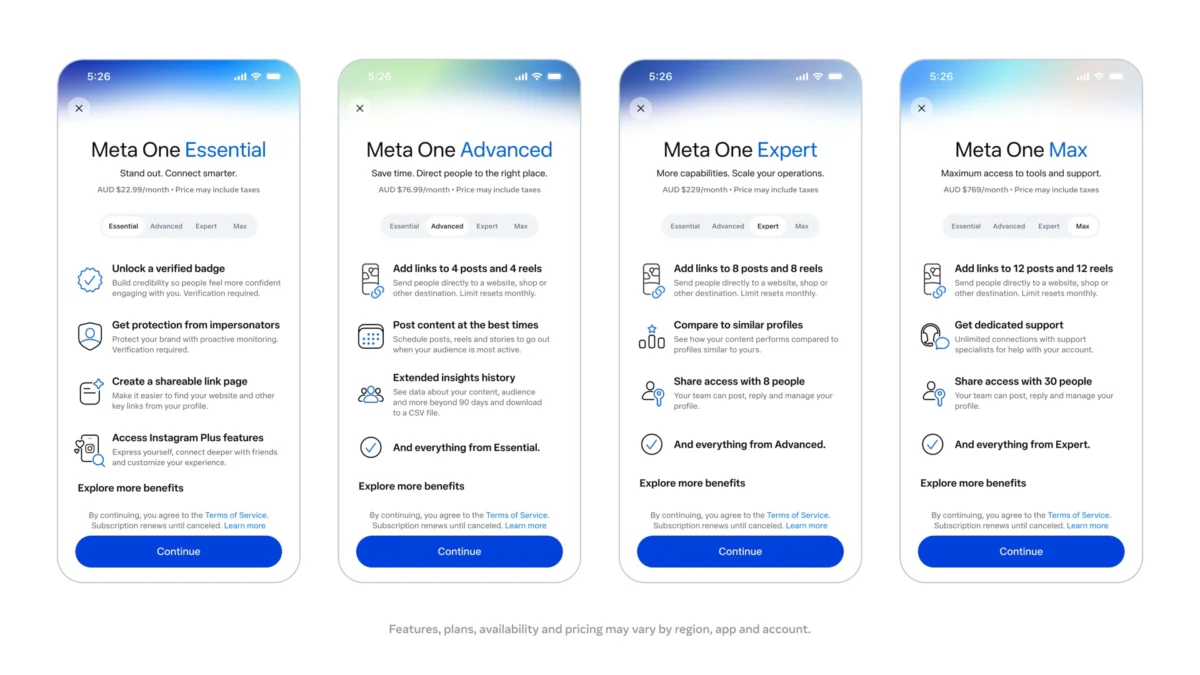
In a move that marks a significant pivot in its monetization strategy, Meta has officially launched Meta One in Australia. This new subscription-based service promises to fundamentally alter how businesses interact with the tech giant’s ecosystem, moving from the automated, often opaque support systems of the past toward a model defined by priority access, live human intervention, and advanced artificial intelligence tools.
For many Australian small and medium-sized enterprises (SMEs), this development represents a long-awaited solution to the "black hole" of Meta’s support infrastructure. However, it also raises critical questions about the cost of doing business in an increasingly pay-to-play digital environment.
The Core Offering: What is Meta One?
At its heart, Meta One is a tiered subscription service designed to provide "power users" on Facebook, Instagram, and WhatsApp with a higher level of service and utility. The headline features of the launch include:
- Priority Support: Subscribers will receive expedited handling of support tickets, significantly reducing the time spent waiting for automated responses.
- Human Connection: Perhaps the most radical departure is the introduction of live phone conversations with Meta support staff, a feature previously reserved for only the largest enterprise-level advertisers.
- The Meta Business Agent: This AI-powered tool is designed to integrate directly into WhatsApp. It acts as a 24/7 digital assistant for businesses, capable of managing sales inquiries, collecting customer data, and providing instantaneous answers to frequently asked questions (FAQs).
By bundling these features, Meta is positioning itself not just as a marketing platform, but as a comprehensive business operations partner.
A Chronology of Meta’s Support Evolution
To understand the significance of the Meta One launch, one must look at the historical friction between Meta and the Australian business community.
2018–2021: The Era of Automation
As Meta’s user base exploded, the company moved toward fully automated support. Business owners reported being "locked out" of their accounts due to minor policy flags, with no clear path to appeal. During this period, the "Meta Support Inbox" became a notorious symbol of frustration, where businesses often waited weeks for a bot-generated resolution.
2022–2024: Mounting Pressure
Australian business advocacy groups, alongside the ACCC, began to highlight the "unconscionable" nature of losing business access to platforms like Instagram without recourse. The narrative shifted from "annoyance" to "existential threat" for e-commerce brands reliant on social media for revenue.
2025: The Catalyst
Following a wave of high-profile complaints—where businesses were shuttered for weeks due to technical glitches—Meta began testing pilot programs for "Meta Verified for Business." This trial laid the groundwork for the more robust, enterprise-focused suite launched today.
September 2026: The Launch of Meta One
Meta has formally rolled out Meta One in Australia. The timing is strategic, coinciding with a broader shift in global digital advertising where platforms are seeking to diversify revenue streams away from pure advertising and toward subscription-based SaaS (Software as a Service) models.
Supporting Data: The Cost of the "Digital Black Hole"
The impetus for Meta One is not purely altruistic; it is a response to a clear market pain point. According to recent industry surveys:
- Downtime Impact: Over 60% of Australian SMEs report that a disruption to their Facebook or Instagram business account results in a direct loss of revenue within 48 hours.
- The Support Gap: Currently, only 12% of small businesses report being satisfied with Meta’s automated help center, while 85% express a desire for "human-to-human" communication.
- AI Adoption: Data suggests that 70% of Australian retailers are actively seeking AI solutions to manage customer inquiries on WhatsApp, confirming that Meta’s inclusion of the "Business Agent" is perfectly timed with local demand.
Official Responses and Strategic Rationale
Meta’s official stance, as communicated by its regional leadership, frames the subscription as a value-add. "We recognise that for Australian businesses, time is the most valuable currency," a spokesperson stated at the launch event. "Meta One is designed to give back that time by providing direct access to our experts and cutting-edge automation."
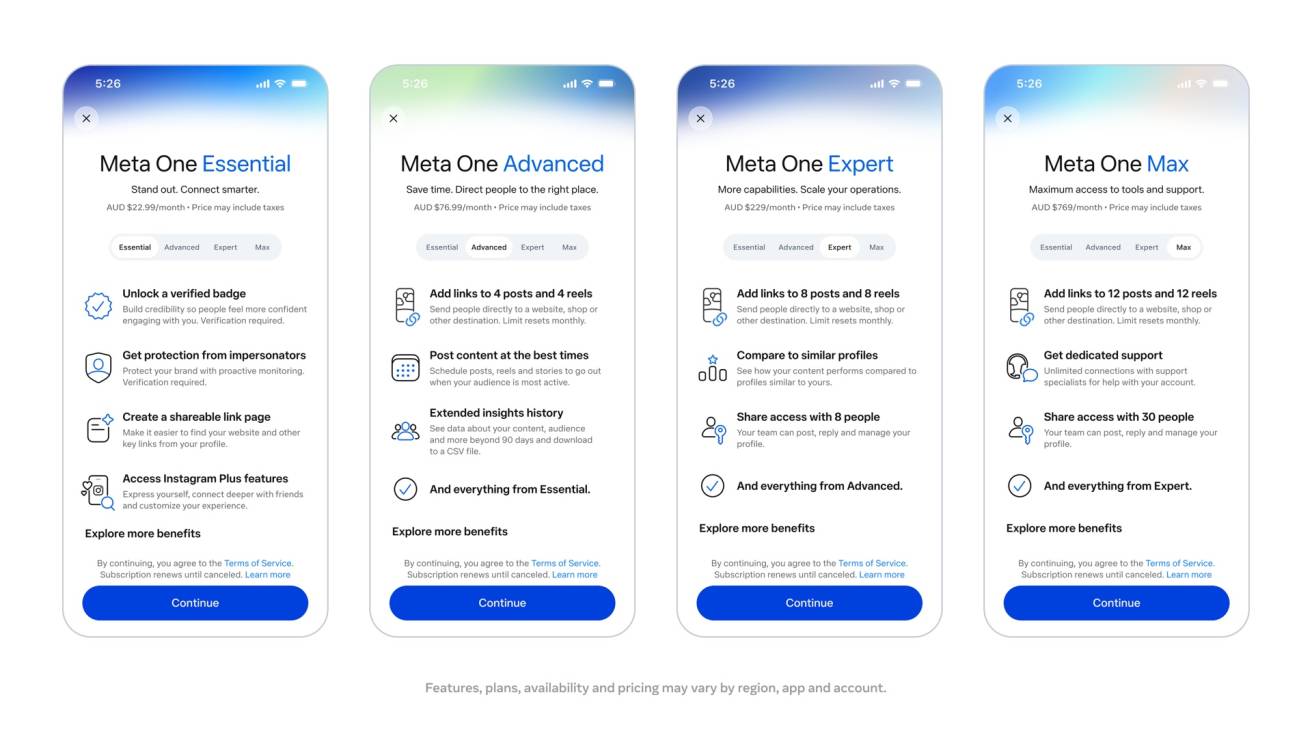
However, industry analysts have been quick to point out the underlying economic strategy. By moving support behind a paywall, Meta is effectively monetizing the "safety" of a business’s digital assets.
"Meta is essentially moving from a model where support is a cost center to one where it is a profit center," says digital economist Dr. Sarah Jenkins. "By charging for support, they are incentivizing the platform to be more reliable for those who pay, while potentially leaving the ‘free’ tier of users in the same support limbo they have always occupied."
Implications: A Two-Tiered Digital Economy?
The introduction of Meta One brings several long-term implications for the Australian market.
1. The "Pay-to-Play" Barrier
For the smallest of small businesses, the subscription fee may represent an additional overhead that is difficult to justify. This risks creating a two-tiered economy where well-funded brands enjoy premium support and superior AI tools, while micro-businesses remain vulnerable to the platform’s automated—and often error-prone—moderation systems.
2. The Future of AI in Retail
The Meta Business Agent could be a game-changer. By keeping the customer experience entirely within the WhatsApp ecosystem, Meta is betting that it can become the primary "operating system" for Australian commerce. If the tool proves effective, it will likely reduce the reliance on third-party CRM software, further centralizing business operations within Meta’s walls.
3. Regulatory Scrutiny
The move will undoubtedly draw the attention of regulators. If Meta effectively makes "basic functionality" (like account recovery) contingent on a subscription, it may trigger investigations into whether the platform is creating an unfair barrier to entry for small businesses. The Australian Competition and Consumer Commission (ACCC) has previously signaled a willingness to challenge platforms that exert excessive control over business operations.
Conclusion: Is Meta One Worth the Investment?
For Australian business owners, the decision to subscribe to Meta One will come down to a simple calculation of risk versus reward. For a brand that generates the bulk of its leads through Instagram or conducts its customer service via WhatsApp, the peace of mind offered by human support and enhanced AI tools may be worth the monthly fee.
However, the launch of Meta One also signals a broader shift in the digital landscape. The era of the "free" internet as a business tool is slowly receding, replaced by a model where platform access, visibility, and even basic service reliability are increasingly commodified.
As businesses begin to sign up for these services, the Australian market will serve as a critical case study. If Meta One leads to a more stable, responsive, and efficient environment for businesses, it may be welcomed as a necessary evolution. If, however, it creates a system of "haves and have-nots," Meta may find itself facing a new, and perhaps more intense, wave of public and regulatory backlash.
For now, the subscription is live, the agents are waiting, and the Australian business community is watching closely to see if the promised "human touch" lives up to the cost.
Quick Reference: The Meta One Subscription Model
| Feature | Free Tier | Meta One (Subscription) |
|---|---|---|
| Support Access | Automated Bots / Help Center | Live Phone Support / Priority Tickets |
| Response Time | Unpredictable (Days/Weeks) | Expedited (Hours) |
| AI Integration | Limited | Advanced Meta Business Agent |
| WhatsApp Tools | Basic | Full CRM / Sales Inquiry Automation |
As Meta One rolls out across the country, businesses are encouraged to audit their current support needs before committing to the subscription tier. The shift toward a paid-support model is likely to become the industry standard for major platforms moving into 2027.