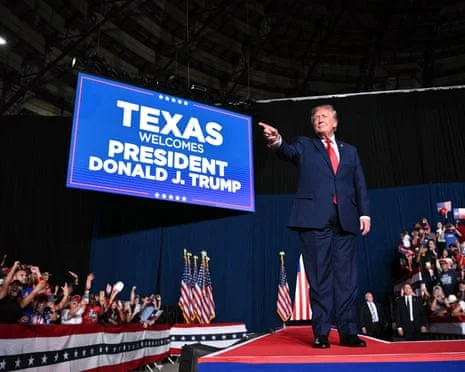
For the international community, the diplomatic firestorm between Washington and Panama City—ignited by President Donald Trump’s inflammatory 2025 inaugural claim that China exercised de facto control over the Panama Canal—appears to have been extinguished. Following a period of intense pressure, the Trump administration secured expanded U.S. military training access within the Panamanian jungle, and, in a move that signaled a major policy pivot, the Panamanian Supreme Court struck down operating contracts for two massive, Hong Kong-owned port facilities.
For the White House, the chapter is closed. But for the Republic of Panama, the "post-conflict" reality has proven to be a devastating, grinding economic siege. While the geopolitical dust has settled in Washington, Beijing has responded with a sophisticated, asymmetric campaign of maritime lawfare that threatens the very foundation of Panama’s sovereignty and its status as a global logistics hub.
A Chronology of Escalation: From Courtroom to Portside
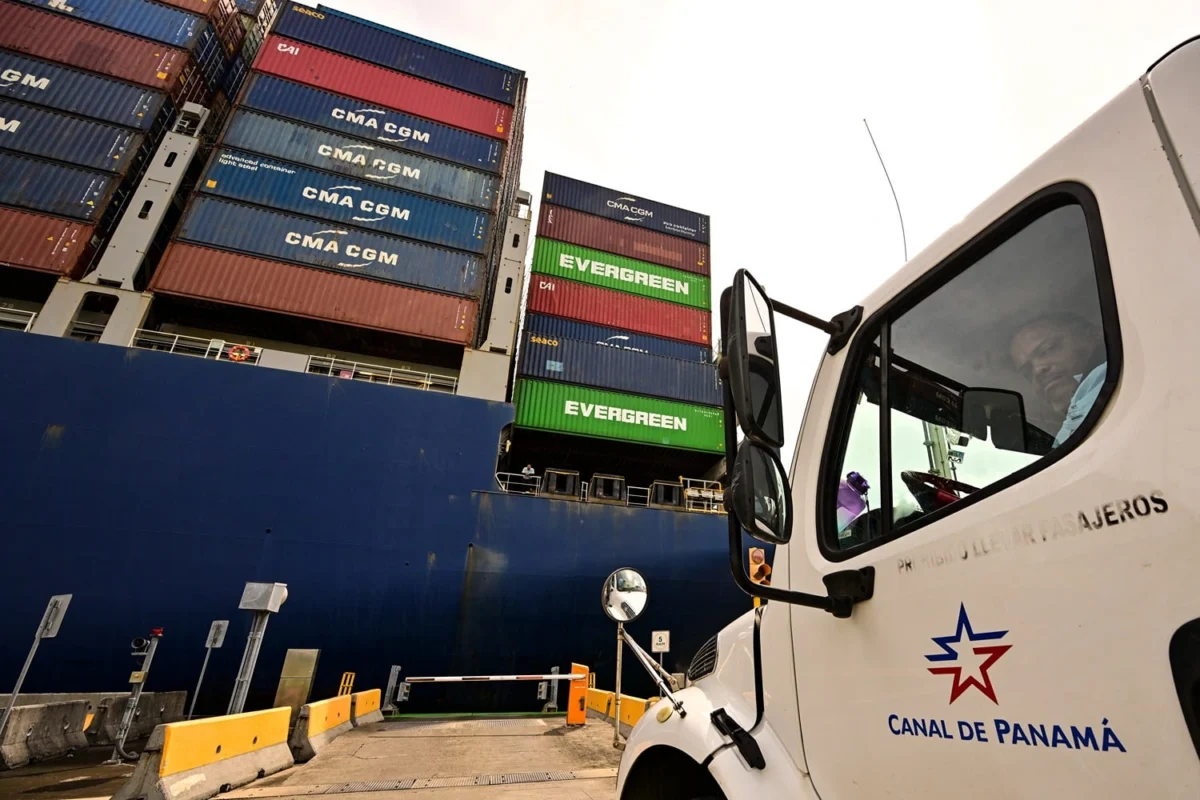
The friction began in earnest as the United States ramped up accusations that Beijing was exerting undue influence over the canal, which facilitates more than 40 percent of all U.S. container traffic. At the heart of the dispute were the Balboa and Cristóbal terminals, operated by the Panama Ports Company, a subsidiary of the Hong Kong-based conglomerate CK Hutchison.
While these facilities did not control the transit of the canal itself, they occupied the strategic "gateways" at the Pacific and Atlantic ends. Citing potential espionage threats and fears of sensitive communication interception, U.S. lawmakers pressured the Panamanian government to re-examine the concession.
- January 2025: An audit by the Panamanian comptroller alleges that the CK Hutchison concession—extended in 2021—had resulted in $1.3 billion in lost revenue due to unpaid dues and tax irregularities.
- January 30, 2026: The Panamanian Supreme Court rules the concession and its extension unconstitutional. The government moves to reclaim the ports, assigning interim operations to global shipping giants Maersk and MSC.
- February 2026: Beijing formally condemns the ruling, labeling it an act of "bad faith" and a result of illegal U.S. coercion. CK Hutchison initiates arbitration through the International Chamber of Commerce.
- March 8, 2026: The "silent" retaliation begins. Chinese authorities launch an unprecedented surge in inspections of Panama-flagged vessels.
- April 2026: Chinese Premier Li Qiang signs a State Council order formally expanding Beijing’s authority to retaliate against foreign regulatory actions deemed harmful to Chinese national interests.
The Weaponization of Compliance
The tactic employed by Beijing is a masterclass in modern, state-sanctioned economic coercion. Rather than declaring an open trade war—which would invite direct international sanctions—China has chosen to weaponize the technical, mundane infrastructure of maritime regulation.
By leveraging "informal directives" to increase the frequency of port state control inspections, Chinese authorities have effectively paralyzed a significant portion of the Panamanian fleet. Between March and July 2026, more than 400 Panama-flagged ships were detained at Chinese ports. By April, China was responsible for an staggering 91 percent of all detentions of Panama-flagged vessels across the Asia-Pacific region.
While Beijing’s ambassador to the United States has publicly dismissed these actions as routine responses to "fishing boat collisions" and safety concerns, the data tells a different story. The delays are not merely bureaucratic inconveniences; they are targeted signals. For a shipowner, an unexpected detention translates into massive losses in daily operating costs, insurance spikes, and the potential for spoiled or late cargo.
Supporting Data: The Erosion of a Global Registry
The economic consequences for Panama have been swift and severe. Panama has long prided itself on having the world’s largest ship registry, a cornerstone of its national economy that generates between $125 million and $150 million annually in licensing fees.
The fear instilled by Beijing’s crackdown has caused a mass exodus. Between late 2025 and August 2026, approximately 500 ships left the Panamanian registry—roughly 12.3 percent of the country’s total fleet by tonnage. The impact extends beyond simple registration fees; it has tainted the "Panama flag" with the stigma of political risk.
Financial institutions, particularly Chinese leasing companies, have begun explicitly requiring shipowners to reflag their vessels away from Panama as a condition for securing new financing. This "financial redlining" strikes at the heart of Panama’s maritime identity, forcing the country into an existential crisis regarding its neutrality.
Official Responses and the Multilateral Vacuum
The international reaction to this form of "maritime lawfare" has been tepid at best. In April, a coalition including the United States, Bolivia, Costa Rica, Guyana, Paraguay, and Trinidad and Tobago issued a joint statement supporting Panama’s sovereignty. However, statements have failed to deter Beijing’s administrative maneuvers.
The U.S. Federal Maritime Commission has threatened to investigate the "weaponization of port state control," yet they lack the jurisdictional reach to compel China to stop. The International Maritime Organization (IMO), designed to govern safety and common standards, remains ill-equipped to handle disputes where safety protocols are used as a cover for geopolitical retribution.
Similarly, the World Trade Organization (WTO)—already weakened by years of U.S. skepticism—struggles to address disputes that focus on the infrastructure of trade rather than the goods themselves.
Strategic Implications: A New Era of Geopolitics
Panama’s ordeal is not an isolated incident; it is a preview of a broader, more dangerous trend. From the Chinese-built port of Chancay in Peru to the strategic ports across the Caribbean, Beijing is systematically building an infrastructure network that allows it to exert pressure on global supply chains with surgical precision.
1. The Death of Neutrality
The 1977 Panama Canal Neutrality Treaty, which guarantees the canal’s status as a peaceful transit zone for all nations, is being tested in ways the original drafters could not have imagined. While China is not a party to the treaty, its ability to influence the commercial environment surrounding the canal effectively subverts the spirit of the agreement.
2. The Need for New Maritime Governance
If the global community wishes to prevent the further fragmentation of maritime commerce, it must look beyond traditional trade agreements. There is an urgent need for:
- Enhanced Transparency: The IMO should establish procedures to flag "unusual patterns" of vessel detentions, treating them as potential violations of maritime law rather than mere domestic inspections.
- Alternative Infrastructure Investment: The U.S. International Development Finance Corporation (DFC) must aggressively support, alongside private capital, the development of port capacity in the Western Hemisphere to dilute China’s monopolistic control over logistics hubs.
- Coordinated Responses: Countries with shared interests in maritime stability—such as Greece, Denmark, and Panama—should formalize an information-sharing network to coordinate responses to discriminatory inspection practices.
Conclusion: The Price of Independence
Panama is currently paying a steep price for its role in the U.S.-China commercial tug-of-war. The crisis demonstrates that in the 21st century, the most effective tools of influence are not necessarily found in aircraft carriers or missile silos, but in the bureaucratic levers that control the flow of global trade.
If the United States and its allies remain focused solely on the "big picture" of military deterrence, they risk ignoring the granular, systemic ways in which Beijing is reshaping the global commons. Panama is the current battleground, but it is unlikely to be the last. Without a robust, multinational effort to safeguard the neutrality of maritime infrastructure, the "freedom of navigation" that the world relies on may soon become a privilege granted—and revoked—at the discretion of those who control the ports.