TIRANA, ALBANIA – October 27, 2026 – In a significant development following weeks of escalating public demonstrations, the Tirana Prosecutor’s Office announced today that it has initiated a comprehensive investigation into alleged excessive force and disproportionate use of power by the State Police during recent protests. The probe will primarily focus on the serious injury sustained by protester Erjon Vishkulli, who reportedly lost sight in one eye after being struck by a rubber bullet, as well as numerous other claims of police misconduct.
The investigation into Vishkulli’s case has been officially registered under charges of "Abuse of Duty" and "Arbitrary Acts," offenses that carry a maximum penalty of up to seven years in prison. This move by the prosecution signals a potential turning point in addressing public grievances against law enforcement actions that have characterized the recent unrest.
Main Facts: A Deepening Investigation into Alleged Police Brutality
The Tirana Prosecutor’s Office has confirmed that it is actively pursuing multiple avenues to thoroughly examine the events that transpired during the recent protests. The core of the investigation centers on the severe injury to Erjon Vishkulli, a demonstrator who is currently receiving specialized medical treatment in Italy for the loss of vision in one eye.
The prosecution has stated that it has collected and reviewed crucial video footage related to Vishkulli’s case, with some of the visual evidence provided by the Bank of Albania. Medical records from the University Hospital of Trauma have also been secured, and collaborative efforts are underway with the Police Oversight Agency (AMP) to gather further evidence and conduct necessary inquiries.
Beyond the Vishkulli incident, the same criminal proceedings are also encompassing investigations into injuries sustained by other protesters. These cases raise serious concerns about the potential for disproportionate force being employed by members of the State Police during public gatherings.
Chronology of Events: From Peaceful Demonstrations to Escalating Tensions
The recent wave of protests in Albania has been a complex and often volatile affair. Initially, many of the demonstrations were characterized by a largely peaceful assembly, with citizens voicing their dissent through organized marches and public forums. However, over the past several weeks, these events have increasingly devolved into confrontations between protesters and law enforcement.
The shift in the nature of the protests has been marked by several key developments:
-
Early Stages of Dissent: The initial protests were fueled by a range of grievances, including economic concerns, political dissatisfaction, and calls for greater transparency and accountability from government institutions. These early gatherings were largely characterized by organized marches and peaceful rallies.
-
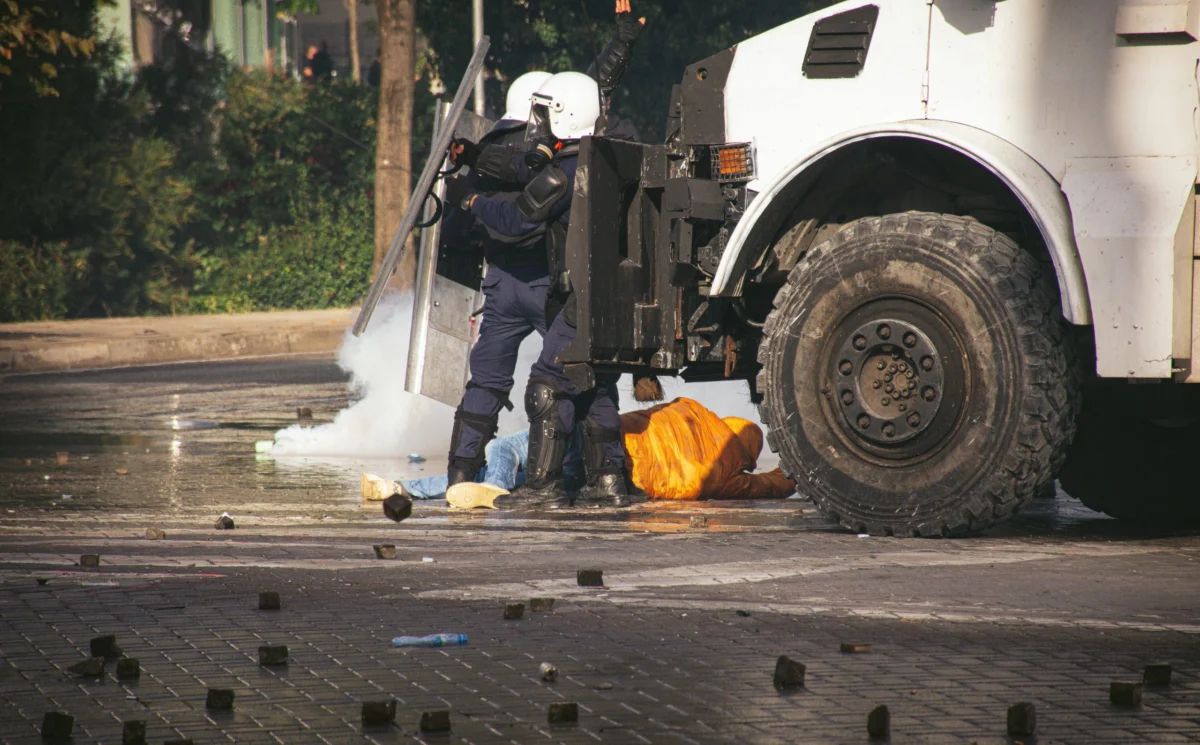
Escalation of Police Response: As the protests grew in size and intensity, the response from the State Police also appeared to escalate. Reports began to emerge of the use of crowd control measures, including tear gas and water cannons, to disperse demonstrators.
-
Allegations of Excessive Force: Following these police actions, a growing number of complaints surfaced regarding the alleged excessive and disproportionate use of force. These allegations ranged from physical altercations to the use of less-lethal munitions, such as rubber bullets, which have been at the center of the current investigation.
-
The Erjon Vishkulli Incident: The severe injury to Erjon Vishkulli, reportedly from a rubber bullet, has become a focal point of the public outcry and a primary catalyst for the Prosecutor’s Office’s investigation. This incident has amplified calls for accountability and a thorough review of police tactics.
-
Widespread Arrests and Prosecutions: In parallel with the alleged police misconduct, law enforcement agencies have carried out numerous arrests of protesters. Hundreds of individuals have reportedly been prosecuted, including a significant number of minors, raising further concerns about the proportionality of the state’s response.
-
Judicial Scrutiny of Arrests: The judiciary has also played a role in the unfolding situation, with the Tirana Court reportedly deeming dozens of arrests as unlawful, leading to the immediate release of those detained. This judicial intervention highlights potential procedural irregularities in the handling of arrests.
Supporting Data: Medical Records and Witness Accounts Fueling the Investigation
The Prosecutor’s Office has indicated that its investigation is being built upon a foundation of collected evidence and witness testimonies. As of the latest reports, approximately 20 medical records of individuals who sustained injuries during the protests have been processed. These medical documents are crucial in corroborating claims of harm and establishing the extent of injuries.
In addition to medical records, the prosecution is actively reviewing video evidence. The footage obtained from the Bank of Albania, particularly in relation to the Erjon Vishkulli case, is considered vital for reconstructing the events leading to his injury. This visual evidence can offer objective insights into the actions of both protesters and law enforcement officers.
The Police Oversight Agency (AMP) is a key partner in this investigation, working in tandem with the Prosecutor’s Office to verify the circumstances surrounding each reported incident. The AMP’s role is to ensure that any potential breaches of police conduct are thoroughly examined and that appropriate disciplinary or legal measures are taken if warranted.
Official Responses: Prosecutor’s Office Vows Accountability, Rights Groups Raise Alarms
The Tirana Prosecutor’s Office, through its official statements, has emphasized its commitment to a fair and impartial investigation. The decision to initiate criminal proceedings for "Abuse of Duty" and "Arbitrary Acts" in the Vishkulli case underscores the seriousness with which the office is treating these allegations.
The prosecution’s announcement stated: "To date, approximately 20 medical records of injured citizens have been administered, and verifications for these cases are being carried out with the Police Oversight Agency (AMP)." This indicates a systematic approach to addressing the multitude of complaints.
However, the investigation has also been met with scrutiny and calls for broader action from human rights organizations and media freedom advocates. These groups have consistently voiced concerns about what they perceive as a pattern of disproportionate force used by the police. Their statements often highlight the imbalance between the number of arrested protesters and the comparatively fewer investigations initiated against law enforcement officers.
Concerns have also been raised about the fact that, until the recent announcement, no criminal proceedings had been officially registered against State Police officers, despite widespread allegations of misconduct. This has led to a perception among some segments of the public and civil society that a degree of impunity may exist.
Implications: Towards Accountability and Rebuilding Public Trust
The Prosecutor’s Office’s decision to launch a comprehensive investigation into police conduct during the recent protests carries significant implications for Albania’s legal system, public safety, and the relationship between citizens and law enforcement.
For the Legal System: This investigation represents a critical test of the Albanian justice system’s ability to hold state agents accountable for their actions. If conducted thoroughly and impartially, it could set a precedent for future instances of alleged police misconduct and reinforce the principle that no one is above the law. The potential for significant prison sentences for those found guilty of abuse of duty could serve as a strong deterrent.
For Public Safety and Trust: The protests have, in part, been a manifestation of public frustration and a demand for greater accountability. The way this investigation unfolds will have a direct impact on public trust in the State Police and the government’s commitment to protecting citizens’ rights. A perceived lack of thoroughness or impartiality could further erode this trust and potentially fuel future unrest. Conversely, a transparent and just process could begin the long road to rebuilding that trust.
For Civil Liberties and Human Rights: The allegations of excessive force and disproportionate use of power during protests directly touch upon fundamental civil liberties, including the right to peaceful assembly and freedom of expression. The outcome of this investigation will be closely watched by international human rights organizations, which are increasingly focused on the conduct of law enforcement in democratic societies.
For the Future of Protests: The current situation underscores the delicate balance between the state’s responsibility to maintain public order and its obligation to respect the rights of its citizens to protest. The findings of this investigation could inform future police training, guidelines for the use of force, and protocols for managing public demonstrations, aiming to prevent a recurrence of the events witnessed in recent weeks.
As the Tirana Prosecutor’s Office embarks on this crucial investigation, the eyes of Albania and the international community will be fixed on its progress, seeking a resolution that upholds justice and reinforces the rule of law. The path forward demands transparency, diligence, and an unwavering commitment to accountability.