By [Your Name/Journalist Name]
October 26, 2026
In an era defined by a rapidly shifting regulatory landscape, multinational corporations are finding themselves buried under a mounting pile of ESG (Environmental, Social, and Governance) mandates. As jurisdictions from the European Union to the United States and across the Asia-Pacific region introduce increasingly complex reporting requirements, the challenge for legal, compliance, and sustainability teams is no longer just about compliance—it is about knowing exactly which laws apply to which parts of their global operations.
To address this pressing bottleneck, Datamaran, a leading provider of ESG-focused software analytics, announced today the launch of its “Applicability Assessment” tool. This new feature, integrated directly into the company’s existing Regulatory Monitoring Platform, aims to transform how enterprises identify and manage their regulatory obligations on a granular, entity-by-entity basis.
The Core Challenge: The Compliance Burden
For global organizations, the current approach to regulatory tracking is often labor-intensive, fragmented, and prone to human error. Large enterprises frequently operate hundreds of legal entities across dozens of countries, each subject to unique local regulations, sectoral mandates, and reporting thresholds.
Traditionally, these companies have relied on manual assessments—often involving spreadsheets, internal surveys, and high-priced legal consultations—to determine their compliance exposure. This process is not only costly but inherently reactive. When a new regulation is proposed or an existing one is amended, teams must repeat the entire diagnostic process. In a world where regulatory velocity is accelerating, this “check-the-box” culture is becoming unsustainable.
Datamaran’s new Applicability Assessment tool is designed to automate this lifecycle, providing a scalable solution that bridges the gap between regulatory data and operational reality.
Chronology: From Monitoring to Action
The introduction of the Applicability Assessment tool marks a significant milestone in Datamaran’s product roadmap, building on the foundation of their broader Regulatory Monitoring Platform launched in March 2026.
- March 2026: Datamaran launches its dedicated Regulatory Monitoring Platform. This initial release provided businesses with a comprehensive view of the global ESG regulatory landscape, allowing them to track developments and legislative updates in real-time.
- Q2–Q3 2026: Throughout the spring and summer, Datamaran’s client base—composed largely of Fortune 500 companies and global entities—reported a consistent pain point: while they knew what regulations were emerging globally, they struggled to map these requirements to their specific organizational structures.
- October 26, 2026: Datamaran officially rolls out the Applicability Assessment tool, moving beyond mere "monitoring" into the realm of "active compliance management."
The launch represents a strategic evolution for the software provider, acknowledging that the future of ESG software lies not just in information gathering, but in the intelligent application of that information to specific corporate footprints.
How It Works: Intelligent Categorization
The Applicability Assessment tool operates by marrying organizational data with Datamaran’s deep repository of regulatory intelligence.
Automated Entity Profiling
The tool allows users to build comprehensive profiles for every entity within their corporate structure. These profiles are automatically populated with critical metadata, including:
- Headquarters and Jurisdictions of Operation: Identifying where the entity is legally registered versus where it conducts business.
- Sector Classification: Mapping the entity to specific industry-based regulations (e.g., banking, manufacturing, or retail).
- Operational Metrics: Capturing revenue brackets and employee headcounts, which are often the primary triggers for mandatory sustainability reporting (such as the EU’s CSRD or California’s climate disclosure laws).
The Assessment Engine
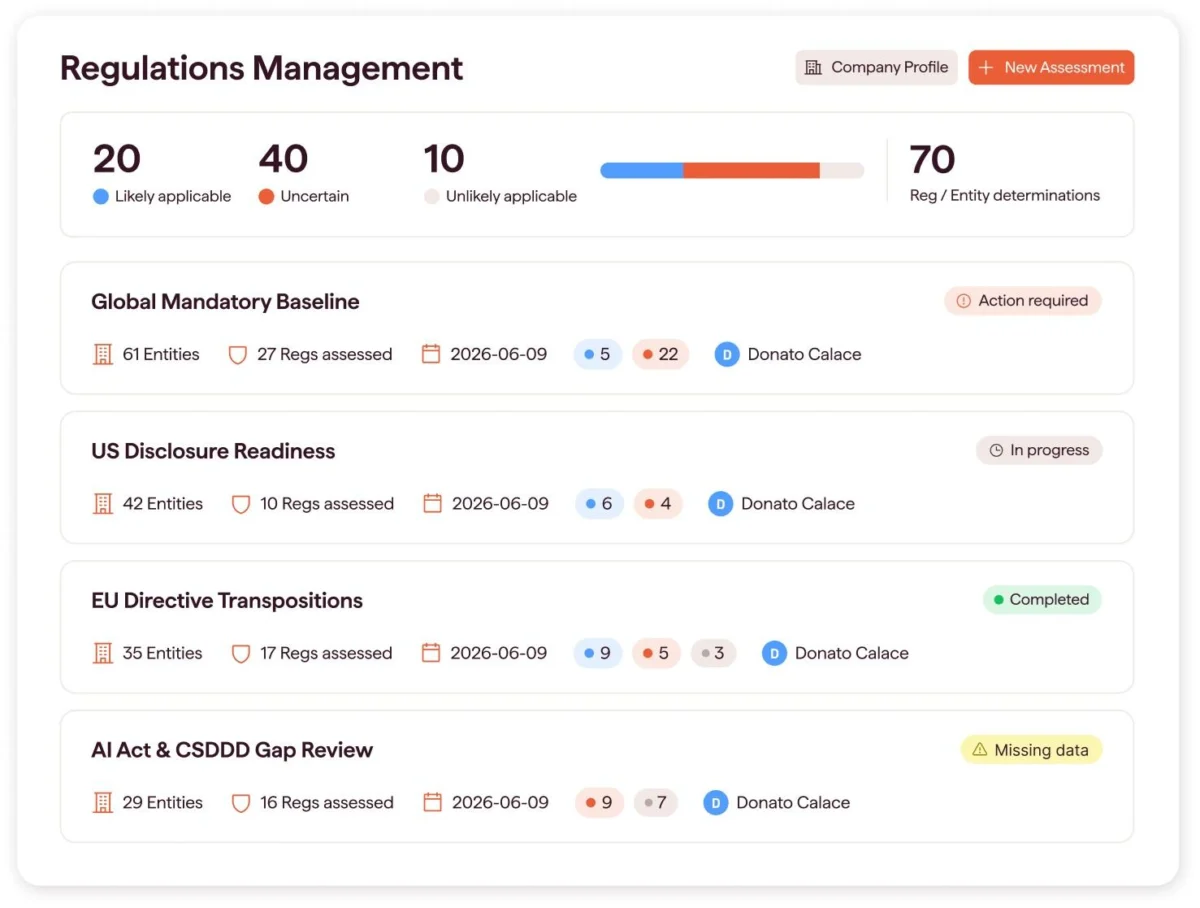
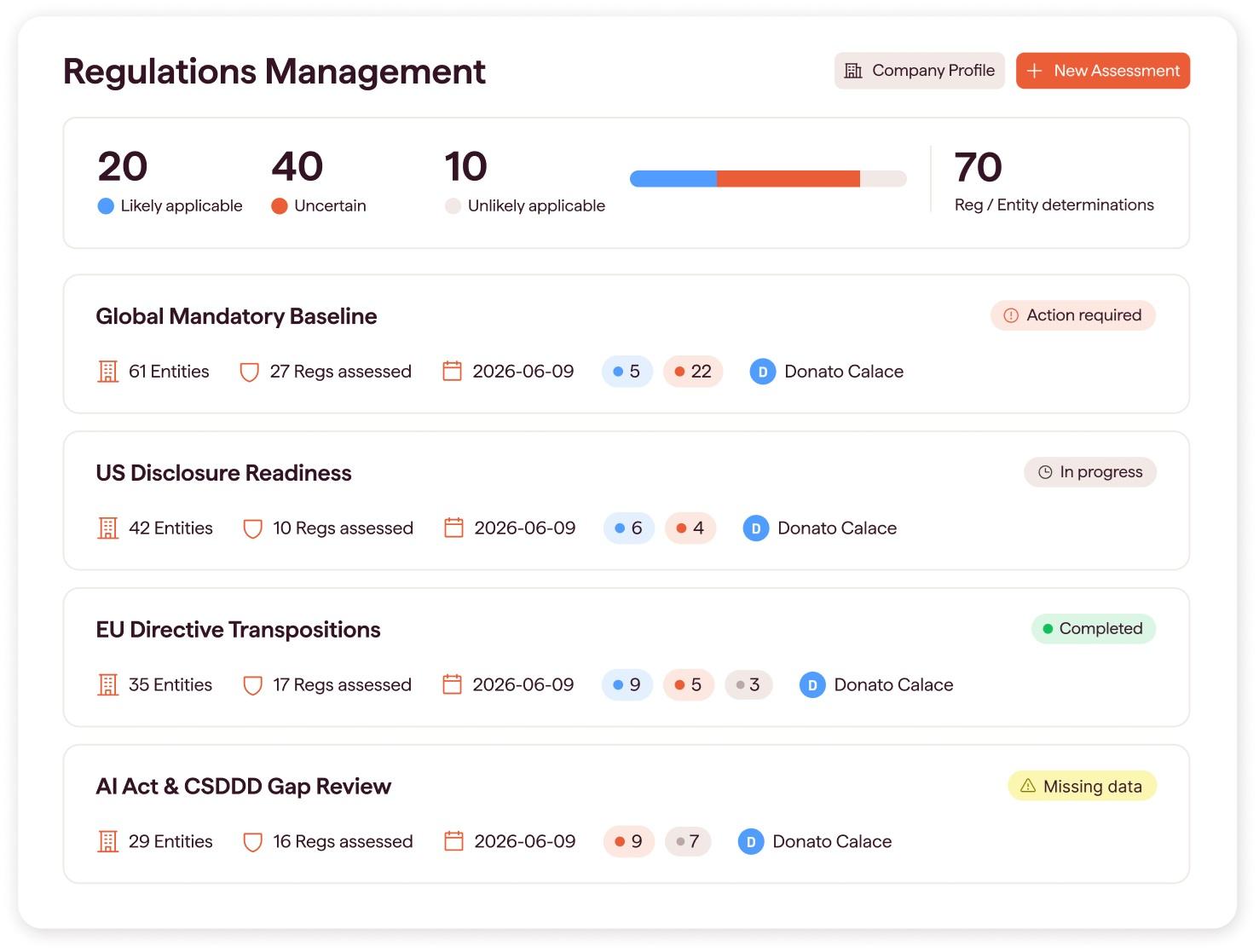
Once the profiles are established, the software evaluates each entity against the global database of regulations. Each assessment is then classified into one of three categories:
- Likely: High probability of applicability based on the entity’s metadata.
- Unlikely: The entity falls outside the scope of the specific regulation.
- Uncertain: The software flags cases where the applicability is ambiguous, prompting a need for further investigation or human oversight.
Each classification is accompanied by a transparent explanation of the criteria used, ensuring that compliance officers can audit the tool’s logic and provide the necessary documentation for stakeholders or external auditors.

Official Perspective: Simplifying the Complexity
For the leadership at Datamaran, the product launch is a direct response to the "noise" currently flooding corporate boardrooms. Marjella Lecourt-Alma, CEO and co-founder of Datamaran, emphasized that the tool is intended to cut through the confusion that plagues modern sustainability teams.
"‘We just need to know what applies to us’ is something we hear often from legal, compliance, and sustainability teams," Lecourt-Alma noted during the announcement. "Applicability Assessment provides that information quickly and reliably at the entity level at scale."
By shifting the focus from high-level regulatory tracking to granular entity-level compliance, Datamaran is positioning itself as a critical partner in risk mitigation. For a company with a complex, multi-layered supply chain or subsidiaries in multiple high-regulation regions, this clarity can save thousands of man-hours and significantly reduce the risk of non-compliance fines.
Implications for the Future of ESG
The launch of the Applicability Assessment tool has several profound implications for the broader ESG market.
1. The Rise of "Regulatory Intelligence"
We are moving away from the era of static reporting. Modern compliance requires "Regulatory Intelligence"—the ability to track, analyze, and act upon legislative changes in real-time. By integrating dashboards that monitor regulatory exposure, companies can now track "what’s next" rather than just "what’s now."
2. Bridging the Gap Between Legal and Sustainability
Historically, legal departments and sustainability departments have worked in silos. Legal teams focus on black-letter law, while sustainability teams focus on voluntary disclosures. The Applicability Assessment tool creates a shared language and a shared dashboard, forcing these two functions to collaborate on a single source of truth.

3. Increased Scrutiny and Validation
Datamaran has already announced plans for an "expert review" feature, which will support the validation of assessment results. This is a crucial step toward creating audit-ready reports. As regulators globally demand higher levels of assurance on ESG data, tools that provide a clear audit trail of why a company decided a regulation did or did not apply will become industry standard.
4. Operational Efficiency and Cost Reduction
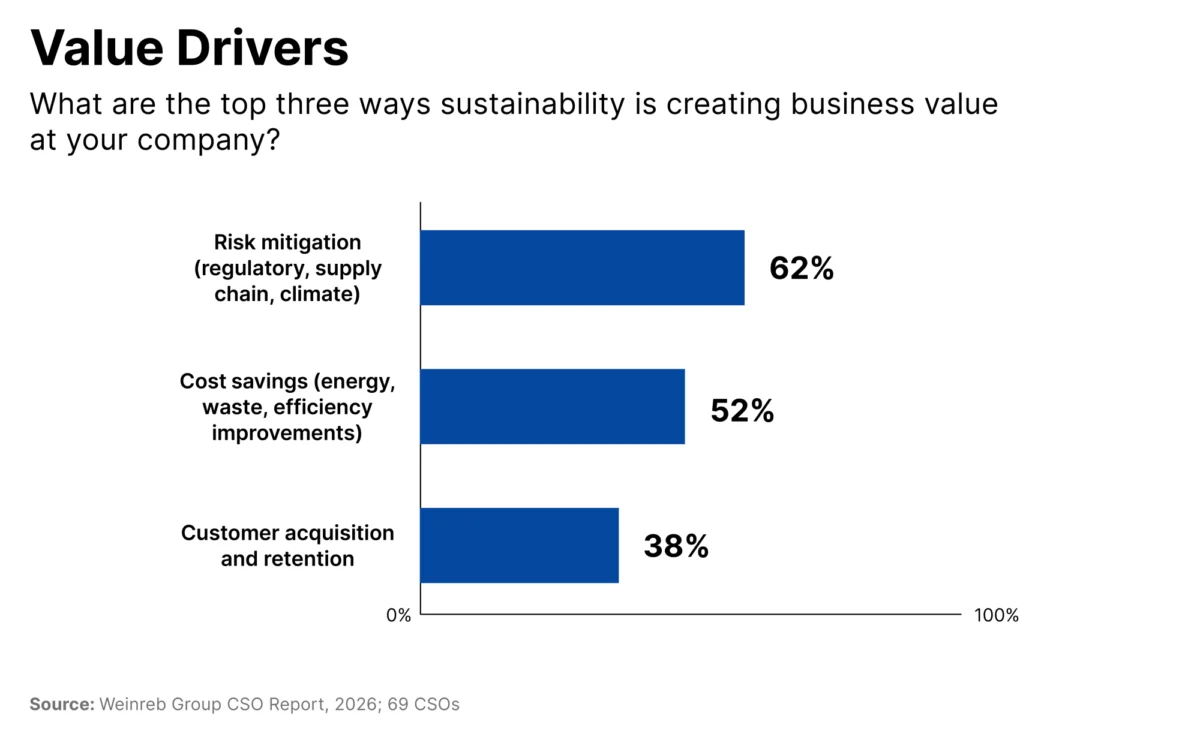
For multinational firms, the cost of compliance is ballooning. By automating the preliminary assessment phase, companies can reallocate their human talent—legal counsel and sustainability managers—to more strategic tasks, such as improving performance and meeting sustainability targets, rather than spending months mapping spreadsheets.
Supporting Data: The Expanding Regulatory Web
The need for such a tool is underscored by the current state of global regulation. According to recent data from Datamaran and other industry observers, the sheer volume of ESG-related laws has surged by over 400% in the last five years.
- Regional Fragmentation: The EU’s Corporate Sustainability Reporting Directive (CSRD) alone involves thousands of data points. When combined with the SEC’s climate rules in the US, the IFRS Sustainability Disclosure Standards globally, and various local supply chain due diligence laws (such as the German Supply Chain Act), the matrix of compliance is overwhelming.
- The "Uncertainty" Gap: Data suggests that nearly 60% of companies currently feel "under-prepared" to manage the cross-border implications of these overlapping laws. The "Uncertain" category within the new Datamaran tool is specifically designed to highlight these grey areas, which currently pose the highest risk of litigation for corporations.
Conclusion: A New Standard for Compliance
The launch of Datamaran’s Applicability Assessment tool is more than just a software update; it is a signal that the market for ESG compliance is maturing. As the "wild west" of voluntary ESG reporting gives way to a strict, regulated environment, the tools required to survive will need to be as robust as those used for financial reporting.
By automating the identification of regulatory obligations, Datamaran is empowering companies to move from a defensive posture—trying to keep up with the law—to a proactive one. In the coming years, we can expect to see more platforms follow suit, integrating deep analytical capabilities with operational data to create a seamless, transparent, and defensible compliance ecosystem.
For the modern enterprise, the message is clear: the era of manual, ad-hoc compliance is over. To thrive in the new regulatory climate, data-driven, entity-level insights are no longer a luxury—they are a prerequisite for doing business on a global scale.