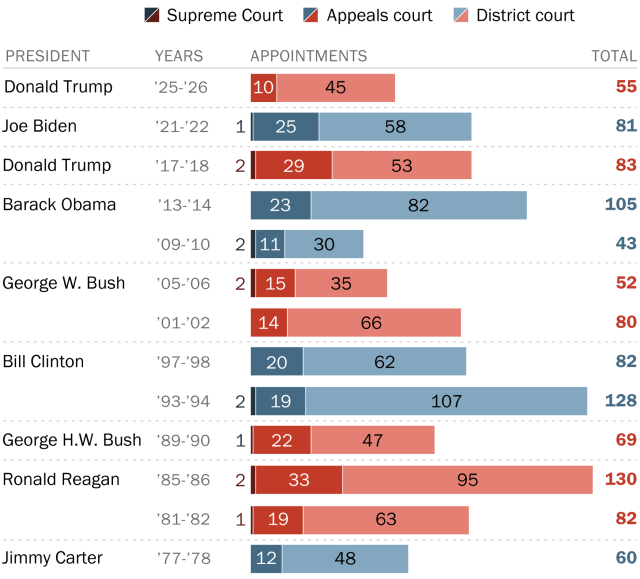
As the midterm election cycle reaches a fever pitch, the composition of the federal judiciary has once again moved to the forefront of the American political conversation. A new analysis from the Pew Research Center, utilizing data from the Federal Judicial Center, reveals a striking trend: President Donald Trump has appointed significantly fewer federal judges through the first half of his second term than he did at the same point during his initial tenure—and fewer than most of his modern predecessors.
With just 55 lifetime appointments confirmed as of October 15, 2026, the current administration is trailing the historic pace set by recent presidents. This shift carries profound implications for the federal bench, as these jurists will hold their seats for decades, influencing the interpretation of law and the trajectory of national policy long after the current administration concludes.
The Data: A Comparative Look at Judicial Velocity
The numbers provide a clear picture of a judicial pipeline that is moving at a historically modest speed. Since returning to the White House in 2025, President Trump has successfully installed 55 Article III judges. When viewed through the lens of history, this total places his current administration among the slowest in terms of pre-midterm judicial output since the Jimmy Carter presidency.
To understand the scale of this disparity, one need only look at the comparative data:
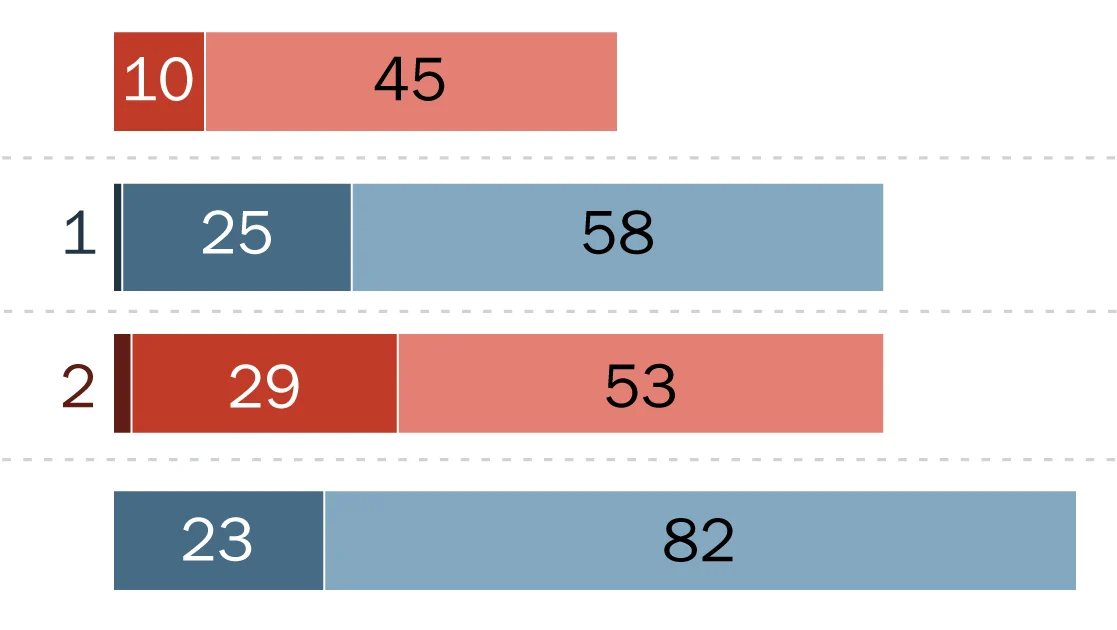
- Joe Biden: By the same point in his presidency (2021-2022), the Biden administration had secured the confirmation of 81 federal judges.
- Trump’s First Term: During the 2017-2018 period, the Trump administration had already seen 83 of its nominees confirmed to the federal bench.
- Barack Obama: At this juncture in his second term (2013-2014), the Obama administration had reached 105 confirmations.
The current breakdown of the 55 appointees consists of 45 district court judges and 10 appeals court judges. Notably, unlike his first term, which saw the transformative appointment of three U.S. Supreme Court justices, the second term has yielded zero new Supreme Court appointments thus far.
Chronology of a Shifting Landscape
The current state of judicial appointments is not merely a product of the present moment but the result of a complex interplay of vacancies, administrative procedural hurdles, and legislative maneuvering that has unfolded since early 2025.
The Slow Start
Following his inauguration, the administration’s pace was notably deliberate. The first judicial nominee of the second term was not announced until nearly four months into the administration. Following the nomination, the path to the bench proved equally methodical; the Senate did not confirm this initial nominee until two months after her introduction to the Judiciary Committee. This delay at the beginning of the term established a tempo that has yet to accelerate to the levels observed in the 2017 transition.

The Vacancy Deficit
A primary driver of the current slowdown is the simple lack of open seats. Judicial appointments are contingent upon vacancies created by retirement, death, or resignation. Data indicates that the current administration has faced a "paucity of vacancies" compared to the high turnover seen during the transition from the Trump to the Biden presidency. For example, between the 2020 election and the end of President Biden’s first year, 30 appeals court judges stepped down. In stark contrast, only three appellate judges have vacated their positions since the 2024 election. Without a seat to fill, the executive branch cannot exercise its power of appointment.
Legislative Bottlenecks
The process of confirming a judge is a three-part race: identifying a candidate, moving them through the Senate Judiciary Committee, and securing a floor vote in the full Senate. Currently, there are 13 nominees stuck in the committee stage, while three others have cleared the committee but remain in limbo, awaiting a full Senate vote. These bottlenecks are exacerbated by a narrow Republican majority in the Senate, which provides little room for error when faced with unified opposition from Democratic senators.
Why the Pace Matters: The Legacy of Lifetime Tenure
The significance of these numbers cannot be overstated. Article III of the U.S. Constitution grants federal judges lifetime tenure, a design intended to insulate the judiciary from the whims of electoral politics. However, this also means that the impact of a president’s judicial appointments is one of the most durable elements of their executive legacy.
Appeals court judges, in particular, serve as the final arbiter in the vast majority of federal legal disputes. With only 10 appellate confirmations so far, the administration has significantly less influence over the circuit courts than it did during the first term, where 29 appellate judges were confirmed by this stage. Because these courts often decide the constitutionality of federal statutes, environmental regulations, and civil rights protections, the current slowdown represents a deceleration in the reshaping of the federal bench.
Implications of the Upcoming Midterms
As the November midterm elections approach, the judiciary serves as a potent campaign issue. Control of the Senate is the primary variable that will dictate the speed of judicial confirmations for the remainder of the president’s term.
Should the Democratic party succeed in flipping the Senate, political analysts predict a near-total freeze on the confirmation of the president’s remaining nominees. Conversely, if Republicans maintain their narrow majority, there is already talk of a "lame duck" strategy. Reports suggest that Senate Republican leadership is prepared to prioritize the confirmation of the current backlog of judicial nominees in the post-election session, aiming to clear as many names as possible before the new Congress convenes.
This "lame duck" sprint is a common feature of modern judicial politics, where the outgoing legislative body seeks to maximize the ideological footprint of the executive branch before the political winds potentially shift.
Official Perspectives and Expert Analysis
The reasons for this slower pace are debated by experts across the political spectrum. Some argue that the administration is exercising more caution in the vetting process to avoid the controversies that sometimes accompanied earlier appointments. Others point to the procedural realities of a divided government.
"The judicial vacancy rate is not a variable the president can always control," notes one legal scholar. "When you have a shortage of senior judges choosing to take inactive status or retire, you are effectively locked out of the process regardless of how many names you have on your shortlist."
However, others emphasize the legislative aspect. The Brookings Institution has noted that the relationship between the White House and the Senate Judiciary Committee is a delicate one. When the margin in the Senate is thin, every single vote becomes a potential point of failure, forcing the administration to spend significantly more political capital to secure each individual seat than they would in a chamber with a more robust majority.
Conclusion: A Bench in Transition
The federal judiciary remains the most enduring monument to a president’s time in office. While the current administration has been criticized by some for a slower pace of appointments, the data suggests that the reality is more nuanced, involving a convergence of low judicial turnover and legislative friction.
As the country moves toward the midterm elections, the composition of the Senate will serve as the ultimate arbiter of the judiciary’s future. Whether the next two years see a surge in confirmations or a continued, measured pace will depend entirely on which party holds the gavel in the upper chamber. For now, the 55 judges confirmed since 2025 stand as a reminder that even in an era of rapid political change, the gears of the federal judiciary turn slowly, shaped by the deliberate and often contentious process of constitutional governance.