In a dramatic, high-stakes conclusion to one of the most volatile electoral cycles in Latin American history, Luiz Inácio Lula da Silva has secured a fourth, non-consecutive term as the President of Brazil. The 80-year-old leftist, a towering figure in Brazilian politics, overcame a significant first-round deficit to defeat his far-right opponent, Flávio Bolsonaro, in a second-round runoff that has left the nation deeply divided but marks a monumental shift in the country’s political trajectory.
With nearly 99% of the votes counted, Lula received 51.75% of the ballots against Flávio Bolsonaro’s 48.25%. The result serves as a definitive validation of the veteran politician’s resilience, as he becomes the first candidate in the history of Brazil’s modern democracy to reverse a first-round loss and clinch the presidency in a runoff.

A Chronology of a Tense Campaign
The road to this historic victory was far from smooth. In early October, the first round of the election delivered a shock to the political establishment when Flávio Bolsonaro—the eldest son of the disgraced former president, Jair Bolsonaro—surpassed expectations to lead the polls. That initial outcome plunged progressive Brazilians into a period of profound uncertainty, with many fearing that the populist, right-wing movement that had dominated the country since 2019 was poised for a multi-generational grip on power.
The campaign period was defined by intense polarization and controversy. As early as mid-October, the integrity of the process was brought into question. A significant flashpoint occurred when Lula’s legal team formally accused Meta, the parent company of Instagram, of interfering in the election. Supporters of the leftist candidate reported that their content was being systematically removed or restricted in reach, while the far-right camp faced fewer hurdles. Although Meta dismissed the allegations as “false and unfounded,” citing “technical incidents” affecting multiple sides, the controversy underscored the digital battleground that has defined contemporary Brazilian politics.

Adding to the tension was a late-stage scandal involving Brazil’s Supreme Court. Justice Alexandre de Moraes, who had been instrumental in prosecuting Jair Bolsonaro for his failed 2022 coup attempt, found himself at the center of a storm. Reports emerged suggesting that his wife’s law firm had held a lucrative contract with a banker involved in a massive fraud scheme. The scandal provided fodder for Flávio Bolsonaro, who utilized the narrative to frame the judiciary as corrupt, further alienating voters and complicating the final stretch of the campaign.
The Turning Point: Voting Day and Voter Access
The day of the runoff, October 25, was characterized by anxiety and logistical hurdles. Shortly after polls opened, the campaign for Lula filed an urgent request to extend voting hours, citing evidence that authorities in several key regions had deliberately restricted public transportation access to stifle voter turnout.
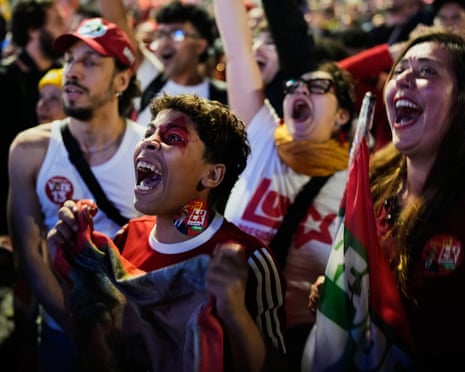
In a move that caught many by surprise, Supreme Court Justice Cristiano Zanin ordered a two-hour extension for voting across the nation. While this move was celebrated by supporters of the Workers’ Party (PT) as a defense of democracy, it led to logistical confusion, as some polling stations had already shuttered their doors by the time the order was issued. Nonetheless, the extension is widely seen as having played a critical role in the final tally. According to analysts, the record-high abstention rate of 21.08% seen in the first round dropped to 19.21% in the runoff, a shift that disproportionately favored Lula, whose base often resides in more remote or economically disadvantaged areas where transportation is a critical factor for participation.
The Youth and Cultural Mobilization
A unique feature of this election cycle was the unprecedented involvement of digital fandoms. In the weeks leading up to the final vote, more than 600 organized fan groups—ranging from supporters of international pop icons like Billie Eilish, Lady Gaga, and Harry Styles to Brazilian superstars like Anitta—formed a unified digital coalition.
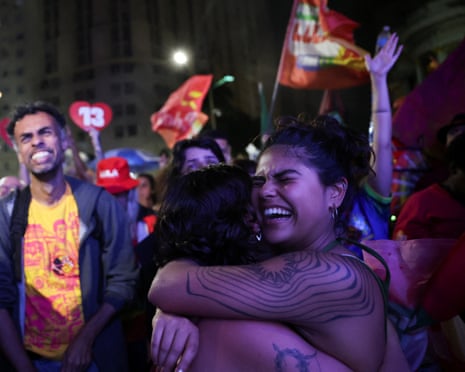
These groups, frustrated by the prospect of a Bolsonaro presidency, launched an aggressive, highly organized campaign to mobilize young voters. For many, this was a reaction to the frustration of seeing the same political actors from the previous administration return to the spotlight. The involvement of these communities marked a shift in traditional campaigning, proving that digital mobilization can be a decisive factor in swaying a tight race among the younger electorate.
Official Responses and the Mood on the Ground
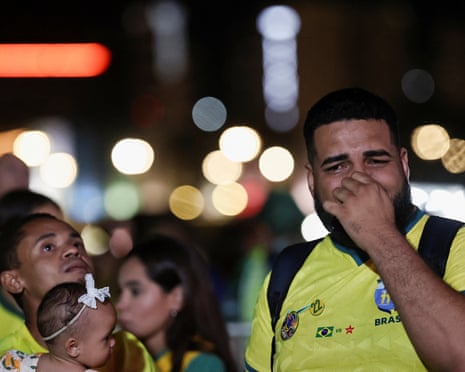
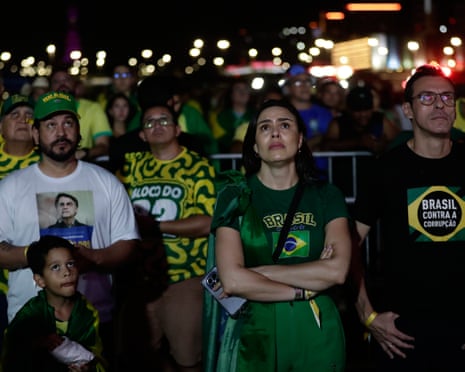
As the results trickled in throughout the evening, the atmosphere in the two camps was a study in contrasts. At the headquarters of Flávio Bolsonaro in Brasília, the initial confidence of his supporters—who had been cheering every positive update as if it were a goal in a football match—gradually evaporated. As the count shifted in favor of the veteran leftist, the silence in the room became heavy. Many supporters departed in dejection, refusing to speak to the press.
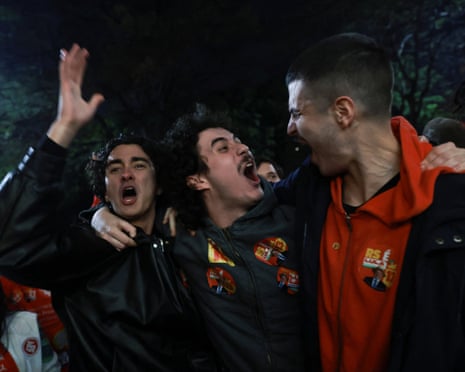
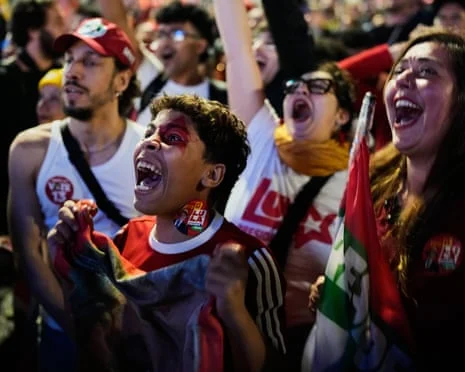
In contrast, the mood at the hotel where Lula awaited the final counts was one of intense emotional release. Reginaldo Lopes, a prominent congressman and key ally of the President-elect, captured the sentiment of the victory, telling reporters, “This is Brazil telling the world that the extreme right is against the poor, against the state, and against the marginalized. We are going to reorganize the democratic forces.”
The Road Ahead: Implications for Brazil
The election of Lula to a fourth term carries profound implications for the future of Brazil. During the campaign, environmentalists, including former environment minister Marina Silva, warned that a victory for the Bolsonaro dynasty would have been disastrous for the Amazon. Silva had described the prospect of a continuation of the Bolsonaro-era policies as a “perverse project” that would prioritize the destruction of the rainforest for economic gain.
With Lula now at the helm, the focus will likely shift toward restoring the institutional safeguards that were gutted during the 2019-2022 period. The new administration faces the monumental task of addressing climate change, curbing illegal mining, and mending the social fabric of a country that has been fractured by years of vitriolic rhetoric.
Furthermore, the victory forces a period of introspection for the Brazilian right. Flávio Bolsonaro’s loss suggests that while the movement retains a significant share of the electorate, it may struggle to maintain the coalition that brought his father to power. The aggressive rhetoric employed by party figures—such as congressman Nikolas Ferreira’s ominous warning that “Either we win, or we win”—suggests that the transition will be closely watched by the international community.
Conclusion
Lula’s return is a testament to the enduring power of his political brand, but his fourth term will be anything but a return to the status quo. He inherits a nation that is deeply divided, struggling with the legacy of a tumultuous few years, and facing significant economic and environmental pressures.
As he prepares to take office, the 81-year-old leader will be tasked with reconciling these divisions. The "sensational final chapter" of his career, as described by observers, is not merely about personal vindication; it is about the stability of South America’s largest democracy. Whether Lula can successfully bridge the gap between his supporters and those who voted for the far-right remains the defining question of his new mandate. For now, however, the scenes of joy in São Paulo and Rio de Janeiro signal that for a significant portion of the Brazilian public, the country has turned a page, looking toward a future that, at least for the next four years, will be under the guidance of one of its most polarizing and iconic figures.