In a heated display of political polarization, the 2026 Ohio gubernatorial race has descended into a bitter confrontation over morality, history, and the limits of campaign tactics. At the center of the storm is a television advertisement released by the campaign of Republican nominee Vivek Ramaswamy. The spot features the estranged mother of his Democratic opponent, Dr. Amy Acton, who uses the platform to label her daughter—whom she has not seen since the child was 12 years old—a "liar."
The advertisement has ignited a bipartisan firestorm, drawing sharp rebukes from across the political spectrum. The visceral reaction stems from the documented history surrounding the family: in 1978, Acton’s mother lost custody of her children after her husband—Acton’s stepfather—was arrested, charged, and indicted for the sexual abuse of his stepdaughter. Following these events, the mother reportedly fled the state of Ohio with the man accused of the crime, remaining married to him until his death in 2004.
Despite this harrowing context, Donald Trump has offered his full-throated support for the advertisement, accusing the media of "ganging up" on the mother. His intervention has turned a local gubernatorial race into a national referendum on the boundaries of decency in modern American politics.
A Chronology of the Controversy
The fallout began earlier this week as the ad started airing across Ohio. The immediate reaction from political analysts and party figures was one of shock, as the details of the candidate’s childhood trauma resurfaced in the public eye.
- October 20, 2026: The Ramaswamy campaign releases the television spot featuring Donna Arthur, Acton’s estranged mother. The ad is met with immediate backlash from both sides of the aisle.
- October 21, 2026: Journalists, including ABC News’ Karen Travers, brief Donald Trump on the underlying facts regarding the sexual abuse allegations.
- October 22, 2026: Mike DeWine, the outgoing Republican governor of Ohio, publicly calls the ad "deeply, deeply troubling" and urges the Ramaswamy campaign to remove it.
- October 22, 2026: As Donald Trump prepares to depart the White House for a campaign rally in Iowa, he is confronted by CNN correspondent Kaitlan Collins. Trump refuses to acknowledge the nature of the abuse allegations, instead attacking the press for their coverage of the mother’s claims.
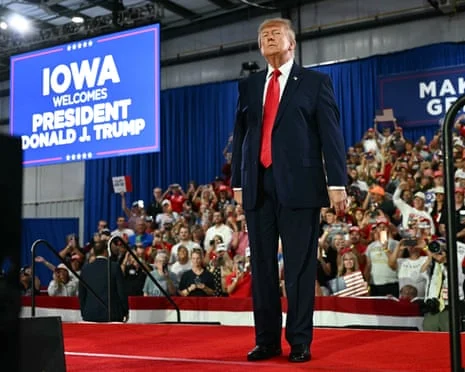
- October 22, 2026: Later that day, during a rally in Sioux City, Iowa, Trump doubles down, labeling the media’s criticism as a "well-coordinated attack" and encouraging Ramaswamy to keep the ad on the air.
The Presidential Defense and Media Confrontation
When pressed by Kaitlan Collins on the White House lawn regarding the sexual abuse allegations, Donald Trump utilized a strategy of deflection. When asked why he had made no mention of the fact that the mother remained married to the man accused of raping her daughter, Trump expressed a performative ignorance.

"What happened is the press has ganged up on a woman making a horrible statement about her daughter," Trump stated. "I don’t know why she should be shielded."
When Collins clarified, "She accused her stepfather of child rape," the President countered by focusing solely on the mother’s claim that her daughter is a "dirty liar." The exchange underscored a widening chasm between the political strategies employed by the current administration and the concerns of the broader public regarding trauma and candidate character.
Trump’s insistence that the mother is "fair game" for political messaging has drawn condemnation from those who believe there are sacred boundaries in political discourse. However, for Trump, the ad is "hitting pay dirt," a phrase he used to characterize the effectiveness of the attack in a social media post on Truth Social.
Bipartisan Backlash and Shifting Projections
The outrage is not confined to the Democratic party. Prominent Republicans, recognizing the potential for the ad to alienate suburban voters and survivors of abuse, have distanced themselves from the campaign.
Mike DeWine, despite his endorsement of the Republican ticket, has been vocal about his discomfort. "I think about it as a mom," said Congresswoman Ashley Hinson, a Republican Senate candidate in Iowa, during an interview with ABC News. "You think about a kid surviving childhood sexual abuse and having to relive that trauma on TV again. I think it’s absolutely terrible."
The electoral impact has been swift. Sabato’s Crystal Ball, a highly regarded election forecasting entity at the Center for Politics, shifted the Ohio gubernatorial race from "toss up" to "leans Democratic." Analysts suggest that the ad has served to consolidate the Democratic base and has left moderate Republican voters searching for an alternative or feeling disillusioned with the current direction of their party’s messaging.
The Role of Vice President JD Vance
Vice President JD Vance has taken a markedly different stance, signaling a potential fracture in Republican strategy. At a rally in Cincinnati, Vance chided fellow Republicans for their public outrage, suggesting that the party should focus on winning rather than "whining about an advertisement."
This friction highlights a growing tension between traditionalist Republicans, who are concerned about the moral optics of the campaign, and the populist wing, which views any attack that damages a political opponent as legitimate, regardless of the personal history involved.
Contextualizing the Broader Political Environment
The controversy in Ohio is occurring against a backdrop of a wider, increasingly volatile midterm season. The 2026 cycle has been marked by a record number of personal attacks and a high level of national anxiety.
Voter ID and the Supreme Court
While the Ohio race captures headlines, the Supreme Court has simultaneously issued a ruling that could have significant implications for the youth vote. On October 22, the court ruled that New Hampshire students cannot use school-issued IDs to vote. This decision, which reinforces a law signed by Republican Governor Kelly Ayotte, is viewed by voting rights groups as a systemic barrier for young voters—a demographic that currently leans heavily toward Democratic candidates.
The "One Big Beautiful Bill" and Healthcare
Meanwhile, the Democratic challenger in Maine, Troy Jackson, has made the repeal of Donald Trump’s "One Big Beautiful Bill"—a broad, controversial domestic policy package—the cornerstone of his campaign. Jackson’s platform, which includes a return to more robust healthcare access and a movement toward Medicare for All, has been boosted by the active support of figures like Alexandria Ocasio-Cortez.
The Lewandowski Inquiry
Adding to the atmosphere of political instability is the news that the Department of Justice has opened a criminal investigation into Corey Lewandowski, Donald Trump’s first campaign manager. The inquiry, which stems from a referral by the Department of Homeland Security’s inspector general, involves allegations of illegal profiting during his time as an adviser to former homeland security secretary Kristi Noem.
Implications for the Future of Political Discourse
The defense of the Ramaswamy ad by the President and the Vice President represents a significant departure from previous norms of American campaigning. By explicitly validating an attack that utilizes the victim of a sexual crime as a tool to discredit a candidate, the current leadership is signaling that personal trauma is no longer a "no-go" zone for political messaging.
For the voters of Ohio, this leaves a stark choice. One side is attempting to pivot to policy, while the other is fully embracing a strategy of total political warfare. The shift of the Ohio race to "leans Democratic" suggests that a segment of the electorate is recoiling from these tactics.
However, the question remains: if this strategy proves successful in other parts of the country, will it become the new standard for national elections? The "ganging up" narrative used by the President effectively frames the media as the adversary, turning a question of moral judgment into a question of media bias.
As the midterm elections approach in less than two weeks, the nation is witnessing a profound transformation in how campaigns are conducted. The reliance on conspiracy theories, as seen in Trump’s recent comments on Ilhan Omar and Abdul El-Sayed, coupled with the weaponization of personal histories, suggests that the final days of the campaign will be marked by extreme polarization.
The voters will ultimately decide whether this "pay dirt" strategy resonates with their values or whether it represents a bridge too far in an already fractured political landscape. As for Amy Acton, she has remained focused on her platform, urging voters to look past the "exploitation" of her personal history and toward the issues facing the state of Ohio—a stance that reflects the ongoing battle between the personal and the political in the 2026 cycle.
The outcome of the Ohio race will undoubtedly serve as a bellwether for the rest of the country. If the electorate punishes the use of such tactics, it may signal a retreat from the current aggressive political climate. If, however, the campaign succeeds, it may well embolden future candidates to pursue similarly destructive paths, permanently altering the integrity of the democratic process. For now, the nation watches as Ohio becomes the central stage for a debate over what it means to lead, and what costs are acceptable in the pursuit of power.