As delegates from 196 nations descend upon Yerevan, Armenia, for the COP17 biodiversity summit, the atmosphere is heavy with the weight of unfulfilled promises. A landmark UN global stocktaking report, released just weeks ahead of the summit, has laid bare a sobering reality: the world is drastically failing to meet the financial commitments necessary to reverse nature loss by 2030.
At the heart of the crisis is a yawning “biodiversity finance gap.” The commitments made at the historic COP15 summit in Montreal in 2022—designed to secure the future of the planet’s ecosystems—are currently being treated as optional rather than foundational. With the deadline for key 2025 milestones now effectively missed, the upcoming negotiations in Armenia are expected to be defined by a tense confrontation between the Global North and South over who bears the cost of environmental restoration.

The Anatomy of a Broken Promise: Main Facts
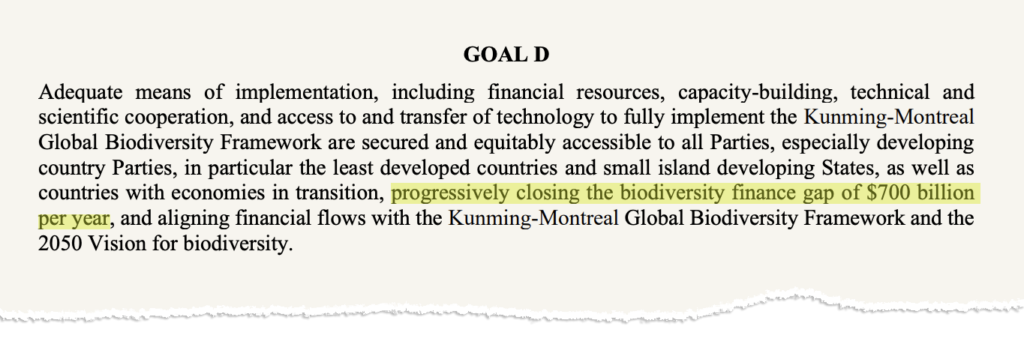
In 2022, the world celebrated the Kunming-Montreal Global Biodiversity Framework (GBF), an ambitious roadmap to halt and reverse biodiversity loss by the end of the decade. Goal D of the agreement was clear: nations must close a $700 billion-per-year financing gap by 2030.
This total was intended to be achieved through two primary mechanisms: the elimination or reform of $500 billion in nature-harming subsidies, and the mobilization of $200 billion in new annual funding. The report suggests that both prongs of this strategy are faltering. While progress on subsidy reform remains sluggish, the failure to mobilize the $200 billion in annual finance is becoming an existential threat to the entire GBF.
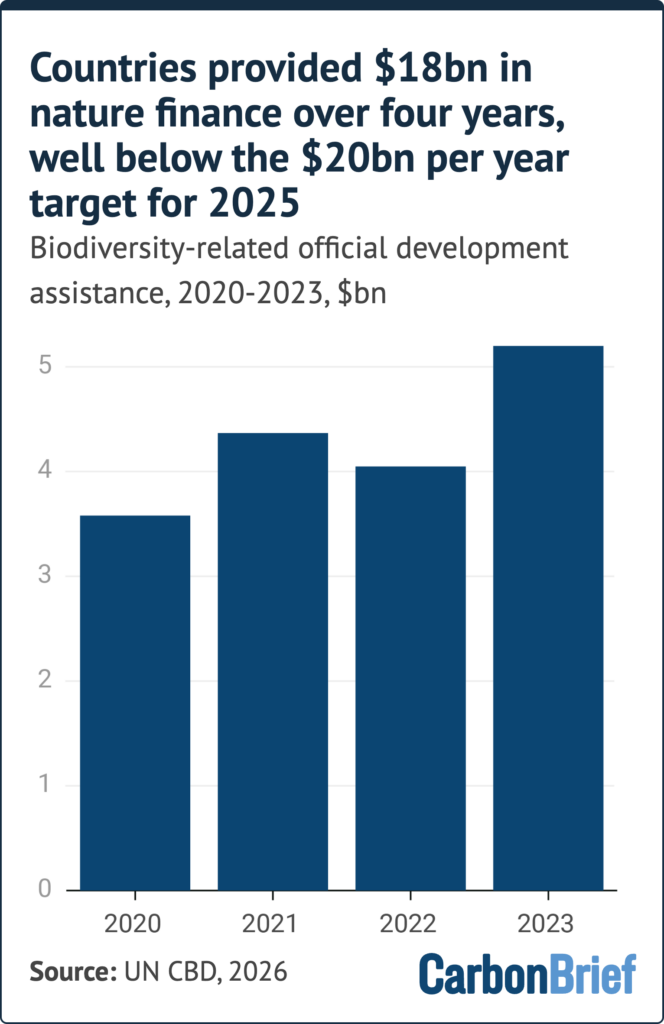
Crucially, the agreement stipulated that developed nations must provide at least $20 billion annually to developing countries by 2025, rising to $30 billion by 2030. Current data indicates that international public funding for biodiversity averaged a mere $4.4 billion per year between 2020 and 2023—a figure that represents only a fraction of the promised support.
A Chronology of Declining Ambition
The current crisis is the result of years of mounting systemic inertia.
- December 2022 (COP15, Montreal): The international community adopts the Kunming-Montreal Global Biodiversity Framework. It is hailed as the "Paris Agreement for Nature," setting specific, measurable financial targets for 2025 and 2030.
- August 2023: The Global Biodiversity Framework Fund (GBFF) is established under the Global Environment Facility (GEF). It is designed to be the primary vehicle for channeling international public finance to developing countries.
- October 2024 (COP16, Colombia): The "Cali Fund" is launched, marking the first global effort to ensure companies profiting from digital genetic sequence data contribute to biodiversity conservation.
- September 2026: The UN releases its global stocktaking report. The findings confirm that the 2025 milestone of $20 billion in annual public funding has not been met.
- October 2026 (COP17, Yerevan): The current summit begins, with finance set to be the primary point of contention.
Supporting Data: The Numbers Behind the Deficit
The disparity between rhetoric and reality is quantified by recent reports from the UN and the OECD. The UN’s global stocktaking exercise revealed that between 2020 and 2023, the global community mobilized a cumulative total of $186.4 billion—averaging less than $50 billion annually. This is nowhere near the required $200 billion annual target.
The OECD’s analysis further confirms this shortfall. According to their data, total global biodiversity finance between 2023 and 2025 reached between $74.9 billion and $92.4 billion per year. Of this, international public finance—the critical lifeblood for developing nations—contributed only $16.1 billion annually, falling nearly $4 billion short of the 2025 target.
Even more troubling is the qualitative breakdown of these funds. Much of the reported finance is not “biodiversity-specific.” Instead, it consists of secondary-aim funding where nature conservation is merely a co-benefit of other development projects. Only about $8 billion annually qualifies as dedicated biodiversity funding, a figure that remains stagnant even as the rate of species extinction accelerates.
The Collapse of Specialized Initiatives
Beyond general public funding, the specialized mechanisms created to bridge the gap are effectively running on empty.
The Global Biodiversity Framework Fund (GBFF)
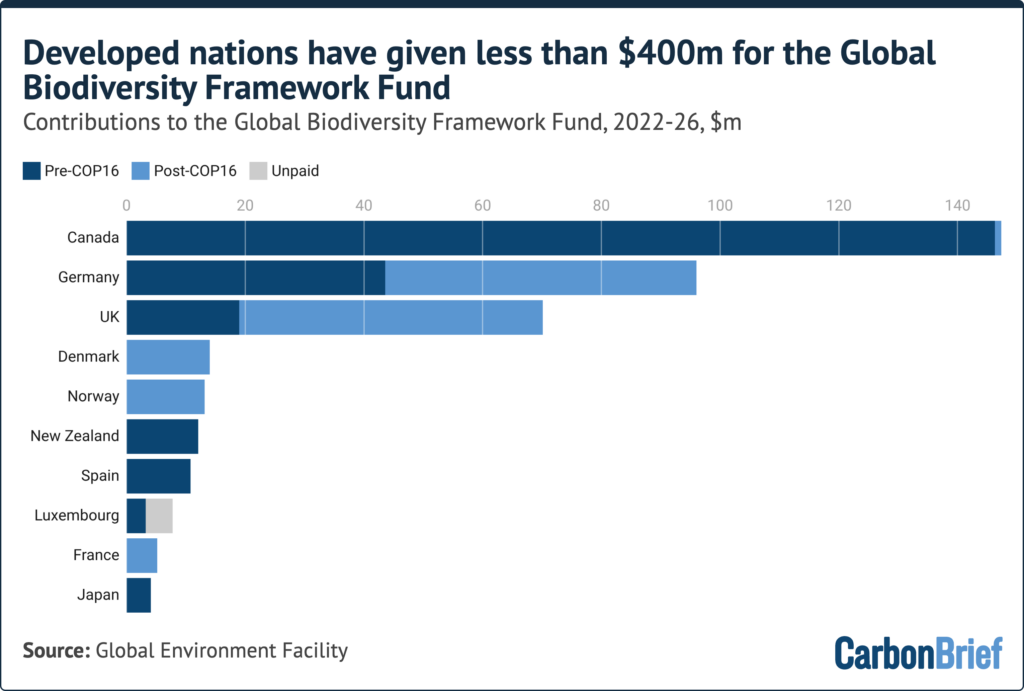
Despite high-level diplomatic pledges during its inception, the GBFF has been a disappointment. By mid-2026, it had received less than $400 million in signed commitments from only 11 countries and a single subnational government (Quebec). This represents a negligible amount of the capital required to facilitate the transition to nature-positive economies.
The Cali Fund
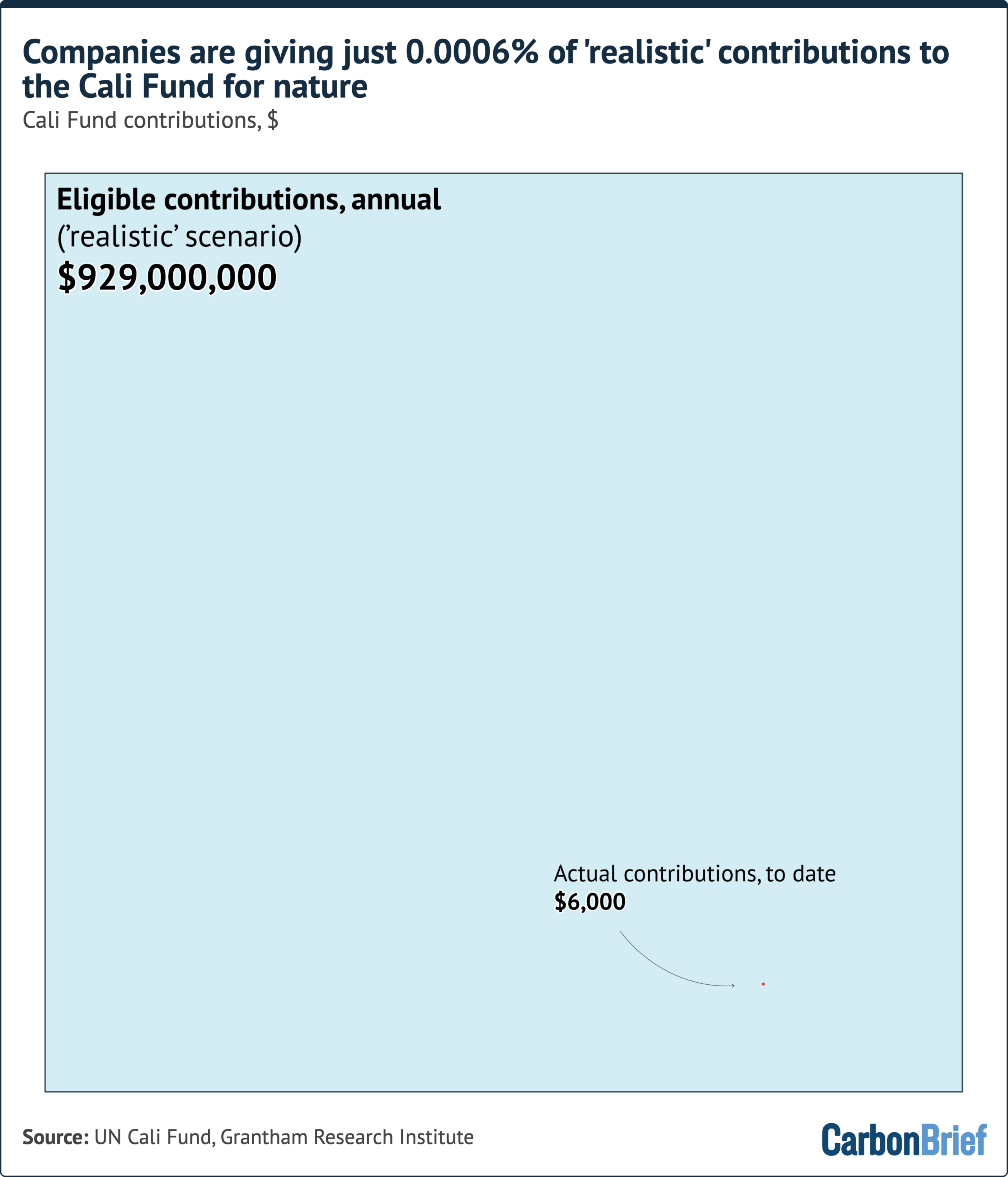
Perhaps the most egregious example of corporate apathy is the "Cali Fund." Designed to capture a fraction of the massive profits generated by companies using genetic data—often derived from the biodiversity-rich Global South—the fund has been a failure in practice. While the Grantham Research Institute estimates that a realistic uptake by corporations could generate nearly $1 billion annually, the fund has received a total of only $6,000 to date. This equates to 0.0006% of the projected "realistic" target.

Official Responses and Expert Critique
The response from the scientific and policy community has been one of mounting frustration. Lim Li Ching, representing the Third World Network, has been vocal about the implications of this failure. "Developed countries have regrettably not met their legal obligations," she stated, noting that the shortfall cannot be used as an excuse to rely solely on private sector market-based mechanisms, such as biodiversity offsets, which she argues often mask ecological destruction rather than preventing it.
Dr. Siva Thambisetty of the London School of Economics echoes this sentiment, emphasizing the lack of regulatory enforcement. "The private sector is doing what it always does: minimizing outgoings and liability," she notes. "States with jurisdiction over these businesses need to take legislative action to create an ethical obligation to contribute."

Indigenous voices have also highlighted the disconnect between global headlines and local reality. Dr. June Rubis, representing Indigenous and local community interests on the Cali Fund’s steering committee, warns that the lack of coordination is eroding the "global biodiversity bargain." She points out that for many local communities, the issue is not just the total amount of money, but the accessibility and predictability of the funds that do exist.
The Implications for COP17 and Beyond
The failure to meet the 2025 financial targets casts a long shadow over the proceedings in Yerevan. For developing nations, which host the majority of the world’s remaining biodiversity but possess the fewest resources to protect it, the lack of funding is a breach of trust.
If the "finance gap" is not addressed during COP17, the credibility of the entire Kunming-Montreal framework will be at risk. The implications are threefold:
- Loss of Institutional Trust: Developing countries may lose the political will to enforce domestic conservation policies if the promised international financial support does not materialize.
- Increased Ecological Degradation: Without adequate funding, the "nature-harming" industries—such as industrial agriculture and mining—will continue to expand in sensitive areas because the economic incentive to preserve them does not exist.
- The Rise of Ineffective Market Solutions: A continued refusal by developed nations to provide public finance will force a pivot toward carbon credits and biodiversity offsets. While these are often touted as "innovative," they have a poor track record of delivering genuine, localized biodiversity outcomes and are often susceptible to "greenwashing."
As the summit continues, the message from the global south is clear: the time for pledges is over. Without mandatory, transparent, and significant financial contributions from both state actors and the private sector, the 2030 goal of reversing biodiversity loss will shift from a challenging ambition to an impossible dream. The coming days in Armenia will determine whether the world is capable of moving from rhetoric to the hard, expensive, and necessary work of planetary preservation.