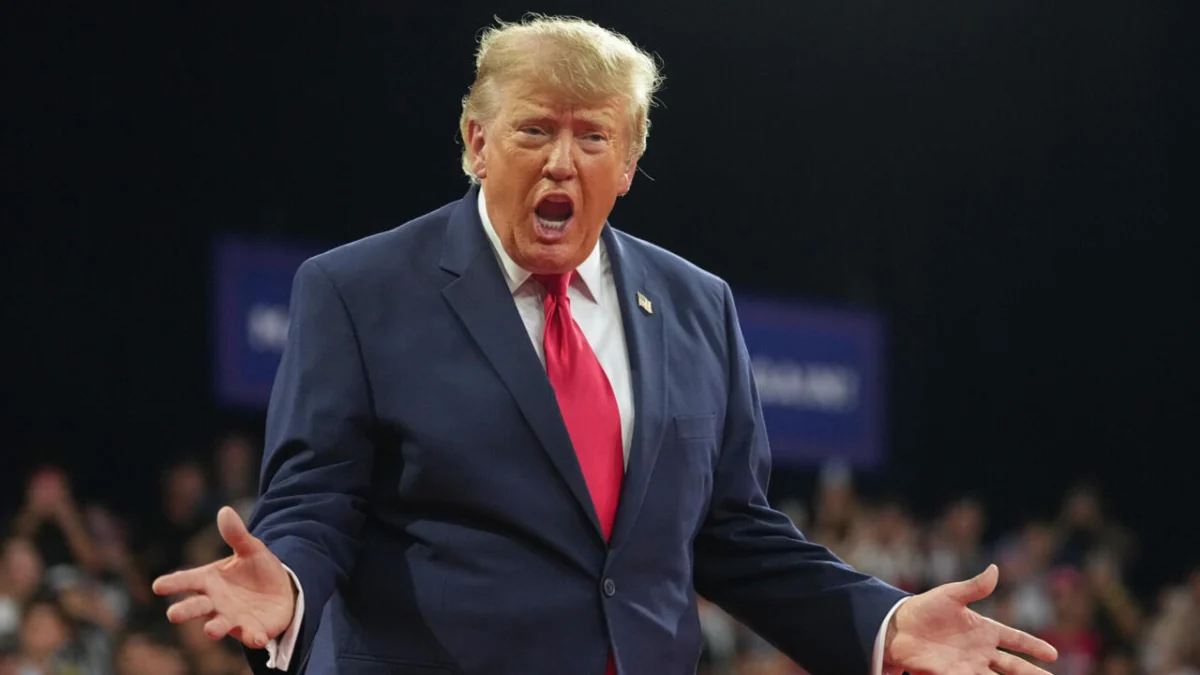
FORT MYERS, FLORIDA – In a significant escalation of rhetoric that has reverberated through global capitals, US President Donald Trump signaled on Friday that the United States may launch a fresh round of military strikes against Iran. Speaking before a boisterous crowd at a campaign rally in Fort Myers, Florida, President Trump alluded to the potential for "another little Epic Fury," a direct reference to the joint US-Israeli military operation that ignited the ongoing conflict between the two nations in late February 2026.
As the conflict nears its eight-month anniversary, the President’s remarks arrive at a precarious juncture. With US midterm elections looming on November 3 and domestic concerns over rising fuel prices mounting, the geopolitical maneuverings in the Middle East have once again moved to the forefront of the American political consciousness.
The Core Conflict: A Return to "Epic Fury"
The phrase "Epic Fury" carries heavy weight in current military parlance, serving as the codename for the decisive joint operation launched by Washington and Tel Aviv in February. That offensive, which fundamentally altered the security architecture of the Middle East, sought to neutralize key Iranian strategic assets.
President Trump’s invocation of the term during his Florida rally was framed as a stern warning to Tehran. While he provided few operational details, the choice of language suggests that the administration is contemplating a tactical, surgical strike rather than a protracted ground invasion. Analysts suggest that the timing of this rhetoric is intended to project strength to his domestic base, framing the potential military action as a necessary measure to protect US interests and global stability.
"We may do another little Epic Fury," the President stated, drawing cheers from his supporters. The comment, while brief, effectively ended weeks of speculation regarding whether the White House would pursue a diplomatic or military path as the conflict enters its most grueling phase.
Chronology of the Iran-US Conflict (2026)
To understand the weight of the President’s recent comments, one must look at the rapid deterioration of relations throughout the year:

- February 2026: The conflict ignites. Following months of heightened maritime tensions, the US and Israel launch "Operation Epic Fury," targeting Iranian defensive installations and missile launch sites.
- March–May 2026: The conflict enters a high-intensity phase. Both sides engage in localized maritime skirmishes and cyber warfare, causing significant volatility in global oil markets.
- June 2026: The front lines stabilize, but diplomatic channels remain largely shuttered. Humanitarian concerns grow as international bodies call for a ceasefire.
- August 2026: The first serious attempt at peace talks begins in neutral territory. However, the negotiations prove fragile, hampered by mutual distrust and conflicting demands.
- October 4, 2026: Iran formally declares that there is "no military solution" to the war, signaling a shift in rhetoric as domestic economic pressures grow within the Islamic Republic.
- October 23, 2026: President Trump addresses supporters in Florida, suggesting that a new round of military action is under consideration, effectively sidelining the stalled peace process.
Economic Implications and the Midterm Factor
The timing of this potential escalation is inextricably linked to the upcoming US midterm elections. The American electorate is currently grappling with a sharp spike in energy costs—a direct consequence of the instability in the Persian Gulf and the subsequent disruption of oil supply chains.
The political stakes for the administration are immense. By threatening further action against Iran, the President is attempting to control the narrative. Supporters view his "peace through strength" approach as a necessary defense of the American economy against Iranian aggression. Conversely, critics argue that the administration is using the threat of war as a "wag the dog" strategy to distract from economic woes and solidify voter turnout in key swing states like Florida.
Global markets reacted with predictable anxiety following the President’s speech. Crude oil futures saw an immediate uptick in trading on Friday evening, as investors hedged against the possibility of renewed hostilities in the Strait of Hormuz. The economic ripple effect of any new military operation would likely be felt immediately at gas pumps across the United States, adding another layer of complexity to the administration’s pre-election strategy.
Official Responses and Diplomatic Stagnation
The international community has met the President’s comments with a mix of alarm and skepticism. European leaders, many of whom have been pushing for a return to the negotiating table, have expressed concern that any new military action would permanently dismantle the possibility of a diplomatic resolution.
From the Iranian perspective, the response has been one of defiance. Sources close to the Iranian leadership suggest that Tehran views the rhetoric as a domestic political ploy rather than an imminent military threat. However, they have warned that any violation of their sovereignty would be met with "a swift and overwhelming response."
The stalled peace talks, which were touted as a glimmer of hope earlier this month, appear to have been relegated to the background. With the US entering the final week of its election cycle, the prospect of any meaningful dialogue between Washington and Tehran seems increasingly remote. The administration has signaled that while it remains open to diplomacy, it will not engage in substantive talks until after the November 3 congressional elections are decided.

Strategic Implications: A New Middle East
The "Epic Fury" doctrine represents a shift away from traditional containment strategies. By favoring direct, high-impact military engagements, the US-Israeli alliance has fundamentally changed the power balance in the region.
Military Considerations
If a second "Epic Fury" were to take place, military analysts suggest it would likely involve:
- Precision Strikes: Targeting advanced drone manufacturing facilities and underground storage bunkers.
- Cyber-Dominance: Disabling regional command and control networks to prevent a coordinated counter-attack.
- Maritime Security: Increasing naval presence to ensure the free flow of tankers through critical waterways, regardless of Iranian threats to close them.
Long-term Geopolitics
The long-term implications of this approach remain debated. While proponents argue that it prevents Iran from reaching a nuclear threshold or expanding its regional influence, opponents argue that it creates a cycle of violence that guarantees an Iranian retaliation, leading to a permanent state of war.
Conclusion: The Path Forward
As the world watches the unfolding situation with bated breath, the rhetoric from Florida serves as a stark reminder of how fragile the current peace is. The intersection of military strategy, economic anxiety, and electoral politics creates a volatile environment where a single miscalculation could lead to a massive escalation.
President Trump’s mention of a "little" operation suggests a desire for limited, controlled conflict. Yet, history has shown that the Middle East is rarely a theater for "little" wars. As voters head to the polls in early November, the question of whether the administration will follow through on its threat—or if this is merely the latest chapter in the theater of international power projection—remains the single most critical variable in the global security landscape.
For now, the world remains in a holding pattern, waiting to see if the rhetoric of the campaign trail translates into the reality of the battlefield. The coming weeks will likely determine not only the direction of the US Congress but also the future of the eight-month-old conflict that has reshaped the geopolitical map.