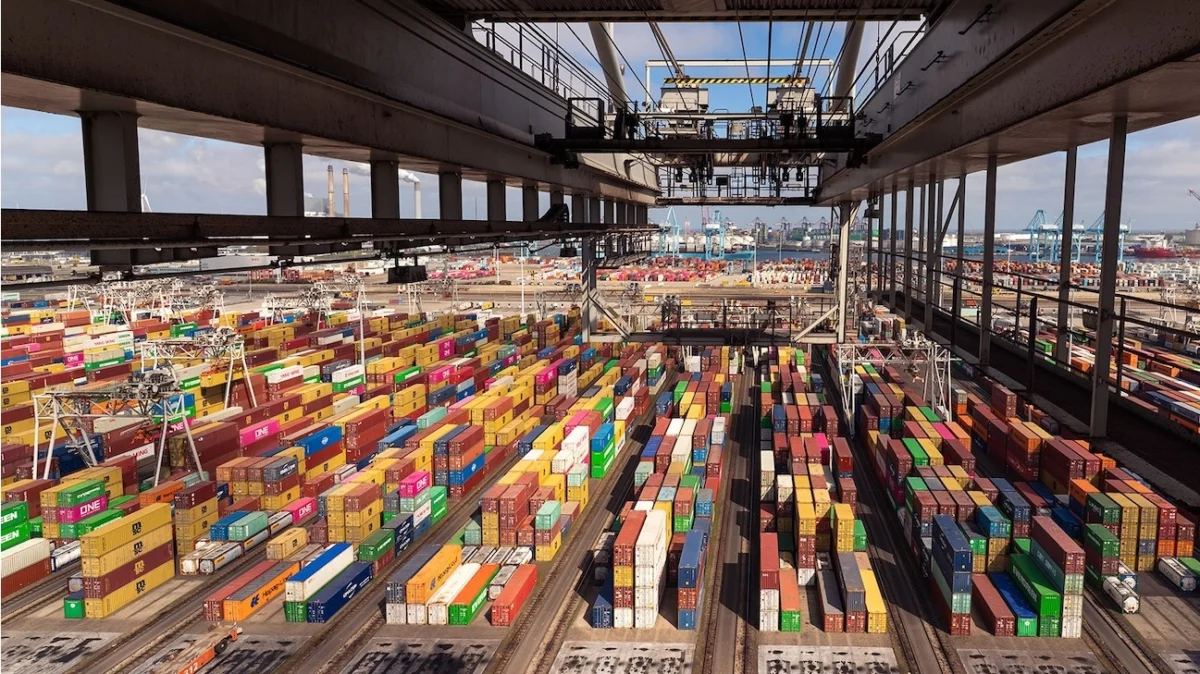
The global maritime logistics landscape is currently navigating a period of heightened volatility. According to the latest data from the Drewry World Container Index (WCI), freight rates have registered a 2% increase, bringing the average cost of a 40-foot container to $4,585. This upward trend, while modest in percentage, reflects a complex interplay of resilient import demand in the United States and aggressive supply-side management by ocean carriers on key trans-Pacific and Asia-Europe trade lanes.
As shippers grapple with these fluctuating costs, the industry is closely monitoring how carrier strategies—specifically the use of blank sailings—are being deployed to maintain price floors in a market characterized by both capacity expansion and unpredictable geopolitical pressures.
Main Facts: The Current State of Global Freight
The recent climb in the Drewry World Container Index underscores a persistent reality for global supply chains: ocean freight remains under significant cost pressure. The index, which tracks spot rates for major East-West trade routes, has found support from robust demand for U.S.-bound goods. Despite the introduction of new vessel capacity into the market, which theoretically should depress pricing, carriers have successfully mitigated this effect through strategic route management.
Key Regional Performance Metrics
- Trans-Pacific Resilience: Rates from Shanghai to Los Angeles have seen a 2% uptick, reaching $8,007 per 40-foot container. Simultaneously, the route from Shanghai to New York saw a 1% increase, settling at $10,166.
- Asia-Europe Gains: The Asia-Europe corridor has seen even sharper movement. Shanghai-to-Rotterdam rates surged 3% to $3,632, while Shanghai-to-Genoa rates experienced a 5% jump, reaching $4,152.
The divergence between these routes is primarily driven by differing operational approaches. While trans-Pacific demand remains strong enough to absorb new capacity, the Asia-Europe route is being intentionally tightened by carriers to force a correction in pricing.
Chronology of Market Developments
The current state of the market is the result of several weeks of rapid operational shifts. To understand the current pricing environment, one must examine the progression of port operations and carrier behavior throughout the fourth quarter.
The Easing of Port Congestion
One of the most significant positive developments has been the dramatic improvement in port efficiency within major Asian hubs. In Week 38, vessel waiting times at the Port of Shanghai were reported at a staggering 97 hours. By Week 42, that figure had plummeted to 38 hours. This reduction of nearly 60% in waiting time suggests that the mechanical bottlenecks that plagued the industry earlier this year are finally beginning to clear.
The Tactical Shift in Blank Sailings
The most immediate factor influencing the latest rate hikes is the implementation of "blank sailings"—scheduled voyages that are canceled or skipped by carriers to reduce the total supply of available space.
- Trans-Pacific: Carriers have taken a relatively conservative approach, announcing only two blank sailings for the upcoming week, a sharp reduction from the six recorded the previous week. This suggests that carriers are confident in the strength of U.S. consumer demand.
- Asia-Europe: In contrast, the Europe-bound trade is seeing a drastic increase in blank sailings. Carriers have ramped up cancellations from two to eight for the next week, a clear signal that they are deliberately restricting capacity to prevent a rate collapse.
Supporting Data: Capacity and Security Challenges
The Drewry Container Capacity Insight, which monitors fleet deployment and port congestion, highlights the dual-pronged pressure of geopolitical risk and fleet management.
Security Risks and Trade Lane Disruption
Geopolitical instability continues to influence vessel routing, particularly in the Persian Gulf and the Suez Canal. The security situation remains a point of concern for major liners.
- Gulf Transit: In Week 42, only two containerships entered the Persian Gulf, a significant decline from the five seen the previous week. This drop indicates that carriers are becoming increasingly risk-averse regarding regional maritime security.
- Suez Canal Transit: Despite the regional tensions, transit through the Suez Canal showed a slight uptick, moving from 54 sailings in Week 41 to 55 in Week 42. This suggests that while risk is a factor, the canal remains a vital artery that carriers are unwilling to abandon despite the increased security premiums.
Implications for Shippers and Global Trade
The current market environment presents a "new normal" for importers and exporters. The days of predictable, low-cost ocean freight are currently superseded by a model where supply is as artificial as it is physical.
The Cost Burden on Importers
For importers, the message is clear: cost relief is not on the horizon. While the easing of port congestion in Shanghai is a welcome development that should theoretically improve transit times, the savings are being offset by carriers through capacity management. When ships spend less time waiting at anchor, they complete voyages faster, effectively increasing the total supply of "slot-weeks" available. To prevent this from devaluing their services, carriers are preemptively canceling voyages to keep the market tight.
Strategic Decision-Making
Shippers can no longer rely on market equilibrium to set their logistics budgets. Instead, they must contend with a landscape where:
- Carrier Power Remains High: Through coordinated blank sailings, carriers have demonstrated a remarkable ability to influence spot rates, regardless of the underlying cargo volume.
- U.S. Demand as a Floor: The strength of the U.S. economy is currently providing a "price floor" for trans-Pacific routes. As long as U.S. consumers continue to buy, carriers will be less inclined to lower rates.
- Dependency on Operational Reliability: With the reliability of booking systems under strain, shippers face increased risk. The volatility means that securing space is not just about cost—it is about the integrity of the supply chain itself.
The Road Ahead: Future Outlook
Looking toward the remainder of the quarter, Drewry analysts project that trans-Pacific rates will likely remain stable. The influx of new capacity is expected to be absorbed by continued strong U.S. import demand. However, on the Asia-Europe front, the outlook is for a slight increase in rates, directly resulting from the aggressive capacity cuts currently being implemented.
The maritime industry is effectively operating in a "managed" market. While the physical infrastructure of global shipping—ports, ships, and canals—is showing signs of stabilization, the financial structure of the industry is being tightly controlled by the major carriers.
Final Considerations for Stakeholders
For logistics professionals and corporate procurement departments, the takeaway is the necessity of agility. Contracts and spot-market strategies must be revisited with the understanding that capacity is no longer a static variable. The ability to forecast carrier behavior—particularly their propensity for blanking sailings—will be just as important as monitoring traditional macroeconomic indicators.
As the industry moves toward the end of the year, the combination of regional geopolitical risks, evolving port efficiencies, and tactical fleet management will ensure that freight rates remain a focal point of corporate budget discussions. Shippers must continue to monitor the Drewry indices and industry capacity reports to navigate what remains a highly sensitive and reactive global logistics environment.
For those seeking to stay abreast of the shifting landscape of freight technology and industry best practices, the upcoming industry forums and symposiums—such as the Brokerage Compliance Symposium and the F3: Future of Freight Festival—will offer critical insights into these and other emerging trends.