
In the high-stakes arena of American entrepreneurship, the narrative of success is often dominated by tech unicorns and venture-backed SaaS platforms. However, David Royce, the founder and chairman of Aptive Environmental, represents a different breed of wealth builder. By mastering one of the most overlooked sectors of the economy—residential pest control—Royce has proven that the most lucrative opportunities are rarely found in the limelight. Instead, they are often hiding in the "unsexy" industries that most business school graduates wouldn’t touch with a ten-foot pole.
Royce’s journey is not one of inherited privilege or Silicon Valley serendipity. It is a masterclass in grit, the strategic deployment of capital, and the radical decision to prioritize "opportunity over image."
The Genesis of a Mindset: From "Not Smart" to Top-Tier Salesman
The story of David Royce begins with a profound sense of inadequacy. As a child, he struggled in the traditional classroom, finding himself unable to focus unless he was deeply invested in the subject matter. "I struggled in school because I couldn’t focus unless I cared deeply," Royce recalls. "When you’re a kid, you don’t say, ‘I might have undiagnosed ADHD.’ You say, ‘I guess I’m not smart.’"
It wasn’t until the sixth grade, under the tutelage of a teacher named Mrs. Luft, that Royce began to believe in his own potential. Mrs. Luft saw past his lack of focus, providing the external validation he needed to begin applying himself. Later, as an adult, he would receive an ADHD diagnosis, allowing him to reframe his condition as a "double-edged sword." In mundane environments, it was a struggle; in high-stakes, entrepreneurial settings, it became a competitive advantage.

This shift in self-perception was tested during his first foray into sales. Looking to make money during college, Royce took a job in door-to-door pest control, a move prompted by a friend who had earned $25,000 in a single summer. His introduction to the industry was humbling: he went an entire week without a single sale. While his peers were closing deals, Royce was effectively performing "free cardio" for his employer.
Rather than quitting, Royce retreated to a bookstore, purchased half a dozen sales manuals, and committed 90 minutes of daily study. His stubbornness paid off. By the end of that summer, he was the top sales rookie out of 200 representatives. "Persistence is genius in disguise," he notes.
Chronology: A Trajectory of Scalable Exits
Royce’s ascent is marked by a unique methodology: building, scaling, and selling the recurring revenue streams of pest control companies to large strategic buyers, all while retaining his core leadership and sales teams.
- The Early Lessons (Teenage Years): A stint at a McDonald’s after being let go from a pizza parlor taught Royce the value of operational "best practices"—a lesson that would become the backbone of his future empires.
- The Foundation (College Years): Leveraging $300,000 in savings earned from four summers of door-to-door sales, Royce launched his first venture instead of pursuing the traditional path of investment banking.
- The First Scaling Challenges: In his first year, he nearly bankrupted his startup in Los Angeles. The issue was a classic cash-flow trap: the business model required paying commissions before the actual service revenue was collected. He learned the hard way that "revenues are vanity, profits are sanity, but cash flow is reality."
- The Serial Entrepreneur (2000s–Present): Royce sold three consecutive companies to the same strategic buyer, each time carving out his leadership team to form the nucleus of his next, better-capitalized venture.
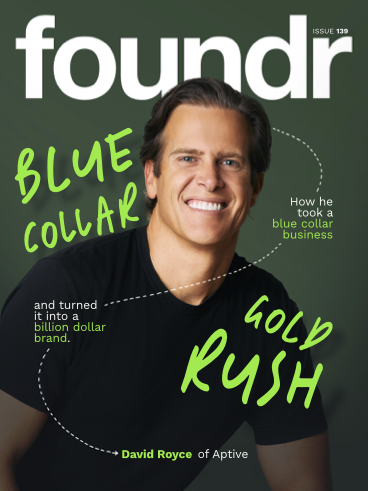
- The Aptive Era: Under Royce’s leadership, Aptive grew into the third-largest residential pest control provider in North America, achieving over $500 million in annual revenue.
Supporting Data: Why "Boring" is Better
Royce’s success aligns with a broader trend in American wealth creation. According to reports cited by The Wall Street Journal, among the top 0.1% of U.S. income earners—those making $2.3 million or more annually—approximately 43% are involved in blue-collar, essential service industries.
The reasoning is simple:
- Essential Services: Recessions may impact luxury spending, but as Royce points out, "bugs don’t read the Wall Street Journal."
- High Barriers to Disruption: AI and digital automation can streamline back-office operations, but they cannot replace the physical labor required for home services, such as pest control or plumbing.
- Fragmented Markets: With over 20,000 competitors in North America alone, the industry is ripe for consolidation by those who can professionalize sales and service through technology.
Royce’s "machine" at Aptive saw incredible results. By utilizing a proprietary sales app, gamifying performance, and implementing advanced training protocols, he enabled his representatives to outperform competitors by 70% in terms of production.
Official Perspectives: Culture as a Strategic Asset
When asked about his approach to company culture, Royce emphasizes that "culture isn’t vibes—it’s design." While he famously installed NCAA basketball courts and golf simulators at headquarters, he acknowledges that perks are merely "sugar," not the "protein."
The real substance of his culture was two-fold:

- Training: The primary driver for top-tier talent was the promise that they would sell more at Aptive than anywhere else in the industry.
- Ownership: Royce pioneered a radical compensation structure, distributing 25% of the company to his employees. At the time of his major exits, this meant hundreds of team members received six- or seven-figure payouts. "Ownership is a far better retention tool than ping-pong tables," he says.
The Lessons of Failure: Knowing When to Let Go
Even the most successful entrepreneurs face setbacks, and Royce’s experience with a high-profile executive hire serves as a cautionary tale. While preparing for a major sale, Royce brought on a CFO from a billion-dollar tech company. The mismatch in experience—the CFO was accustomed to massive corporate infrastructure, not the lean, cash-flow-sensitive world of private service—led to missed forecasts.
The consequence was significant: potential buyers, spooked by the instability, walked away from a deal valued between $1 billion and $1.6 billion. "Never miss your forecast while running a sale process," Royce advises. "It hands buyers all the leverage."
Furthermore, Royce’s transition from CEO to Chairman required him to stop being the "hero" of the story. He had to learn to trust his hand-picked successor, even when it meant watching decisions play out differently than he would have handled them. "Leadership at that level means letting someone else win," he explains.
Implications for Future Founders
The legacy of David Royce is not found in a specific balance sheet, but in the shift of perspective he offers to aspiring entrepreneurs. He suggests that the "smart" choice—the one that looks good on paper, the one that earns the approval of peers—is often a distraction.
His story carries three core implications for the next generation of builders:
- Seek the Unsexy: The most defensible businesses are often found in industries that society considers beneath them.
- Focus on the Human Element: Whether it is giving employees an equity stake or training them to be the best in their field, the most scalable part of any business is the people.
- Embrace the Climb: Entrepreneurship is a brutal, long-term endeavor. If the motivation is purely the "big exit," the reality of the journey will lead to disappointment. Instead, one must find fulfillment in the discipline, character, and expertise gained along the way.
As Royce reflects on his career, he quotes Gandhi: "The sign of a good leader is not how many followers one has, but how many leaders one can create." For Royce, the billions in valuation are secondary to the network of leaders he helped build. His journey remains a powerful reminder that the best opportunities in life are rarely the ones that look like a trophy on paper; they are the ones that require the grit to do what everyone else is unwilling to do.