In the rapidly evolving landscape of artificial intelligence, the divide between simple chatbot interfaces and complex, agentic workflows is widening. As businesses and developers scramble to integrate AI into their daily operations, platforms that promise a “unified workspace” are gaining significant traction. Among these, Abacus AI has emerged as a comprehensive, albeit complex, contender. By consolidating model switching, autonomous agents, and cloud-based development environments under one roof, the platform seeks to be the "operating system" for the AI era.
However, as with any high-utility technical product, a gap exists between its ambitious promise and the reality of day-to-day implementation. This review explores the technical capabilities, user feedback, and economic realities of the Abacus AI ecosystem.
The Genesis of a Unified AI Workspace
Abacus AI was designed to move beyond the limitations of standalone conversational models like ChatGPT or Claude. While those platforms excel at natural language processing and creative writing, they often struggle with multi-step, technical, and agent-based tasks that require persistent context and external tool access.
Chronology of Development
The evolution of Abacus AI reflects the broader industry shift from “LLMs as chatbots” to “LLMs as agents.”
- Initial Phase: The platform launched as a robust backend for AI development, focusing on data science and machine learning pipelines.
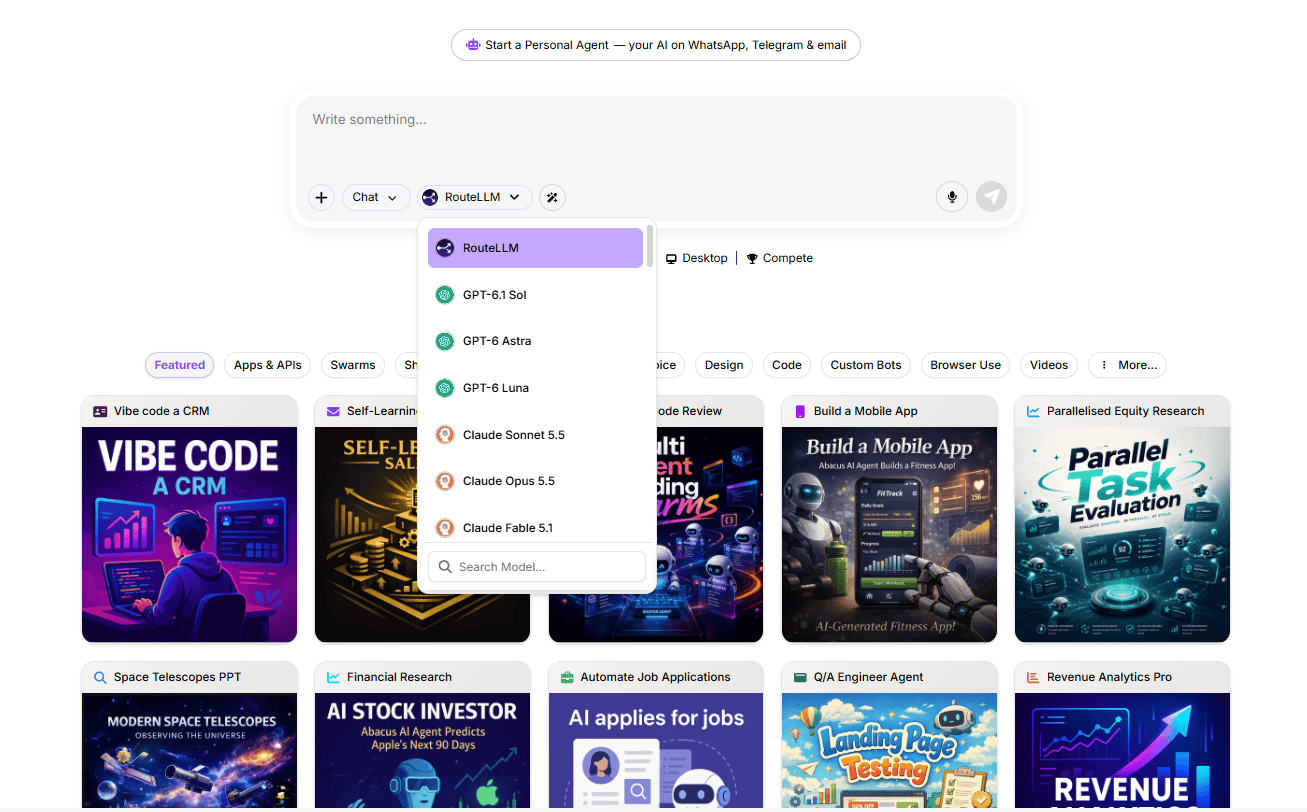
- Expansion: Recognizing the need for a more accessible front-end, the company introduced the "ChatLLM" interface, allowing users to toggle between top-tier models (OpenAI, Anthropic, Google) within a single session.
- Agentic Integration: Most recently, the platform shifted focus toward "Agent Swarms," "Vibe Coding," and automated workflow tools, enabling the platform to function as a digital coworker rather than just a passive assistant.
Core Capabilities: The Abacus AI Ecosystem
The strength of Abacus AI lies in its breadth. Rather than forcing users to manage multiple API keys or subscription services, it provides a centralized hub for a wide array of high-level AI services.
| Product | Functional Purpose |
|---|---|
| ChatLLM | Intelligent model routing to provide the best response from varied providers. |
| Abacus AI Agent | Executes multi-step research, coding, and web-based tasks. |
| Claw | An agent that maintains session context across messaging platforms like Slack and WhatsApp. |
| Hermes | A learning-capable agent that retains skills from prior task execution. |
| SuperComputer | A persistent cloud environment for running code and services post-session. |
| Agent Swarms | Orchestrates multiple AI agents to solve complex, parallelized tasks. |
Evidence-Based Assessment: Strengths vs. Challenges
To provide an objective view, it is necessary to weigh the glowing testimonials of power users against the granular complaints found in developer forums and user feedback threads.
The Complexity Learning Curve
A recurring theme in user reviews is the "steepness" of the learning curve. Because Abacus AI packs so much functionality into a single workspace, new users often report feeling overwhelmed. While the ChatLLM interface is intuitive, the transition to "Vibe Coding" or setting up "Agent Swarms" requires a shift in mindset.
- The Reality: The platform is inherently developer-centric. While basic usage is accessible, the true value—and the highest risk of error—lies in the advanced features that require precise prompting and workflow configuration.
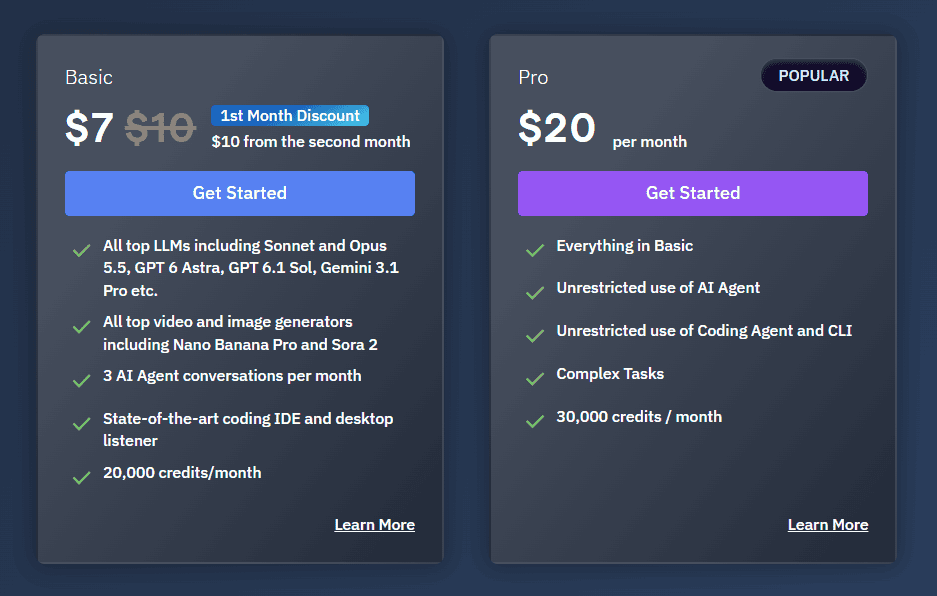
The Economics of the Credit System
The most contentious aspect of Abacus AI is its credit-based billing.
- The Mechanism: Credits are consumed based on computational complexity. Simple queries are inexpensive; complex, multi-step agentic workflows that require intensive reasoning or long-running cloud compute (SuperComputer) can deplete a monthly allowance rapidly.
- User Friction: Users have reported difficulties in predicting the "cost" of a specific task. For businesses, this lack of predictability can be a deterrent. Without granular monitoring, a complex autonomous agent could theoretically exhaust a monthly budget in a single afternoon of poorly optimized research.
Workflow Reliability and Performance
In professional settings, reliability is the primary metric. Evidence from community discussions suggests that while the AI agents are highly capable, they are not infallible.
- Hallucinations & Error Handling: Like all LLM-based systems, agents can occasionally "hallucinate" during web searches or stop mid-task.
- The "Failed Run" Problem: A significant pain point for users is the consumption of credits during failed or incomplete runs. While the company continues to refine its error-handling mechanisms, users are advised to implement manual checkpoints during multi-step processes.
Real-World Applications: From CRM to Automated QA
The utility of Abacus AI is best demonstrated through its specific use cases. The platform is not merely a generator of text; it is an engine for business automation.
1. Automated Software Testing (AI QA Engineer)
By utilizing agents to navigate user interfaces, submit forms, and report issues in Jira, Abacus AI allows for a level of automated QA that previously required dedicated headcount. The key is in the "parallelization"—testing multiple UI components simultaneously.
2. Revenue Analytics & BI
The "Revenue Analytics Pro" tool bridges the gap between raw data and actionable insights. By allowing users to feed in business data and receive automated dashboards, it democratizes data science. However, as noted in expert reviews, the quality of the output is strictly dependent on the quality of the data and the user’s ability to define correct business metrics (e.g., distinguishing between recognized vs. collected revenue).
3. Vibe Coding and CRM Development
Perhaps the most impressive feature is the ability to generate functioning web applications—like a CRM—through natural language. This "Vibe Coding" approach allows non-developers to build prototypes rapidly. Yet, for production-grade software, these apps require rigorous security vetting and integration testing, as AI-generated code is not inherently immune to vulnerabilities.
Strategic Implications: Is It Worth the Investment?
Determining whether Abacus AI is a viable tool for your organization requires an honest assessment of your internal technical capacity and the nature of your workload.
The "Pro" Verdict
For individuals and small teams that require a "Swiss Army Knife" of AI capabilities, the cost-to-utility ratio is favorable. By paying one subscription for multiple models and agentic capabilities, you bypass the "subscription fatigue" of managing separate accounts for ChatGPT, Claude, and various coding assistants.
The "Con" Verdict
For large enterprises requiring highly specialized, siloed, and strictly compliant workflows, the "generalist" nature of Abacus AI may be a liability. If your team only needs a simple chatbot for customer service, a dedicated, single-purpose platform might be more cost-effective and easier to manage from a security and governance perspective.
Conclusion: A Tool for the Architect, Not the Casual User
Abacus AI is a powerful, multifaceted ecosystem that marks a significant milestone in how we interact with machine intelligence. Its ability to manage complex, autonomous workflows—from writing code to executing business analytics—is undeniably impressive.
However, users must approach the platform with a clear understanding: It is a professional-grade tool. It requires the user to be an "architect" of their own workflows. You must monitor your credit consumption, define your task parameters clearly, and perform due diligence on all AI-generated outputs.
For those willing to invest the time to master its complexities, Abacus AI offers a competitive edge in automation and development. For those seeking a simple, "set-it-and-forget-it" assistant, the platform’s depth may be more than is required. As the technology continues to mature, the focus for Abacus AI will likely shift toward simplifying the interface and providing more transparent cost-forecasting, which will only solidify its place in the modern software stack.
Frequently Asked Questions
Q: Is the credit system transparent?
A: While the platform provides monitoring tools, the exact cost of a "complex" task can be difficult to forecast before execution. Users are encouraged to start with small, low-risk tasks to understand the consumption rates of their specific workflows.
Q: Can I use it for business-critical applications?
A: Yes, but with caveats. It is recommended to use the platform for prototyping and automated workflows that are verified by human review, especially when dealing with financial data or customer-facing applications.
Q: Is it beginner-friendly?
A: The ChatLLM feature is highly beginner-friendly. However, the advanced agentic and coding features are designed for those with at least a baseline understanding of technical workflows.