The rapid evolution of autonomous AI agents has shifted the technological paradigm from simple chat interfaces to sophisticated systems capable of executing multi-step, real-world tasks. Today’s agents can analyze complex customer requests, mine proprietary databases for context, and trigger external API calls in milliseconds. While this velocity is a clear business advantage, it introduces significant operational risk. When an AI agent handles financial transactions, updates customer records, or modifies critical system states, the "black box" nature of Large Language Models (LLMs) can lead to unintended consequences.
To bridge the gap between autonomous utility and corporate risk management, developers are increasingly turning to "Human-in-the-Loop" (HITL) architectures. By integrating strategic checkpoints, organizations can allow AI to perform the heavy lifting of investigation and reasoning while reserving the final, irreversible action for human judgment. This article explores how to implement this architecture using LangGraph, providing a blueprint for building reliable, agentic systems.
The Philosophy of the "Checkpoint"
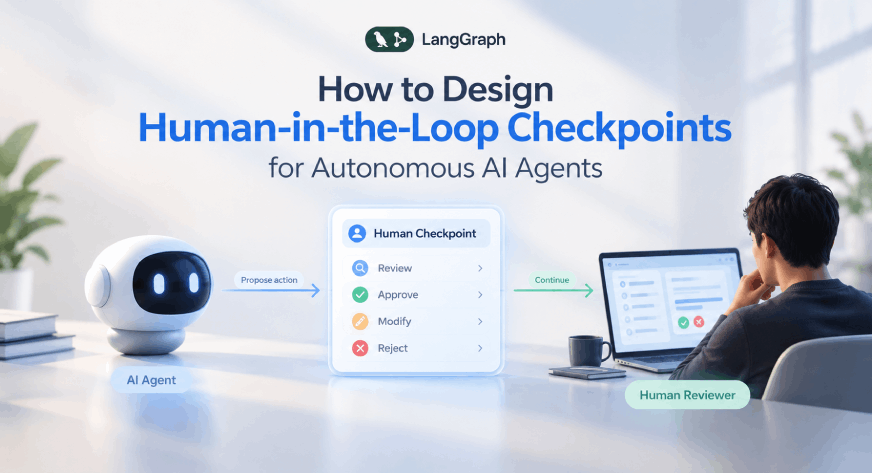
A human-in-the-loop checkpoint is not merely a delay; it is a structural guarantee. It represents a deliberate pause in an automated workflow, occurring precisely after an agent has formulated a plan but before that plan is translated into a real-world effect.
The fundamental architectural principle here is the separation of reasoning from execution. In a well-designed agentic workflow, the LLM is tasked with synthesis—gathering facts and proposing a course of action. However, the application layer—the code that defines the graph—retains the "veto power." By utilizing tools like LangGraph’s interrupt() function, developers can ensure that the workflow state is persisted in a checkpointer, effectively "freezing" the agent in time until a human reviewer authorizes the next step.
When Autonomy Becomes a Liability
Not all agent actions require oversight. Reading a knowledge base or summarizing a public document carries low risk. However, the risk profile changes drastically when the agent interacts with external systems. Organizations should map their agent’s capabilities against a risk matrix:
| Agent Action | Potential Impact | Requirement for Human-in-the-Loop |
|---|---|---|
| Data Retrieval | Minimal | None |
| Content Drafting | Moderate (Brand Risk) | Optional (Review before send) |
| Record Modification | High | Recommended |
| Financial Transactions | Critical | Mandatory |
| Destructive Actions | Critical | Mandatory |
Chronology of an Agentic Refund Workflow
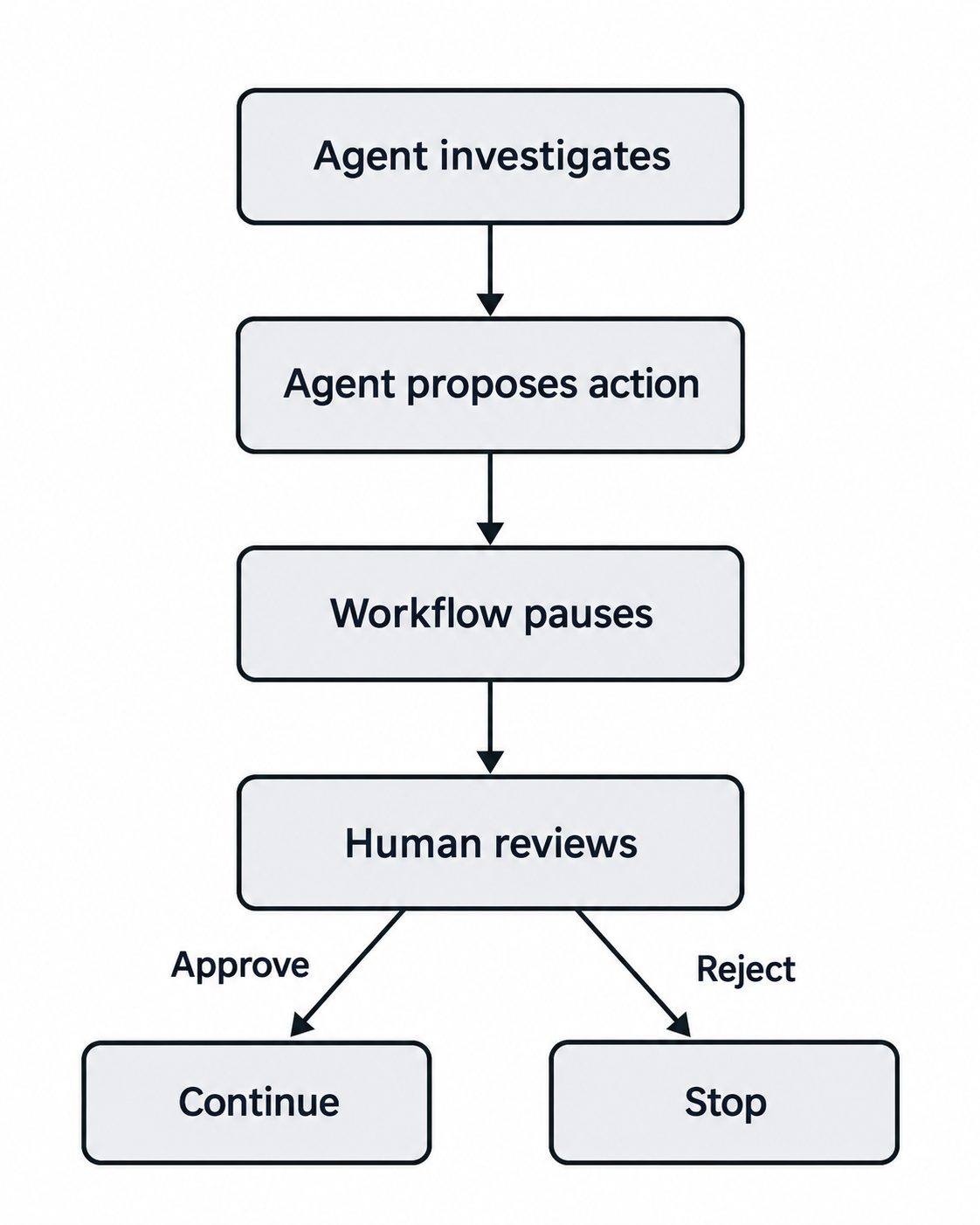
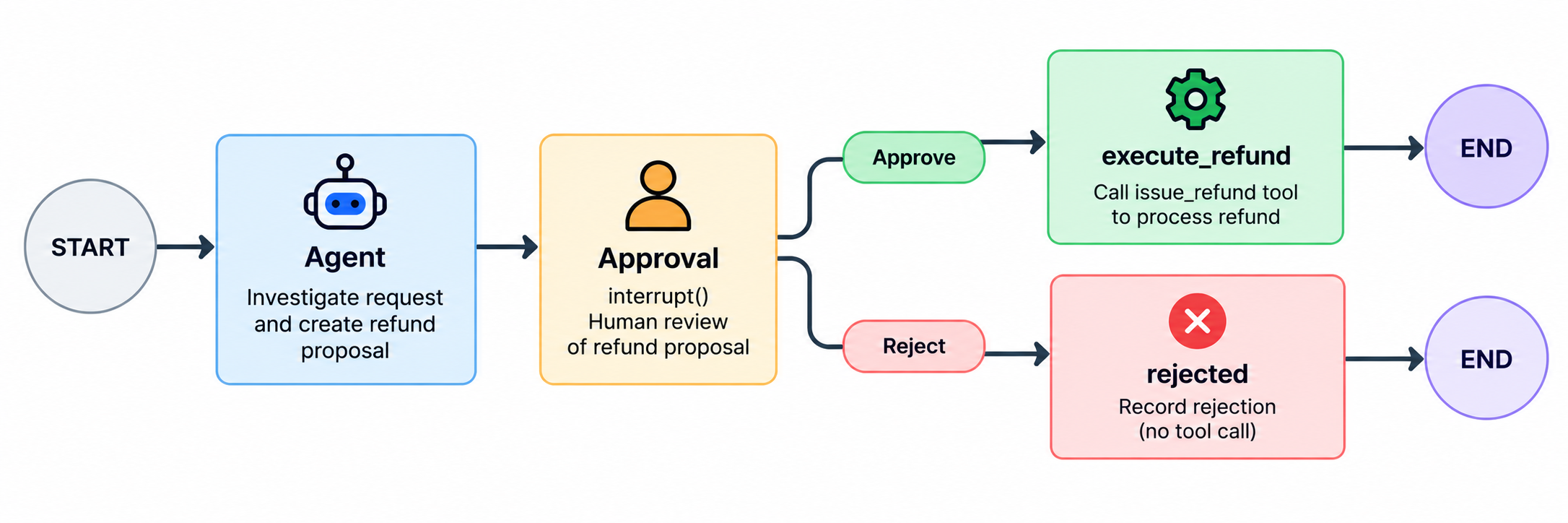
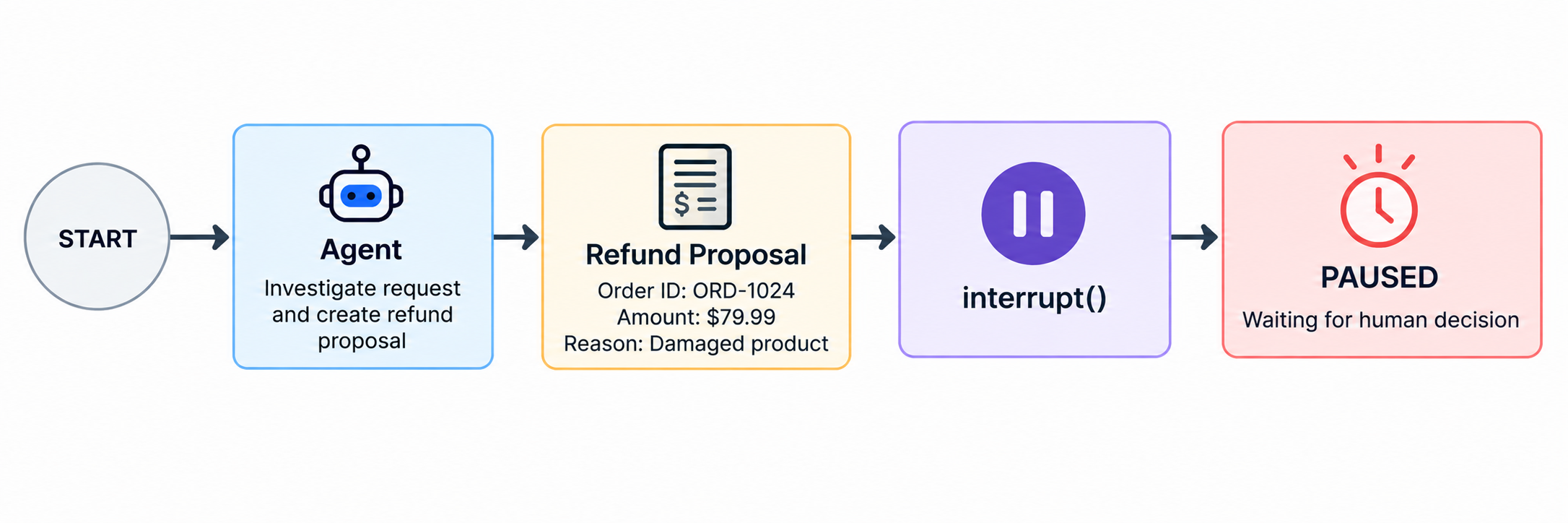
To illustrate the practical application of this architecture, we will build a refund agent. The lifecycle of a request in this system follows four distinct stages:
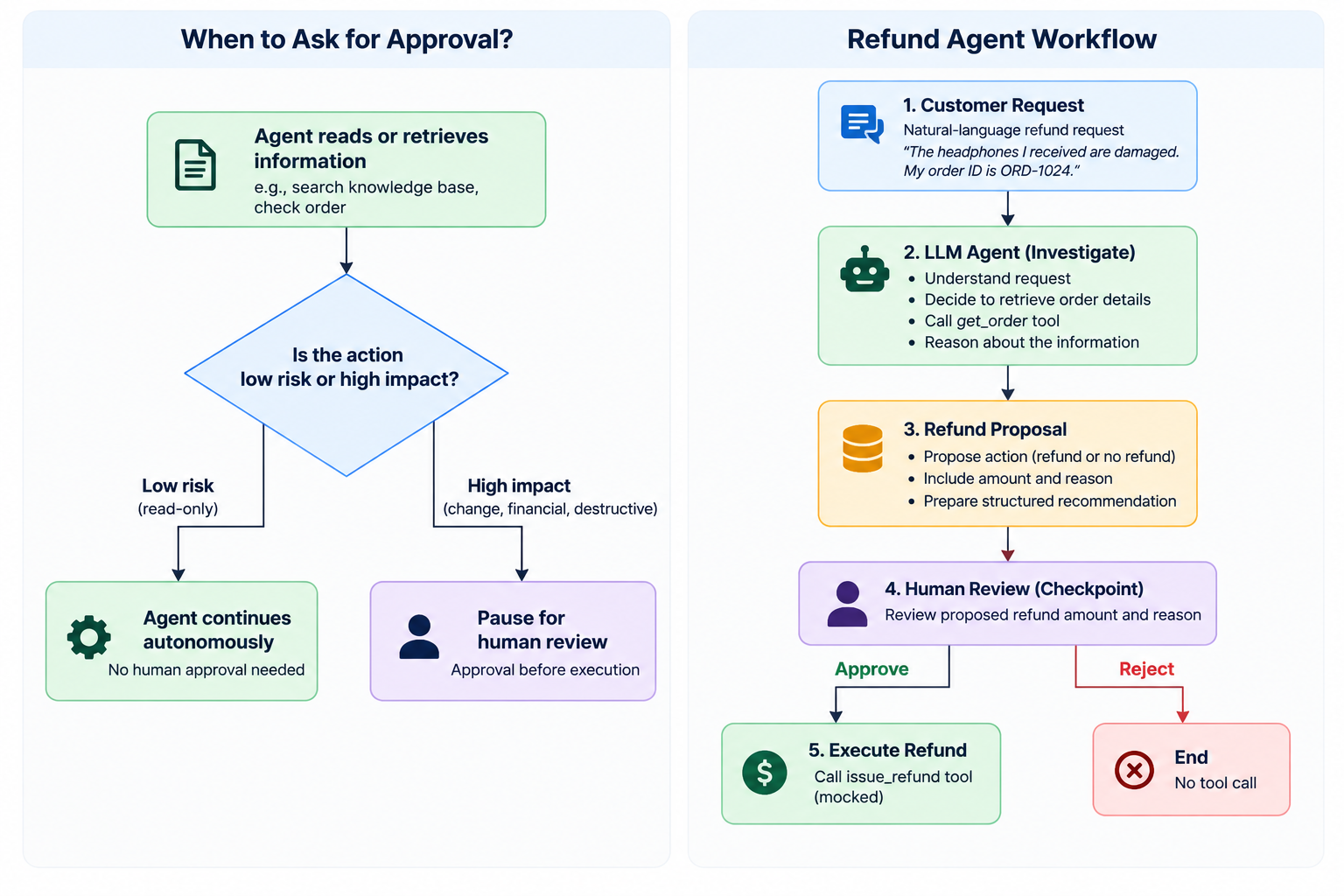
- Preparation (Autonomous): The agent receives a natural language query, identifies the relevant order ID, and invokes a read-only tool to fetch verified order data (product, amount, delivery status).
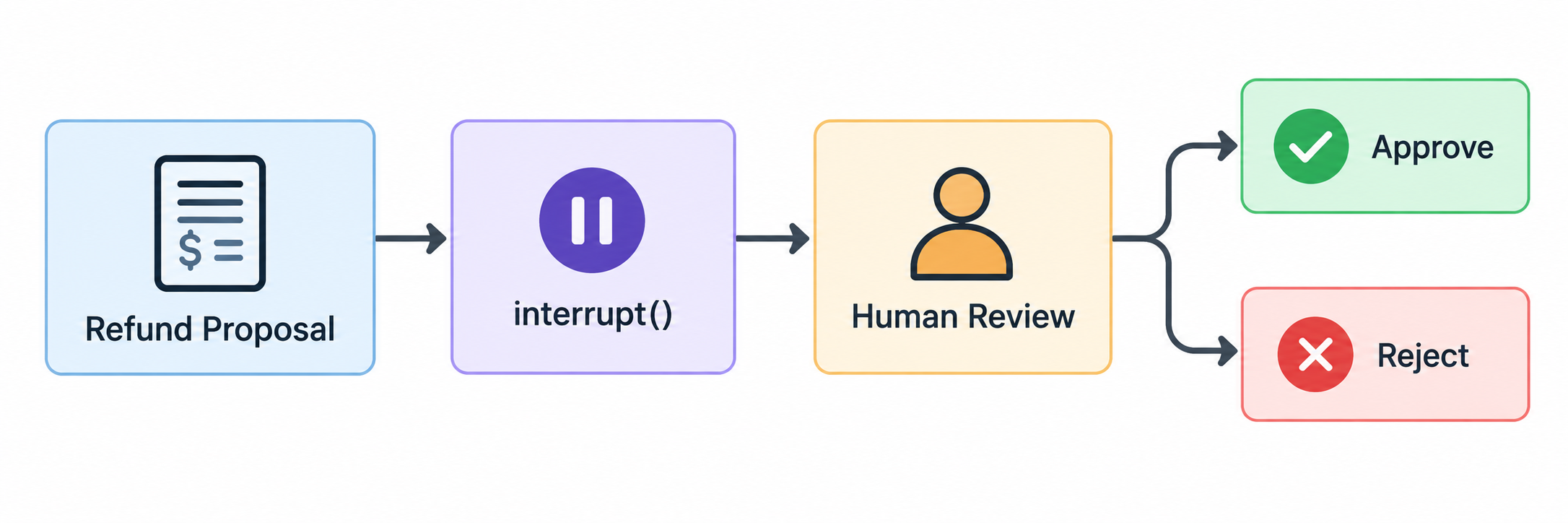
- Review (Human): The agent produces a structured proposal. The workflow hits an
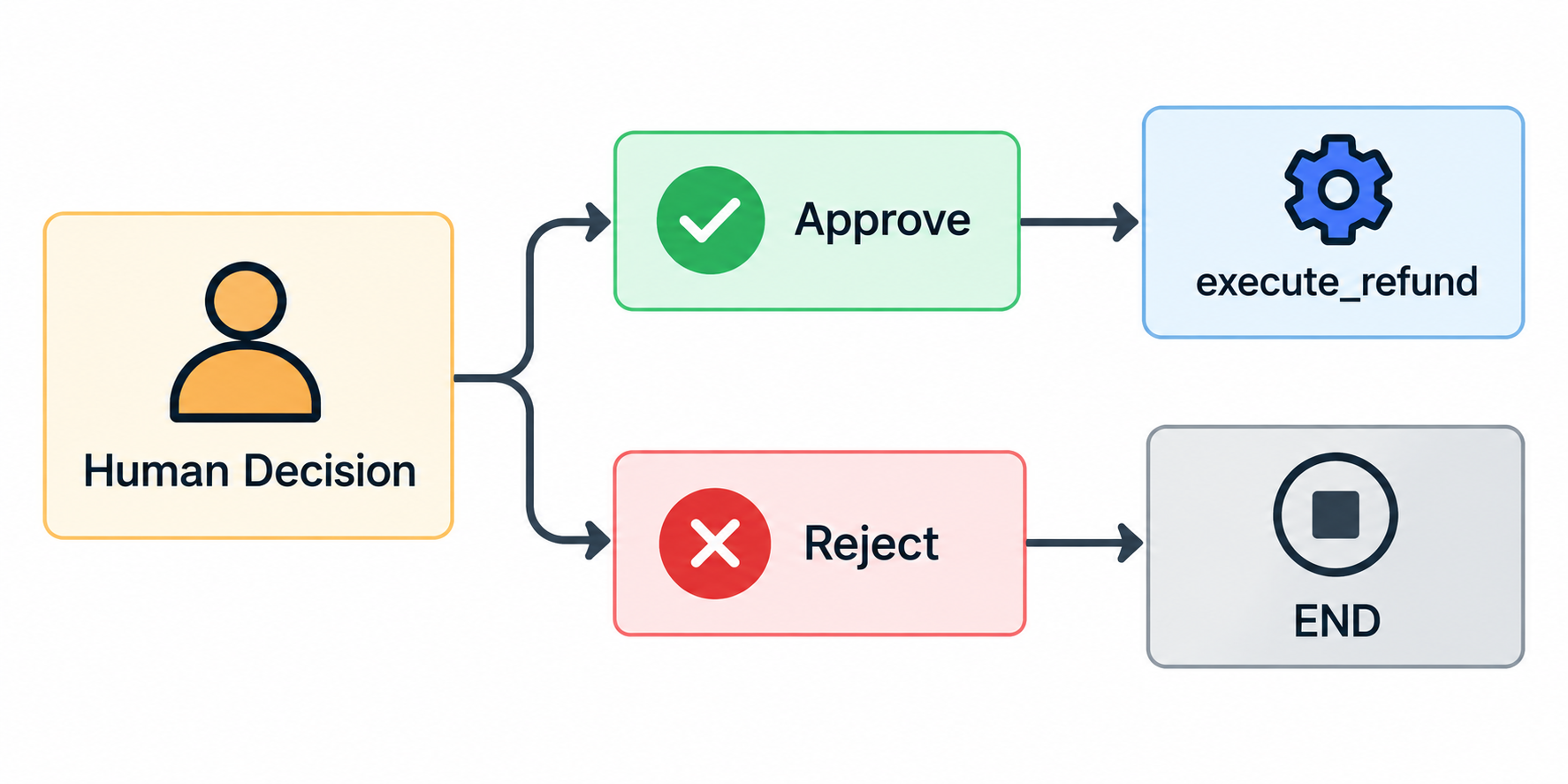
interrupt()point, surfacing the proposal—including the order ID, refund amount, and the agent’s rationale—to a human dashboard. - Decision (Human): The reviewer evaluates the information. An approval command resumes the graph, while a rejection command terminates it.
- Act (System): Only upon explicit approval does the system trigger the
issue_refundtool, ensuring the transaction is logged and the state is updated.
Implementation: Building the Infrastructure
Prerequisites and Setup
To implement this, you will need langchain, langgraph, and langchain-openai. The environment must be configured with your API credentials.
pip install -U langchain langgraph langchain-openai pydantic1. Establishing the "Read-Only" Environment
The agent should never "guess" values. We define a tool for the agent to fetch order information, ensuring it only interacts with verified data.

@tool
def get_order(order_id: str) -> dict:
    """Retrieve verified order details."""
    order = ORDERS.get(order_id)
    return order if order else "found": False
By restricting the agent to this read-only tool, we ensure that even if the LLM "hallucinates" a refund amount, the data it bases its reasoning on is grounded in the truth of your database.
2. The Structured Proposal
Using Pydantic, we force the LLM to return a predictable RefundProposal object. This eliminates the need for messy string parsing and provides the human reviewer with a clean, consistent interface.
class RefundProposal(BaseModel):
    order_id: str
    action: Literal["refund", "no_refund"]
    refund_amount: float
    reason: str
3. The LangGraph State and Workflow
The RefundState serves as the "source of truth" as the request moves through the nodes. We connect the agent, the approval node, and the execution node using StateGraph.
The magic occurs at the approval_node:
def approval_node(state: RefundState):
    decision = interrupt(
        "question": "Approve this refund?",
        "details": state["proposal"]
    )
    return "approved": bool(decision)
The interrupt() function stops the graph in its tracks. Because we use an InMemorySaver (or a persistent DB in production), the entire state is saved, allowing the system to wait seconds, minutes, or hours for human intervention.
Supporting Data and Security Implications
Implementing HITL is not just about code—it is about security. In a production-grade environment, the "Reviewer" role must be authenticated. The human approval step should be integrated with Identity and Access Management (IAM) systems.
Key Considerations for Production:
- Idempotency: The
issue_refundtool must be idempotent. If a network error occurs during execution, the system should be able to retry without issuing a second refund. - Auditability: Every interaction—the user request, the agent’s internal reasoning trace, the human’s decision timestamp, and the final result—must be logged in an immutable audit trail.
- Delegated Authority: Not all human reviewers should have the same power. A junior agent might be able to approve refunds under $50, while anything higher requires manager-level authorization. These logic gates should be hard-coded into the application, not delegated to the LLM.
Official Perspectives on AI Governance
Industry leaders and regulatory bodies, including the NIST AI Risk Management Framework, emphasize that human oversight is a critical component of "trustworthy AI." The approach described here aligns with the principle of "Meaningful Human Control." By keeping the agent’s logic transparent and the final action tethered to a human decision, organizations can deploy autonomous systems that comply with internal governance policies while reaping the benefits of LLM-driven efficiency.
Conclusion: Balancing Autonomy with Control
The goal of building autonomous agents is to augment human productivity, not to replace the accountability that comes with professional decision-making. By using LangGraph to create checkpoints, developers gain the ability to scale their operations without compromising on safety.
This architecture allows the LLM to excel at what it does best—processing ambiguity and identifying patterns—while the human operator handles what they do best: applying contextual wisdom and taking responsibility for high-stakes outcomes. As we move toward an era of increasingly capable AI, the most successful companies will be those that master the art of the "pause," ensuring that technology remains a powerful, predictable, and safe servant of the business.