By Investigative Desk
October 15, 2026
The Palestinian political landscape is reeling following the announcement that President Mahmoud Abbas has once again postponed legislative and presidential elections, pushing them back to September 2027. This decision, marking two decades without a national mandate, has ignited a firestorm of criticism from civil society, international observers, and reform-minded activists.
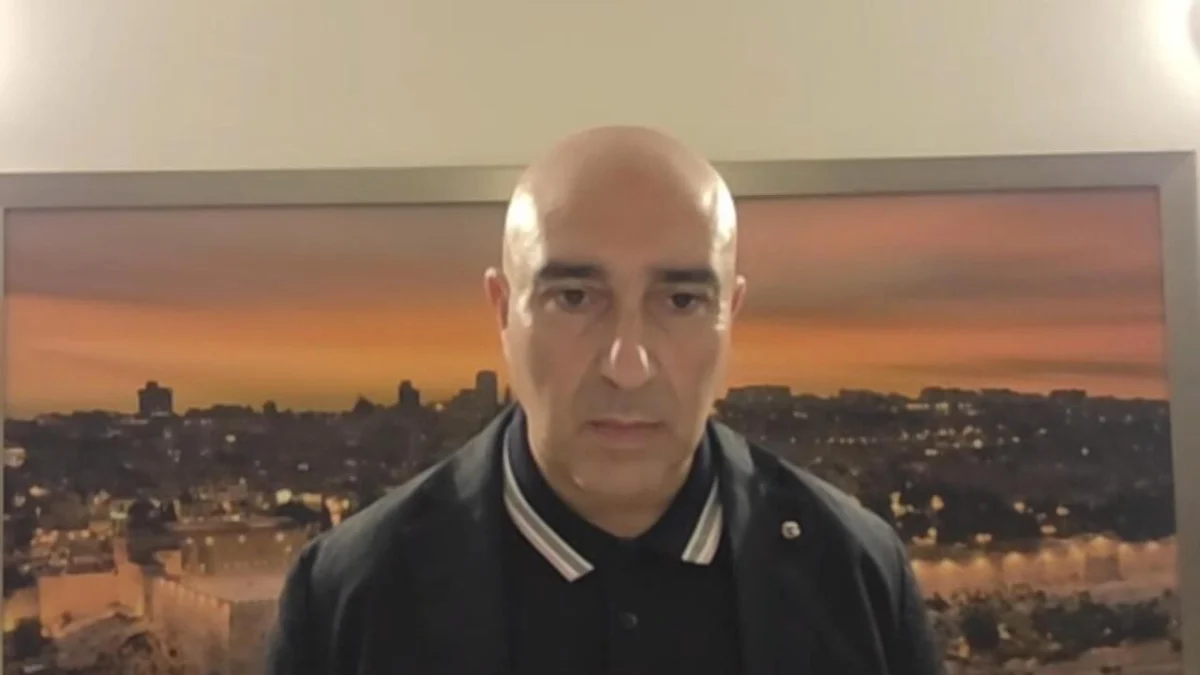
In a recent interview on FRANCE 24’s Tête à Tête, prominent Palestinian activist Samer Sinijlawi delivered a scathing indictment of the current leadership, characterizing the delay as a "terrible disappointment" for a generation of Palestinians who have been systematically denied the fundamental right to cast a ballot.
Main Facts: A Broken Promise
The core of the current crisis lies in the breach of explicit commitments made by the Palestinian Authority (PA). According to Sinijlawi, President Mahmoud Abbas had provided written assurances to French President Emmanuel Macron—as well as other key global leaders—that national elections would be conducted by June 2026.
These elections were seen as the cornerstone of a diplomatic roadmap designed to secure international recognition for a Palestinian state. France, in a significant diplomatic push, had successfully rallied 15 nations to support this statehood bid, contingent upon the PA implementing governance reforms and holding free and fair elections.
"President Macron has delivered the goods," Sinijlawi asserted during the broadcast, emphasizing that the international community held up their end of the bargain by providing the political leverage needed for statehood. "It is the Palestinian leadership that has failed to act."

Sinijlawi pointedly identified Palestinian Vice President Hussein al-Sheikh as the primary architect of the delay, noting that al-Sheikh has been "leading this effort in a very public way," suggesting a calculated move by the incumbent power structure to preserve the status quo.
Chronology: Two Decades of Stagnation
To understand the gravity of the current decision, one must look at the timeline of the Palestinian electoral process, which has been frozen for over twenty years:
- 2006: The last legislative elections were held, resulting in a victory for Hamas, which eventually led to the internal split between the West Bank and Gaza.
- 2005: The last presidential election was held, in which Mahmoud Abbas was elected to a four-year term. He has remained in office for two decades.
- 2021: A previously scheduled election was cancelled by Abbas, who cited Israel’s refusal to allow voting in East Jerusalem as the primary reason—an excuse that many observers viewed as a pretext to avoid a potential loss.
- 2026 (Early): Renewed pressure from France and other international donors prompted fresh promises of democratic renewal.
- October 2026: The official postponement of the 2026 elections to September 2027, marking the latest chapter in a long-standing pattern of deferral.
Supporting Data: The Erosion of Legitimacy
The decision to delay elections is not merely a bureaucratic shift; it represents a significant erosion of the Palestinian Authority’s domestic and international legitimacy.
The "Israeli Restriction" Myth
For years, the PA has utilized the argument that Israeli security restrictions in East Jerusalem make it impossible to hold transparent, inclusive elections. However, critics like Sinijlawi argue that this is a convenient smokescreen. "It is a rejection of change among ageing Palestinian leaders," he argued. By using external obstacles as a scapegoat, the leadership avoids addressing internal demands for accountability, anti-corruption reforms, and a transition of power.
Donor Fatigue
The Palestinian Authority is heavily reliant on international aid. Donor nations, particularly in Europe, have long conditioned their financial support on the expectation of democratic progress. Sinijlawi warned that the patience of these donors is reaching a breaking point. "I am sure there will be consequences," he stated, noting that taxpayers in donor countries may soon refuse to subsidize a political system that actively prevents its own population from participating in a democratic process.
Official Responses and Political Maneuvering
The atmosphere within the Palestinian political elite remains tense. While Vice President Hussein al-Sheikh has been cited as the driving force behind the delay, the inner circles of the Fatah party remain deeply divided.

Proponents of the delay argue that the security situation on the ground remains too volatile to conduct a national campaign. They suggest that an election under current conditions could invite further instability and potentially empower fringe elements.
However, this stance is increasingly rejected by the Palestinian youth demographic. With over 60% of the population under the age of 30, the lack of political agency is fostering a sense of disenfranchisement. The "gerontocracy" within the PA is seen by many young Palestinians not as a guardian of national stability, but as an obstacle to progress.
Implications: A Future in Jeopardy
1. Diplomatic Isolation
The failure to honor the agreement with France and other European allies puts the push for Palestinian statehood in a precarious position. If the PA cannot demonstrate a commitment to democratic values, the diplomatic capital invested by France may evaporate. Without a renewed mandate, the PA lacks the moral authority to speak on behalf of the Palestinian people in international forums.
2. Radicalization and Discontent
History shows that when political avenues for change are closed, populations often look toward alternative, sometimes radical, methods of expressing dissent. The inability to vote for change may drive the youth toward civil unrest or support for non-democratic factions, further fracturing a society already struggling with deep internal divisions.
3. Financial Instability
The warning regarding donor funding is perhaps the most immediate threat to the PA’s survival. If European or other international donors decide to leverage their funds against the lack of progress, the PA could face a liquidity crisis. A government that cannot pay its civil servants—who make up a massive portion of the Palestinian economy—is a government on the brink of collapse.
4. The "Succession" Problem
The delay is also widely viewed as a mechanism to avoid a succession crisis. With President Abbas’s health a frequent topic of speculation, the lack of an electoral process ensures that the transition of power will occur through internal backroom maneuvering rather than a transparent, constitutional process. This uncertainty creates a power vacuum that could lead to internal power struggles.

Conclusion: The Urgent Need for Reform
Samer Sinijlawi’s critique resonates as a wake-up call. The Palestinian Authority is currently standing at a crossroads. By prioritizing the preservation of power over the will of the people, the leadership is effectively eroding the very state they claim to be building.
As the September 2027 date looms, the international community must decide whether it will continue to provide blank-check support to an institution that refuses to renew its mandate, or if it will pivot toward supporting the civil society groups and activists who are calling for immediate, substantive change.
For the Palestinian people, the wait for democracy continues. Whether 2027 will truly bring a ballot box to the West Bank and Gaza or merely another excuse for delay remains the defining question of the decade. As Sinijlawi emphasized, the cost of this "rejection of change" is not just measured in broken promises, but in the lost future of an entire generation.