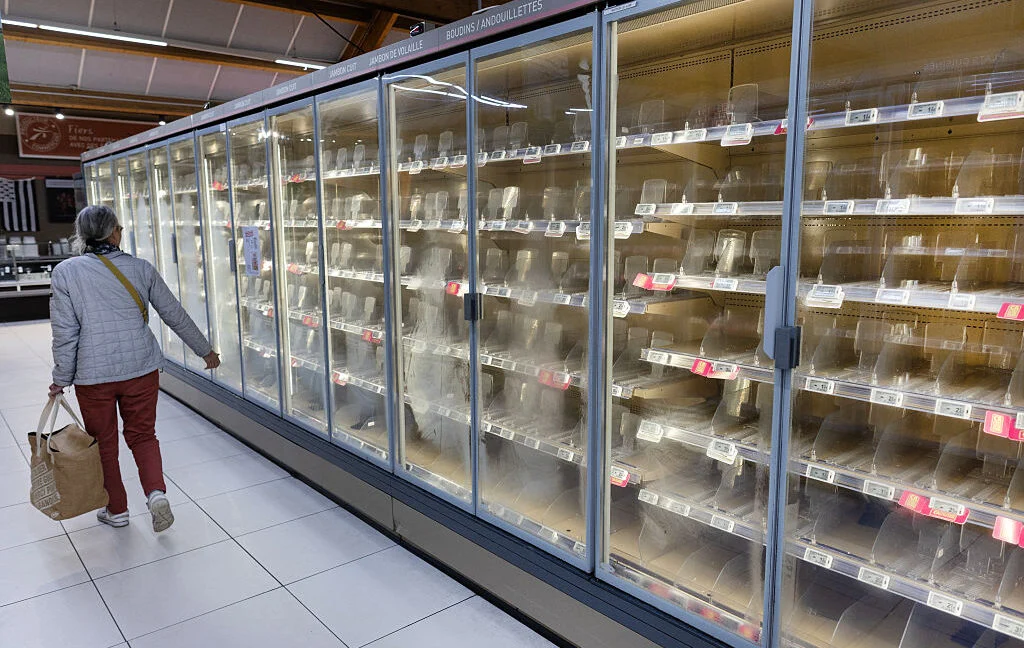
A massive, coordinated cyberattack targeting industrial refrigeration controllers across Europe has sent shockwaves through the retail and cybersecurity sectors, resulting in the potential loss of tens, if not hundreds, of millions of euros in spoiled food. The incident, which primarily impacted supermarket chains, has exposed a dangerous reality: the critical infrastructure that keeps our food supply chain cold is often running on outdated, internet-exposed hardware that lacks even the most rudimentary security protections.
While the investigation into the perpetrators continues, the technical failures that allowed the breach are clear. By exploiting vulnerabilities in discontinued refrigeration controllers, attackers were able to manipulate temperature settings, effectively "defrosting" stores across Spain, Portugal, Poland, Germany, and Belgium simultaneously.
The Anatomy of the Breach: A Failure of Basic Cyber Hygiene
The incident was not the result of a sophisticated, high-level exploit that bypassed cutting-edge encryption. Instead, it was a systemic failure of "cyber hygiene." According to security experts at Pen Test Partners, the affected supermarket stores likely failed to implement the most basic security protocols for their Industrial Control Systems (ICS).
The "Public Internet" Problem
Many of the compromised controllers were connected directly to the public internet, rather than being isolated behind a Virtual Private Network (VPN). By failing to hide these devices from public view, operators effectively placed a "welcome" mat out for any scanner looking for exposed industrial hardware.
Credential and Patch Negligence
Beyond direct exposure, the affected systems were reportedly running on outdated, end-of-life firmware. Furthermore, it appears many of these systems were operating with default or easily guessable credentials. When a device is both publicly accessible and password-protected by a default "admin" string, it is only a matter of time before an automated script or a motivated actor gains administrative access.
"Two things would have changed the outcome," researchers at Pen Test Partners stated in a recent advisory. "Cyber hygiene would have prevented the access: take the controller off the public internet, put remote access behind a VPN and an IP allowlist, bring third-party kit onto the network in a controlled, owned and documented way rather than leaving it on a contractor’s own connection, change known and default credentials, and patch to a current release."
Chronology: From Warning to Catastrophe
The vulnerability of these industrial controllers was not an unknown secret. For over a year, the cybersecurity community and government agencies have issued warnings that went largely unheeded by the retail sector.
- October 2023: Researchers from the security firm Claroty published a detailed report titled “Freeze the Controller, Defrost the Food,” uncovering significant vulnerabilities in Danfoss refrigeration controllers. The report specifically highlighted how these devices, if left exposed, could be weaponized to manipulate temperature settings.
- February 2024: The U.S. Cybersecurity and Infrastructure Security Agency (CISA) issued an official advisory (ICSA-26-057-10), echoing the findings of private sector researchers and urging operators of critical infrastructure to audit their systems, patch firmware, and move sensitive controls behind restricted networks.
- The Attack Phase: In the weeks following the CISA warning, the coordinated strike occurred. Attackers scanned the public internet for the specific models identified by Claroty and CISA. Once identified, they exploited the lack of authentication and firmware vulnerabilities to gain control of the refrigeration units.
- The Aftermath: By the time the breaches were identified, the damage was already done. Thousands of units of perishable inventory across multiple countries had reached unsafe temperatures, forcing retailers to discard massive quantities of food, leading to the estimated multi-million-euro losses.
Supporting Data: Why Industrial Control Systems Are Vulnerable
The refrigeration controllers targeted in this attack fall under the umbrella of Operational Technology (OT). Unlike standard IT systems (like laptops or office servers), OT systems are designed for longevity, often remaining in service for 15 to 20 years.
This lifecycle creates a "security debt." A refrigeration controller installed in 2010 was likely never designed to face modern threats. When these "legacy" devices are suddenly connected to the cloud for remote monitoring, they lack the memory, processing power, or software architecture to support modern encryption, multi-factor authentication (MFA), or frequent security patching.
Furthermore, the integration of third-party contractors—often responsible for the maintenance of these units—introduces additional risk. If a contractor connects their own laptop or gateway directly into the store’s controller network, they may inadvertently bypass the store’s own security measures, creating a back-door that remains open long after the contractor has left.
Official Responses and Manufacturer Accountability
The response from major manufacturers has been measured but points to a broader industry challenge regarding "End-of-Life" (EOL) equipment.
Copeland, a major player in the industrial cooling space, acknowledged in an email statement that the vulnerability existed in a "discontinued, end-of-life generation of controllers." The company noted that it is actively working with customers to prevent similar incidents, essentially shifting the responsibility toward the owners of the hardware to decommission obsolete gear.
Danfoss, another manufacturer linked to the vulnerabilities by researchers, has remained notably quiet, with spokespeople not immediately responding to inquiries. The consensus among analysts is that while manufacturers are responsible for the security of their products, the supermarket chains—as the "asset owners"—bear the ultimate responsibility for the security posture of their operational environment.
The Motive: Vandalism or State-Sponsored Disruption?
One of the most chilling aspects of this attack is the silence of the perpetrators. There has been no demand for ransom, no manifesto posted on dark web forums, and no claim of responsibility.
The Case for Vandalism
The lack of a financial motive suggests this could be an act of "hacktivism" or pure vandalism. By targeting the food supply chain, the attackers maximize social and economic disruption for the sake of the chaos itself. It is a digital form of graffiti, where the damage is measured in tons of rotting produce rather than spray paint.
The Case for State-Level Actors
Security analysts are not ruling out the possibility of a nation-state actor. In recent years, intelligence agencies have warned that "pre-positioning" attacks—where hackers gain access to critical infrastructure and leave "logic bombs" or backdoors—are a common tactic for countries aiming to destabilize the economies of their rivals. A continent-wide disruption of the food supply chain would be an effective, low-cost way to sow doubt in the security of European critical infrastructure.
Implications: The CFO vs. the CISO
The incident underscores a fundamental tension that exists in boardrooms worldwide: the conflict between the Chief Financial Officer (CFO) and the Chief Information Security Officer (CISO).
In many retail organizations, upgrading refrigeration hardware is viewed as a "sunk cost" with no tangible return on investment. If a controller is still keeping food cold, the CFO is unlikely to approve a multi-million-euro budget to replace it with a more secure version. Security is often treated as a "cost center" rather than an insurance policy.
This attack serves as a brutal lesson in the cost of inaction. The price of replacing thousands of insecure controllers is significantly lower than the cost of losing an entire week’s worth of inventory across hundreds of stores, not to mention the reputational damage and the long-term loss of consumer trust.
A Call for Regulatory Change
Industry experts suggest that "voluntary" adoption of security standards is no longer sufficient. As the line between IT and OT continues to blur, governments may move toward mandatory security certification for industrial equipment. If a supermarket chain cannot prove their refrigeration units are behind a secure, segmented network, they may face heavy fines.
For now, the supermarket chains affected by this hack are left to tally their losses and perform a frantic, reactive audit of their networks. The question remains: will this serve as a wake-up call for the rest of the industry, or will other businesses continue to prioritize short-term savings over the long-term security of the infrastructure that feeds the world? The next major outage may not be a simple defrosting incident; it could be something far more severe.