In the rapidly evolving architecture of the artificial intelligence revolution, few relationships are as scrutinized—or as vital—as that between Nvidia, the undisputed king of AI hardware, and CoreWeave, the specialized cloud provider that has become a cornerstone of the chipmaker’s ecosystem. This week, that relationship found itself at the center of a profound disconnect. While Nvidia CEO Jensen Huang traverses Europe, projecting unwavering confidence in the financial health of his partners, the global credit markets are signaling a growing, and increasingly vocal, sense of alarm.
The Tale of Two Realities: Huang’s Optimism vs. Market Fear
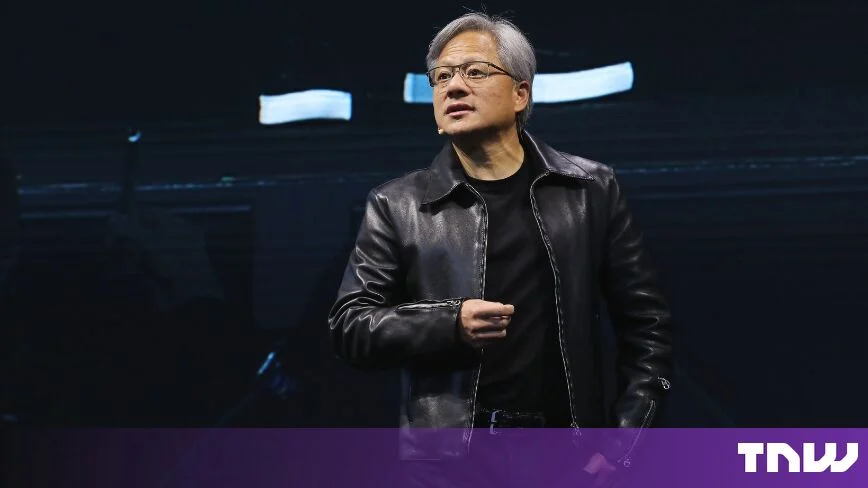
During a high-profile visit to Stockholm, Sweden, this past Thursday, Jensen Huang offered a bullish assessment of CoreWeave, the AI-focused cloud infrastructure firm in which Nvidia holds a significant 10% equity stake. Speaking to Bloomberg, Huang pushed back against the growing narrative that Nvidia might eventually be required to provide a financial backstop to its partner.
“CoreWeave’s strength is improving every day,” Huang stated, emphasizing that he remains optimistic about the firm’s trajectory. Crucially, he noted, “Their cost of capital is actually decreasing.”
However, the sentiment on trading desks in London and New York tells a starkly different story. On the very same day that Huang touted the company’s financial resilience, CoreWeave’s five-year credit default swaps (CDS)—financial derivatives used to hedge against the risk of debt default—soared to a record-breaking 1,194.5 basis points. According to data provided by ICE Data Services, this represents a jump of 74.5 basis points in a single session.
In the cold, mathematical language of the bond market, this pricing implies a greater than 60% probability that CoreWeave will default on its obligations within the next five years. The dissonance between the CEO’s public assurance and the market’s pricing of distress highlights a growing tension in the AI supply chain: the challenge of separating genuine industrial growth from the risks of a debt-fueled bubble.
Chronology: A Rapid Accumulation of Risk
The trajectory of CoreWeave’s credit standing has been volatile, mirroring the broader hyper-growth phase of the generative AI boom. To understand the current climate, one must look at the recent timeline of the firm’s fiscal footprint:
- Late 2025: CoreWeave’s credit risk reached a preliminary peak as the company aggressively scaled its infrastructure to meet the insatiable demand for H100 and Blackwell GPU clusters.
- June 2026: Market sentiment appeared to stabilize. CDS spreads tightened significantly, falling to roughly 452 basis points. During this period, the market responded favorably to signs of maturation, and bonds backed by CoreWeave leases were priced at a 7% yield—a figure suggesting that while the firm was speculative-grade, it was not yet viewed as a high-risk liability.
- Summer 2026 to Present: The narrative shifted. Over the last four months, the spread on these contracts has roughly tripled. This rapid repricing reflects mounting investor anxiety over the company’s ability to service its massive debt load, which reached $30 billion by mid-year—a threefold increase from the previous twelve months.
- October 2026: The current record-high CDS levels arrived alongside Huang’s European tour, creating a jarring juxtaposition between his rhetoric in Stockholm and the fiscal realities reflected in global financial indices.
Supporting Data: The Debt-to-Backlog Equation
At the heart of the debate is whether CoreWeave’s massive capital expenditures are justified by its future revenue potential. As of July, CoreWeave reported a staggering backlog of $99.4 billion. On paper, this is a sign of immense demand. However, the costs associated with fulfilling this backlog are equally astronomical.
The company’s capital spending budget for 2026 is slated to fall between $31 billion and $35 billion. While the backlog covers these costs several times over, analysts point out that "backlog" is not synonymous with "cash on hand." The operational reality requires CoreWeave to borrow heavily to purchase Nvidia’s hardware, pay for massive energy infrastructure, and build out high-performance data centers.
This circularity is where critics find the most cause for concern. If Nvidia is a primary supplier to CoreWeave, a primary shareholder in CoreWeave, and a potential financier to CoreWeave’s clients, the entire chain becomes highly sensitive to the health of the broader AI market. When Nvidia’s own credit markets "flinched" in July—coinciding with the announcement of $750 billion in AI-related deals—it signaled that the entire ecosystem is being priced with a risk premium that was absent just a year ago.
Official Responses and the "Backstop" Controversy
The question of whether Nvidia acts as a "backstop" for its customers has become a lightning rod for criticism. Critics argue that Nvidia is effectively financing its own revenue by providing capital or guarantees to the very companies that purchase its hardware. This, skeptics argue, artificially inflates demand and creates a feedback loop that could become systemic.
Jensen Huang has consistently dismissed these concerns, calling the idea of a circular, risky bubble “ridiculous.” In his view, the demand for AI compute is a generational infrastructure shift comparable to the electrification of the global economy.
However, the market is not the only entity paying attention. International financial institutions, including the IMF and the Bank for International Settlements (BIS), have recently flagged the financing models of AI hyperscalers as a potential source of systemic risk. They warn that if the projected return on investment for AI projects fails to materialize at the speed required to service the debt, the fallout could spread from private cloud providers to the balance sheets of the largest technology firms in the world.
Complicating the narrative further are reports that Nvidia is in private talks to backstop as much as $250 billion in data-center financing for OpenAI. This deal, aimed at covering the lease and construction debt for a massive 10-gigawatt campus in Ohio, would represent a significant escalation in Nvidia’s role as a financier. Neither Nvidia nor OpenAI has confirmed these discussions, but the mere prospect of such a massive guarantee has kept bond traders on high alert.
Implications: The European Pivot and Future Outlook
While his home-turf markets are wrestling with these concerns, Jensen Huang is actively working to cultivate new growth engines in Europe. His recent appearances in Paris and Stockholm underscore a strategy of geographical diversification. By promising $2 billion in European investments and announcing a new Stockholm AI lab in collaboration with the Norrsken Foundation, Nvidia is attempting to frame its future as one of global, multi-sector integration rather than just domestic, debt-leveraged data center growth.
The opening of the Stockholm AI lab, scheduled for 2027, serves as a symbolic hedge. By planting flags in Europe, Nvidia is signaling to its shareholders that it is not merely reliant on the capital-intensive US cloud-provider model.
Conclusion: The Road Ahead
The next twelve months will be critical. If CoreWeave can successfully convert its $99.4 billion backlog into high-margin revenue without requiring additional capital injections from its largest shareholders, the skeptics may be forced to retreat. If, however, the credit default swaps continue to climb, Nvidia will face a difficult choice: double down on its commitment to its partners, or risk the potential contagion that could follow a failure in its primary distribution chain.
For now, the divide remains: Jensen Huang sees a world of limitless potential where the cost of capital is a minor hurdle to a massive technological transition. The credit markets, meanwhile, see a balance sheet pushed to its limits, priced for a future that is becoming increasingly difficult to guarantee. Whether this is a simple "growth pain" or the beginning of a systemic correction remains the most important question in the world of artificial intelligence.