By Nina L. Khrushcheva
October 13, 2026
In the long, blood-stained annals of Russian political history, repression has rarely been characterized by its transparency, but it has often been defined by its perceived purpose. During the height of Stalin’s Great Terror, or even in the stifling ideological conformity of the Brezhnev era, the state apparatus operated under a grim, teleological framework. Victims were accused of "wrecking," "Trotskyism," or "anti-Soviet agitation"—charges that, however fabricated or deranged, implied the existence of a grand state project. Whether for the rapid industrialization of a nation or the maintenance of a utopian myth, there was a sense that the suffering served an end.
Today, that internal logic has evaporated. The repression unfolding in contemporary Russia is fundamentally different in its nihilism. It is no longer about forcing a populace toward a glorious future; it is about the cold, mechanical preservation of the current state apparatus for its own sake. When the state begins to consume its own intellectuals, academics, and analysts on transparently absurd charges, it signals a transition from authoritarianism to a state of permanent, groundless volatility.
The Case of Alexander Kynev: A New Baseline for Absurdity
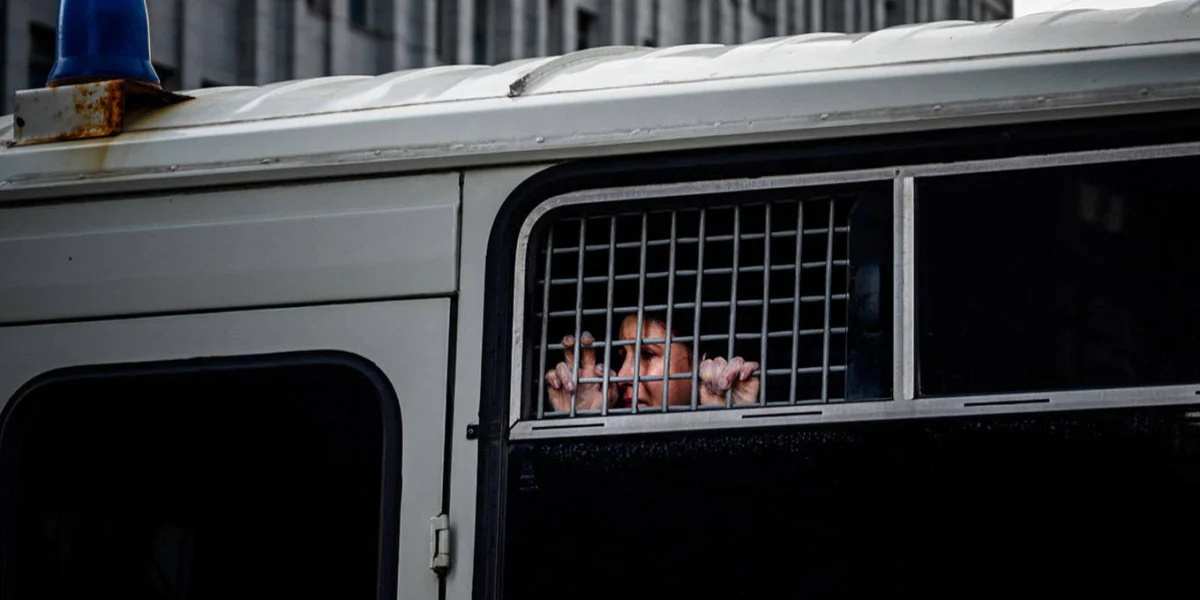
On September 25, 2026, the Moscow judicial system provided a chilling snapshot of this new reality. Alexander Kynev, one of Russia’s most respected and nuanced political analysts, was remanded to pretrial detention. The charges leveled against him—"large-scale illegal drug production, sale, and trafficking"—are not merely severe; they are functionally grotesque.
Kynev, a man whose life’s work has been the meticulous study of electoral systems and political transitions, is now facing a potential sentence of 10 to 20 years in a penal colony. The disconnect between his public profile—a mild-mannered, scholarly observer of Russian regional politics—and the lurid nature of the allegations is not a bug in the system; it is the feature.
There has been no evidence made public to substantiate the state’s claims. There are no seized labs, no clandestine shipments, no testimony from credible associates. Instead, there is the silent machinery of the Russian security services, which has increasingly resorted to "off-the-shelf" criminal charges—narcotics possession or extremism—to neutralize voices that the state finds inconvenient. By stripping political dissent of its political context and reframing it as common criminality, the Kremlin effectively gaslights the public, forcing them to participate in a shared, televised delusion.
Chronology of a Coordinated Silence
The arrest of Kynev did not occur in a vacuum. It is the latest station in a systematic campaign to hollow out the Russian analytical community.
- 2022-2023: The Great Exodus and the First Wave of Pressure: Following the escalation of the conflict in Ukraine, the Russian state moved to consolidate domestic opinion. Dozens of independent research centers were shuttered or labeled "foreign agents." Analysts were forced to choose between exile and silence.
- 2024: The Tightening of the Net: Legislation regarding "discrediting the armed forces" and "spreading false information" was expanded to include even the most cautious academic commentary. Kynev, who had remained in Russia, continued to provide critical analysis, albeit with increasing circumspection.
- Early 2026: The Strategic Isolation of Independent Voices: Throughout the spring and summer of 2026, several regional experts and civil society leaders were detained on administrative grounds, a precursor to more severe criminal charges.
- September 25, 2026: The arrest of Alexander Kynev. His detention serves as a "red line" crossing; if an intellectual of his stature can be accused of drug trafficking without the slightest shred of credibility, no one—regardless of their academic reputation or public standing—remains protected.
Supporting Data: The Erosion of Academic Freedom
The suppression of figures like Kynev is supported by a robust, if perverse, statistical reality. According to data tracked by various human rights monitoring groups operating from abroad, the number of "political criminal cases" in Russia has reached levels unseen since the mid-1980s.
Crucially, the nature of these charges has shifted. In previous years, political charges were often categorized under "extremism" or "treason." Today, the state increasingly favors "common" criminal charges—narcotics, fraud, or tax evasion. This shift serves a dual purpose:
- Demoscaping: By labeling intellectuals as drug dealers, the state attempts to strip them of their moral authority in the eyes of the general public.
- Administrative Efficiency: Drug charges allow for rapid detention without the need to engage in lengthy, complex debates about the nuances of "state secrets" or "extremist ideology." The evidence is fabricated, the sentence is mandated, and the analyst is effectively removed from the discourse.
According to reports from independent media outlets like The Moscow Times, the conviction rate in Russian courts remains north of 99%. For an individual like Kynev, once the machine of the Investigative Committee and the Prosecutor’s Office is set in motion, the court functions less as a venue for justice and more as a rubber stamp for a predetermined outcome.
Official Responses and the Void of Accountability
The response from the Russian state to the outcry surrounding Kynev’s arrest has been one of practiced, glacial indifference. Spokespeople for the judicial system have maintained that the case is an ongoing criminal investigation, refusing to comment on the lack of public evidence.
In the rare instances where state media addresses such cases, the narrative is uniform: the "investigation" is a matter of law enforcement, and any suggestion of political motivation is dismissed as "Western interference" or "an attempt to undermine the Russian legal system." There is no debate, no public inquiry, and no requirement for the state to prove the why of the arrest—only the what.
The institutional silence is a deliberate strategy. By refusing to engage in a dialogue about the merits of the case, the state denies the opposition the dignity of a political confrontation. It treats the political analyst as if he were a common street dealer, thereby signaling to all other observers that their status as an intellectual offers no shield against the arbitrary application of state violence.
Implications: The Death of the Analytical Class
The detention of Alexander Kynev marks a definitive point of no return for Russian intellectual life. When the "experts" are silenced or imprisoned, the state loses its ability to receive honest feedback about its own performance.
The Vacuum of Information
As analysts are removed from the public sphere, the quality of information reaching both the Russian public and the international community deteriorates. We are left with a landscape where only state-approved "patriotic" analysis is permitted. This creates a feedback loop: the state makes a bad decision based on poor information, the negative consequences emerge, and the state, lacking a mechanism for self-correction, doubles down on the repression that caused the failure in the first place.
The Normalization of the Absurd
Perhaps most dangerous is the psychological toll on the Russian populace. When the state forces its citizens to acknowledge the "guilt" of an obviously innocent person, it breaks the link between the individual and the truth. A society that is forced to accept that a political analyst is a drug dealer is a society that has lost the ability to trust its own senses. This is the ultimate goal of the current regime: not just to suppress dissent, but to render the concept of "truth" irrelevant.
The Longevity of the State
The tragedy of the current moment is that this repression does not serve a greater goal. Stalin’s terror, as horrific as it was, was an attempt to forge a new world. The current wave of arrests is merely an attempt to delay the inevitable. By eliminating independent voices, the regime ensures its survival in the short term, but it simultaneously ensures its own intellectual and strategic stagnation.
Conclusion: A Future Without Analysts
As Alexander Kynev sits in his cell, the Russian state continues its march toward a form of isolated, self-referential governance. The arrest is a microcosm of the current Russian state: paranoid, vengeful, and profoundly detached from reality.
For the international community, the case of Alexander Kynev should serve as a warning. We are not watching a traditional dictatorship grappling with internal dissent; we are watching a state that has abandoned the need for justification. When the charge of "drug trafficking" is used to silence a man whose only weapon was his pen, the state has already admitted that it has no better arguments left.
The silence that follows the arrest of an analyst like Kynev is not the silence of peace; it is the silence of a house being boarded up from the inside. As the light of intellectual inquiry is extinguished, one by one, the Russian state becomes increasingly opaque, increasingly volatile, and increasingly dangerous—not just to its own people, but to the world at large. The era of the intellectual is over; the era of the machine has begun.