The geopolitical landscape of South Asia is undergoing a profound, albeit cautious, transformation. Following years of deep-seated animosity, particularly after the 2020 border conflagration—the most severe military escalation between China and India in over four decades—the two Asian giants have embarked on a process of "partial renormalization." This reset, solidified by high-level diplomatic exchanges and a growing consensus on regional stability, suggests that both Beijing and New Delhi are prioritizing pragmatic engagement over the rigid, confrontational postures that defined the early 2020s.
The Chronology of Reconciliation: A Diplomatic Thaw
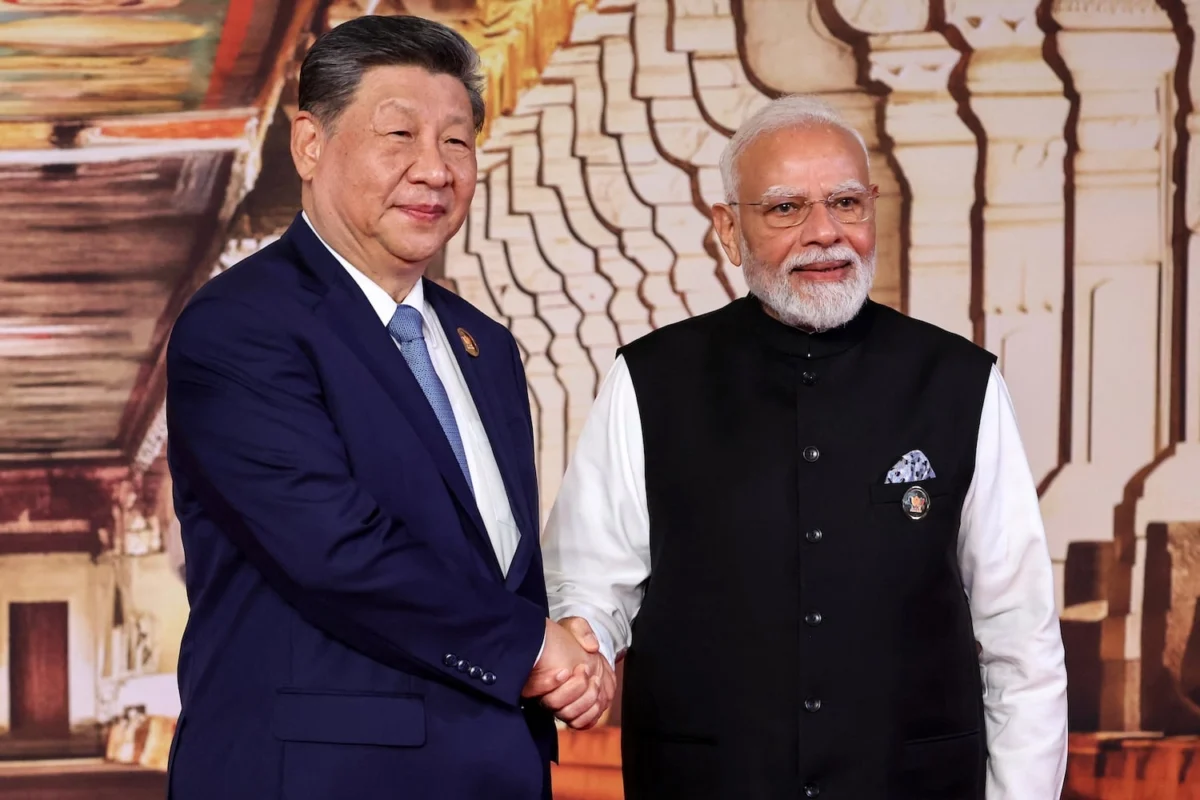
The recent BRICS summit served as the symbolic pinnacle of this ongoing rapprochement. Chinese President Xi Jinping’s visit to India—his first in nearly seven years—underscored the urgency of stabilizing ties between the world’s two most populous nations. This visit served as a reciprocal gesture to Indian Prime Minister Narendra Modi’s landmark trip to China last year to attend the Shanghai Cooperation Organisation (SCO) summit in Tianjin, which also marked his first visit to the country in seven years.
The thawing of relations has not been merely performative. It has manifested in tangible policy shifts:
- Aviation and Mobility: Direct flights between the two nations have resumed, and visa and investment restrictions—previously tightened in the wake of border skirmishes—are being systematically relaxed.
- The Border Framework: The intractable border issue, the primary source of bilateral friction, has seen substantive progress. In August, Indian National Security Advisor Ajit Doval and Chinese Foreign Minister Wang Yi finalized an eight-point consensus under their Special Representatives framework.
- Economic Resumption: Symbolizing a return to normalcy, trade along three key border passes resumed in August, marking the end of a six-year hiatus.
Global Alignment: The New Delhi Declaration
Beyond bilateral mechanics, China and India have found a surprising degree of common ground regarding the shifting international order. The 140-point New Delhi Declaration issued during the recent BRICS summit highlighted a shared anxiety over the disruptive foreign policy maneuvers of the Trump administration.
Both nations have voiced concerns over the erosion of a "predictable and rules-based multilateral trading system." The declaration took a firm stance against the "imposition of unilateral coercive measures that are contrary to international law," a thinly veiled reference to the protectionist tariffs and sanctions frequently employed by Washington. Furthermore, both Beijing and New Delhi expressed "concern about ongoing conflicts in many parts of the world and the current state of polarization and fragmentation in the international order," signaling a desire to insulate their regional interests from the volatility of Western geopolitical agendas.
Regional Dynamics: The Untapped Potential for Himalayan Diplomacy
While bilateral and global engagement gains momentum, a critical, often overlooked frontier remains: regional cooperation in the Himalayas. The recent flash floods in Nepal, triggered by a glacial collapse near the Chinese border, served as a stark reminder of the environmental fragility of the region.
The Need for a Shared Framework
Initially, there was hesitation in Kathmandu regarding foreign aid, but both China and India eventually stepped forward as primary humanitarian responders. However, this relief effort operated in parallel, rather than through a coordinated mechanism. This lack of synergy is a missed opportunity.
During the U.N. General Assembly in late September, Nepali Prime Minister Balendra Shah proposed a "Himalayan Climate Resilience Mechanism." The proposal calls for a tripartite leadership—Nepal, China, and India—to share satellite data, harmonize expertise, and strengthen joint early-warning systems for glacial lakes. Existing platforms, such as the International Centre for Integrated Mountain Development (ICIMOD), are perfectly positioned to host this initiative. By focusing on climate-driven disaster mitigation, both Beijing and New Delhi could engage in "win-win" diplomacy that bypasses sensitive territorial disputes while fostering regional transparency.
South Asian Architecture: From Competition to Coordination
For a decade, China has aggressively expanded its footprint in South Asia, positioning itself as a leading trade, investment, and defense partner. Beijing’s strategy—driven by the desire to overcome the "Malacca Dilemma" and ensure a stable periphery—has historically been viewed by New Delhi as a "String of Pearls" strategy aimed at strategic encirclement.
Shifting Strategic Paradigms
New Delhi has matured in its regional outlook. Rather than viewing South Asia as an exclusive sphere of influence, India is increasingly partnering with like-minded nations. The collaboration with Japan through the "Act East Forum" to develop infrastructure in India’s geopolitically sensitive northeast is a testament to this evolving strategy.
However, the "hub-and-spokes" geography of South Asia makes India unavoidable. The fact that India shares a border with every other state in the region makes it the linchpin of South Asian stability. Yet, the persistent dormancy of the South Asian Association for Regional Cooperation (SAARC), which has not held a summit since 2014, has created a vacuum. This vacuum has been filled by Chinese-led initiatives, such as the China-Pakistan Economic Corridor (CPEC) and trilateral dialogues with Bangladesh and Pakistan.
The Reality of Multi-alignment
It is a misconception to view South Asian nations as strictly belonging to a "China camp" or an "India camp." Most regional states practice a sophisticated form of multi-alignment, seeking the development benefits of Chinese investment while maintaining cultural and economic ties with India. The "debt trap" narrative surrounding projects like Sri Lanka’s Hambantota port has left regional leaders wary; consequently, a more transparent, coordinated approach between Beijing and New Delhi would be welcomed by smaller states as a way to diversify risk and increase leverage.
Addressing Water and Stabilization
Water remains a quintessential area for cooperation. As an upper riparian state, China’s influence on the Indus and Brahmaputra river systems is absolute. With existing bilateral treaties—such as the Indus Waters Treaty—currently in limbo, a multilateral framework that includes China is not merely an option; it is a necessity. The recent agreement to resume sharing hydrological data is a positive, albeit modest, step toward managing these shared resources.
Furthermore, the stabilization of "near-failed" states like Afghanistan and Myanmar requires a unified front. While both Beijing and New Delhi have historically supported opposing factions in these countries to serve their own security imperatives, the long-term goal—maintaining a stable periphery and protecting trade routes—is identical.
Implications: The Path Forward
The reset in China-India relations is not merely a tactical maneuver to mitigate pressure from Washington; it is a strategic necessity in a world where Western interest in South Asia is waning. With U.S. and NATO priorities shifting away from the region following the 2021 withdrawal from Afghanistan, a power vacuum has emerged.
China and India are now the primary architects of South Asian stability. By moving toward a two-pronged approach—engaging Beijing on climate, water, and infrastructure, while simultaneously strengthening regional ties with smaller neighbors—New Delhi can ensure it remains the central player in its own neighborhood.
For Beijing, the benefit is equally clear: a stable, collaborative relationship with India allows it to focus on its domestic economic consolidation without the constant friction of a hostile, nuclear-armed neighbor. If the current reset evolves from a temporary thaw into a long-term strategic alignment, it would fundamentally reshape the "Global South," transforming it from a collection of competing interests into a coherent, resilient bloc.
In conclusion, the ongoing reconciliation marks a turning point. If both powers can move beyond the "zero-sum" game that has dominated the last decade, they can provide the leadership necessary to stabilize one of the world’s most volatile yet promising regions. The test for the coming years will be whether these leaders can prioritize this "third-world solidarity" over the lingering shadows of history.