LONDON — The legal proceedings against comedian and media personality Russell Brand reached a critical juncture on Wednesday morning as the trial regarding multiple allegations of sexual assault began at Southwark Crown Court. The 51-year-old, who has long been a fixture of the British entertainment industry, faces a series of grave charges that threaten to define his legacy and mark a significant moment in the UK’s judicial handling of high-profile sexual misconduct cases.
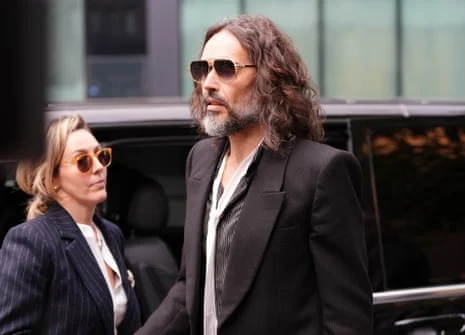
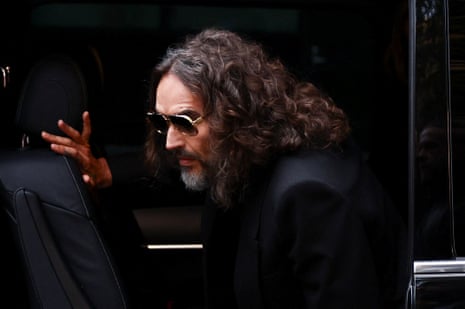
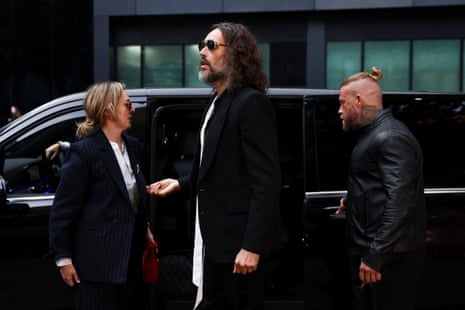
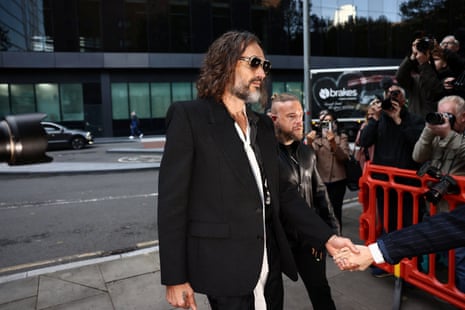
Brand arrived at the court building shortly before the proceedings were set to commence, accompanied by his wife, Laura Gallacher. He was seen emerging from a black Mercedes-Benz van, dressed in a dark suit paired with a black-and-white striped shirt, a long white tie, and sunglasses. Speaking briefly to members of the media gathered outside, Brand struck a posture of cautious apprehension, stating that he felt “concerned but hopeful.”
“Today I feel blessed, I feel of course concerned but hopeful that this process will lead to good outcomes for everybody involved,” he told reporters. “That’s my prayer.”
The Charges and the Prosecution’s Case
The trial, which is expected to span several weeks, centers on allegations involving six women, with incidents alleged to have occurred between 1999 and 2009. The prosecution is expected to present a comprehensive overview of the charges, which include three counts of rape, three counts of sexual assault, and one count of indecent assault.

Brand has consistently and vehemently denied all allegations, entering a plea of not guilty to every charge leveled against him. As the legal process moves from the pretrial phase to the presentation of evidence, the courtroom will become the site of a rigorous examination of events dating back over two decades.
Legal observers note that the age of the allegations—some dating back to the late 1990s—presents unique challenges for both the prosecution and the defense. Establishing a clear timeline and managing the reliability of witness testimony will likely form the core of the courtroom battles as the trial progresses.
Chronology of the Legal Process
The arrival of the trial at Southwark Crown Court follows a lengthy period of intense public and legal scrutiny. The path to this week’s opening statements has been marked by several key procedural milestones:
- Initial Investigations: Following a wave of public allegations, official investigations were launched to determine the viability of criminal charges. These investigations involved months of evidence gathering and interviews with complainants.
- Charging Decisions: Following the completion of police inquiries, the Crown Prosecution Service (CPS) moved forward with the charges, citing sufficient evidence to provide a realistic prospect of conviction.
- The Pre-trial Phase: Throughout the preceding months, both the prosecution and defense teams have navigated a complex series of hearings, focusing on evidence disclosure, legal arguments regarding the admissibility of testimony, and the protection of complainant anonymity.
- Jury Selection (October 13, 2026): On Tuesday, a jury was officially sworn in. The presiding judge, Mr. Justice Bennathan, issued a firm and clear instruction to the jurors, emphasizing the necessity of impartiality. He specifically warned the panel to disregard any prior media reports, public discourse, or speculation regarding Brand’s character or the specific allegations, stressing that their verdict must be based solely on the evidence presented within the four walls of the courtroom.
Media Presence and Security Protocols
The high-profile nature of the defendant has drawn a massive contingent of national and international media to the Southwark area. News agencies, including the Press Association, reported that journalists, photographers, and broadcast crews had begun establishing positions as early as 7:30 a.m.
The atmosphere outside the court was strictly managed by security and law enforcement. A perimeter was established with barriers, and police officers were seen managing the flow of the press to ensure the court’s operations remained undisturbed. One officer was observed directing journalists to remain behind the established barriers, underscoring the court’s commitment to maintaining order during what is expected to be a highly visible trial.
Implications for the Entertainment Industry
The commencement of this trial has reignited a broader conversation regarding the entertainment industry’s culture, power dynamics, and the accountability of public figures. The allegations against Brand cover a period during which he was ascending to the peak of his fame, working across television, radio, and film.
Industry analysts suggest that the outcome of this trial will have far-reaching implications for how such allegations are handled in the future. It serves as a litmus test for the judicial system’s ability to adjudicate historical claims of sexual misconduct involving prominent figures in the era of #MeToo and heightened societal awareness.
Furthermore, the trial highlights the tension between the public’s interest in the private lives of celebrities and the fundamental legal principle of the presumption of innocence. The judge’s instruction to the jury to ignore past media coverage is a direct acknowledgment of the difficulty in finding an impartial jury in the age of viral news and social media echo chambers.
The Role of the Jury and the Judge
Mr. Justice Bennathan’s role in this trial is pivotal. As the arbiter of law, he is tasked with ensuring that the proceedings remain focused on the facts. His warning to the jury is a standard, yet critical, element of ensuring a fair trial. In cases where the defendant is a household name, the threat of "trial by media" is an ever-present risk to the integrity of the judicial process.
The jury, comprised of ordinary citizens, faces the heavy burden of weighing testimony that spans a significant period of time. They must evaluate the credibility of the complainants—who have come forward with accounts of trauma from years past—against the defense’s narrative, which maintains Brand’s innocence.
Supporting Data: Contextualizing the Allegations
While the specific details of the evidence remain sealed until presented in open court, the legal framework under which these charges are being tried is well-defined. Under UK law, the burden of proof rests entirely with the prosecution, which must prove the charges "beyond a reasonable doubt."
The prosecution’s case is expected to rely on a combination of:
- Direct Testimony: The accounts of the six complainants will be central. Their cross-examination will likely be the most intense phase of the trial, as the defense will seek to highlight inconsistencies or gaps in memory.
- Corroborating Evidence: Where available, the prosecution may look to introduce digital evidence, such as communications or logs from the relevant time periods, to support the claims made by the witnesses.
- Expert Testimony: The court may hear from experts regarding the psychological impact of trauma and the complexities of memory, particularly concerning events that occurred years or decades prior.
Looking Ahead
As the trial moves into its opening phase, the public and the media remain in a "wait and see" pattern. With the opening statements from the prosecution expected to outline the specific narrative of the allegations, the public will finally gain a clearer understanding of the details that have been the subject of so much speculation.
For Russell Brand, this is the most significant challenge of his professional and personal life. For the legal system, it is an opportunity to demonstrate the robustness of the British justice system in handling complex, sensitive, and high-stakes criminal trials.
The trial is expected to continue throughout the coming weeks, with the court operating on a strict schedule. As proceedings move forward, the focus will remain on the courtroom floor, where the legal arguments and evidence will dictate the trajectory of the case. Whether this process leads to the "good outcomes" that Brand mentioned in his brief remarks remains a question that only the final verdict of the jury will answer.
As the court reconvenes, the nation watches, waiting to see how the justice system navigates the intersection of fame, accountability, and the rule of law.