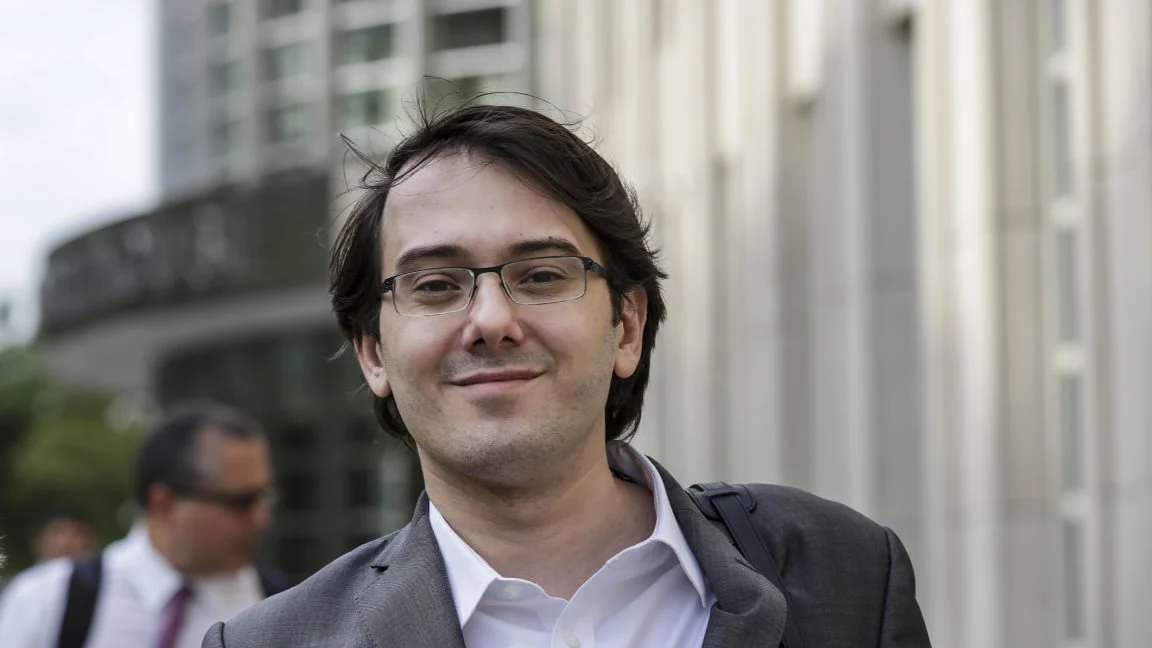
In a significant escalation of a long-standing legal battle, the Federal Trade Commission (FTC) and a coalition of state attorneys general have formally accused Martin Shkreli—the former pharmaceutical executive once dubbed "the most hated man in America"—of flagrantly violating a lifetime ban from the pharmaceutical industry. The regulatory body, supported by a mounting volume of digital evidence, contends that Shkreli has not only returned to the sector he was barred from but has done so with a sense of impunity, openly flaunting his activities on social media platforms.
The legal motion, filed recently, seeks to enforce the consequences of a permanent injunction imposed in the wake of his 2022 antitrust trial. For regulators, the case is about more than just stock trades; it is a test of whether the judiciary’s most severe penalties have any teeth in the era of decentralized finance and livestreamed influence.
The Regulatory Stance: A Breach of Public Trust
FTC Commissioner Mark Meador issued a scathing statement alongside the filing, emphasizing that the integrity of judicial orders rests entirely on their enforcement. “The extensive record compiled by FTC staff shows that Mr. Shkreli chose to blatantly disregard the order after leaving prison,” Meador wrote. “Among other actions, he has traded pharmaceutical stocks and actively sought to influence the business and management of multiple pharmaceutical companies through public commentary, in violation of the terms of the injunction. A lifetime industry ban is only effective if breaches are met with consequences commensurate with the seriousness of the order.”
The FTC’s position is clear: the injunction was designed to prevent Shkreli from leveraging his notoriety and market-moving influence to manipulate the pharmaceutical sector, a space where he previously became infamous for drastic price hikes on life-saving medications. By engaging in stock-picking, short-selling, and public commentary that moves market prices, regulators argue that Shkreli is effectively conducting the very business he was forbidden to touch.
Chronology of Alleged Violations
The brief filed by the FTC breaks down the evidence of Shkreli’s activities into four distinct phases, painting a picture of a man who has treated the court’s mandate as a mere suggestion.
Phase 1: The 2022 Trading Competition
Shortly after his release from federal prison, Shkreli began engaging in a series of online "trading competitions" alongside other influencers and YouTubers. The FTC alleges that these competitions were not mere casual entertainment but intentional forays into the pharmaceutical equities market, directly testing the boundaries of his court-ordered restrictions.
Phase 2: The 2024 Biotech Short-Selling
In 2024, the scope of his activity expanded. The filing details how Shkreli took active short positions against small-cap biotech firms. By shorting these stocks, Shkreli stood to profit from the decline of these companies—a move that regulators argue constitutes an attempt to profit from the manipulation of firms within the forbidden industry.
Phase 3: The 2025 Trading Challenge
By 2025, the alleged activity became more brazen. During this period, Shkreli engaged in a trading challenge where he publicly shorted three distinct biotech companies while simultaneously holding a broad portfolio of pharmaceutical stocks. This period marked a significant shift, as the FTC noted his public discourse began to explicitly influence the stock prices of the companies he was targeting.
Phase 4: The $10 Million Account (2026–Present)
The most recent phase, which began in June 2026, involves a massive $10 million trading account. The FTC filing highlights that Shkreli continues to use this capital to trade in pharmaceutical companies, demonstrating a scale of involvement that the commission characterizes as a direct affront to the federal court that sentenced him.
The "Magic Trick": Market Influence via Livestream
Central to the government’s case is Shkreli’s use of livestreaming platforms to broadcast his trading strategies. These broadcasts provided the FTC with a treasure trove of incriminating evidence. Shkreli frequently shared his screen, displaying his brokerage accounts and offering detailed analyses of clinical trial outcomes—a practice that carries immense weight given his background in the pharmaceutical sector.
In 2025, Shkreli boasted to his viewers about his "magic trick." He remarked, “It doesn’t matter what trades I make because I can always find a couple of biotech stocks to smoke.” This statement is cited in the legal brief as evidence of intent to manipulate market sentiment. His influence is not merely theoretical; the filing notes that after he advised his viewers to short a particular pharmaceutical firm in 2025, the company’s stock price plummeted by 17 percent in short order.
The FTC suggests this is likely just the "tip of the iceberg." Shkreli has hinted at the existence of hidden portfolios and secondary accounts, openly mocking regulators during his broadcasts. “I have some other accounts that I’d show you, but, like, I know feds are watching, so f— that,” he allegedly stated, according to the transcript included in the filing.
The Defendant’s Response: A Political Pivot
True to his provocative public persona, Shkreli responded to the filing with a mix of defiance and political deflection. Writing on social media, he expressed feigned surprise at the FTC’s actions, framing the legal pressure as an ideological attack rather than a response to rule-breaking.
“I could see totalitarian NY AG Letitia James trying to limit a citizen’s free speech but not from Trump’s FTC,” Shkreli wrote, invoking political figures to galvanize his base. By framing the enforcement action as a violation of his free speech rights, Shkreli continues his long-standing strategy of casting himself as a martyr against a bureaucratic "deep state." This rhetoric has served him well in maintaining a dedicated, albeit controversial, following online, but it remains to be seen whether such a defense will hold weight before a federal judge.
Implications: The Limits of Regulatory Power
The implications of this case are profound for both the pharmaceutical industry and the broader regulatory landscape. If Shkreli is found in contempt of court, the consequences could include additional fines, the seizure of trading assets, or even a return to incarceration.
1. Enforcement in the Digital Age
The case highlights the difficulty of policing high-profile individuals in the age of social media. When an individual can influence market cap with a single livestream, traditional "industry bans" become difficult to monitor. The FTC is effectively arguing that "influence" in the pharmaceutical space is synonymous with "participation" in the pharmaceutical space.
2. The Future of Judicial Injunctions
This case will likely set a precedent for how the judiciary handles permanent injunctions against white-collar defendants. If the court finds that Shkreli’s behavior—trading stocks and providing commentary—constitutes a violation, it could pave the way for more restrictive injunctions in future cases, potentially limiting the public speech of barred individuals.
3. Market Integrity
Finally, the case touches upon the sanctity of pharmaceutical markets. These companies are often driven by the outcome of clinical trials and regulatory approvals. When a controversial figure like Shkreli actively seeks to destabilize these firms for personal profit, it raises questions about the vulnerability of the market to targeted misinformation or coordinated short-selling campaigns.
Conclusion
The FTC’s move against Martin Shkreli serves as a stark reminder that the long arm of the law does not stop at the edge of a livestream. While Shkreli continues to lean into his role as a digital provocateur, the weight of the evidence presented—ranging from his own recorded boasts to the quantifiable drops in stock prices following his commentary—suggests a legal reckoning is approaching. Whether this will finally silence the man who once famously raised the price of Daraprim by 5,000 percent remains to be seen, but the federal government has signaled that it is no longer willing to tolerate the "magic tricks" of a man they believe has exhausted his second chances.