
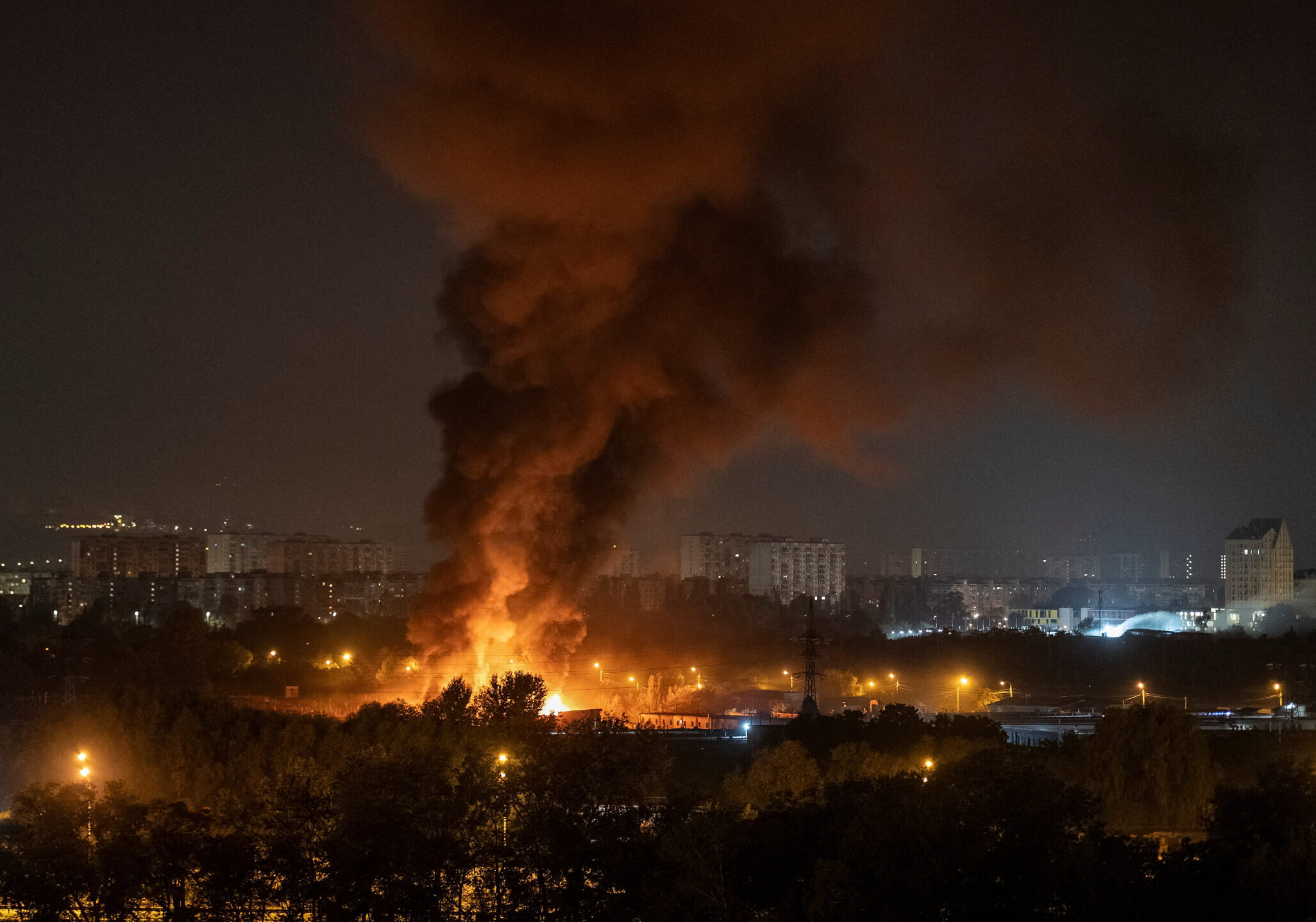
In a stark rejection of international diplomatic overtures, the Kremlin has intensified its aerial campaign against Ukraine, launching a wave of precision strikes on critical energy infrastructure mere hours after a surprise announcement by U.S. President Donald Trump regarding a potential energy ceasefire. This calculated military escalation serves as a definitive rebuke to U.S.-led mediation efforts, signaling that Russian President Vladimir Putin remains committed to a strategy of total attrition rather than negotiation. As the seasonal freeze approaches, the conflict has shifted from a conventional struggle for territorial control into a brutal, systematic effort to render the Ukrainian state uninhabitable.
The Strategy of Attrition: A New Phase of Aerial Warfare
The current Russian offensive marks a departure from earlier phases of the war. Unable to achieve a decisive breakthrough on the front lines despite years of staggering human and material losses, the Kremlin has pivoted toward a refined "victory plan." This strategy relies on an expanded air offensive designed to exploit the limitations of Ukraine’s depleted air defense network.
By deploying a sophisticated cocktail of ballistic missiles, long-range cruise missiles, and high-velocity jet-powered drones, Moscow is targeting the very nervous system of Ukrainian society. The objective is clear: to systematically dismantle the power grid, water supply, and logistical backbone of the nation, thereby inducing a humanitarian catastrophe of such magnitude that the Ukrainian government is forced into capitulation.
Chronology of Escalation: From Stalemate to Systematic Destruction
The path to this winter’s anticipated bombardment has been paved by a series of military setbacks for the Kremlin and a hardening of resolve in Kyiv.
- Mid-2026: After months of grueling combat, Russian forces find themselves stalled across most sectors. Despite mobilizing massive reserves, the Russian military has been unable to overcome the tactical hurdles of the "fortress belt" in the northern Donbas.
- August 2026: Ukraine launches Operation Vivaldi, a series of counter-maneuvers that succeeds in regaining territory in the Donetsk region, further complicating Russian supply lines and halting their momentum.
- September 2026: Russia begins a noticeable shift in tactics, moving away from front-line infantry assaults to a intensified, multi-vector aerial campaign. Large-scale drone strikes begin to disrupt the economic life of Kyiv and other major urban centers.
- October 2026: Following a brief diplomatic flicker from the U.S. regarding an energy ceasefire, Russia responds with its most concentrated bombardment of power plants to date. Simultaneously, internal documents recovered by Ukrainian intelligence suggest that Moscow has stockpiled at least 700 ballistic missiles specifically for a winter campaign.
The Weaponization of Winter: Data and Infrastructure Targets
As the temperature drops, the strategic focus of the Russian military has narrowed to the "winterization" of the conflict. The intelligence gathered by Ukrainian officials indicates a highly specific list of targets designed to isolate cities from the national grid.
The documents point to a multi-layered attack plan:
- Energy Hubs: Targeting thermal and hydroelectric plants, as well as the critical junctions connecting Ukraine’s nuclear power stations to the national grid.
- Water and Logistics: Strikes against water treatment facilities and major railway hubs, which are essential for both civilian survival and the movement of goods and humanitarian aid.
- Economic Strangulation: By hitting steel plants and logistics nodes, Russia aims to bankrupt the Ukrainian state, starving the budget of export revenues and driving unemployment to critical levels.
The introduction of next-generation jet-powered drones—which are significantly faster and harder to track than the earlier Iranian-designed Shahed models—has exacerbated the strain on Ukraine’s air defense systems. These drones are being used to keep cities in a state of perpetual alarm, preventing recovery efforts and disrupting essential services like public transport and schooling.
Official Responses and the Humanitarian Crisis
The international community is bracing for the fallout. The United Nations, led by development agency chief Alexander De Croo, has described the current situation as a "race against the clock." With the power grid already fragile, the UN warns that the coming months could trigger a mass exodus of millions of refugees into the European Union, potentially destabilizing the region further.

Ukrainian President Volodymyr Zelenskyy has been vocal in his warnings, urging the West to acknowledge the scale of the Russian stockpile. "We are facing an adversary that has prioritized the destruction of civilian life over military progress," Zelenskyy noted in a recent address. He has repeatedly called for the urgent delivery of additional air defense systems, including Patriot and IRIS-T batteries, alongside industrial-scale power generation equipment to keep hospitals and municipal services running through the expected blackouts.
Implications: The Failure of Coercion?
History provides a cautionary tale for the Kremlin. Military analysts often point to the "London Blitz" or the bombing campaigns of World War II to illustrate that the deliberate targeting of civilian populations frequently yields the opposite result of what is intended: it strengthens national resolve rather than breaking it.
Despite the devastation, there is no evidence that the Ukrainian public is willing to concede. On the contrary, the intensification of Russian strikes has historically acted as a catalyst for increased Western aid. Each wave of infrastructure destruction has provided Western leaders with the political impetus to release further tranches of funding and advanced weaponry.
However, the security implications are profound. If Putin succeeds in rendering Ukraine’s major cities uninhabitable, the humanitarian consequences will not be confined to Eastern Europe. The collapse of the Ukrainian power sector would create a massive security vacuum, embolden aggressive posturing elsewhere, and test the limits of EU solidarity.
Strategic Recommendations for the West
To counter the Kremlin’s winter strategy, analysts suggest that Western partners must shift from reactive support to proactive fortification. The following pillars are considered essential:
- Integrated Air Defense: Moving beyond the provision of interceptors to supplying localized, layered air defense networks specifically designed to protect power substations and critical water infrastructure.
- Economic Resiliency: Providing financial guarantees to allow Ukraine to maintain industrial activity, alongside the provision of mobile power generation units that can be deployed rapidly to affected areas.
- Diplomatic Pressure: While the Kremlin has signaled its disinterest in ceasefire talks, Western nations must maintain a unified stance, ensuring that the cost of Russia’s aerial campaign remains prohibitively high through increased sanctions on the dual-use components required for their drone and missile programs.
Conclusion: A Turning Point in the Conflict
The unfolding events of late 2026 represent a critical juncture in the Russo-Ukrainian war. By choosing to target the civilian life-support systems of Ukraine rather than engaging in honest negotiation, Vladimir Putin has signaled a belief that total devastation is his only path to success.
The winter months will be a test of endurance for the Ukrainian people and a test of resolve for their international partners. Whether this phase of the war leads to a breakthrough in negotiation or a deepening of the humanitarian catastrophe depends heavily on the speed and efficacy of the support provided by the transatlantic community. As the ice sets in, the world is witnessing a grim realization: the battle for Ukraine is no longer just being fought in the trenches; it is being fought in the power plants, the railway stations, and the homes of millions of civilians caught in the crosshairs of a ruthless, long-term campaign of destruction.
The time for waiting has passed. The security of Europe, and the survival of a sovereign Ukraine, now depend on the ability of the international community to bolster the resilience of a nation that refuses to be plunged into darkness.