PARIS – On October 24, 2026, the streets of France became a vivid theater of economic discontent as hundreds of thousands of citizens mobilized in a coordinated nationwide demonstration. The rallies, which targeted the government’s fiscal policies and the rapid erosion of purchasing power, paralyzed city centers from Paris to Marseille, marking one of the most significant domestic challenges to the French administration in recent years.
While the day remained largely orderly in the capital, the sheer scale of the turnout underscores a deepening fracture between the French public and the government’s ongoing austerity measures. As inflation continues to outpace wage growth, the "cost-of-living movement" has evolved from localized grievances into a potent, broad-based social force.
Main Facts: A Tale of Two Figures
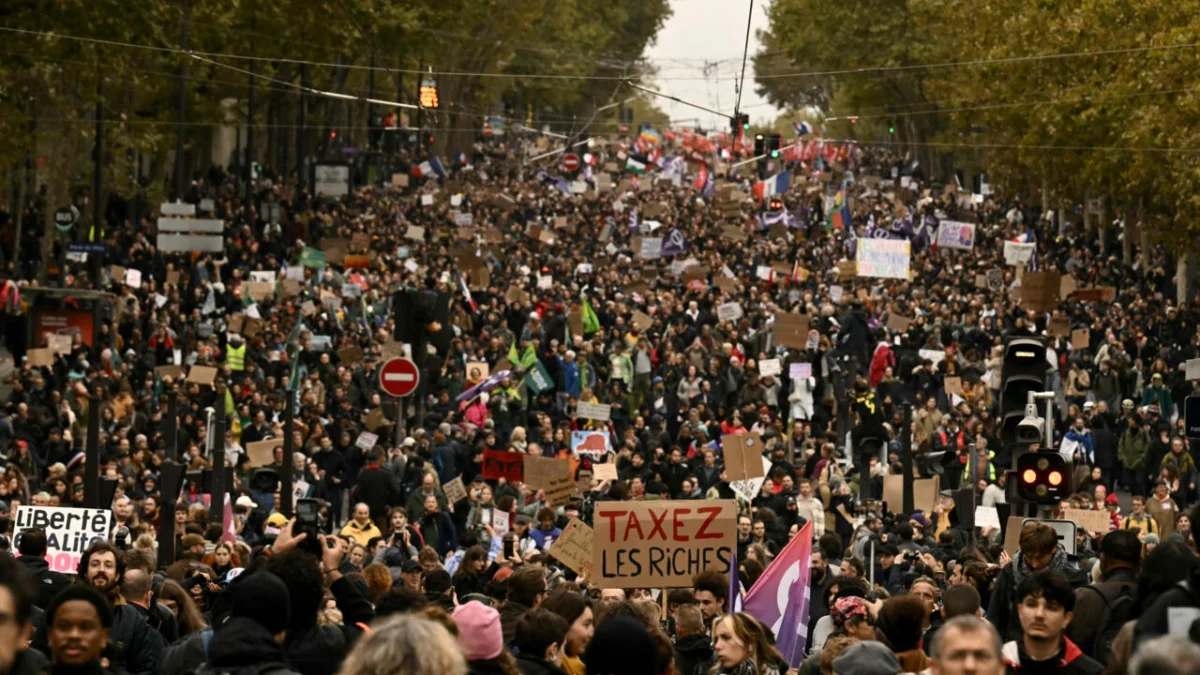
The intensity of the mobilization was highlighted by the starkly contrasting attendance figures provided by state authorities and protest organizers. According to the Ministry of the Interior, approximately 410,000 individuals participated in demonstrations across the country, with 110,000 marching through the heart of Paris.
Conversely, labor unions and advocacy groups—who spearheaded the movement—offered significantly higher estimates, claiming nearly 800,000 participants nationwide and 250,000 in the capital alone. Regardless of the discrepancy, both sets of figures suggest a massive mobilization that signals widespread public dissatisfaction.
The protests centered on three primary pillars:
- Restoration of Purchasing Power: Demands for immediate wage indexation and tax relief for low-to-middle-income households.
- Protection of Public Services: Opposition to proposed budget cuts in healthcare, education, and transport sectors.
- Fiscal and Social Justice: Calls for a more progressive tax system that places a heavier burden on corporations and high-net-worth individuals to fund public infrastructure.
Chronology of the Day: From Calm to Confrontation
The demonstrations began early Saturday morning under heavy police surveillance. In Paris, the atmosphere was marked by a blend of collective urgency and civic discipline. Marchers, ranging from unionized industrial workers to students and healthcare professionals, moved through the capital’s central arteries, carrying banners decrying "fiscal inequality" and "the death of the middle class."
Morning: The Gathering Storm
By 10:00 AM, thousands had already congregated at major transit hubs. The mood in Paris was initially described by local officials as "calm." Despite the presence of thousands of security personnel, the morning proceeded without significant incident. The demonstration was characterized by a diverse demographic: elderly retirees worried about pension sustainability marched alongside Gen-Z activists concerned about the future of employment and environmental policy.
Afternoon: The Shift in Tone
As the afternoon progressed, the situation in several regional hubs—notably Nantes, Lyon, and Bordeaux—began to diverge from the relative peace observed in Paris. In these cities, fringe groups attempted to deviate from sanctioned protest routes, leading to isolated but intense clashes with law enforcement. Police utilized tear gas and perimeter containment tactics to prevent unauthorized access to government buildings and restricted urban zones. By 4:00 PM, minor skirmishes had broken out in secondary cities, resulting in a limited number of arrests and minor property damage, though authorities maintained that the vast majority of participants remained peaceful.
Supporting Data: The Economic Engine of Discontent
The October 24 protests did not emerge in a vacuum; they are the direct result of a prolonged period of economic instability. Economic data released in the week leading up to the protest paints a grim picture:

- Inflationary Pressure: Consumer Price Index (CPI) reports for late 2026 indicate that the cost of essential goods—including fuel, electricity, and basic foodstuffs—has risen by double-digit percentages compared to the same period in the previous year.
- Wage Stagnation: While nominal wages have seen slight adjustments, real purchasing power has shrunk significantly, creating a "cost-of-living gap" that the government’s existing subsidies have failed to bridge.
- Fiscal Deficits: France’s debt-to-GDP ratio remains a primary concern for the administration. The government’s attempt to consolidate the budget through reduced public spending has inadvertently acted as a catalyst for social unrest, as the most vulnerable segments of the population feel the immediate impact of reduced social services.
Official Responses and Political Maneuvering
The administration of President Emmanuel Macron has found itself in a precarious position. Ahead of the October 24 demonstrations, the President held emergency meetings with student leaders, labor representatives, and law enforcement heads in a bid to pre-emptively address grievances.
The Government Position
In a televised address following the protests, government spokespersons emphasized the need for "responsible fiscal management." The administration has argued that while it acknowledges the pain caused by global inflationary trends, the current budgetary constraints are necessary to avoid long-term structural debt crises. "We are listening to the French people," one official noted, "but we cannot solve systemic global economic problems with populist measures that would jeopardize the long-term stability of the French economy."
The Opposition Stance
Opposition parties have seized on the protests to criticize the government’s perceived detachment from the working class. Leaders from both the far-left and far-right have framed the protest as a failure of the current administration’s "technocratic" approach to governance. They are calling for an emergency parliamentary session to discuss the repeal of recent fiscal reforms and the implementation of more aggressive price controls on essential goods.
Implications: The Road Ahead
The events of October 24 have profound implications for the French political landscape. The mobilization suggests that the "social contract" in France is undergoing a severe stress test.
1. The Threat of Escalation
The shift in violence in regional cities provides a blueprint for how future protests might evolve. If the government continues its current fiscal trajectory without offering meaningful concessions, there is a risk that the movement will adopt more militant tactics. Labor unions have already hinted at the possibility of rolling strikes if their demands for a national dialogue on purchasing power are ignored.
2. A Challenge to Policy Reform
For the Macron administration, the protests represent a major hurdle for its legislative agenda. Future bills involving public service reforms or tax adjustments will likely face intense public scrutiny and opposition. The government must now decide whether to double down on its fiscal discipline or pivot toward a more populist, welfare-heavy policy stance to regain public favor.
3. The European Context
France is not an outlier; the protests are part of a broader wave of economic unrest sweeping across the European Union. Similar rallies in Germany, Italy, and Spain have highlighted a continental trend of dissatisfaction with how national governments are handling the transition away from fossil fuels, the aftermath of recent global supply chain shocks, and the rising costs of living. France’s experience will likely serve as a litmus test for how EU nations manage the balance between fiscal responsibility and social stability in the coming year.
Conclusion: A Nation at a Crossroads
As the dust settles on the October 24 demonstrations, the message from the streets is clear: the French public is no longer willing to bear the brunt of economic volatility in silence. The 410,000 to 800,000 citizens who took to the streets represent a diverse cross-section of society unified by a singular, urgent need for relief.
The next few weeks will be critical. The government’s response—whether it chooses to engage in substantive negotiation or maintain its current defensive posture—will determine whether the country faces a period of cooling social temperatures or a long, winter season of discontent. For now, the streets remain quiet, but the underlying tensions that sparked the movement remain largely unresolved, leaving France in a state of tense anticipation.