As the global landscape shifts, three major developments are dominating the international discourse: a landmark housing crisis in Spain that has triggered legislative reform, a strategic U.S. military withdrawal from Iraq, and an escalating trade war between Washington and Ottawa. These events, unfolding simultaneously, highlight the tension between domestic policy challenges and the complexities of international relations.
I. Spain’s Housing Crisis: From Personal Tragedy to Policy Reform
The Catalyst: Maricarmen Abascal
The housing crisis in Spain, long simmering, reached a breaking point last week when 87-year-old María del Carmen Abascal was forcibly removed from her Madrid apartment of seven decades. The image of the octogenarian being carried out on a stretcher became a visceral symbol of a nation struggling to balance private investment with the fundamental right to shelter.
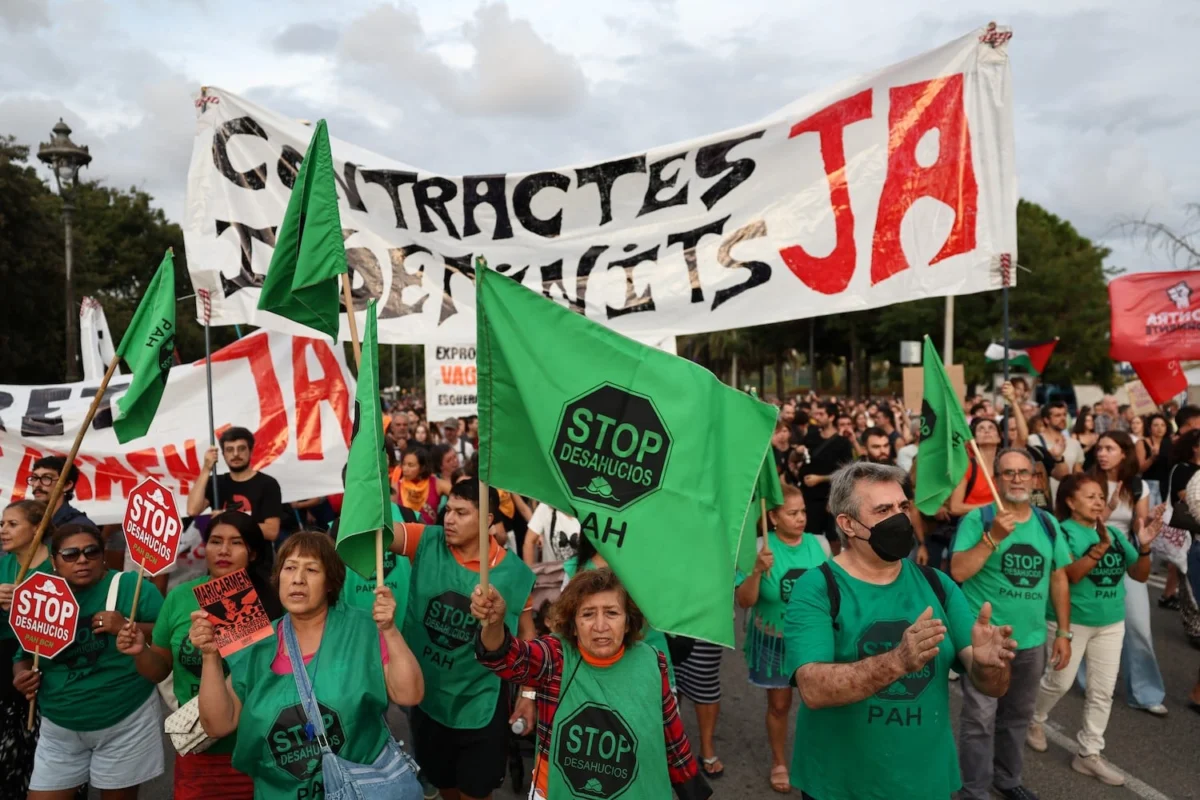
Abascal’s plight was the result of a 230 percent rent increase imposed by an investment firm that had purchased the building. Her inability to pay, despite having lived in the residence since the 1950s, sparked outrage across the country. Following mass anti-government protests, a legal breakthrough was reached: Abascal signed an eight-year lease at a rate pegged to 30 percent of her pension, roughly $460 per month. While the Madrid tenant union celebrated this as a “historic” victory against speculators, it highlighted the fragility of housing security for millions.
A Chronology of Decline
The current crisis is not a sudden phenomenon but the culmination of decades of misaligned policy:
- Early 2000s: Spain aggressively incentivized construction to stimulate the economy, leading to a massive housing glut.
- 2008 Financial Crash: Property values plummeted, leaving the market in shambles. To lure investors back, the government implemented policies that made it easier for foreign capital and landlords to acquire real estate.
- 2014–2024: A combination of increased foreign investment, a booming tourism sector, and the proliferation of short-term rentals pushed rents up by 80 percent nationwide.
- Present Day: An estimated 3.8 million homes remain empty in rural areas due to lack of jobs, while the deficit in urban centers is projected to exceed 1 million units by 2028.
Legislative Response and Political Friction
Prime Minister Pedro Sánchez’s coalition government has moved to capitalize on the public momentum, proposing two major legislative measures. The first, which enjoys broad support, aims to freeze evictions for vulnerable tenants until 2030, ban "vulture funds" from predatory practices, and cap short-term rental permits.
The second proposal, however, is meeting fierce resistance. It seeks to allow the automatic renewal of rental contracts without rent increases. Conservative opposition leader Alberto Núñez Feijóo of the People’s Party (PP) has slammed the plan as a political maneuver, arguing that the government is ignoring the root cause of the crisis: an "open-door immigration policy" that has caused demand to outstrip supply. As parliament prepares for a crucial vote, the debate reflects a deepening divide in Spanish politics over how to reconcile market dynamics with social welfare.
II. The Strategic Withdrawal: U.S. Forces Exit Iraq
The End of an Era
By Wednesday, U.S. forces are slated to complete their withdrawal from the last of their bases in Iraq, fulfilling a deadline set in 2024. This move marks the end of a two-decade-long military presence that began with the 2003 invasion to topple Saddam Hussein.
While the withdrawal is being framed by some Iraqi factions as a "crushing defeat for the American project," the reality is far more nuanced. The U.S. presence has long served as a vital counterweight to Iranian influence in the region. The departure leaves a significant power vacuum that observers fear could be filled by Iranian-backed militias and potentially exploited by remnants of the Islamic State.
Implications for Regional Stability
Baghdad finds itself in a precarious position. As the only country in the Middle East maintaining deep ties with both Washington and Tehran, Iraq’s ability to navigate the post-withdrawal landscape will determine its future stability. Abu Mojtaba al-Yasiri, a commander in the Islamic Resistance in Iraq, has publicly hailed the withdrawal as a victory. However, international security experts warn that the Iraqi military may not yet possess the operational autonomy to maintain internal security without the technical and strategic support of American forces.
III. The North American Trade War: U.S. vs. Canada
Escalating Tensions
The White House has officially implemented a ban on over $1 billion in Canadian goods, including dairy, alcohol, and automotive components. This measure is a direct retaliation against Canadian tariffs—ranging from 15 to 50 percent—that were placed on U.S. exports earlier this month.
President Donald Trump, in a sharp escalation of rhetoric, recently labeled Canada "one of the worst countries in the world" regarding trade practices. Trump’s administration has openly questioned the fairness of the long-standing bilateral trade relationship, going so far as to threaten the imposition of extreme economic policies.
Ottawa’s Pivot
In response to the hostility from Washington, the Canadian government under Prime Minister Mark Carney is actively diversifying its trade partners. The administration is pivoting toward the European Union and prioritizing domestic production to insulate its economy from U.S. volatility. Carney recently celebrated a new rail project, emphasizing that Canadian infrastructure will henceforth rely on domestic materials and labor, a clear signal that Ottawa is prepared for a long-term decoupling from its southern neighbor’s economic sphere.
IV. Global Flashpoints: Conflict in Myanmar
Amidst these shifts, the humanitarian situation in Myanmar continues to deteriorate. A recent military airstrike near a market in the rebel-held Rakhine state claimed at least 50 lives. Local aid organizations describe the event as a deliberate attack on civilian infrastructure.
Since the 2021 military coup that ousted the government of Aung San Suu Kyi, the country has been locked in a brutal civil war. The human cost is staggering: 100,000 deaths, 3.5 million displaced persons, and a growing food security crisis affecting 12 million people. While the military regime, the Tatmadaw, claims to target only military infrastructure, international observers continue to document a pattern of strikes that suggest a systemic disregard for civilian safety.
V. Odds and Ends: Integrity in Sport
In a rare intersection of bureaucracy and athletics, the English Football Association (FA) has ordered a full replay of an FA Cup qualifying match. The decision stems from a refereeing error during a game between Woodford Town and Mulbarton Wanderers. After a penalty kick was disallowed due to player encroachment—rather than being retaken as per regulation—the subsequent fallout altered the course of the match. The FA’s decision to order a replay serves as a reminder that, even in the world of high-stakes sports, the adherence to established rules remains paramount to maintaining the integrity of the game.
Conclusion
As the world watches these disparate events, a common theme emerges: the struggle for stability. Whether it is a tenant fighting for her home in Madrid, a nation balancing geopolitical giants in Baghdad, or a country recalibrating its economic alliances in the face of protectionism, the common thread is the search for sovereignty and security in an increasingly unpredictable global climate. The outcomes of this week’s developments—from the halls of the Spanish parliament to the borders of North America—will undoubtedly set the tone for the coming year.