In a development that highlights the fragile intersection of private sector technology and high-stakes military strategy, the Ukrainian government has confirmed that its military has restored a "stable connection" to the Starlink satellite communications system. This stabilization comes 10 days after a sudden, restrictive capping of data speeds left frontline units blind, incapacitated vital defensive operations, and sparked a diplomatic firestorm between Kyiv, Washington, and the billionaire entrepreneur Elon Musk.
The Starlink satellite terminals, manufactured by Musk’s SpaceX but operated under the auspices of the U.S. government, serve as the backbone of Ukraine’s digital warfare infrastructure. When these terminals were throttled—capping operational speeds at a debilitating 160 km/h (99 mph)—the consequences were immediate and catastrophic for Ukrainian combat missions. As the dust begins to settle on this technical standoff, analysts are left questioning how a private entity—and the shifting political winds in the White House—can exert such profound control over the battlefield fate of a sovereign nation.
A Chronology of the Connectivity Crisis
The crisis began in mid-October 2026, coinciding with an announcement by President Donald Trump regarding a new trade deal involving Russian diesel. Almost simultaneously, Ukrainian forces reported a sudden, unexplained degradation in their satellite bandwidth.
- October 14: Reports emerge that Ukrainian soldiers are experiencing significant, widespread restrictions on Starlink access, severely limiting their ability to coordinate drone strikes and logistical movements.
- October 15–18: Military operations suffer. Several high-priority missions are aborted as the throttled connection prevents real-time data transmission. Russia, seemingly sensing the vulnerability, launches a series of ballistic missiles against Ukrainian targets, which hit with little to no warning as Ukrainian early-warning systems were hampered by the connectivity lag.
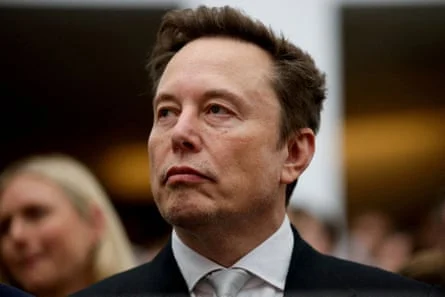
- October 19–20: The blame game begins. Elon Musk posts on X that the systems are "owned and controlled by the US government," effectively shifting responsibility to the Trump administration.
- October 21–22: U.S. Secretary of State Marco Rubio publicly distances the White House from the issue, framing Starlink as a private commercial entity beyond the reach of presidential directive. Simultaneously, Vice President JD Vance defends Musk, arguing that the billionaire should not be expected to act as a combatant in a state-level war without explicit federal guidance.
- October 23–24: President Volodymyr Zelenskyy denounces the move as a "planned operation," noting that restrictions were applied exclusively to Ukraine and not to EU-based terminals.
- October 25: Following intense diplomatic pressure and a flurry of back-channel communications, the restoration of service begins. By the morning of the 25th, Zelenskyy announces that speeds have returned to operational levels.
The Operational Cost: When Bandwidth Becomes a Weapon
The implications of the 10-day blackout extended far beyond mere technical frustration. For the Ukrainian military, Starlink is not a convenience; it is the central nervous system for modern, decentralized warfare.
When the terminals were capped, the immediate failure was in the realm of aerial defense. Ukraine’s ability to intercept incoming Russian "Shahed" jet-powered drones relies on a constant stream of satellite-relayed telemetry. Without the high-speed data necessary to process these threats, the air defense network suffered a critical blind spot. Furthermore, intelligence-led operations behind enemy lines were grounded; ground commanders, unable to download high-resolution mapping or transmit encrypted drone feeds, were forced to scrub missions to avoid exposing their positions.
President Zelenskyy was stark in his assessment of the human cost, stating that the throttling would "bring a lot of human losses." The technical bottleneck effectively turned the tide in several regional sectors, allowing Russian forces a temporary, if narrow, operational advantage.
Official Responses: A Web of Denials
The geopolitical theater surrounding the outage was marked by a series of contradictory statements that underscored the friction between the Trump administration and the private sector.
President Trump, when questioned about the incident, adopted a stance of detachment. "I don’t know if it was anybody, but it wasn’t me, and I don’t think it was Elon," he told reporters. Yet, this assertion was contradicted by the reality that the U.S. government maintains strict oversight of the "Starshield" iteration of the network used by the military.
Secretary of State Marco Rubio attempted to insulate the executive branch by highlighting the private nature of SpaceX, stating: "The president doesn’t run that company and can’t direct that company to do anything." However, this narrative was swiftly dismantled by Elon Musk himself. Writing on his platform, X, Musk explicitly stated that "Any limits on speed or usage are decided by the US military and ultimately POTUS."

This public disagreement highlighted a deeper concern: the lack of a clear framework for how private technology providers should behave in a theater of war. JD Vance’s intervention, which suggested that Musk was simply trying to avoid becoming a "state actor" without government authorization, only deepened the unease among Ukraine’s European allies. To Kyiv, the "private company" defense felt like a convenient bureaucratic shroud used to mask a deliberate political message.
Implications: The Dangers of Corporate Dependency
The resolution of the crisis—with the restoration of full speeds—brings a temporary sense of relief, but the structural risks remain. The situation has exposed three critical vulnerabilities that will define the future of modern conflict:
1. The Privatization of Military Infrastructure
Ukraine’s reliance on a single provider, controlled by a single individual, has created a "single point of failure" in their defense. While Starlink provided a lifeline when other infrastructure was destroyed, the events of October 2026 proved that this lifeline can be severed at the stroke of a keyboard. This has accelerated discussions within the EU and NATO regarding the development of sovereign, state-owned low-earth-orbit satellite constellations.
2. The Influence of the "Techno-Diplomat"
Elon Musk’s role in the Ukraine war represents a new, uncomfortable era in international relations. Billionaires with control over critical infrastructure are no longer just business leaders; they are de facto participants in geopolitical strategy. The ability of such individuals to unilaterally, or even via administrative pressure, influence the outcome of a war creates a precedent that democratic institutions may struggle to contain.
3. Regulatory and Legal Uncertainty
The conflict has highlighted an urgent need for international legal standards regarding "dual-use" technologies. When does a commercial satellite network become a weapon? And what are the obligations of these companies when they are contracted by the military? As President Zelenskyy noted, the fact that these restrictions were applied specifically to Ukraine suggests a level of precision that implies a "planned operation." If such systems can be turned on and off to influence diplomatic outcomes, they essentially become a form of economic and military sanctions, wielded without the transparency of democratic oversight.
A Fragile Status Quo
As of the latest reports, the situation has stabilized. In a video address on Telegram, a clearly relieved President Zelenskyy thanked his U.S. counterparts, including the Trump administration, for the restoration of the service. "The speeds are now at the level we need," he confirmed.
However, the shadow of the incident looms large. President Trump’s recent remark that he might have to "speak to [Musk]" if the service fails again was interpreted by many as an attempt to maintain his authority over the technology. While the immediate threat to Ukrainian soldiers has passed, the question of whether a sovereign nation’s defense should be contingent upon the shifting whims of a private CEO and the fluctuating political strategies of the U.S. government remains the most critical, and unresolved, question of the war.
For now, the signals remain clear, the drones are being tracked, and the war continues—but the vulnerability of the digital front has been permanently unmasked.