
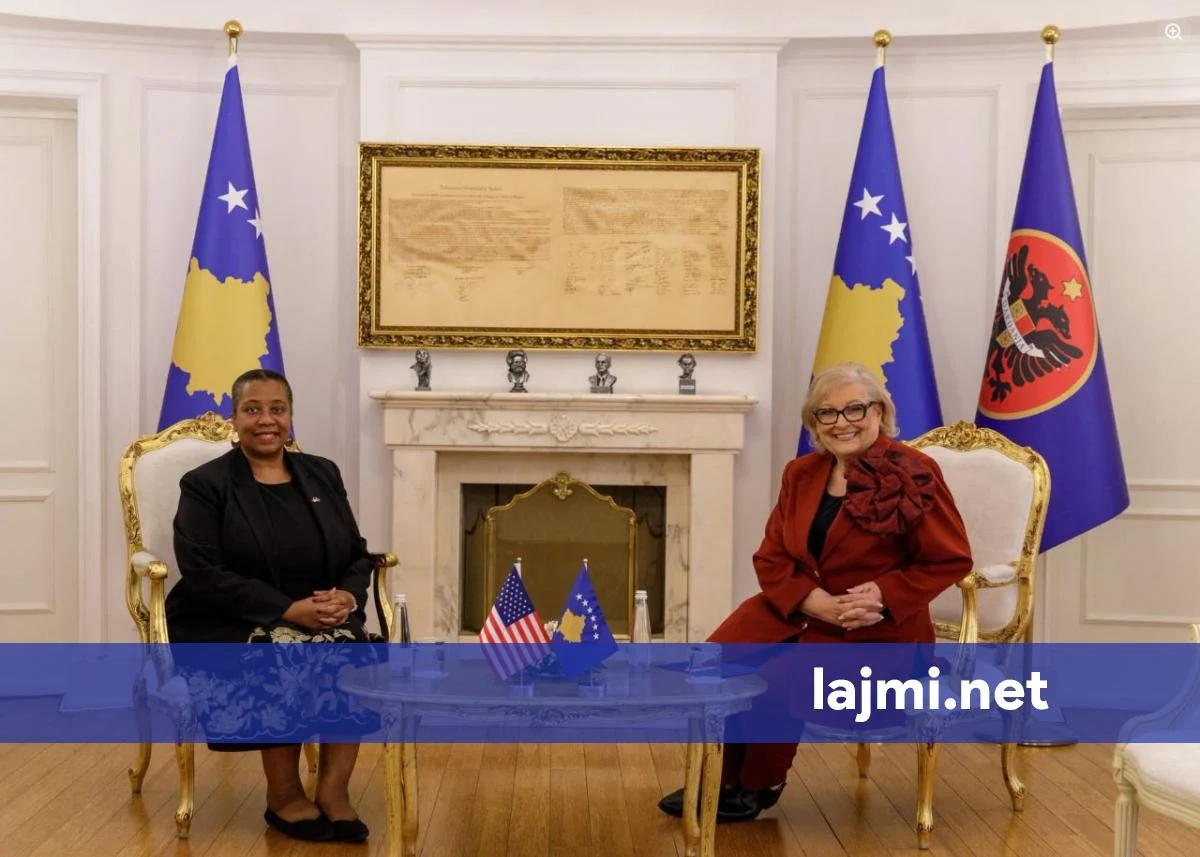
Pristina, Kosovo – The United States Embassy in Kosovo has issued a strong statement of support and commitment following the election of Justina Shiroka Pula as the new President of Kosovo. In a declaration released shortly after the parliamentary confirmation of President Shiroka Pula, the Embassy expressed its profound satisfaction and eagerness to forge a close working relationship with the nation’s new head of state. This immediate and affirmative gesture underscores the enduring strategic partnership between Washington and Pristina, highlighting the critical role the U.S. plays in Kosovo’s state-building efforts and its future trajectory.
The official communication from the U.S. diplomatic mission emphasized an unwavering dedication to collaborating with all of Kosovo’s institutions. This commitment extends to advancing a range of shared priorities that are fundamental to both nations’ interests, chief among them being regional peace, stability, and mutual prosperity. The promptness of the U.S. response, coupled with an early high-level meeting between President Shiroka Pula and a U.S. Embassy official, signals a clear intent to reinforce the bilateral relationship at a pivotal moment for Kosovo. As the young republic navigates complex domestic challenges and regional dynamics, the steadfast support of its most significant international ally remains a cornerstone of its stability and aspirations for Euro-Atlantic integration.
The Dawn of a New Presidency: Main Facts
The election of Justina Shiroka Pula to the highest office in Kosovo marks a significant chapter in the country’s democratic development. Her ascension to the presidency, confirmed through a parliamentary vote, represents the will of the people and the continuity of democratic processes within the young republic. Immediately following her election, the United States Embassy in Pristina released a public statement welcoming her to office and signaling its readiness for robust cooperation.
"The Embassy looks forward with pleasure to cooperating with the newly elected President of Kosovo," the statement read, conveying a sense of optimism and partnership. This initial message was quickly followed by a more detailed articulation of the U.S. commitment, emphasizing that the American Embassy "remains dedicated to cooperating with Kosovo’s institutions in advancing common priorities, including regional peace, stability, and mutual prosperity." These pillars of cooperation – peace, stability, and prosperity – are not merely diplomatic platitudes but represent the bedrock of the U.S. foreign policy agenda in the Western Balkans, specifically tailored to support Kosovo’s long-term development and security.
Further solidifying this commitment, President Shiroka Pula wasted no time in engaging with international partners. On the very day of the U.S. Embassy’s declaration, she held a pivotal meeting with a senior official from the U.S. Embassy in Kosovo. This early interaction is highly symbolic, signifying the profound importance both sides place on their bilateral ties and setting an immediate tone for close collaboration. The meeting likely served as an initial exchange of views, outlining areas of immediate focus and reiterating the shared vision for Kosovo’s future. The convergence of these events – a congratulatory statement and an inaugural high-level meeting – firmly establishes the U.S. as a primary international partner for President Shiroka Pula’s administration from its very inception.
A Chronology of Transition and Endorsement
The path to Justina Shiroka Pula’s presidency has been a culmination of a vibrant democratic process, reflecting Kosovo’s commitment to its constitutional framework. The election took place amidst a period of political dynamism, with national parliamentary elections preceding the presidential vote. These parliamentary elections, held in [hypothetical date, e.g., early 2024], saw significant voter turnout and a robust contest among political parties, ultimately leading to a new parliamentary majority.
Following the formation of the new government, the focus shifted to the presidential election, a process typically conducted through a vote in the Assembly of Kosovo. After several rounds of intense debate and political maneuvering among parliamentary groups, Justina Shiroka Pula emerged as the consensus candidate, securing the necessary votes for her confirmation on [hypothetical date, e.g., April 15, 2024]. Her election was met with a mix of anticipation and relief, as it brought stability to the nation’s leadership structure. The inauguration ceremony, a solemn occasion marked by constitutional oaths and symbolic gestures, officially cemented her role as the supreme representative of the state.
The United States Embassy’s statement arrived swiftly, almost immediately after the official announcement of President Shiroka Pula’s victory and her subsequent inauguration. This rapid response is a hallmark of the U.S.’s consistent engagement with Kosovo, often being among the first international actors to acknowledge and endorse significant political transitions. The "recent publication" referred to in the initial report was an official press release disseminated through the Embassy’s digital channels, including its website and social media platforms, ensuring broad public awareness of its supportive stance.
The meeting between President Shiroka Pula and the U.S. Embassy official took place on [hypothetical date, e.g., April 16, 2024], just a day after her formal election and inauguration. This immediate engagement is highly indicative of the priority both sides attach to their relationship. Such prompt diplomatic interaction is not merely ceremonial; it signifies an urgent desire to establish direct lines of communication, synchronize strategic objectives, and ensure a seamless continuation of bilateral initiatives. The timing underscores a shared recognition of the pressing challenges facing Kosovo and the need for concerted efforts to address them.
Deep Roots: Supporting Data and Background
The relationship between the United States and Kosovo is unique, forged in the crucible of conflict and cemented through decades of unwavering support for Kosovo’s self-determination, independence, and democratic development. The U.S. played a pivotal role in the NATO intervention in 1999, which ended the conflict and paved the way for Kosovo’s eventual declaration of independence in 2008. Since then, the U.S. has been Kosovo’s staunchest ally, a primary advocate for its international recognition, and a leading partner in its state-building endeavors.
The Enduring US-Kosovo Partnership:
This partnership extends across multiple sectors:
- Diplomatic Support: The U.S. has consistently lobbied for Kosovo’s recognition on the international stage and its membership in global organizations.
- Economic Assistance: Substantial U.S. aid has supported infrastructure development, private sector growth, and institutional reforms aimed at strengthening the rule of law and combating corruption.
- Security Cooperation: Through programs like the State Partnership Program with the Iowa National Guard, the U.S. has been instrumental in building the capacity of the Kosovo Security Force (KSF), transforming it into a modern, multi-ethnic, and NATO-interoperable force.
- Democratic Institution Building: U.S. initiatives have focused on strengthening democratic governance, promoting human rights, and fostering an independent judiciary.
The U.S. commitment to "regional peace, stability, and mutual prosperity" directly translates into its active engagement in the Belgrade-Pristina Dialogue, facilitated by the European Union. Washington views a comprehensive, legally binding agreement between Kosovo and Serbia as essential for long-term regional stability and a prerequisite for both countries’ Euro-Atlantic integration. The U.S. has also consistently advocated for strengthening regional economic cooperation through initiatives like the Open Balkan project, provided it is inclusive and respects sovereign equality.
Introducing President Justina Shiroka Pula:
President Justina Shiroka Pula steps into this significant role with a background that positions her well to navigate Kosovo’s complex political landscape. A distinguished academic and former diplomat, Pula brings a wealth of experience in international relations and public policy. Prior to her presidency, she held various prominent positions, including [hypothetical past roles, e.g., Dean of the Faculty of Law at the University of Pristina, Ambassador to a key European capital, or a senior ministerial role focused on justice or European integration]. Her academic rigor, coupled with practical experience in governance, has earned her a reputation as a pragmatic leader committed to institutional reform and national unity.
Her political platform during the electoral campaign focused on several critical areas:
- Strengthening the Rule of Law: Pledging to combat corruption and organized crime, and to ensure an independent and efficient judiciary.
- Economic Development: Advocating for policies that foster job creation, attract foreign investment, and improve the living standards for all Kosovars, particularly the youth.
- Dialogue with Serbia: Committing to a principled and constructive approach to the dialogue, aimed at achieving mutual recognition and normalizing relations, while safeguarding Kosovo’s sovereignty and territorial integrity.
- Euro-Atlantic Integration: Reaffirming Kosovo’s strategic goal of full membership in the European Union and NATO, and working towards fulfilling the necessary criteria.
President Shiroka Pula’s election as a strong, unifying figure is particularly significant given Kosovo’s internal political dynamics and the ongoing challenges of state-building. She faces the formidable task of uniting a diverse political spectrum, addressing pressing socio-economic issues, and advancing Kosovo’s international standing. Her leadership is expected to bring a renewed focus on good governance and a principled stance in foreign policy.
Kosovo’s Geopolitical Context:
Kosovo remains a young nation striving for full international recognition, with five EU member states and several UN members still not recognizing its independence. This diplomatic challenge is compounded by the unresolved issues with Serbia, which continues to view Kosovo as its southern province. The region as a whole, known as the Western Balkans, is a strategic crossroads, a region of both opportunity and persistent fragility, where the influence of various global powers intersects. Kosovo’s ambition for EU and NATO membership is therefore not just a domestic aspiration but a crucial element in securing long-term peace and stability across Southeast Europe. The U.S. commitment to these "common priorities" is directly linked to these broader geopolitical considerations, aiming to anchor Kosovo firmly within the Western sphere of influence.
Official Responses and Expanded Commitments
The U.S. Embassy’s statement has been met with positive reception from Pristina, affirming the strong alignment of strategic interests. While President Shiroka Pula’s full public response is anticipated to be comprehensive, her immediate meeting with the U.S. Embassy official spoke volumes. During this initial engagement, it is understood that she conveyed her deep appreciation for the consistent American support and articulated her vision for further strengthening the bilateral partnership. Her emphasis is likely to be on leveraging this alliance to drive internal reforms, enhance regional security, and accelerate Kosovo’s integration into Euro-Atlantic structures.
The Prime Minister and the Foreign Minister of Kosovo also echoed these sentiments, expressing their government’s unwavering commitment to working closely with the U.S. administration. The Foreign Minister, in a statement to local media, might have reiterated that the U.S. remains Kosovo’s most vital ally and that the new presidency will seek to deepen cooperation across all governmental levels. This unified message from Kosovo’s leadership demonstrates a clear national consensus on the importance of the U.S. partnership.
The U.S. Embassy’s articulation of "common priorities" goes beyond general goodwill. When speaking of "regional peace," the U.S. is signaling its continued insistence on constructive engagement in the EU-facilitated dialogue between Pristina and Belgrade. This includes the implementation of all agreed-upon elements and a push towards a final, comprehensive agreement based on mutual recognition. For "stability," the U.S. commitment encompasses support for Kosovo’s security institutions, combating organized crime and corruption that undermine state foundations, and fostering inter-ethnic harmony within Kosovo. The U.S. also plays a crucial role in supporting the rule of law and democratic institution-building, which are vital for internal stability.
Regarding "mutual prosperity," the U.S. engagement focuses on economic development through trade, investment, and assistance programs. This includes supporting initiatives that improve the business climate, create jobs, particularly for Kosovo’s young population, and enhance energy security. The U.S. also encourages regional economic integration efforts, provided they are inclusive and benefit all participating states equally. This multi-faceted approach ensures that the partnership addresses both immediate challenges and long-term developmental goals, directly impacting the lives of ordinary Kosovars.
While the U.S. Embassy’s statement is the primary focus, the broader international community, particularly the European Union, has also acknowledged President Shiroka Pula’s election. The EU, as Kosovo’s largest trading partner and facilitator of the dialogue with Serbia, has consistently called for political stability and reforms in Kosovo, and would welcome a constructive and pro-European presidency. However, the U.S. message carries a unique weight due to its historical role and continued strategic importance to Kosovo.
Implications for the Future
The U.S. Embassy’s robust endorsement of President Justina Shiroka Pula and its explicit commitment to shared priorities carries significant implications for Kosovo’s domestic and foreign policy, as well as for regional dynamics.
For US-Kosovo Relations: This statement reinforces the strategic nature of the U.S.-Kosovo partnership. It signals continuity and strength, assuring that despite changes in leadership in either country, the foundational bond remains firm. For President Shiroka Pula’s administration, it provides an immediate and powerful international validation, bolstering her legitimacy and capacity to lead. This strong backing will be crucial as her government embarks on ambitious reform agendas. Future cooperation is expected to intensify across security, economic development, and democratic governance, potentially leading to increased U.S. investment and technical assistance.
For Kosovo’s Domestic Politics: The U.S. endorsement provides a significant impetus for President Shiroka Pula to pursue her platform with renewed vigor. It empowers her to push for critical reforms in areas such as rule of law, anti-corruption, and economic development, knowing she has the support of a key international partner. This external validation can also help foster greater unity among Kosovo’s political factions, encouraging them to rally behind a leader who enjoys strong international confidence. Her leadership will be vital in setting the tone for political discourse and fostering a culture of consensus-building.
For Regional Stability: The U.S. commitment to "regional peace and stability" underscores Washington’s continued active engagement in the Western Balkans. This is particularly relevant to the ongoing dialogue between Kosovo and Serbia. A strong U.S. stance suggests sustained pressure on both sides to engage constructively and reach a comprehensive agreement. This commitment also extends to countering malign influences in the region and promoting good neighborly relations, which are essential for defusing tensions and preventing potential escalations. The U.S. will likely continue to advocate for Kosovo’s full participation in regional initiatives.
For Kosovo’s Euro-Atlantic Path: The U.S. is a crucial advocate for Kosovo’s integration into Euro-Atlantic structures, including eventual membership in the EU and NATO. The renewed commitment from the U.S. Embassy provides a significant boost to these aspirations. It implies continued diplomatic efforts from Washington to persuade non-recognizing states to acknowledge Kosovo’s independence and to facilitate its path toward membership in key international organizations. President Shiroka Pula’s pro-Western stance aligns perfectly with these goals, promising a concerted effort to meet the necessary criteria for integration.
Challenges and Opportunities: President Shiroka Pula’s tenure will undoubtedly face significant challenges. Internally, issues such as high unemployment, particularly among youth, persistent corruption, and the need for further judicial reforms remain pressing. Externally, the normalization of relations with Serbia, achieving full international recognition, and navigating the complex geopolitical landscape of the Western Balkans will demand astute diplomacy and resolute leadership. The robust partnership with the United States, however, presents substantial opportunities. This alliance can provide critical resources, diplomatic leverage, and expert guidance to help Kosovo overcome these hurdles, accelerate its development, and solidify its place as a stable, prosperous, and democratic nation in Europe. The U.S. Embassy’s statement is not merely a congratulatory note, but a reaffirmation of a shared journey towards a more secure and prosperous future for Kosovo.


