As the 2026 midterm elections approach, the American electorate appears increasingly defined by a sharp, faith-based polarization. A comprehensive new survey from the Pew Research Center, conducted between September 28 and October 4, 2026, reveals that religious identity remains one of the most reliable predictors of political preference in the United States. While the broader political environment currently tilts toward Democratic engagement, the data exposes a profound, deepening fissure between various religious cohorts regarding both their choice of candidates for the U.S. House of Representatives and their assessment of President Donald Trump’s second-term performance.
The State of the Electorate: Main Findings
The survey, which engaged 5,062 U.S. adults, including 3,917 registered voters, paints a picture of a nation where "sour moods" are driving high levels of civic engagement—particularly among those favoring Democratic candidates. While registered voters as a whole are more likely to express support for Democratic House candidates, this aggregate figure masks the reality of a fractured religious landscape.
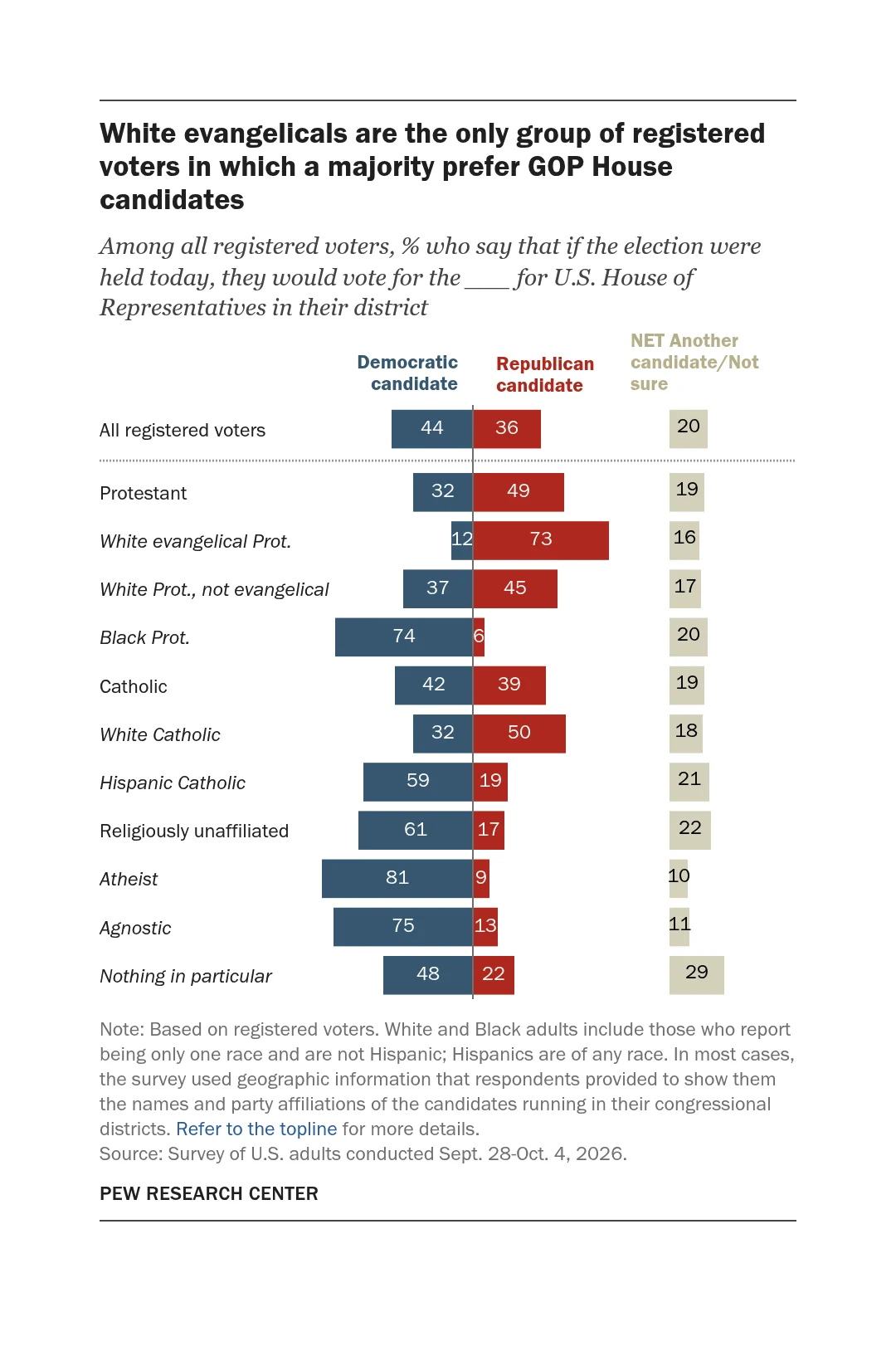
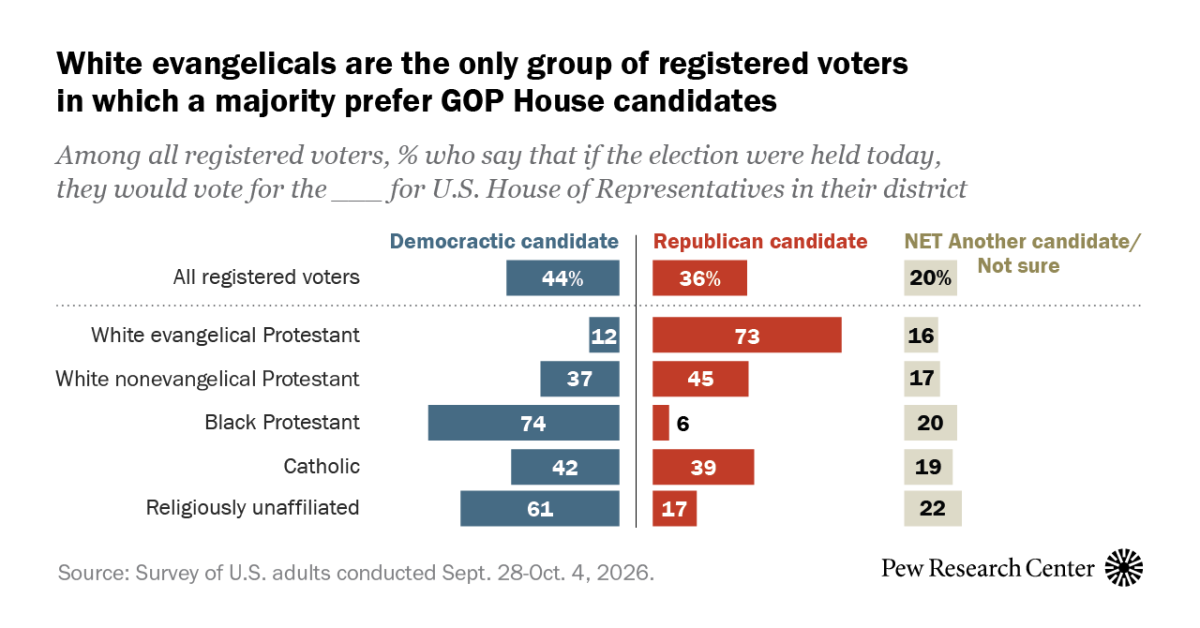
The most striking finding is the singular status of White evangelical Protestants. They stand alone as the only major religious group in the United States where a clear majority of registered voters prefers Republican candidates for the House. Conversely, voters from virtually every other religious demographic—ranging from Black Protestants and Hispanic Catholics to those identifying as religiously unaffiliated, atheist, or agnostic—are either evenly split or lean significantly toward Democratic candidates.
This political divide is not merely a matter of party registration but reflects a deeper, structural shift in how different communities engage with the current administration. As voters prepare to cast their ballots, the chasm between the religious right and the remainder of the American public continues to widen, raising questions about the stability of long-standing voting coalitions.
A Chronology of Declining Approval
To understand the current intensity of the 2026 midterm cycle, one must look at the trajectory of President Donald Trump’s approval ratings since the beginning of his second term. The Pew data provides a granular, month-by-month look at a consistent downward trend that has permeated every corner of the religious spectrum.
In early 2025, President Trump enjoyed relatively robust support among his core base, with 78% of White evangelical Protestants expressing approval. However, the months that followed were marked by a steady erosion of this confidence. By April 2025, that figure had slipped to 72%, and by the summer of 2026, it had dropped to 64%. As of the September-October 2026 survey, that number has fallen to 58%.
This trend is not limited to the President’s traditional base. White Catholics, for example, saw their approval of the President drop from 59% in early 2025 to 39% in the current reporting period. Among "nothing in particular" identifiers, approval plummeted from 41% to 21% over the same period. The data suggests that no religious group has been immune to the political friction that has characterized the second half of the President’s term, indicating a systemic challenge for the Republican party as it attempts to mobilize its base during this crucial election cycle.
Supporting Data: The Religious Vote
The correlation between religious identity and voting intention is stark. In the contest for the U.S. House of Representatives, the preferences break down as follows:
- White Evangelical Protestants: 73% favor Republican candidates, while only 12% support Democrats.
- White Catholics: 50% favor Republicans, compared to 32% for Democrats.
- White Non-Evangelical Protestants: These voters are more evenly divided, with 45% leaning Republican and 37% toward the Democratic ticket.
- Black Protestants: A massive 74% favor Democratic candidates, with only 6% supporting Republicans.
- The Religiously Unaffiliated: This group acts as a massive firewall for the Democratic Party. Atheists show 81% support for Democrats, agnostics follow with 75%, and those describing their faith as "nothing in particular" favor Democrats at 48% to 22%.
These statistics underscore a fundamental realignment in American politics. The "God gap," once a term used to describe a simpler divide, has evolved into a complex map where the level of religious institutional involvement and specific denominational identity serve as high-resolution predictors of political behavior.
Official Responses and Political Context
While political campaigns and party leadership are currently focused on grassroots mobilization, the data from this study suggests that both parties are fighting on very different terrains. Democratic strategists have pointed to the high engagement levels among their base as a sign of momentum, suggesting that the "sour mood" of the American public—often cited in relation to the economy—is serving as a catalyst for turnout.

Republican leadership, meanwhile, is grappling with the cooling of enthusiasm among segments of the electorate that were previously viewed as reliable. While White evangelicals remain a strong pillar, the shift in sentiment among White Catholics and non-evangelical Protestants suggests that the Republican party must work harder to retain its traditional coalition. The party’s focus remains on economic messaging, attempting to tether the current administration’s low approval ratings to broader concerns about inflation and government overreach.
However, the survey data highlights a potential "enthusiasm gap." The fact that those who support Democratic candidates report higher levels of engagement suggests that the motivation to vote is currently higher on the left side of the spectrum, a critical metric for a midterm election where turnout is traditionally lower than in presidential cycles.
Implications for the Future of Governance
The implications of these findings are profound for the immediate future of the U.S. Congress. If the current polling trends hold, the 2026 midterms could result in a significant shift in legislative power, potentially leading to a period of divided government that could further stall the President’s policy agenda.
The Erosion of Consensus
The broad-based decline in President Trump’s approval ratings across all religious groups suggests that the President is losing the ability to command a cross-denominational consensus. When even the groups that provided the foundational support for his 2024 victory are expressing declining confidence, it signals a deeper fatigue with the status quo. This fatigue is not merely political; it is societal.
The Secularization of the Left
The overwhelming support for Democratic candidates among atheists, agnostics, and the religiously unaffiliated confirms that the secular wing of the American electorate is now a dominant force within the Democratic coalition. This demographic shift is forcing a change in how candidates discuss values, morality, and policy. The party is increasingly finding itself in a position where it must balance the concerns of a diverse religious base—such as Black Protestants—with the strongly secularist views of the non-religious.

Challenges for the Republican Brand
For the Republican Party, the challenge is twofold: they must maintain the loyalty of their white evangelical base while simultaneously arresting the slide in support among other religious demographics. The decline in support among White Catholics is particularly concerning for the GOP, as this group has historically been a swing demographic that, when won by Republicans, often determines the outcome of tight congressional races.
The Turnout Factor
Finally, while this data provides a snapshot of preference, the ultimate outcome of the 2026 midterms will rest on the perennial question of turnout. With 46% of eligible voters participating in the 2022 midterms, the 2026 election will likely be determined by which party can better translate these expressed preferences into actual ballots. The increased engagement among Democratic-leaning voters, coupled with the cooling of presidential approval, suggests that the Republican party faces an uphill battle in maintaining its current standing in the House.
As the nation moves toward the final weeks of the campaign, the intersection of faith and politics will remain a focal point. Whether these trends represent a permanent realignment or a temporary manifestation of midterm frustration remains to be seen. However, one conclusion is clear: the American religious landscape is no longer a monolith, and the political parties that ignore the nuances of these shifting allegiances do so at their own peril. The 2026 midterm elections will serve as the next major test of these tectonic shifts, potentially reshaping the governing dynamics of the United States for the remainder of the decade.