As the United States navigates the midpoint of the decade, the collective American consciousness remains tethered to a familiar set of anxieties: the cost of living, the health of the national balance sheet, and the stability of the economy. According to a new, comprehensive study from the Pew Research Center, economic issues have solidified their position as the primary concerns for U.S. adults. Conducted from April 20 to April 26, 2026, the survey of 5,103 U.S. adults provides a granular look at how a nation, still grappling with shifting political and financial tides, defines its most pressing problems.
The data reveals a landscape where bread-and-butter economic issues—specifically health care affordability, inflation, and the federal deficit—have seen a marked rise in public concern over the last 15 months. Yet, beneath these national averages lies a complex tapestry of partisan realignment, suggesting that while the "what" of our problems remains consistent, the "who" is responsible and the "how" we prioritize them is undergoing a profound transformation.
The Dominance of Economic Hardship
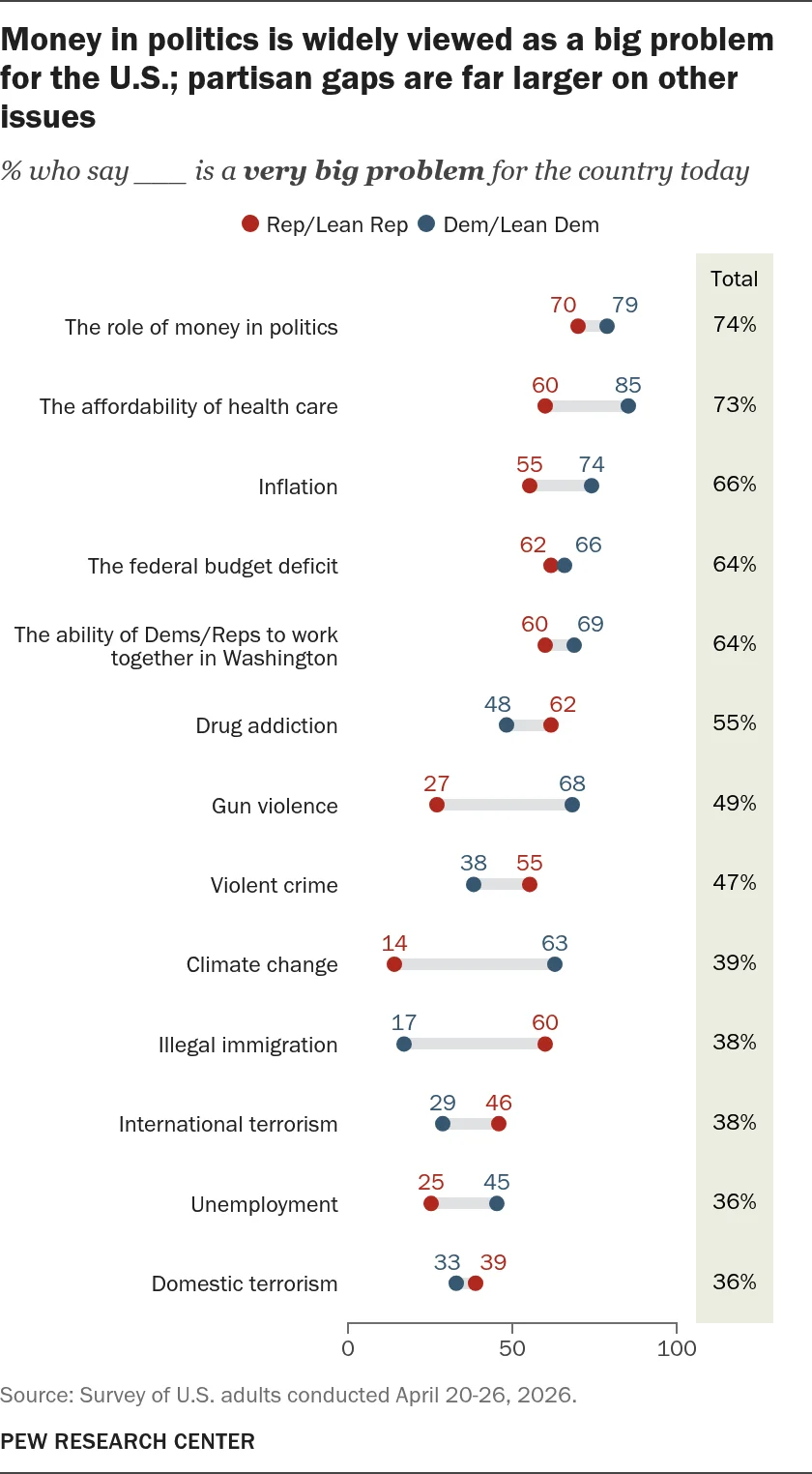
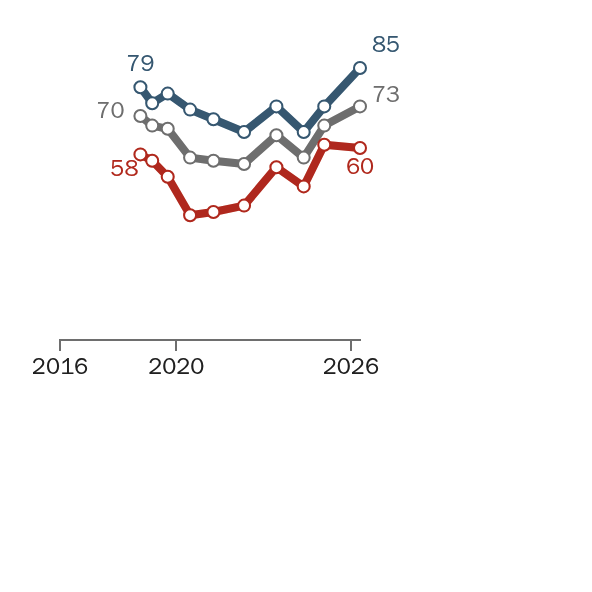
The survey results serve as a stark reminder that the kitchen-table economy remains the bedrock of American political discourse. A resounding 73% of Americans now classify the affordability of health care as a "very big problem," a significant climb from the 67% who felt the same way in February 2025. This upward trend in urgency is mirrored by other core economic metrics.

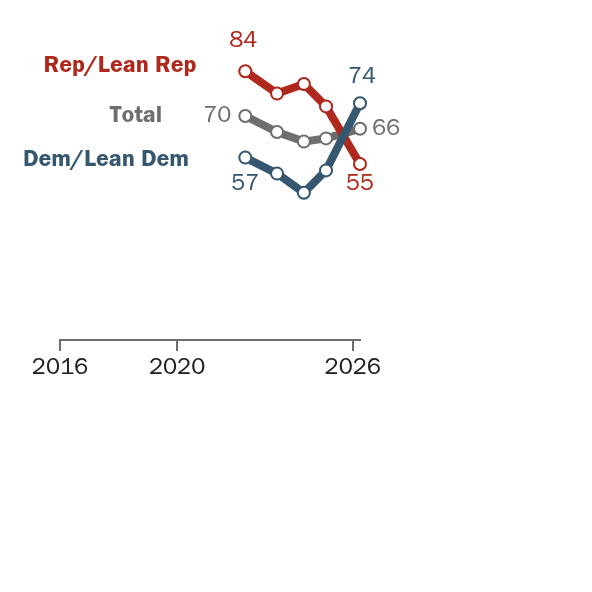
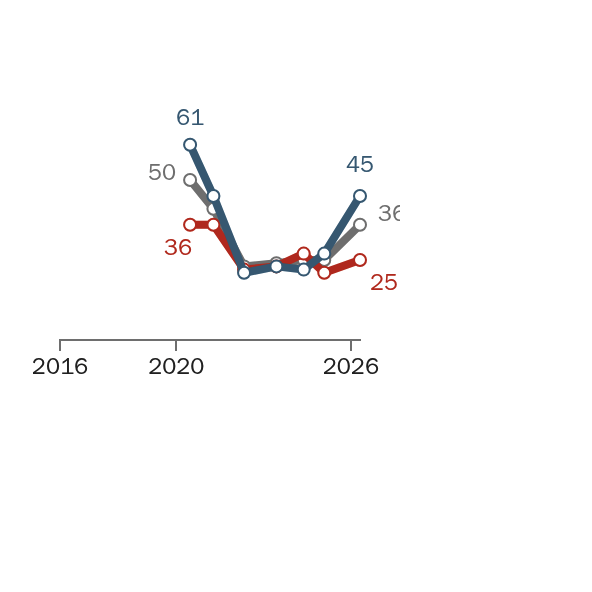
Inflation, which dominated the headlines for much of the early 2020s, shows no signs of loosening its psychological grip on the public. Some 66% of adults identify inflation as a major threat, up from 63% last year. Perhaps most notably, the perception of unemployment—which had been relatively muted in recent years—has surged. While 36% of Americans now label unemployment a "very big problem," this represents a substantial 11-point jump from early 2025. This movement suggests that while the economy may be growing in some sectors, the underlying sense of job security among the workforce is becoming increasingly fragile.
A Chronology of Concern
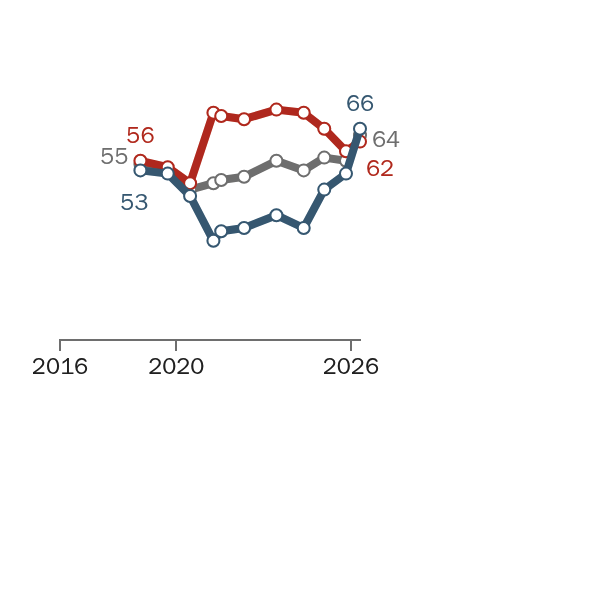
To understand how we reached this point, one must look at the recent trajectory of public opinion. In February 2025, the national mood was already tilting toward fiscal caution. The federal budget deficit was cited as a major problem by 57% of the population. By April 2026, that figure had climbed to 64%.
The shift is not merely linear; it is reflexive. During the early stages of the current administration, the public was focused heavily on the immediate effects of price hikes and the legislative response to health costs. As we moved into 2026, the conversation has expanded to include the long-term sustainability of the federal budget. The data suggests a public that is increasingly wary of debt, viewing the structural integrity of the government’s finances as directly tied to their own personal financial health.

Partisan Realignment and the "Deficit" Shift
One of the most striking revelations in the Pew Research analysis is the shift in how partisans view the federal deficit. During the presidency of Joe Biden, the deficit was largely framed as a Republican-led issue of concern. Republicans and those who lean Republican were consistently twice as likely as their Democratic counterparts to label the deficit a "very big problem."
That ideological divide has effectively evaporated. As of April 2026, 66% of Democrats now view the federal budget deficit as a "very big problem," surpassing the 62% of Republicans who share that sentiment. This convergence is a rare moment of bipartisan agreement, albeit one rooted in anxiety rather than policy consensus.
The reversal on inflation is equally noteworthy. In May 2024, the political optics were stark: 80% of Republicans were sounding the alarm on inflation, compared to just 46% of Democrats. Today, those roles have partially swapped, with 74% of Democrats identifying inflation as a top-tier issue, compared to 55% of Republicans. This suggests that as economic policies evolve, the political parties are shifting their focus to the issues they feel most vulnerable to—or most capable of weaponizing against the opposition.
Supporting Data: The Broader Landscape
While the economy dominates the top of the list, the survey also offers a window into the non-economic issues that define the American experience.
The Role of Money in Politics
A staggering 74% of Americans identify the role of money in politics as a "very big problem." This is a rare issue that transcends partisan divides, with 79% of Democrats and 70% of Republicans agreeing on the severity of the threat. It suggests that while voters may disagree on taxes or health care, there is a deep-seated, systemic distrust of the influence of wealth in Washington.
The Breakdown of Cooperation
Compounding the cynicism regarding money is the shared belief that Washington is fundamentally broken. Sixty-four percent of adults cite the inability of Democrats and Republicans to work together as a major national problem. This sentiment is consistent across the aisle, with 69% of Democrats and 60% of Republicans expressing frustration with the current state of legislative gridlock.
Divergent Priorities: Crime and Climate
The survey highlights the stark divide between the parties on social issues:
- Republicans remain significantly more concerned about illegal immigration (60% vs. 17% for Democrats) and violent crime (55% vs. 38%).
- Democrats are heavily focused on gun violence (68% vs. 27% for Republicans) and climate change (63% vs. 14%).
These figures illustrate that while economic anxiety provides a shared language of "problems," the specific social and environmental threats that keep Americans up at night remain deeply polarized.
Official Perspectives and Expert Interpretation
The methodology employed by the Pew Research Center—utilizing the American Trends Panel—ensures that the voices represented are reflective of the broader U.S. adult population. Political scientists and policy analysts often point to these "national problems" surveys as a barometer for potential legislative action.
When a supermajority of the public, regardless of party, identifies an issue like the "affordability of health care" or "money in politics" as a major problem, it creates a "pressure cooker" environment for lawmakers. However, as the data on the federal deficit and inflation shows, the source of the concern is often filtered through partisan lenses, which can lead to paralysis in the halls of Congress. If Republicans and Democrats agree the deficit is a problem but disagree entirely on whether to solve it through spending cuts or tax increases, the "problem" remains unresolved despite the broad public mandate for action.
Implications for the Future
The implications of these findings are profound. First, the resurgence of anxiety regarding unemployment—rising from 25% in 2025 to 36% in 2026—suggests that the labor market is becoming a source of stress. Should this trend continue, it will likely become a primary campaign issue in the coming election cycle.
Second, the shifting views on the budget deficit indicate that fiscal responsibility is no longer a niche concern for the fiscally conservative. It has become a mainstream anxiety. This puts significant pressure on any administration to balance the desire for government investment with the public’s growing aversion to rising national debt.
Finally, the consensus on the influence of money in politics and the lack of cooperation in Washington points to a deeper crisis of faith in democratic institutions. When citizens believe that the system itself is corrupted by wealth and incapable of functional governance, they are less likely to participate in the political process, creating a feedback loop of apathy and dysfunction.
As we look toward the remainder of 2026, the data from the Pew Research Center provides a roadmap for the issues that will define the American narrative. Whether these concerns translate into meaningful policy reform or simply continue to fuel the fires of partisan polarization remains to be seen. What is certain, however, is that the American public is in a state of high alert, keenly aware of the economic and structural challenges that face the nation.
About the Research:
The Pew Research Center is a nonpartisan fact tank that informs the public about the issues, attitudes, and trends shaping the world. The study cited was conducted via a national survey of 5,103 U.S. adults. The data is weighted to be representative of the U.S. adult population, and the methodology ensures a margin of error suitable for high-level political analysis. For the full questionnaire, detailed response breakdowns, and in-depth methodology, visit the Pew Research Center’s website.