In the rapidly evolving landscape of B2B commerce, a seismic shift has occurred. The traditional "funnel"—once the bedrock of sales strategy—has been disrupted by a more autonomous, informed, and digitally native buyer. Today’s B2B prospects navigate their journey through peer networks, online communities, and AI-driven research long before they ever engage with a vendor. As a result, the role of the Revenue Development Representative (RDR)—formerly known as the Sales or Business Development Rep—has been thrust into a state of existential crisis.
For years, the industry has whispered a skeptical question: In an era of sophisticated automation and self-service buying, do we still need the RDR?
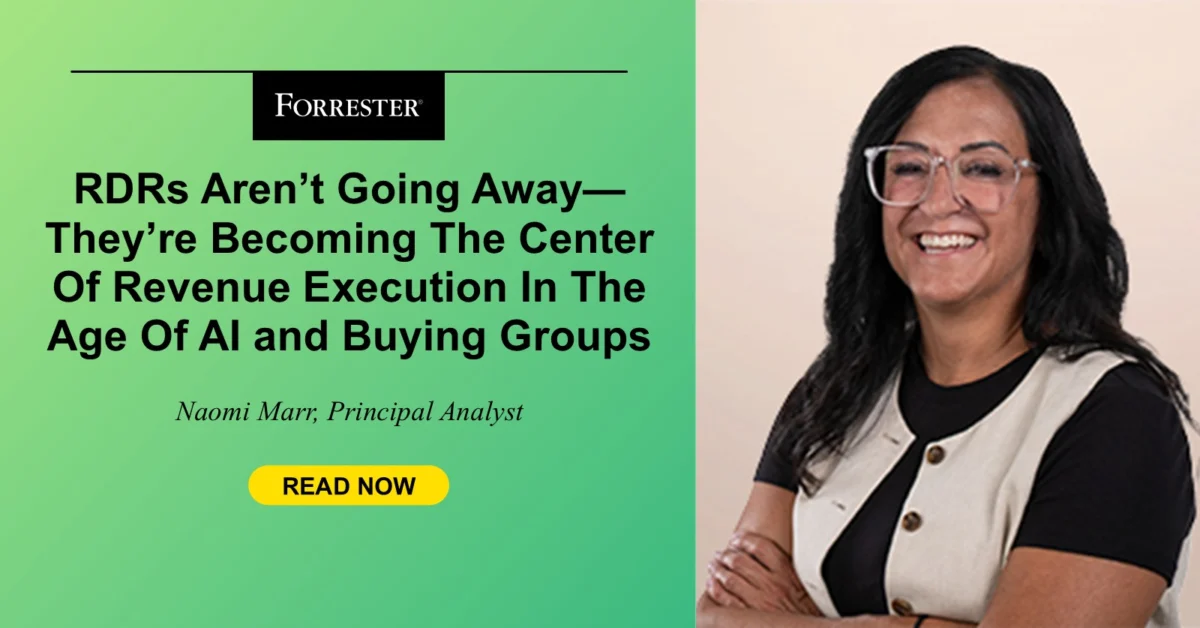
According to a groundbreaking new report from Forrester, Revenue Development Reps Are More Valuable Than Ever In The Age Of AI And Buying Groups, the answer is a resounding "yes." However, the report cautions that the "spray-and-pray" lead-chasing tactics of the past are officially obsolete. To survive, organizations must fundamentally re-envision the RDR from a low-level volume generator to a high-level strategic architect of revenue.
The New Reality: How Modern Buying Behavior Changed the Game
The core of this transformation lies in the behavior of the B2B buyer. Modern purchasing is no longer a linear path orchestrated by a vendor; it is a complex, multi-stakeholder process conducted behind a "digital curtain." By the time a prospect hits the "contact us" button or accepts a meeting request, they have likely already shortlisted their preferred providers.
The Rise of the Buying Group
B2B decisions are increasingly made by consensus-driven buying groups. These groups—comprising IT, procurement, finance, and end-users—conduct independent research, leveraging AI to synthesize technical specifications and peer reviews. When an RDR enters the picture late in this cycle, the traditional "cold call" or generic outreach sequence is often perceived as an annoyance rather than a value-add.
The AI Paradox
While many feared that AI would replace the human touch in sales development, the opposite is occurring. AI is serving as a force multiplier for the RDR, automating the mundane administrative tasks that previously clogged their pipelines. By offloading data entry, basic lead qualification, and scheduling to AI, the RDR is freed to focus on the human-centric aspects of the sale: context, empathy, and strategic coordination.
A Chronology of the Sales Development Evolution
To understand the current pivot, one must look at the trajectory of the role over the last two decades.
- The Early 2000s (The Cold Calling Era): The focus was on raw volume. RDRs (then BDRs/SDRs) were tasked with hitting high daily call quotas. Success was measured in activities: dials, emails sent, and meetings booked.
- The 2010s (The Automation Boom): The introduction of Sales Engagement Platforms (SEPs) allowed for mass-scale outreach. The role became increasingly automated, turning into a "lead factory" where human reps were essentially human wrappers for automated sequences.
- The Early 2020s (The Crisis of Relevance): As AI tools and buyer self-sufficiency matured, generic outreach became ineffective. Spam filters grew tighter, and buyer fatigue reached an all-time high, leading to plummeting conversion rates.
- The Present Day (The Strategic Pivot): Organizations are shifting away from "lead-centric" models toward "account-centric" models. The RDR is being redefined as a specialized intelligence officer who manages buying groups rather than individual leads.
Supporting Data: Why Strategy Outperforms Activity
Forrester’s research emphasizes that the most successful organizations are those that move away from activity-based metrics (dials per day) toward outcome-based metrics (buying group engagement).
In high-performing companies, RDRs are no longer measured by how many people they contact, but by how well they curate the "account context." This includes:
- Signal Monitoring: Tracking intent data, news alerts, and firmographic changes to identify the exact moment a buying group begins to form.
- Buying Group Validation: Moving beyond a single contact to identify the key stakeholders—the "economic buyer," the "technical evaluator," and the "internal champion."
- Cross-Functional Coordination: Acting as the connective tissue between marketing, sales, and customer success, ensuring that the information gathered in the early stages of the funnel is not lost as the deal moves to an Account Executive.
When these functions are performed correctly, the RDR becomes an essential partner to the buyer. They provide the "human-in-the-loop" experience that AI cannot replicate: the ability to navigate internal politics, offer nuanced advice, and provide reassurance during the high-stakes evaluation phase.
Official Perspectives: The Expert View
In the context of the Forrester report, industry experts argue that the survival of the RDR depends on their ability to act as a "Consultative Navigator."
"B2B buyers are not avoiding human interaction," one analyst notes. "They are avoiding bad human interaction. They are more than willing to speak with an RDR who can provide industry insights, help them navigate a complex procurement process, or offer a unique perspective on their specific business challenges. The RDR of today must be a researcher, a marketer, and a psychologist rolled into one."
The shift is not just tactical; it is cultural. Organizations that treat their RDRs as entry-level "grunts" are seeing their pipeline velocity stall. Conversely, companies that provide their reps with high-quality data, AI-driven insights, and clear account-based mandates are seeing higher conversion rates and, more importantly, higher customer satisfaction.
Implications: The Road Ahead for Revenue Teams
What does this mean for the future of your revenue organization? If you are a sales leader, the implications are clear: you must rethink your enablement and your hiring criteria.
1. Shift Your Metrics
Stop rewarding the volume of outreach. Start rewarding the quality of the intelligence gathered. If a rep spends two hours researching a target account to secure a meeting with the right stakeholder, that is infinitely more valuable than 100 cold emails sent to the wrong people.
2. Invest in AI-Enabled Productivity
Do not use AI to send more spam. Use AI to analyze buyer intent, summarize technical documents, and clean up your CRM data. Your RDRs should be spending 80% of their time on high-value interactions and only 20% on administrative work.
3. Integrate the Buying Group
Your CRM and your sales process must be designed to track "buying groups," not "leads." When an RDR adds a new contact to a deal, they should be able to tag that person with their role (e.g., "influencer," "decision-maker"). This creates a living document of the account that provides value long after the initial meeting.
4. Continuous Learning
The role of the RDR is becoming more intellectual. It requires a deeper understanding of the product, the market, and the buyer’s specific pain points. Training programs must pivot from "how to use the dialer" to "how to conduct deep research and facilitate account strategy."
Conclusion: A New Era of Professionalism
The narrative that "the RDR is dead" is a relic of a dying sales model. While the traditional role—the one characterized by low-value lead chasing—is certainly in its twilight, the strategic role is more vital than ever.
In a world where information is abundant but clarity is scarce, the RDR acts as the guide. By mastering the intersection of AI-enabled research, account-based orchestration, and human-centric engagement, these professionals will continue to be the primary engine of B2B revenue growth.
For leaders looking to maintain a competitive advantage, the path forward is not to eliminate the RDR role, but to empower it. By re-envisioning the responsibilities, metrics, and tools provided to these reps, companies can transform their revenue development teams from an expense line into a high-octane strategic asset.
For more in-depth analysis on how your organization can successfully navigate this transition, consult the full report: Revenue Development Reps Are More Valuable Than Ever In The Age Of AI And Buying Groups.