For over two decades, the world of commercial aviation has been defined by a conspicuous silence. Since the retirement of the Concorde in 2003, the dream of affordable, high-speed travel has been grounded, tethered to the subsonic speeds of traditional airliners. This era of atmospheric restraint was largely dictated by a 1973 Federal Aviation Administration (FAA) ban on overland supersonic flight—a regulatory wall erected in response to public outcry over the window-rattling sonic booms generated by military jets during the Cold War.
Today, that barrier is beginning to crack. NASA’s experimental X-59, the centerpiece of the Quesst (Quiet SuperSonic Technology) mission, has officially entered the skies, marking a pivotal moment in aerospace history. By transforming the thunderous "boom" of supersonic travel into a gentle "thump," NASA is not just testing a new airframe; it is working to rewrite the regulations of global travel.
The Engineering of Silence: A "Frankenjet" for the Future
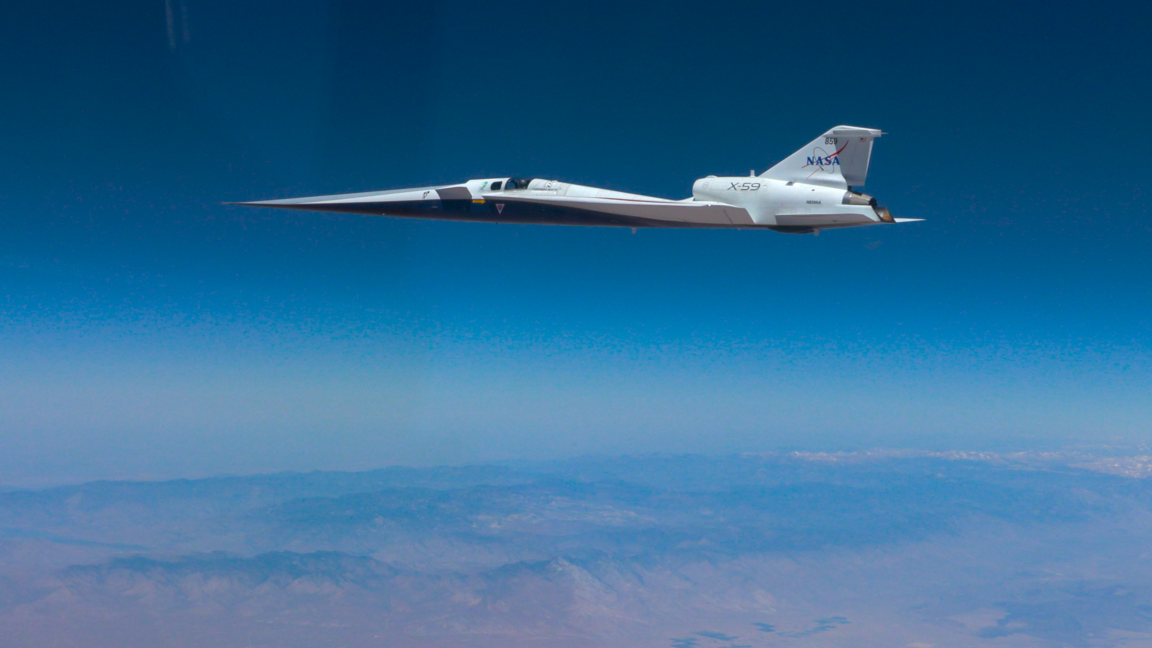
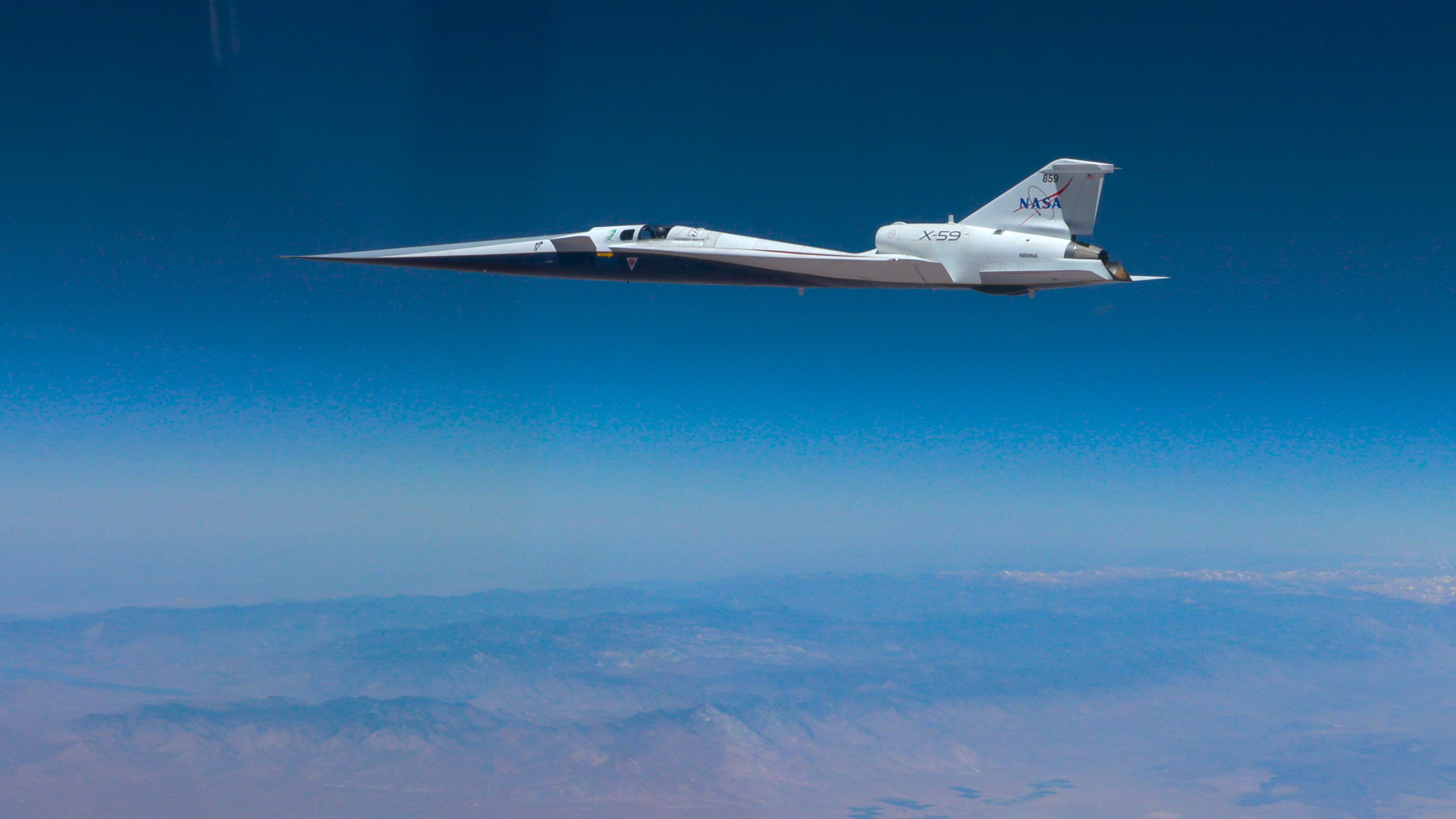
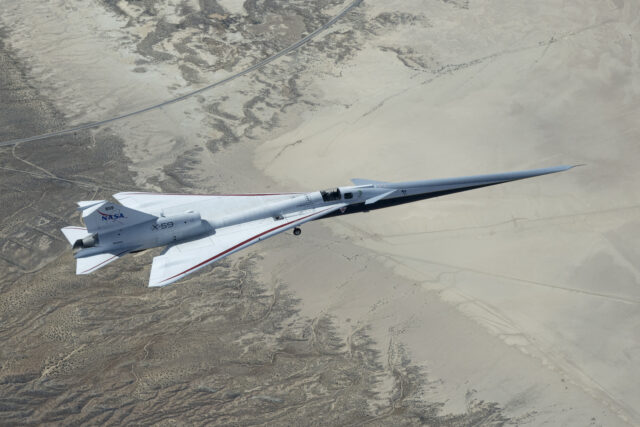
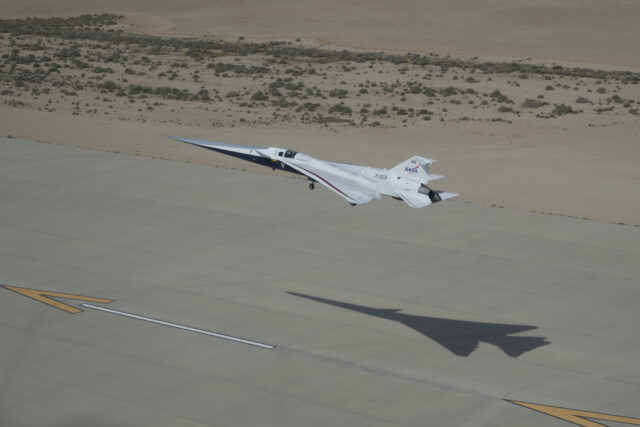
The X-59 is a visual anomaly. With a needle-like, tapered nose that accounts for nearly one-third of its 100-foot length, the aircraft looks less like a conventional jet and more like a spear designed to pierce the sound barrier without leaving a wake of acoustic destruction.
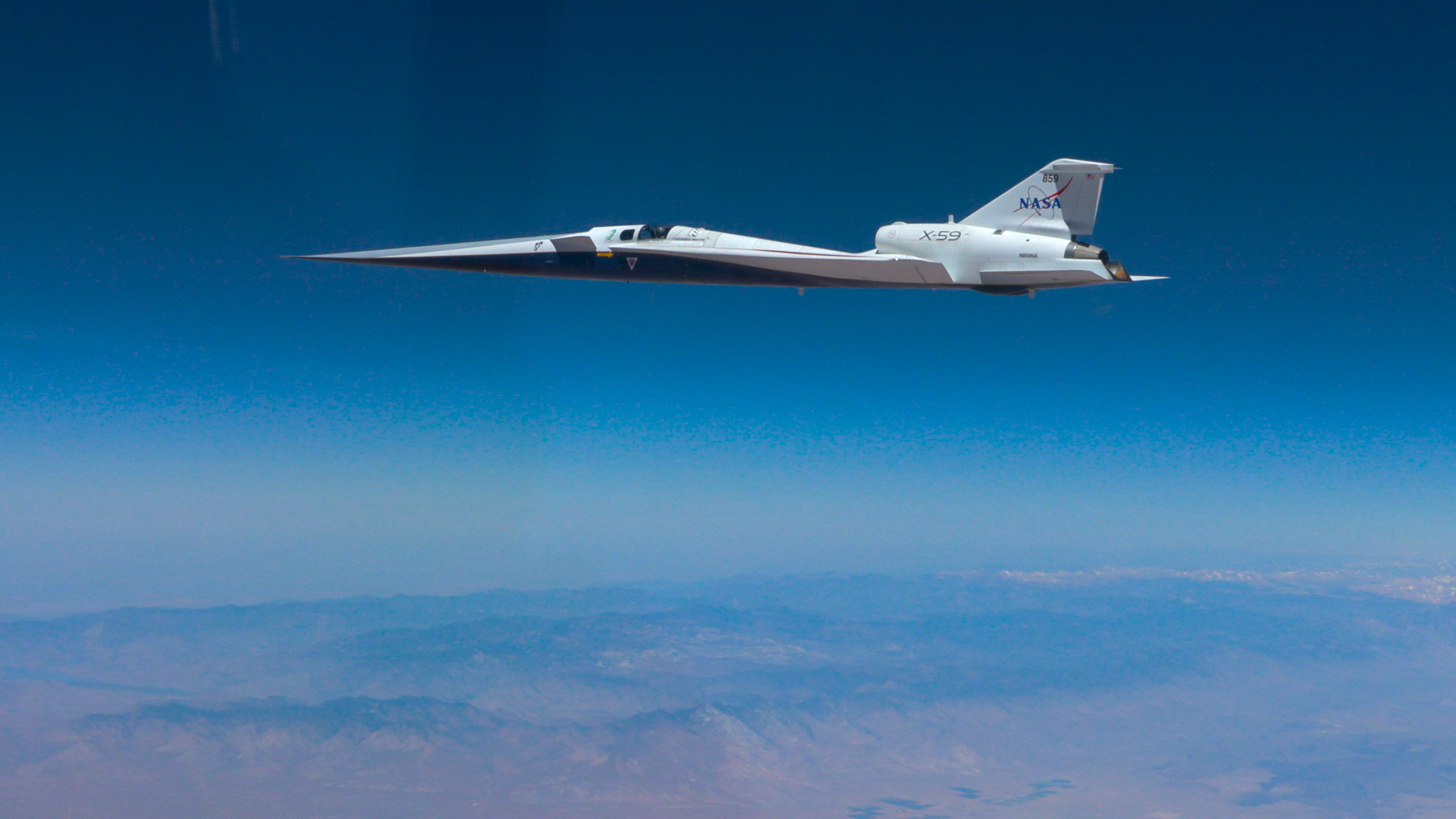
Developed by Lockheed Martin’s legendary Skunk Works in collaboration with NASA, the X-59 is an exercise in precise shockwave management. "All the features of the X-59—from its long tapered nose to the engine mounted on top to the shape of the wing—each one of those features was done to control the strength of a shockwave," says Peter Coen, the mission integration manager for NASA’s Quesst mission.
In traditional supersonic aircraft, shockwaves emanating from the nose, canopy, wings, and tail converge as they travel toward the ground, amplifying into the characteristic double-bang sonic boom. The X-59’s geometry is engineered to ensure these shockwaves remain distinct and weak, allowing them to dissipate in the atmosphere before reaching the surface. The goal is to reach a sound profile of approximately 75 perceived level in decibels (PldB)—a dramatic reduction from the 105 PldB associated with the Concorde.
Despite its cutting-edge mission, the X-59 is a "frankenjet" by design, utilizing a collection of repurposed components to maintain cost-efficiency and flight readiness. Its landing gear is salvaged from an F-16 Fighting Falcon, the stick is derived from an F-117 Nighthawk, and the cockpit is based on the T-38 jet trainer. Powering this assembly is a customized F414-GE-100 turbofan engine, capable of 22,000 pounds of thrust.
A Chronology of Flight: Testing the Limits
The journey of the X-59 from the hangar to the stratosphere has been one of rigorous, iterative testing. The aircraft made its inaugural flight on October 28, 2025, initiating a series of sorties designed to validate the plane’s handling characteristics.
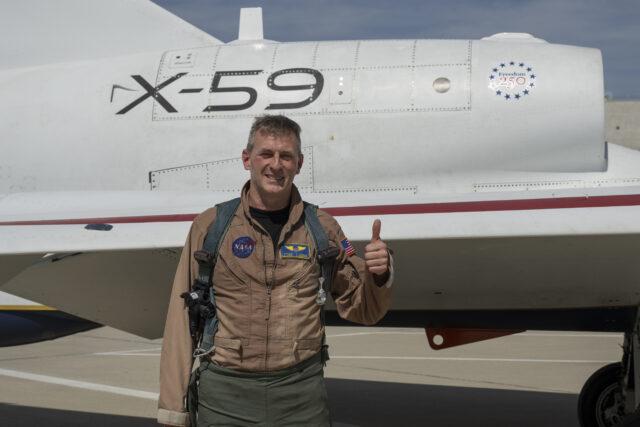
By June 2026, the program reached a significant milestone. On Friday, June 5, 2026, NASA test pilot Jim "Clue" Less successfully pushed the X-59 into its first supersonic flight, reaching Mach 1.1 at an altitude of 43,400 feet. The event was followed shortly by a second supersonic test on June 12, where the aircraft achieved Mach 1.4 at 55,000 feet.
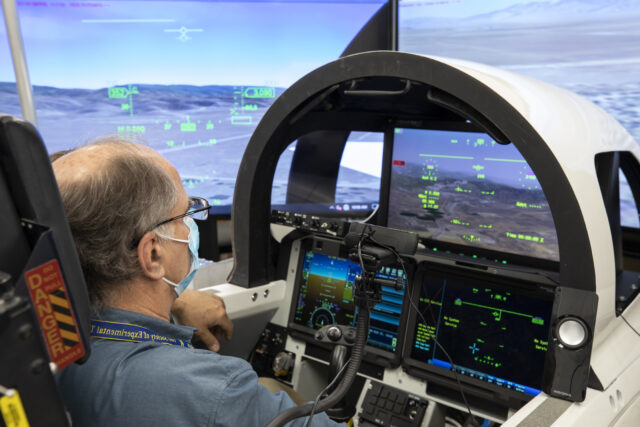
These flights were not without their challenges. During the aircraft’s second flight on March 20, 2026, a false alarm triggered a warning light regarding a potential bleed air leak and fire risk. "It may seem like we spent a lot of time and effort training, but it pays off when you get out there and something’s not going quite right and we know how to respond," Less noted. The incident, later traced to an incorrectly installed instrument, highlighted the importance of the hundreds of hours of simulator training that pilots Less and David Nils Larson underwent prior to takeoff.
Flying Blind: The eXternal Vision System
One of the most radical departures in the X-59 design is the complete absence of a forward-facing window for the pilot. To accommodate the long, tapered nose required for supersonic sound suppression, engineers had to prioritize aerodynamics over direct visibility.
In place of a traditional cockpit windshield, NASA implemented the eXternal Vision System (XVS). This setup utilizes two high-resolution, 4K-capable cameras mounted at the top and bottom of the aircraft, which feed real-time video to a monitor inside the cockpit. Augmented by flight data overlays, the XVS provides a forward view that is, in some testing scenarios, superior to the naked eye.
"It’s not like hopping in an F-18 or an F-15, where you’ve got great visibility all around, but when we’re in the X-59, this is normal to us," says Less. "It’s gotten very routine." The successful implementation of XVS suggests that such technology could eventually find its way into standard commercial airliners, providing enhanced situational awareness even for subsonic aircraft.
The National Tour: Public Perception as a Metric
NASA’s ultimate objective is not merely to prove that the X-59 can fly silently, but to demonstrate that it can do so in a way the public finds acceptable. To achieve this, the third phase of the mission involves taking the X-59 on a national tour.
Unlike most experimental X-plane programs, which remain confined to the restricted airspace of Edwards Air Force Base, the X-59 is intended to operate in the national airspace. NASA plans to fly the aircraft over a variety of U.S. communities that reflect diverse geographies, climates, and population densities. During these overflights, local residents will be invited to provide feedback on the sonic "thumps" they experience.
"Phase 3, where the public is allowed to weigh in on what they heard and how it affected them, is something that I’m personally really looking forward to," says Coen. By collecting this acoustic data and community sentiment, NASA aims to provide the FAA and the International Civil Aviation Organization (ICAO) with the empirical evidence needed to craft new noise standards.
Implications for the Future of Aviation
The potential legalization of overland supersonic travel carries significant weight. With the U.S. House of Representatives actively advancing legislation to lift the 1973 ban, the aviation industry is watching the X-59 program closely. However, the path to a commercial successor to the Concorde remains fraught with economic hurdles.
Beyond the technical challenge of noise, the revival of commercial supersonic flight must contend with the reality of massive fuel consumption and the resulting high operational costs. While the X-59 proves that the acoustics of the problem can be solved, the economics of the industry remain a separate, equally daunting mountain to climb.
Despite these challenges, the success of the X-59 is a victory for American aerospace innovation. It demonstrates that the constraints of the past—such as the prohibition of supersonic travel over populated areas—do not have to be the limitations of the future. As NASA continues to refine the X-59’s performance, the agency is effectively building the foundation for a new era in which travel time between continents could be slashed in half, bringing the world closer together, one quiet thump at a time.
For now, the X-59 remains a research platform—a specialized tool designed to listen to the atmosphere and ensure that when we do eventually return to supersonic commercial flight, we do so without disrupting the peace of the world below. As the test program moves into the latter half of 2026, the focus will shift toward the instrumented nose boom and acoustic ground arrays, preparing the way for that historic national tour. The sky, it seems, is no longer the limit; it is merely the canvas for the next great leap in human mobility.