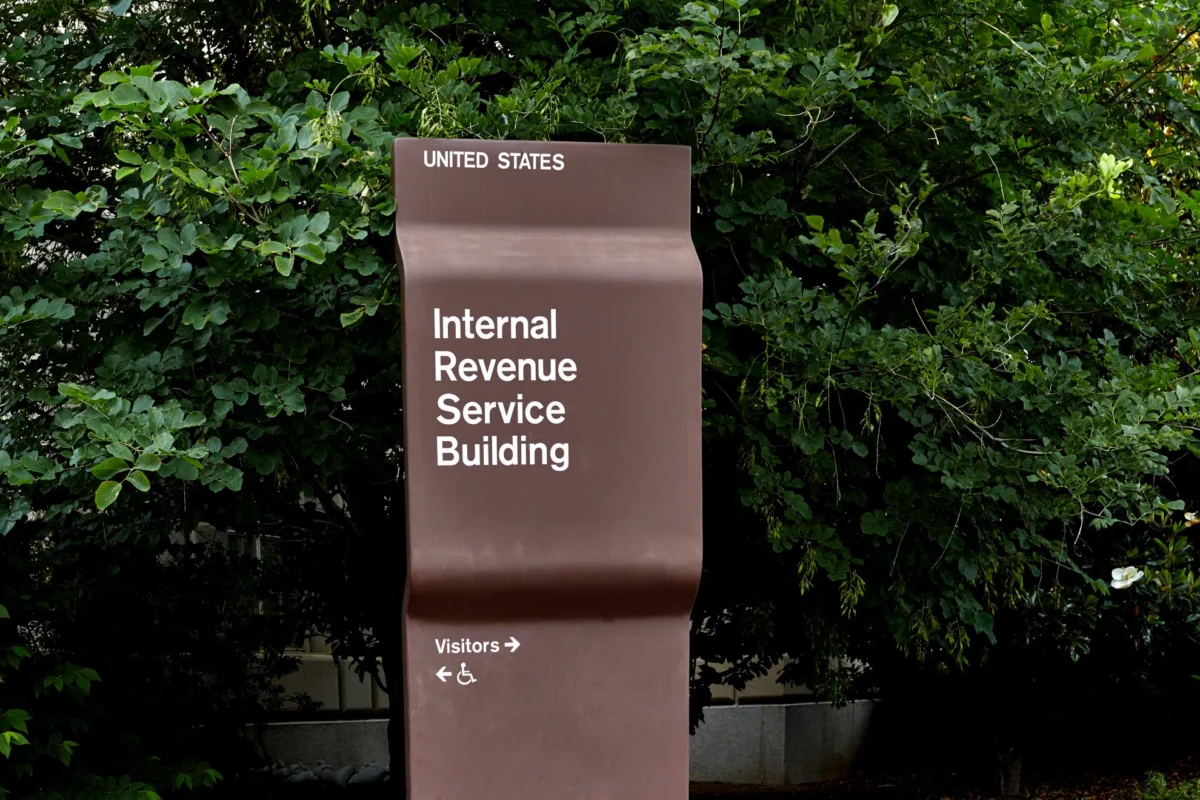
The United States federal government is currently grappling with a fiscal hemorrhage of historic proportions. According to a landmark report from the nonpartisan Government Accountability Office (GAO), the U.S. Treasury loses between $116 billion and $304 billion annually to tax fraud. To put this staggering figure into perspective, the midpoint of these estimates exceeds the entire annual budget of the Supplemental Nutrition Assistance Program (SNAP), the nation’s primary anti-poverty initiative. This fiscal drain represents between two and six percent of total federal tax liabilities, highlighting a critical vulnerability in the architecture of American public finance.
This report serves as a clarion call for a comprehensive overhaul of both the Internal Revenue Service’s (IRS) enforcement mechanisms and the broader, increasingly Byzantine, federal tax code. As the government struggles to balance its books, the "tax gap"—the delta between taxes legally owed and those actually collected—has become a central battlefield for fiscal policy.
The Anatomy of the Tax Gap and the Rise of Fraud
To understand the magnitude of the problem, one must first distinguish between the various components of the "tax gap." The tax gap is the broad, overarching measure of noncompliance, encompassing both intentional fraud and unintentional taxpayer errors. As of tax year 2022, the gross tax gap stood at approximately $696 billion.
While the IRS has historically focused on the gap as a whole, the GAO report is novel in its attempt to isolate "fraud" as a distinct, measurable variable. If we accept the GAO’s findings, intentional fraud accounts for roughly 17 to 44 percent of the total tax gap. This suggests that while a portion of the missing revenue is the result of human error or confusion, a substantial share is the product of deliberate, criminal exploitation of the tax system.
The Shadow Economy
The GAO report identifies the "shadow economy" as a primary breeding ground for this fraud. Economic literature cited by the agency estimates that the shadow economy—comprised of unreported income from legal activities, illegal activities, and cash-based businesses—could account for anywhere from two to nine percent of the U.S. Gross Domestic Product (GDP). Within this opaque sector, the lack of third-party reporting (such as W-2 or 1099 forms) allows income to remain hidden from the IRS, effectively insulating it from taxation.
A Chronology of Fiscal Noncompliance
The struggle to bridge the tax gap is not a new phenomenon, but the complexity of the digital age has introduced new vectors for fraud.
- Pre-2010s: Tax evasion was largely characterized by "skimming" and the underreporting of cash income by small businesses. Enforcement relied heavily on manual audits and traditional paper-based document matching.
- 2011–2013: The IRS conducted its last major comprehensive tax gap study, establishing a baseline that suggested a voluntary compliance rate of approximately 83.6 percent. This period set the stage for modern concerns regarding the efficacy of IRS enforcement.
- 2020–2022: The COVID-19 pandemic necessitated the rapid rollout of massive, refundable tax credit programs. The sheer speed of these distributions, combined with a lack of robust verification infrastructure, led to a surge in "improper payments"—a major subset of the tax gap that includes both fraud and administrative overpayments.
- 2025–2026: The current period marks a pivot point. The GAO’s recent report has moved the conversation from general "noncompliance" to specific "fraud," putting pressure on lawmakers to adopt technological solutions like the Treasury’s "Do Not Pay" system to intercept illicit claims before they are disbursed.
Supporting Data: Where the Money Goes Missing
The distribution of the tax gap is highly concentrated. Roughly 77 percent of the total gap arises from underreporting, while the remainder is split between nonfiling and the underpayment of taxes.
Individual Income Tax Vulnerabilities
The individual income tax remains the largest source of federal revenue, but it is also the most prone to noncompliance. Specifically, sole proprietorship income accounts for $117 billion of the tax gap—17 percent of the total. The primary driver of this noncompliance is the lack of "information reporting." When an employer withholds taxes from a paycheck, compliance rates are near-perfect. However, when a taxpayer is self-employed and operates without the oversight of a third-party intermediary, the temptation and opportunity to underreport income skyrocket.
The Burden of Improper Payments
Beyond intentional fraud, the government faces a massive challenge with "improper payments" related to refundable tax credits, such as the Earned Income Tax Credit (EITC) and the Child Tax Credit (CTC). In fiscal year 2025 alone, improper payments for four major refundable credits totaled $28.1 billion. While these figures are often labeled as "fraud," the reality is more nuanced. The tax code is so complex that many taxpayers fail to understand the eligibility requirements for these credits, leading to unintentional overpayments that are classified alongside criminal fraud in government databases.
Official Responses and Strategic Recommendations
The GAO’s report does not merely diagnose the illness; it proposes a course of treatment. The agency has issued specific recommendations to the IRS to improve data sharing and modernize the detection of fraud. However, the most significant recommendations are aimed at Congress, focusing on the simplification of the tax code itself.
Recommendations for the IRS:
- Enhanced Data Analytics: The IRS must move toward predictive modeling that can flag suspicious returns in real-time, particularly for sole proprietorships where third-party data is scarce.
- Expanded Verification: Implementing more rigorous identity verification processes for refundable credit claims to ensure that payments reach the intended recipients.
Recommendations for Congress:
- Consolidating Benefits: The current structure of child-related tax credits is disjointed, leading to confusion. Consolidating these into a single, unified child credit would reduce unintentional errors.
- Broadening the "Do Not Pay" System: Congress should grant the Treasury Department expanded statutory authority to use the "Do Not Pay" system to verify income and employment status before processing credits, rather than relying on "pay and chase" methods that rarely recover lost funds.
Implications: The High Cost of Complexity
Perhaps the most startling statistic in the current fiscal landscape is that the annual cost of tax compliance—the time and money businesses and individuals spend just to figure out what they owe—is approximately $544 billion. This is nearly the size of the entire tax gap.
The "Byzantine" Tax Code
The complexity of the U.S. tax code is not an accidental byproduct of policy; it is a feature of a system that attempts to use the tax code to incentivize social behavior, subsidize specific industries, and manage economic cycles. However, this complexity carries a heavy price. It creates "gray areas" where aggressive tax planning borders on fraud, and where honest taxpayers inadvertently become "improper payers."
A Potential Path Forward: The Estonian Model
Economists, including those at the Tax Foundation, have pointed to the "Estonian Model" as a potential path to reform. Estonia’s tax system replaces complicated corporate income taxes with a simple tax on distributed profits. This creates a transparent, low-compliance-cost environment that has proven highly effective at minimizing the tax gap while maintaining government revenue.
For the United States, moving toward such a model—or even a more modest piecemeal reduction of special interest deductions and credits—could significantly shrink the space available for fraudsters. By simplifying the rules, the government can reduce the "noise" that masks actual criminal activity, allowing the IRS to focus its enforcement resources on the most egregious offenders.
Conclusion: A Call for Structural Integrity
The federal government is losing hundreds of billions of dollars annually because its tax administration is struggling to keep pace with an increasingly complex and shadow-prone economy. While it is utopian to suggest that fraud can be entirely eliminated, the current levels of loss are unsustainable.
The solution is two-fold: an IRS equipped with modern, data-driven enforcement tools, and a Congress willing to undertake the political heavy lifting of tax code simplification. As long as the tax code remains a labyrinth, it will continue to provide cover for those looking to hide their income, while simultaneously penalizing the honest taxpayer who simply cannot navigate the rules. In the competition between the tax collector and the tax evader, the current system is effectively tilting the scales in favor of the latter. Reversing this trend is not just a matter of revenue; it is a fundamental requirement for the integrity of the American fiscal system.