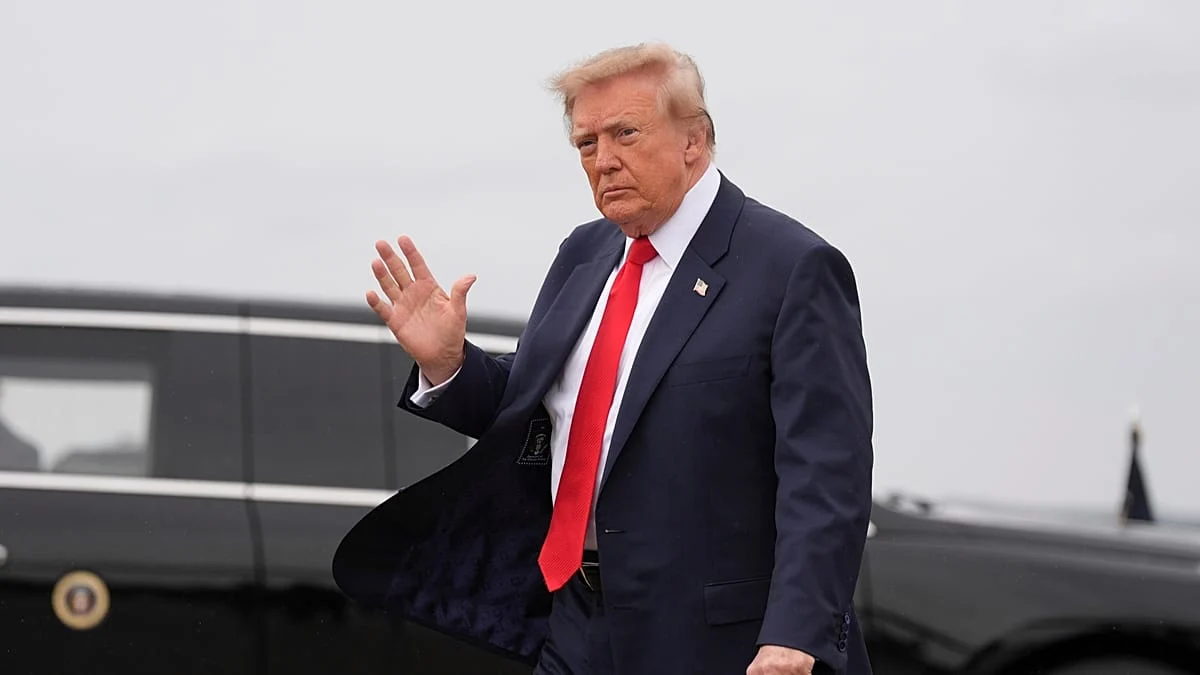
In a political landscape defined by shifting alliances and volatile energy markets, the recent announcement of a bilateral agreement between former U.S. President Donald Trump and Russian President Vladimir Putin has sent shockwaves through Washington. The deal, which aims to provide sanctions relief on Russian diesel exports in exchange for increased shipments to the United States, is being framed by the Trump campaign as a pragmatic "Hail Mary" to combat domestic fuel price inflation. However, the proposal has drawn immediate and fierce bipartisan condemnation, raising profound questions regarding the legality of unilateral sanctions rollback, the strategic autonomy of the U.S. energy sector, and the sheer feasibility of the promised supply chain.
The Genesis of a Controversial Bargain
The announcement comes on the heels of provocative rhetoric from the Trump camp, including public suggestions that Ukrainian President Volodymyr Zelenskyy should be replaced. This alignment—challenging the current Ukrainian leadership while simultaneously seeking a commercial rapprochement with the Kremlin—has left many foreign policy analysts bewildered.
The core of the deal involves a suspension of U.S. sanctions on Russian petroleum products. The purported goal is to stabilize American fuel prices ahead of the election cycle. Yet, critics argue that this represents a fundamental reversal of U.S. foreign policy, which has spent years attempting to isolate the Russian energy sector following the 2022 invasion of Ukraine. By offering a lifeline to the Kremlin, Trump is effectively betting that Russian diesel can bridge a gap that global markets have otherwise struggled to fill.
Chronology of the Crisis and the Accord
The timeline of this unfolding diplomatic maneuver reveals a desperate attempt to manipulate economic variables before the public eye.
- Mid-2024: Global diesel prices remain elevated due to geopolitical instability, refining bottlenecks, and the ongoing war in Ukraine.
- August 2024: Russian seaborne diesel exports experience a sharp contraction, dropping from 713,000 metric tons in July to 535,000.
- September 2024: Exports continue to plummet. By September 24, monthly shipments totaled only 448,000 tons. The Black Sea terminals, previously a vital artery for Russian fuel, saw zero shipments recorded for the final week of the month.
- Late September 2024: Trump announces the deal, promising an immediate delivery of 300,000 tons of Russian diesel, followed by 500,000 tons in November, and escalating, large-scale shipments extending through April 2027.
- Current Status: Congressional committees have launched inquiries into the legality of the agreement, questioning whether the executive branch possesses the authority to bypass established sanctions frameworks without legislative consensus.
Analyzing the Math: The Feasibility Gap
The most significant criticism of the deal lies not in the morality of the arrangement, but in the arithmetic. According to data provided by S&P Global Commodities at Sea, the promise of 300,000 tons of diesel in an initial shipment is mathematically suspect. This volume represents more than 50% of Russia’s entire seaborne diesel export volume for the month of August—a month in which those exports were already in decline.
Several structural factors suggest that Russia lacks the capacity to fulfill these commitments:
- Refinery Vulnerability: Ukrainian drone strikes and sabotage operations have systematically targeted Russia’s domestic refinery infrastructure. These facilities are the engine of the Russian energy economy, and their degradation has limited Russia’s ability to meet its own internal military and civilian fuel demands.
- Competing Priorities: The Russian state is currently managing a "guns and butter" economy. As the war in Ukraine drags on, the military’s demand for high-grade diesel is non-negotiable. It is highly unlikely that Putin would divert supplies to the U.S. market when they are critically needed to maintain the domestic logistics of a state at war.
- Logistical Constraints: Even if the product were available, Russian export terminals are currently constrained by a lack of available, insured, and compliant shipping vessels. The "shadow fleet" used to circumvent previous sanctions is already stretched thin; adding a new, high-volume route to the United States would require a significant reallocation of assets that Russia simply does not possess.
Official Responses and Legal Scrutiny
The reaction in Washington has been swift and deeply polarized. Senior members of the Senate Foreign Relations Committee have signaled their intent to subpoena documents related to the negotiations. The primary legal question is whether Trump’s promise to "unilaterally roll back" sanctions constitutes a violation of the International Emergency Economic Powers Act (IEEPA) or other statutory constraints placed upon the executive.
"This is not just bad policy; it is potentially illegal," noted one ranking member of the House Energy and Commerce Committee. "You cannot negotiate away the security interests of the United States and the integrity of our sanctions regime to solve a temporary domestic pricing problem, particularly when the partner in that deal is currently under a broad international sanctions umbrella."
The White House and the current administration have remained cautious, highlighting that energy policy is being managed through strategic reserves and partnerships with reliable, democratic allies—such as Canada and the North Sea producers—rather than through deals with adversarial regimes. The administration maintains that any attempt to import Russian diesel would be blocked by existing regulatory mechanisms, rendering the Trump-Putin deal a "symbolic gesture devoid of operational reality."
Geopolitical Implications: The Trust Deficit
Beyond the immediate economic impact, the deal has significant implications for the global order. For years, Vladimir Putin has leveraged energy as a geopolitical weapon. By seeking a deal with him, Trump risks signaling that the U.S. is willing to compromise on its core security commitments to Ukraine in exchange for marginal fuel price relief.
Moreover, the "trust deficit" remains a major hurdle. Putin has a long history of failing to honor bilateral commitments when they no longer serve his strategic interests. If the U.S. rolls back sanctions, and Russia subsequently fails to deliver the promised diesel—due to either incompetence or malice—the U.S. will have lost the leverage of those sanctions with nothing to show for it.
The Future of Energy Diplomacy
The debate over the Trump-Putin diesel deal serves as a microcosm for a larger discussion about the future of American energy policy. Should the U.S. rely on domestic production, or should it engage in transactional diplomacy with adversarial petrostates?
The current consensus among energy experts is that the "math is simply not mathing." By focusing on the prospect of Russian imports, the discourse ignores the reality that Russia’s capacity to influence global oil and diesel prices has been structurally diminished. The reliance on such a deal underscores a fundamental misunderstanding of the current state of the global energy market, where supply chains are tightening and the cost of dependency on authoritarian regimes has never been higher.
As the political season intensifies, this episode will likely be cited as a prime example of the tension between populist promises and the realities of global markets. Whether or not the diesel ever arrives at an American port, the damage to the coherence of U.S. foreign policy may already be done. The deal, at its heart, represents a departure from the strategic patience required to manage a complex global crisis, opting instead for a high-stakes, low-probability gamble that threatens to leave the U.S. more vulnerable, rather than more secure.
Ultimately, the episode serves as a cautionary tale: in the high-stakes game of global energy diplomacy, the most dangerous move is one that assumes a bankrupt or embattled partner has the resources to offer a lifeline. As the evidence shows, Russia’s refineries are battered, its military is hungry for fuel, and its export capacity is a shadow of its former self. To bet the U.S. energy strategy on such a foundation is not just a policy failure—it is a disregard for the hard, cold, and undeniable data of the energy sector.