Nearly three years after its grand inauguration, Mexico’s ambitious “Maya Train” (Tren Maya) project stands as a haunting testament to the dangers of top-down infrastructure planning. Stretching across nearly 1,000 miles of the Yucatán Peninsula, the project was envisioned by former President Andrés Manuel López Obrador as the centerpiece of his administration’s effort to spark economic development in one of Mexico’s most culturally rich yet chronically impoverished regions.
Today, however, the tracks snake through jungle landscapes and past once-thriving hamlets as a largely empty vessel. Far from the promised economic boon, the rail line has become a symbol of ecological degradation, skyrocketing national debt, and, according to local residents, a catalyst for the very instability it was meant to solve.
Main Facts: The Anatomy of a Failed Vision
The project was marketed as a revolutionary development for the tourism sector, designed to divert travelers from the overcrowded beaches of Cancún toward the historic, inland Mayan cities like Palenque. The premise was simple: better connectivity would equate to higher local spending and, eventually, a rise in the standard of living for indigenous communities.

The reality, however, has been vastly different. The project, which was largely overseen by the Mexican military, ballooned from an initial estimated budget of US$8.5 billion to a staggering US$30 billion. Despite this massive capital injection, the train is currently operating with a fraction of the projected ridership. While officials initially touted projections of 74,000 daily passengers, recent government figures reveal that the train is lucky to see 3,300, leaving many carriages to circulate as ghost trains through the jungle.
The project has also faced severe criticism for its environmental footprint. Construction necessitated the clearing of seven million trees and the industrial perforation of the region’s delicate karst topography. By driving massive concrete pylons into the porous limestone of the Yucatán, engineers have caused irreversible damage to roughly 130 subterranean caves—a vital part of the world’s largest underground river system.
A Chronological Descent: From Promise to Peril
The trajectory of the Maya Train follows a rapid, often frantic, timeline that many experts argue sacrificed safety and sustainability for political expediency.

- July 2018: Shortly after his electoral victory, President López Obrador announces the Maya Train as a “monumental work,” promising that no other infrastructure project in the world would compare to its scale.
- 2019: Indigenous communities are consulted, though the process is immediately criticized by the United Nations and human rights organizations for failing to meet international standards of "free, prior, and informed consent."
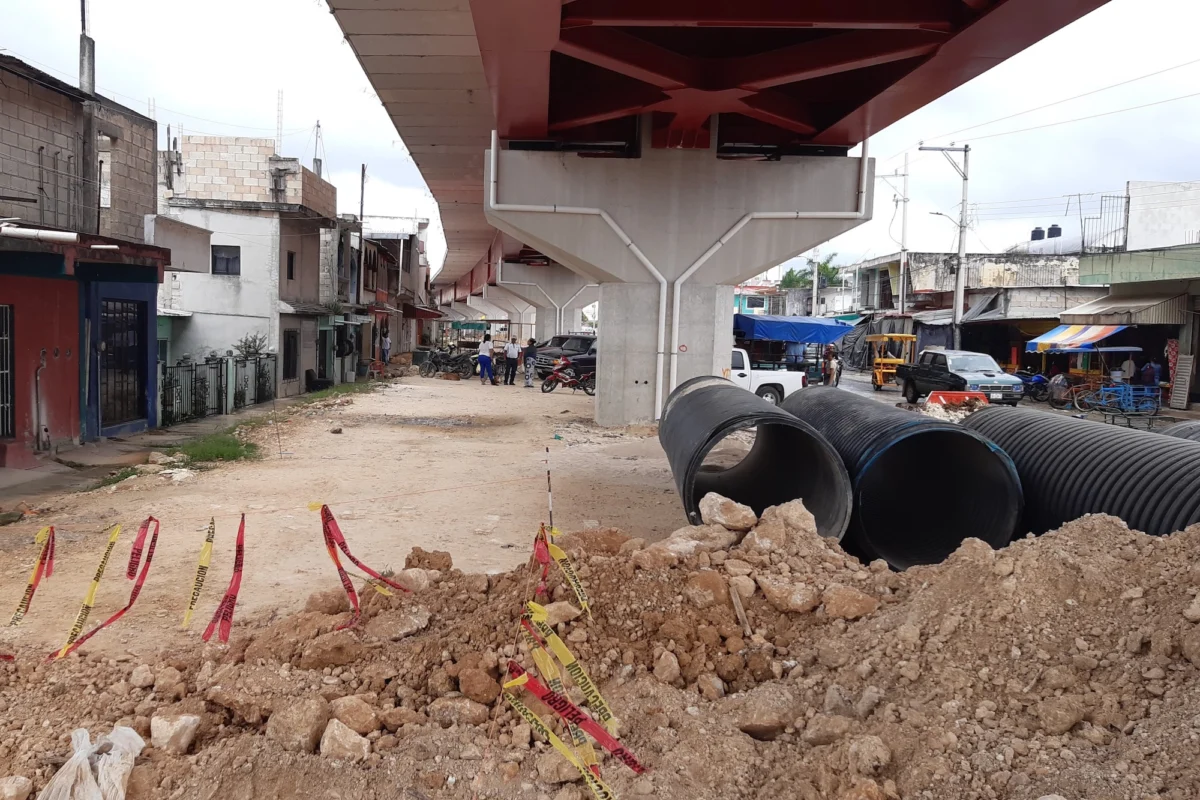
- 2020–2023: Construction begins at a pace 600 percent faster than similar international rail projects. The accelerated schedule results in significant engineering compromises, including the relocation of stations away from city centers to avoid construction delays or local pushback.
- December 2024: The train is inaugurated with great fanfare. However, the economic benefits remain largely theoretical.
- 2025: Economic data reveals a sharp decline in the Yucatán region. After a brief, construction-driven spike in GDP, the state of Quintana Roo enters a recession, with economic activity falling by over 9 percent in the first half of the year.
- 2026: Local residents report a significant rise in insecurity, with crime rates in some areas jumping by 50 percent compared to the previous year.
Supporting Data: The Economic Disconnect
The economic narrative surrounding the Maya Train is one of broken promises. Supporters of the project frequently point to the 13 percent growth in economic activity in Quintana Roo during the peak of construction in 2023. However, economists argue this was a "transient boom."
The vast majority of the labor force was brought in from other parts of Mexico. Consequently, the wages paid to these workers were rarely reinvested into the local economy; instead, they were sent back to their home states. Meanwhile, the influx of temporary workers drove local inflation. Prices for basic goods, food, and housing in towns along the route surged, effectively pricing out the local Maya population.
"There was no economic spillover," says Javier Becerril, an economics professor at the Autonomous University of Yucatán. "People who came from outside and received a paycheck sent the money back to their places of origin. Instead of an economic benefit to the communities, there were losses."

The cost of tickets serves as the final barrier to entry for the very people the train was meant to serve. With a ticket between Mérida and Cancún costing nearly the equivalent of a full day’s minimum wage, the train remains a luxury item for tourists, while the local population continues to rely on older, cheaper, and more convenient bus networks.
Official Responses and the "White Elephant" Critique
The Mexican government maintains that the project is a long-term investment. Officials point to the infrastructure as a permanent asset that will eventually reach its potential as the region matures. However, this defense rings hollow to those on the ground.
"It’s a white elephant of a project," says Guillermo Christy, an industrial engineer and environmentalist. "We have to keep pouring money into it just to keep it running, but in reality, it isn’t serving the community."

The government’s insistence on a top-down approach has been the defining flaw of the project. By bypassing local consultations and prioritizing a "speed-at-all-costs" mentality, the administration created a system that is disconnected from the realities of the geography and the needs of the residents. When the government finally did consult communities, it was often perceived as a performative measure rather than a genuine effort to incorporate indigenous voices into the design process.
The Human and Ecological Implications
The most harrowing consequence of the Maya Train is the shift in social dynamics. In communities that were once peaceful, the arrival of the rail line has been accompanied by a surge in organized crime. Local leaders, such as Pedro Uc, describe a landscape of "insecurity, gunfire, bodies in bags, abductions, misery, and fear."
The ecological cost is equally permanent. The karst landscape of the Yucatán is a complex, fragile ecosystem. By drilling into caves, the project has not only destroyed potential archaeological treasures—thousands of years of human and animal history—but has also threatened the water quality of the region’s aquifers. For a peninsula that relies on its natural beauty to draw tourism, the destruction of these cenotes and forests is a self-defeating strategy.

Lessons for the Future: "Let the Shoemaker Make Shoes"
The failure of the Maya Train offers a sobering case study for global infrastructure development. The primary lesson, as suggested by those who worked on the project, is the necessity of professional autonomy.
"What can we learn? Let the shoemaker make shoes," says Hector Hernández, an engineer who worked on the rail lines. "Let the experts do their job."
The project’s reliance on military oversight and political directives rather than civilian engineering expertise and social science led to a lack of "comprehensive planning." Stations were moved to the outskirts of cities to satisfy political timelines, effectively rendering them useless for daily commuters. A more sustainable approach would have focused on "bottom-up" development—addressing the glaring lack of basic infrastructure, such as water, electricity, and healthcare, in the rural villages that the train now passes through but does not serve.

As the Maya Train continues to operate as an underutilized, debt-laden monument, the residents of the Yucatán Peninsula are left to reckon with the aftermath. The project serves as a stark warning: progress cannot be imposed from above without a deep, respectful understanding of the land and the people it is meant to serve. Without such grounding, a project designed to connect a region may ultimately serve only to highlight the vast, and often widening, chasm between the political elite and the communities they govern.