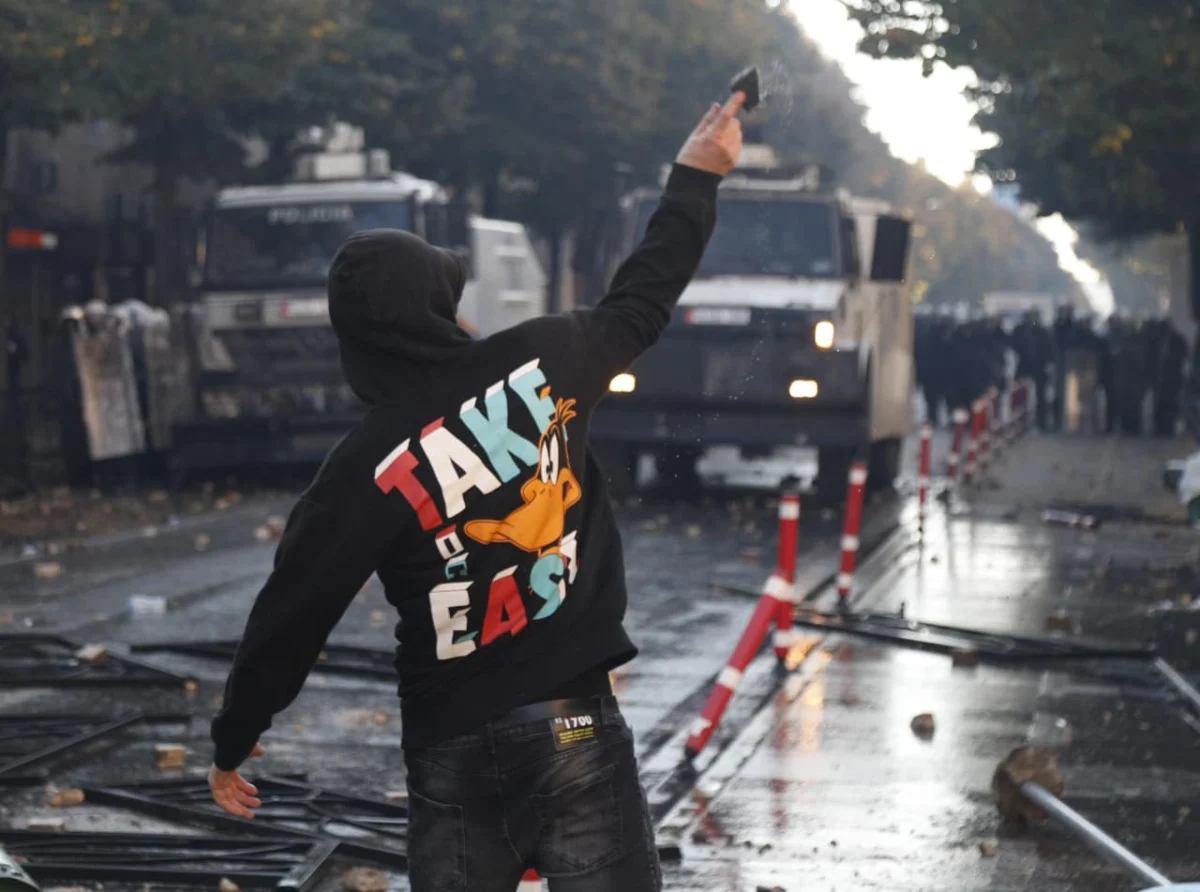
TIRANA, ALBANIA – October 13, 2026 – A student demonstration that erupted on Tuesday, intended to voice grievances and demand change, devolved into a chaotic confrontation between protesters and the State Police. Beyond the physical clashes and the use of crowd-control measures, the volatile atmosphere unfortunately ensnared members of the media, with multiple journalists and camera operators reporting harassment, intimidation, and even physical assault while attempting to cover the unfolding events. These incidents have triggered widespread condemnation from media organizations and calls for thorough investigations into the conduct of law enforcement officers.
Escalating Tensions and Media Under Siege
The student protest, which began with a focus on educational reform demands, rapidly escalated into a scene of civil unrest in the heart of the capital. As demonstrators clashed with police, resorting to throwing projectiles, law enforcement responded with a visible display of force, deploying tear gas and other crowd-dispersal tactics. Amidst this heightened tension, the safety and freedom of the press became a significant concern.
The Albanian Association of Journalists (AGSH) has been at the forefront of denouncing what it describes as a "marked increase" in the use of force, threats, and obstruction against media teams covering the demonstration. The association has formally called upon the Police Oversight Agency (AMP) and the Public Prosecutor’s Office to initiate comprehensive investigations into the actions of the officers involved in these alleged transgressions.
A Pattern of Aggression: Documented Incidents
Several high-profile incidents have been reported, painting a disturbing picture of the challenges faced by journalists on the ground:
-
Assault on Izmir Akulli: One of the most serious reported incidents occurred near the Bank of Albania. Izmir Akulli, the editor-in-chief of the online portal Dosja.al, is reported to have been physically assaulted by several police officers. The alleged aggression took place as Akulli was documenting, via his mobile phone, the police intervention against a student. Enton Abilekaj, the head of Dosja.al, publicly denounced the incident, stating that Akulli was struck by officers while performing his duties and subsequently required medical attention at the University Hospital Center "Mother Teresa."
-
Threats Against Xhoi Malësia: Journalist Xhoi Malësia of Top News reported being threatened by an officer from the Special Intervention Forces (FNSH) after he protested the officers’ behavior. According to Malësia, officers had been throwing stones in an area where journalists were positioned. When he raised a complaint, one officer allegedly aimed a grenade launcher, typically used for deploying tear gas, in his direction. Malësia characterized this action as a direct threat and vowed to file a complaint with the Police Oversight Agency.
-
Violence Against A2 CNN Crew: The violence did not stop with these reported incidents. Anesti Bajramemaj, a journalist for A2 CNN, reported live that he and his cameraman, Heri Simota, were physically assaulted by State Police officers while covering the protest. The nature and extent of their injuries have not been fully detailed, but the implication of physical harm is clear.
-
Injuries to Fatime Halmusaj: Another journalist, Fatime Halmusaj, sustained physical injuries after being struck in the leg by a smoke device deployed by the police. The incident underscores the indiscriminate nature of some crowd-control measures and the potential for collateral damage to those present, including members of the press.
Official Condemnation and Calls for Accountability
The gravity of these incidents has prompted strong reactions from various authorities and media watchdogs.
Armela Krasniqi, the head of the Audiovisual Media Authority (AMA), expressed her profound concern for the journalists who were injured and the difficulties faced by media teams during the protest coverage. She issued a statement urging all parties to exercise caution and restraint towards media teams and encouraged the State Police to pay special attention to the safety of journalists during reporting.
"Journalists and reporters on the ground perform a vital service in the public interest. Their work deserves respect, support, and protection," Krasniqi stated.
The Albanian Association of Journalists (AGSH) further contextualized these events, viewing them not as isolated occurrences but as indicative of a broader, systemic issue in the relationship between the State Police and the media during public gatherings.
"These incidents can no longer be treated as isolated cases but represent a serious concern regarding how police structures respect media freedom and the public’s right to be informed," declared AGSH. The organization asserted that in recent months, the police have repeatedly obstructed journalists covering protests, often exhibiting a lack of cooperation and unprofessional conduct.
AGSH has formally requested the General Directorate of the State Police and the AMP to identify the officers involved, conduct a thorough verification of the circumstances surrounding each incident, and implement appropriate legal measures. In the specific case of the alleged assault on Izmir Akulli, the association has also called for the intervention of the Public Prosecutor’s Office to investigate potential criminal responsibility.
Furthermore, the AGSH appealed to the Ministry of Interior to take proactive steps to prevent the recurrence of similar events. This includes issuing clear directives and providing comprehensive training to police structures on respecting media freedom during demonstrations.
"The identification of journalists and media teams should serve to facilitate and protect their work, not to expose them to arbitrary interventions or the use of force," the AGSH emphasized. The association has vowed to continue documenting these incidents and to inform international partners and networks dedicated to the protection of journalists.
Broader Implications for Media Freedom and Public Trust
The recurring pattern of hostility towards journalists during protests in Albania raises significant concerns about the state of media freedom and the public’s right to access information. When the very individuals tasked with informing the public are targeted, it erodes trust in both law enforcement and the media itself.
The AGSH’s assertion that these are not isolated incidents suggests a need for a fundamental re-evaluation of police protocols and training concerning interactions with the press. The presumption should be one of facilitation and protection, not obstruction and confrontation. The use of force against journalists, even in volatile situations, is a dangerous precedent that can have a chilling effect on reporting and stifle crucial public discourse.
The call for investigations by the AMP and the Prosecutor’s Office is a crucial step towards ensuring accountability. Without holding individuals responsible for their actions, such incidents are likely to persist. The international community, including organizations that monitor press freedom, will undoubtedly be watching closely to see how these allegations are addressed.
The protests themselves, while a legitimate expression of dissent, often become flashpoints where the boundaries of civil liberties are tested. It is imperative that in navigating these tensions, the fundamental right to a free and independent press is upheld. The safety and ability of journalists to perform their duties without fear of reprisal are cornerstones of a democratic society. The incidents reported during Tuesday’s student demonstration serve as a stark reminder of the ongoing challenges and the need for continued vigilance in defending these essential freedoms. The Ministry of Interior’s commitment to implementing new training and directives will be a critical indicator of progress in fostering a more respectful and cooperative environment between law enforcement and the media in Albania.