
In an era where environmental consciousness is a primary driver of consumer behavior, "greenwashing" has emerged as one of the most pervasive challenges in corporate communications. Defined as the practice of using vague, hyperbolic, or outright deceptive environmental claims to inflate the perceived sustainability of a product or company, greenwashing represents a dangerous disconnect between marketing rhetoric and operational reality.
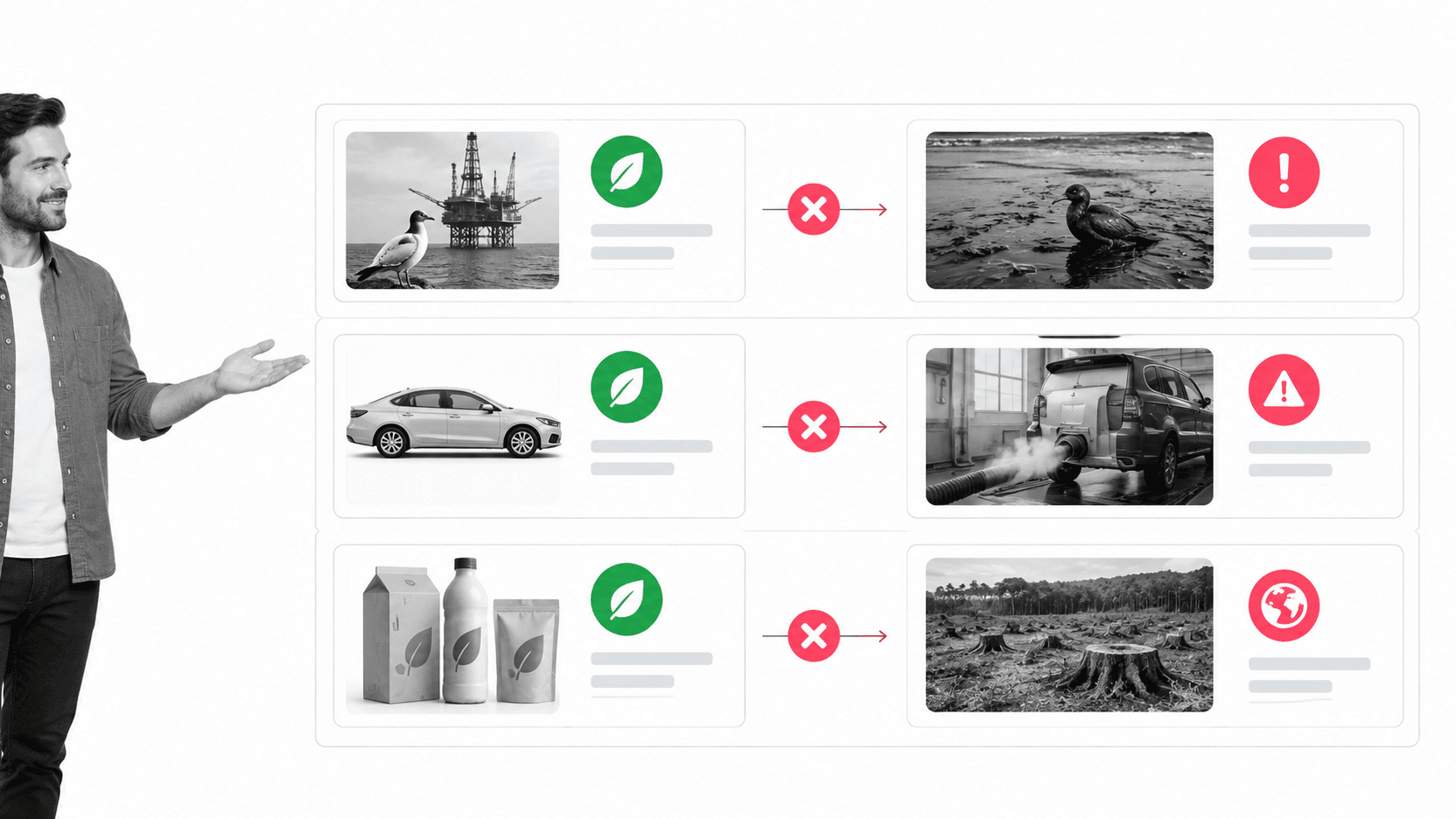
The problem is not merely one of optimistic phrasing. It is a fundamental gap between the carefully curated impression a brand creates and the raw, often damaging, impact of its underlying operations. As environmental regulations tighten and public scrutiny intensifies, this gap has become a liability that threatens both brand equity and the integrity of global ecological efforts.
The Anatomy of Deception: Defining Greenwashing
Greenwashing is, at its core, a marketing gimmick—a strategy designed to capture the "eco-conscious" dollar without making the substantive, often costly, investments required to reform a business model. The term was coined in 1986 by environmentalist Jay Westerveld, who famously identified the irony of the "save the towel" movement in the hotel industry.

While hotels encouraged guests to reuse towels to "save the environment," these same establishments were often simultaneously expanding into fragile ecosystems, destroying coral reefs, and increasing their overall carbon footprint. The towel reuse program served as a low-cost, high-visibility distraction from the larger, environmentally destructive expansion projects. This pattern—where a minor, positive action is leveraged to overshadow a major, negative impact—remains the hallmark of greenwashing today.
Chronology of a Corporate Crisis: Historical Patterns
The evolution of greenwashing can be traced through several landmark cases that highlight how companies have historically weaponized environmental imagery to manage public perception.
The Chevron "People Do" Campaign
In the 1980s and 90s, Chevron launched its "People Do" campaign, which featured stunning footage of employees protecting sea turtles, butterflies, and bears. While the campaign was aesthetically brilliant and emotionally resonant, it was fundamentally deceptive. Investigations revealed that the annual cost of the advertising campaign was in the millions of dollars, while the actual investment in the environmental programs featured—such as a specific butterfly preserve—cost a mere fraction of that amount. During this time, Chevron was actively battling lawsuits related to significant pollution violations and oil spills. The campaign was a masterclass in using "green" imagery to shield the core business from the reputational fallout of its environmental record.

The DuPont "Ode to Joy" Strategy
In 1991, DuPont ran a series of commercials set to Beethoven’s Ode to Joy, featuring marine animals dancing alongside tankers. The advertisement touted the company’s commitment to double-hulled tankers as a symbol of environmental stewardship. However, labor and public interest groups were quick to point out that this single, albeit positive, engineering change did not offset the company’s status as a major industrial polluter. By framing one operational upgrade as evidence of total corporate "greenness," DuPont attempted to sanitize its reputation while maintaining business-as-usual practices elsewhere.
The Volkswagen "Clean Diesel" Scandal
The most significant turning point in modern greenwashing history occurred in 2015 with the Volkswagen emissions scandal. Unlike previous examples that relied on vague imagery, VW’s "Clean Diesel" campaign made explicit, technical claims about environmental performance. The company marketed vehicles as low-emission, "clean" alternatives, while simultaneously installing software designed to cheat emissions testing. This case proved that greenwashing is not just a branding issue; it is a technical, regulatory, and legal crisis. It highlighted the absolute necessity for reproducible, verifiable, and transparent data in all environmental claims.
Supporting Data: The Consumer-Corporate Disconnect
The prevalence of greenwashing is underscored by a persistent lack of transparency. According to a 2020 review by the European Commission, over 53% of environmental claims in the European market were found to be vague, misleading, or entirely unfounded. Furthermore, 40% of these claims lacked any supporting evidence whatsoever.

This deception occurs despite a clear, documented appetite for genuine sustainability. A 2024 PwC global consumer survey revealed that 80% of respondents are willing to pay a premium for sustainably produced goods, with an average "willingness to pay" increase of nearly 10%.
Marketers often treat this consumer demand as a license to use broad terms like "eco-friendly," "green," or "responsible." However, these terms are largely meaningless without specific context. The most credible claims are those that identify:
- The specific benefit: (e.g., "30% reduction in water usage").
- The operational scope: (e.g., "in our manufacturing plant").
- The baseline: (e.g., "compared to our 2022 baseline").
- The measurement period: (e.g., "over the 2023 fiscal year").
Official Responses and Regulatory Shifts
Regulators are increasingly viewing greenwashing not as a marketing nuisance, but as a form of consumer fraud. The U.S. Federal Trade Commission (FTC) has long warned against unqualified claims of "green" or "eco-friendly," noting that such terms are inherently difficult to substantiate.

Globally, frameworks like the Global Reporting Initiative (GRI) and ISO standards (such as ISO 14001) are becoming the baseline for corporate accountability. These systems provide a structured approach to Environmental Management Systems (EMS), requiring businesses to move away from performative branding and toward auditable operational data.
For companies, the shift is no longer optional. Compliance platforms now allow organizations to integrate sustainability audits into their standard operating procedures (SOPs). By utilizing templates—such as Hotel Sustainability Audits or Environmental Accounting checklists—businesses can ensure that every sustainability claim is backed by a verifiable "paper trail" of evidence, role assignments, and management approvals.
Implications: The High Cost of the "Wash"
The implications of greenwashing are far-reaching, affecting three critical pillars:

1. Operational and Legal Risk
When a company makes a claim that is not supported by its operations, it invites regulatory action, fines, and protracted litigation. As seen with the automotive industry, regulators are now looking for proof that is consistent across all operating conditions, not just in controlled laboratory settings.
2. Erosion of Trust
Trust is a non-renewable resource. When consumers realize they have been misled by a "green" campaign, the backlash is often severe and long-lasting. This loss of trust impacts brand loyalty and can lead to boycotts or long-term damage to the company’s social license to operate.
3. The Hindrance of Ecological Progress
Perhaps the most damaging implication of greenwashing is that it slows down actual environmental progress. By confusing consumers and creating a false sense of security, greenwashing diverts capital away from companies that are making genuine, difficult, and expensive changes to their business models. It rewards the performative and punishes the substantive.
Building a Credible Future: From Branding to Accountability
How can a company prove it is not greenwashing? The answer lies in transforming sustainability from a "campaign layer" into "operational work."
1. Define the Boundary: A credible company acknowledges the limitations of its progress. If a company improves its packaging, it should not claim to be a "sustainable company." It should claim to have "improved the sustainability of our packaging."
2. Create an Evidence Loop: Every claim must be tied to a documented process. This means maintaining records of water usage, emissions data, supply chain audits, and corrective action reports.

3. Use Independent Verification: Relying on internal assessments is insufficient. Third-party certifications, such as those from the USDA for organic products or reputable NGOs for environmental standards, provide the necessary external validation.
4. Implement Internal Controls: Marketing, sustainability, legal, and operations teams must review every environmental claim together. If a claim cannot be supported by the current operating data, it should not be published.
Conclusion
The "right to know" principle, championed by environmentalists like Rachel Carson, reminds us that the obligation to endure environmental changes gives consumers the right to accurate information. Greenwashing hides tradeoffs behind broad, comforting words, effectively stripping consumers of their ability to make informed decisions.

A truly sustainable business does not need to resort to marketing tricks. It is a company that minimizes environmental damage by fundamentally changing how it operates, not just how it communicates. In the modern marketplace, credibility is the most valuable currency. By replacing performative branding with rigorous evidence, companies can build a foundation of trust that supports both long-term financial performance and the health of the ecosystems upon which all business ultimately depends.
The era of the "green" label is ending; the era of the "proven" operation has begun. The companies that succeed in the coming decades will be those that realize the most effective sustainability strategy is not one that is marketed, but one that is managed, measured, and verified.