For four decades, the term "greenwashing"—the practice of making misleading claims about the environmental benefits of a product, service, or company practice—has served as a rallying cry for environmentalists and a source of perpetual frustration for corporate communications teams. Despite its longevity, the concept has remained stubbornly elusive, lacking a universally accepted legal or academic definition. This ambiguity has fueled an ongoing debate: if we cannot define greenwashing with precision, how can we effectively police, measure, or eradicate it?
In recent years, however, a quiet revolution has taken place within academic circles. Researchers have coalesced around a rigorous, questions-based framework that aims to move beyond subjective labels toward standardized diagnostic tools. Yet, as this methodology gains traction—cited in over 260 studies and applied across industries ranging from aviation to industrial fisheries—a new and unexpected problem has emerged. The very tools designed to bring clarity are now producing results so stark that they threaten to trigger a counterproductive chilling effect: the rise of "greenhushing."
The Genesis of the Framework: Quantifying the Elusive
The cornerstone of this new academic approach is a 2022 study authored by Noémi Nemes of the University of Vienna and her colleagues. The paper introduced a comprehensive, 28-question framework designed to stress-test corporate sustainability claims. The questions range from the granular—such as whether a company has conducted a full lifecycle assessment (LCA) of its products—to the systemic, such as how marketing budgets align with actual carbon reduction investments and the usage of jargon to obscure negative environmental impacts.
The framework’s power lies in its adaptability. Researchers rarely use all 28 questions; instead, they select a subset of criteria tailored to the specific sector under investigation. By applying these diagnostic filters, academics have begun to turn the murky, qualitative accusations of "greenwashing" into quantitative data points.
Chronology of a Growing Controversy
The shift from theoretical research to high-stakes public discourse has been rapid.
- 2022: Noémi Nemes and colleagues publish the foundational framework, providing a structured methodology for identifying potential greenwashing.
- Early 2024: A major study utilizing the Nemes framework analyzes 3,500 companies’ climate commitments. The findings shock the business community: 96 percent of the companies failed on at least one of seven key greenwashing indicators.
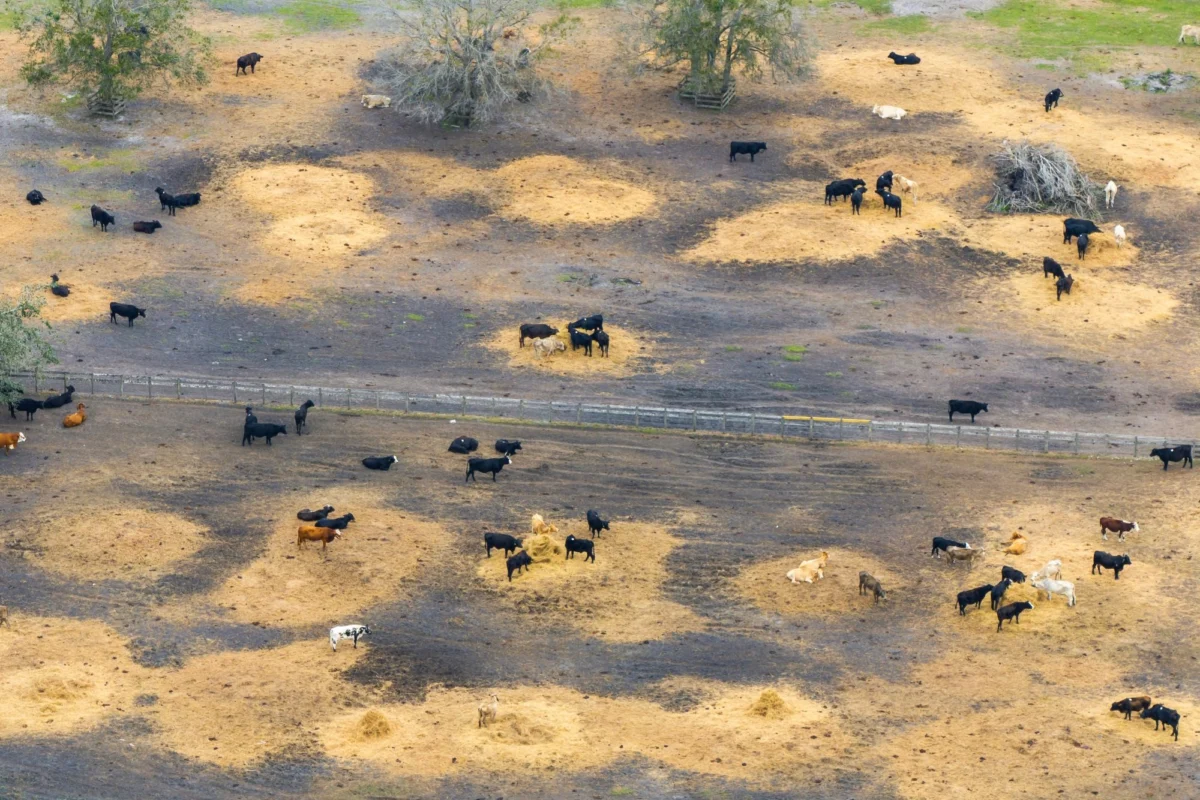
- Late 2024: Jennifer Jacquet, a researcher at the University of Miami, releases a study focusing on the world’s 33 largest meat and dairy producers. Using a modified version of the Nemes questions, the study concludes that 98 percent of the examined statements could be categorized as "greenwashing."
- Present Day: The corporate sustainability sector finds itself at a crossroads, balancing the need for radical transparency against the fear that any public disclosure of progress—no matter how small—will be weaponized as proof of deception.
The Data Dilemma: Why the Failure Rates are Soaring
The headlines generated by these studies have been undeniably sensational. However, critics within the corporate sustainability field argue that the "98 percent" failure rate is a function of the framework’s design rather than an accurate reflection of corporate intent.
The high rates of failure stem from the breadth of the criteria. The frameworks treat a wide spectrum of corporate communication as suspect. For example, a pledge to reach "net-zero by 2050" is flagged as potential greenwashing if it lacks a rigorous, near-term emissions-reduction roadmap. While few would argue that such a pledge is sufficient, the academic framework treats it as a failure of integrity.
Furthermore, the tools are unforgiving of "innocuous" communication. A company that mentions an initiative to reduce food waste—a positive, albeit small, environmental project—may be penalized if they fail to provide a detailed, peer-reviewed footnote quantifying the impact of that specific initiative. Because most corporate sustainability reports are not written as academic papers, they often omit the granular level of evidence that researchers require. When the framework is applied, these omissions are tallied as "greenwashing indicators," leading to a result that many industry practitioners find disconnected from reality.
Perspectives from the Field: The "Catch-22" of Disclosure
The potential for these findings to discourage corporate transparency is a major concern for experts like Katie Anderson, senior director for business, food and forests at the Environmental Defense Fund.
"We need to make sure that honest disclosure of progress is protected, not penalized," Anderson notes. She points out that the transition to a sustainable economy is, by necessity, incremental. A company might make legitimate progress on one small supply chain project while still having a massive overall carbon footprint. Under the current academic frameworks, highlighting that small win can be construed as an attempt to distract from the larger footprint—a classic hallmark of greenwashing.
This creates a "catch-22" for corporations. If they say nothing about their incremental improvements, they are criticized for a lack of transparency. If they speak about them, they are criticized for "hand-wavy" marketing. The result is an environment where the safest path for a legal or PR department is silence—the essence of greenhushing.
Implications for Stakeholders and Consumers
Despite the pushback from the corporate sector, researchers argue that these studies serve a vital purpose. Jennifer Jacquet maintains that her work is not intended to label every corporation as a villain, but to provide a snapshot of communication practices that can be used as a baseline for future accountability.
"Part of this is to make consumers, shareholders, and people in the supply chain more aware of these tactics," Jacquet says. She argues that the public must evolve beyond accepting corporate claims at face value. Instead, stakeholders should be asking: What does this pilot program actually mean for your total global operations? What is the net impact on your overall emissions?
The role of the media in this ecosystem has also come under scrutiny. While researchers are careful to use qualifiers—describing their findings as "indicators" or "risk assessments"—news outlets often strip away this nuance for the sake of a punchy headline. When a paper suggests a "risk of greenwashing" and a newspaper reports that "98 percent of pledges are greenwashing," the public perception shifts from academic inquiry to systemic condemnation.
Conclusion: The Path Forward
The conflict between academic rigor and corporate reality highlights the growing pains of the sustainability movement. We have reached a point where the demand for perfect, airtight, and scientifically bulletproof data is clashing with the reality of complex, long-term corporate transitions.
If the goal of identifying greenwashing is to encourage better, more honest, and more impactful corporate action, then the current framework may require a more nuanced application. Distinguishing between genuine, if imperfect, efforts and malicious, deceptive marketing is essential. Without this distinction, the tools intended to clarify the truth may end up silencing the very conversations necessary to drive meaningful environmental change.
Ultimately, the goal for both researchers and practitioners should be to foster a culture of "radical honesty." This means companies must be willing to disclose the limitations of their progress, while researchers and the public must be willing to acknowledge that incremental steps—when framed accurately—are a necessary part of the journey toward a sustainable future. As the debate continues, the focus must shift from merely "catching" greenwashers to building a framework that incentivizes the hard, honest work of systemic change.