By Rosemary Potter
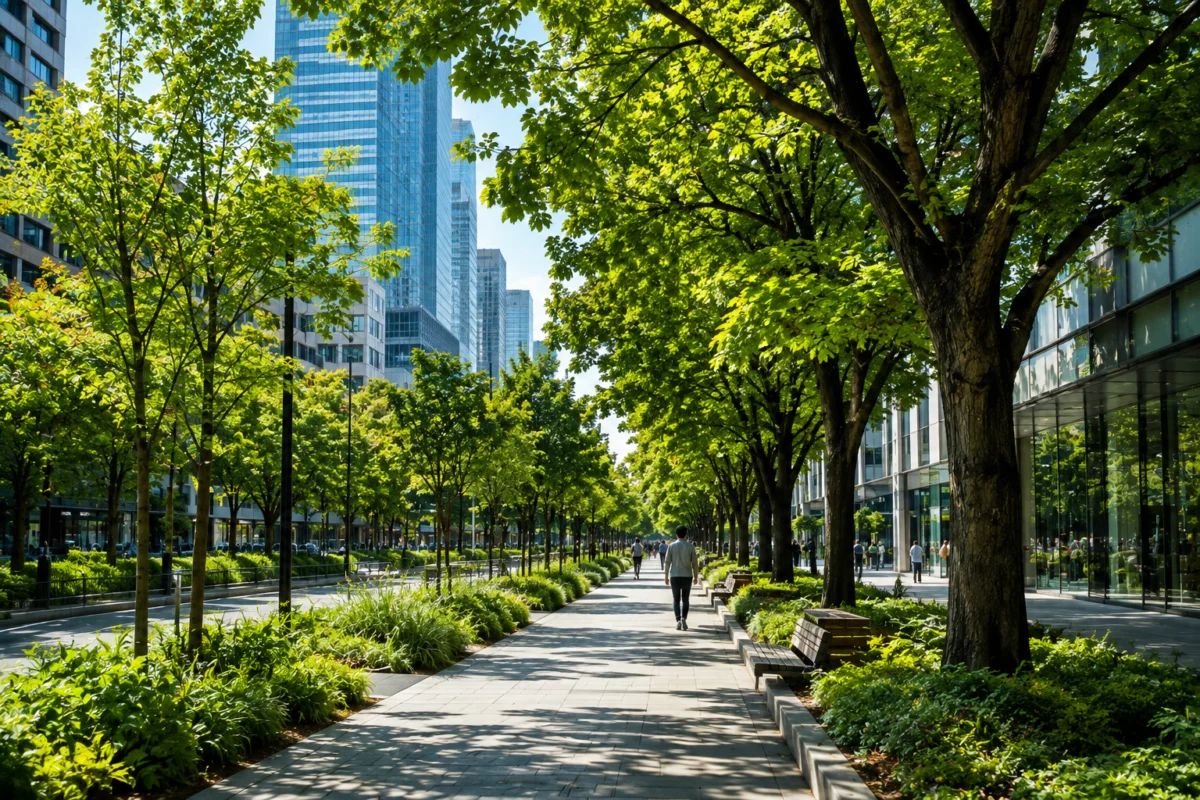
As the global population continues to gravitate toward urban centers, the concrete-heavy landscapes of the 20th century are facing an existential reckoning. The rising frequency of climate-driven heatwaves, flash flooding, and deteriorating air quality has forced city planners to reconsider a forgotten asset: the urban forest. Far from being mere aesthetic ornaments, trees are increasingly viewed as critical infrastructure, acting as the "lungs" and "cooling systems" of our modern metropolis.
Main Facts: The Functional Anatomy of an Urban Forest
The urban ecosystem is a complex, living network of parks, tree-lined avenues, residential gardens, and public squares. Collectively, these spaces provide services that mechanical engineering struggles to replicate at scale.
At the core of this biological infrastructure is the ability of trees to mitigate the "Urban Heat Island" (UHI) effect. In densely built environments, asphalt and concrete act as thermal batteries, soaking up solar radiation during the day and radiating it back at night, preventing urban areas from cooling down. Trees combat this through two primary mechanisms: direct shading and evapotranspiration. By intercepting sunlight before it reaches heat-absorbent surfaces and releasing water vapor through their stomata, trees can lower surface temperatures by as much as 10°C to 15°C in localized areas.
Furthermore, trees act as biological filters. Through photosynthesis, they sequester atmospheric carbon dioxide, storing the carbon in their biomass—trunks, roots, and branches. Simultaneously, their foliage traps particulate matter (PM2.5 and PM10), effectively scrubbing the air of pollutants generated by vehicular traffic and industrial heating systems.
Chronology: From Beautification to Critical Infrastructure
The perception of urban greenery has undergone a significant evolution over the past century:
- 1900–1950 (The Aesthetic Era): The City Beautiful movement emphasized grand boulevards and public parks primarily for civic pride and recreational value. Trees were largely considered "decorations."
- 1960–1990 (The Conservation Era): Environmental awareness grew, and urban planning began to recognize the role of trees in biodiversity, protecting pockets of nature as cities sprawled outward.
- 2000–2015 (The Mitigation Era): Scientific studies began quantifying the economic and health impacts of heat islands. The focus shifted toward using trees to reduce energy consumption in buildings.
- 2016–Present (The Resilience Era): Today, urban forestry is a cornerstone of climate adaptation strategies. Cities like Singapore, Medellin, and Paris are integrating "green infrastructure" into building codes, viewing every tree as a piece of essential, climate-resilient hardware.
Supporting Data: Quantifying the Canopy
The economic and environmental dividends of urban trees are no longer theoretical. Data from recent urban forestry studies reveal compelling metrics:
- Cooling Efficiency: Research indicates that strategically placed trees can reduce air conditioning costs for surrounding buildings by up to 30%, as they drastically lower ambient temperatures.
- Water Management: A single mature tree can intercept thousands of liters of rainwater annually. By slowing runoff and allowing water to infiltrate the soil, trees reduce the burden on aging municipal drainage systems, preventing the catastrophic flash flooding that often follows heavy storms in paved environments.
- Health Outcomes: The World Health Organization (WHO) and various public health agencies have found a direct correlation between canopy cover and improved mental health outcomes. Access to green spaces reduces cortisol levels, encourages physical activity, and lowers the incidence of respiratory issues, particularly in children and the elderly.
- Biodiversity Anchors: Older, mature trees provide nesting sites and micro-habitats that young saplings cannot replicate for decades. A study in the UK found that a single oak tree can support over 2,000 different species of insects, birds, and fungi, forming a vital ecological corridor in an otherwise fragmented urban landscape.
Official Responses: Global Policies on Urban Greening
Governments worldwide are shifting from passive appreciation to active management. In Singapore, the "City in Nature" initiative is a government-mandated goal to ensure every resident lives within a 10-minute walk of a park. The city-state uses high-resolution satellite mapping to monitor canopy density, ensuring that development does not come at the cost of the urban forest.
In the United States, the Inflation Reduction Act has funneled billions into urban forestry grants. The focus is specifically on "environmental justice" neighborhoods—typically low-income areas that have historically been denied the cooling benefits of canopy cover. By prioritizing these areas, policymakers are addressing the inequality of heat exposure, where lower-income residents often live in "heat deserts" with significantly higher temperatures than wealthier, greener districts.
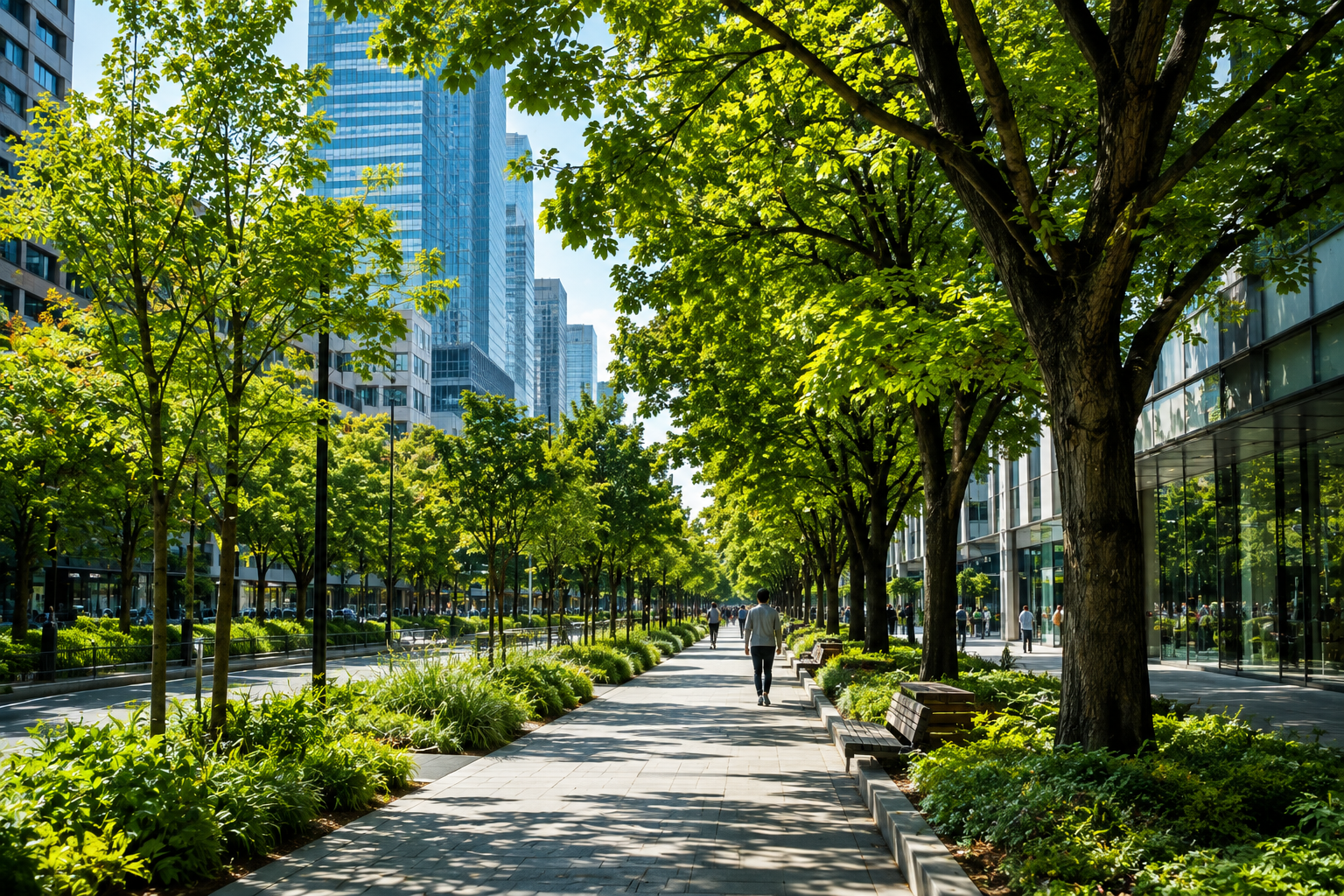
European cities, meanwhile, are implementing "sponge city" mandates. These policies require developers to include permeable surfaces and integrated tree pits to manage stormwater naturally, effectively turning sidewalks and parking lots into absorbent sponge-like structures that prevent sewer overflows.
Implications: The Long-Term Challenge of Stewardship
While the benefits are undeniable, the implementation of large-scale urban forestry presents significant challenges. We must move beyond the "plant-and-forget" mentality.
The Problem of Species Selection
As climate change shifts local ecosystems, the trees planted today must be able to survive the climate of 2050 and 2070. Planting monocultures—rows of identical tree species—is a risky strategy; if a specific pest or disease hits, the entire canopy could be lost. Modern forestry requires a diverse palette of native and climate-resilient species that can withstand prolonged drought and erratic weather patterns.
The Value of the Mature Canopy
There is a dangerous tendency in urban development to prioritize new planting while neglecting the protection of mature trees. A 60-year-old tree provides benefits—shading, carbon sequestration, and habitat—that a sapling will not reach for decades. Protecting existing old-growth urban trees is not merely a conservation effort; it is an economic imperative to preserve the "infrastructure" we already have.
Integrating Nature into the Built Environment
The future of urbanism lies in the seamless integration of biology and architecture. This means moving beyond parks and into "green infrastructure"—vertical gardens on building facades, green roofs, and tree-lined corridors that connect fragmented habitats.
Conclusion: A Living Strategy for the Future
As cities face the dual pressures of densification and a rapidly changing climate, trees represent one of our most effective, scalable, and cost-efficient tools for survival. However, the urban forest is not a set-and-forget asset. It requires a dedicated, long-term commitment to maintenance, protection, and strategic planning.
To bring nature back into the city is not to retreat from progress, but to redefine it. It is an acknowledgment that the most sophisticated technology we possess for temperature control, flood management, and public health is the one that has been growing alongside us for millennia. By prioritizing the urban forest today, we are not just planting trees; we are ensuring that our cities remain habitable, resilient, and human-centric for the generations to come.
The path forward requires a unified approach: local governments must enforce strict tree-protection ordinances, developers must integrate greenery as a core utility, and citizens must continue to advocate for the shaded, vibrant, and oxygen-rich neighborhoods they deserve. The green frontier is not at the edge of the city—it is in the very center of it.