The software industry is currently standing at the precipice of a seismic shift. For decades, the dominance of "Big Tech" software suites—Adobe Creative Cloud, Microsoft Office, and enterprise-grade SaaS platforms—has been cemented by two things: massive, multi-year engineering efforts and the crushing "switching costs" that keep users tethered to expensive subscription models.
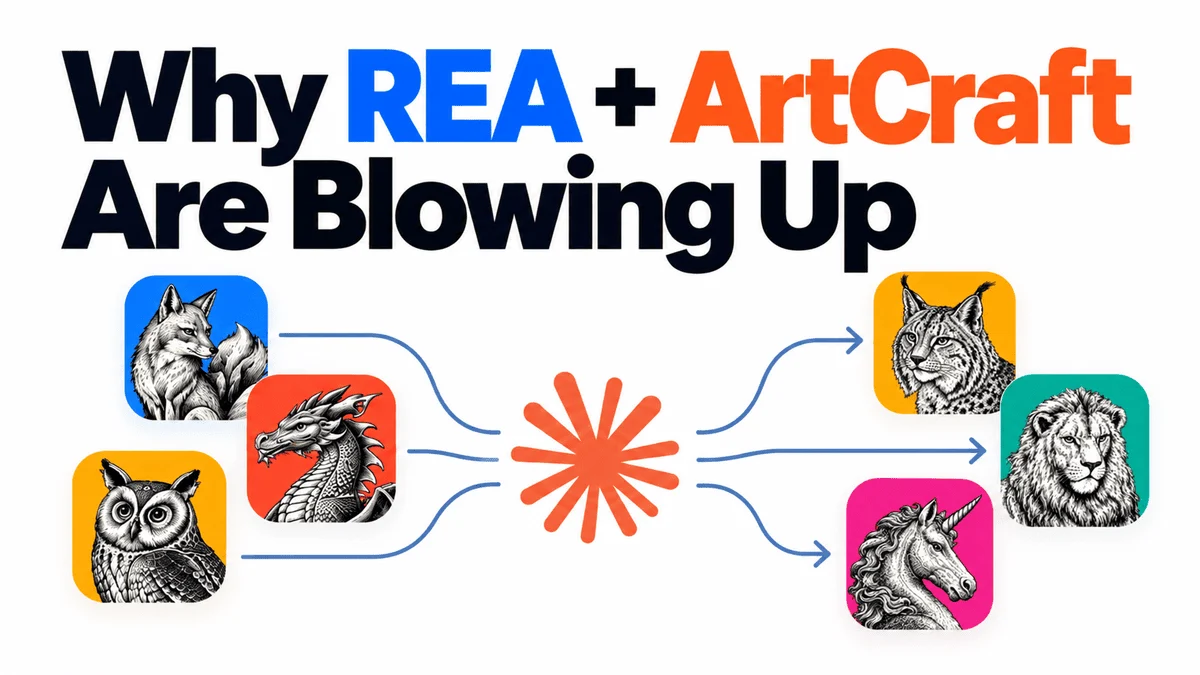
However, a new wave of development, driven by autonomous AI coding agents, is threatening to dismantle this status quo. Developers are no longer merely "vibe coding" simple scripts or landing pages; they are systematically reverse-engineering and cloning complex commercial software. At the forefront of this movement are two revolutionary projects: Reverse Engineer Anything (REA) and the ArtCraft ecosystem.
As these tools gain viral momentum, the fundamental question arises: Is the era of the high-priced, proprietary software subscription coming to an end?
The Genesis of the Clone Movement: Breaking the Switching Cost Barrier
To understand why this development is so disruptive, one must first understand the "switching cost" dilemma. Historically, open-source alternatives to industry giants have existed for years. GIMP has long been a functional alternative to Adobe Photoshop, and LibreOffice has served as a capable substitute for Microsoft Word. Yet, they have failed to achieve mass adoption.
The barrier is not purely technical; it is psychological and workflow-oriented. A professional designer who has spent 15 years mastering the specific hotkeys, layer management, and UI logic of Photoshop cannot simply transition to an application with an entirely different design philosophy.
The new generation of AI-driven projects, however, is taking a different approach. Instead of building "better" or "different" software, they are building functional clones. By utilizing AI to replicate familiar layouts, menu structures, and shortcut paradigms, these developers are attempting to lower the barrier to entry to near zero. The promise is simple: a free, open-source application that feels like the software you already use, minus the recurring monthly tax.
REA: Democratizing the "Black Box" of Proprietary Code
One of the most significant technological catalysts for this movement is Reverse Engineer Anything (REA). In just a few short days, the project has captivated the developer community, racking up over 134,000 stars on GitHub—a meteoric rise that underscores the industry’s appetite for transparency.
The Mechanics of REA
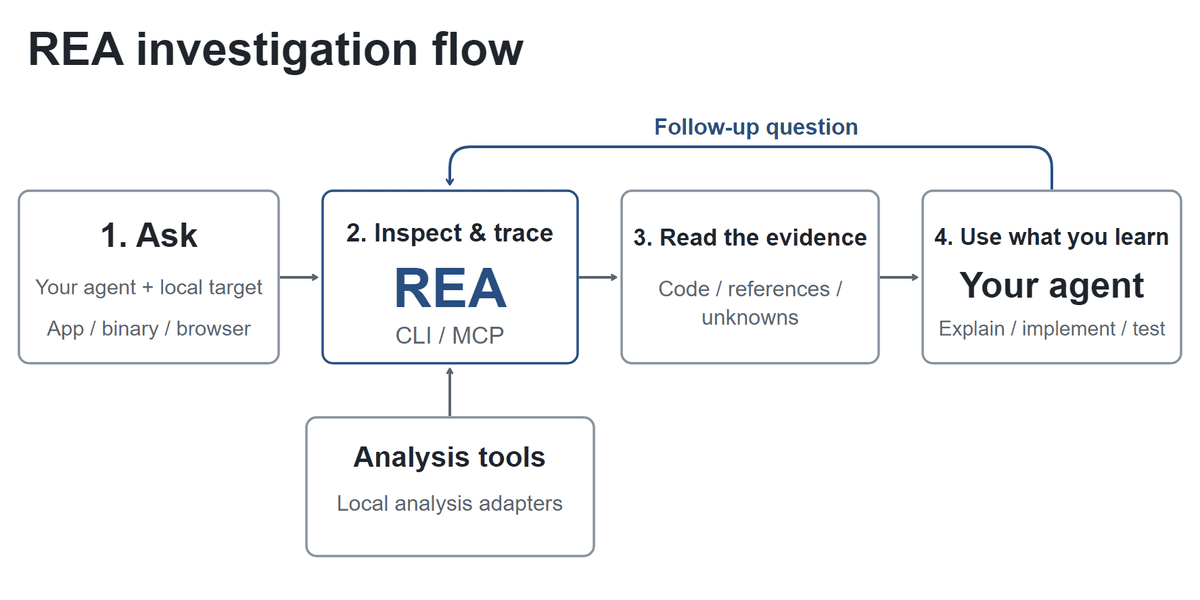
Traditionally, reverse engineering was the domain of highly specialized security researchers. It required manual decompilation, deep knowledge of assembly language, and months of painstaking investigation to understand how a binary functioned. REA changes this by creating a bridge between AI agents (such as Claude Code, Cursor, and Codex) and classic reverse-engineering power tools like Ghidra, Hopper, and IDA Pro.
By feeding a compiled binary into the REA pipeline, an AI agent can effectively "read" the code. It analyzes architecture, maps out function dependencies, and translates complex internal behaviors into human-readable documentation.
Evidence of Efficacy
The proof is already manifesting in real-world experiments:
- Feature Reconstruction: Developers have used REA to extract and document the proprietary clipboard functionality of Notion.
- Algorithmic Recovery: The tool has successfully reconstructed sound-engine calculations from legacy PC-98 titles and DX-Ball.
- Code Porting: By understanding the "logic" of a binary, developers are now using LLMs to rewrite these proprietary functions in modern languages like Rust or Python, creating cleaner, faster, and open-source equivalents.
ArtCraft: The Ambitious Pursuit of Adobe-Style Parity
If REA provides the "how-to," the ArtCraft project represents the "what-if." Spearheaded by developer Brandon Thomas, ArtCraft is a suite of applications written in Rust that aims to replicate the core functionalities of the Adobe Creative Cloud.
The project encompasses:
- PhotoCraft: A Photoshop-inspired image editor.
- VectorCraft: An Illustrator-like tool for vector graphics.
- FilmCraft: A video editing interface modeled after Premiere Pro.
The ambition behind ArtCraft is staggering. Thomas has proposed a timeline of achieving feature parity with these industry giants within months—a goal that has invited both widespread awe and healthy skepticism from the software engineering community.
Critics argue that "vibe coding" (the rapid generation of UI/UX code via AI) cannot replicate the decades of edge-case optimization, GPU acceleration, and stability testing that underpin a product like Photoshop. Yet, supporters argue that in an AI-assisted world, the "time to build" has collapsed. What once took a team of 50 engineers two years to develop might now be iterated upon by an individual developer using an AI agent in a matter of weeks.
Chronology of the Surge
- Pre-2024: Open-source alternatives (GIMP, Inkscape) remain stagnant in terms of market share due to UI/UX friction.
- Early 2024: The emergence of advanced coding agents (Claude 3.5 Sonnet, Cursor) allows for the rapid assembly of complex software architectures.
- Late 2024: The REA toolkit is released, turning the industry’s "black box" secrets into actionable code for the masses.
- Current Week: The viral explosion of REA and ArtCraft on social platforms like X (formerly Twitter) and GitHub creates a feedback loop, drawing in thousands of contributors who are now stress-testing these clones.
The Implications: A Shift in Software Ownership
The rise of these clones forces a critical look at the current software economy. When an individual can use an AI agent to build a high-fidelity clone of a commercial application, the inherent value of the original software shifts away from the code itself and toward the ecosystem, cloud synchronization, and support.
The Threat to Subscription Models
For companies like Adobe and Microsoft, the threat is not necessarily a "better" product, but a "good enough" product that is free. If a user can perform 90% of their daily tasks in a free, open-source clone that mirrors the interface they’ve used for a decade, the justification for a $50–$100 monthly subscription becomes significantly harder to defend.
Legal and Ethical Gray Zones
This movement is not without its controversies. Intellectual property lawyers are already watching closely. While reverse engineering for interoperability is often protected, the line between "learning from" a binary and "cloning" it can be thin. The industry is bracing for a wave of litigation that will likely define the limits of AI-assisted development in the coming years.
Skepticism and the Reality of Software Maturity
Despite the viral hype, the "vibe coding" movement faces significant hurdles. Enterprise software is not just about the interface; it is about:
- Reliability: Mature software has thousands of developers dedicated to bug squashing and stability.
- Performance: Real-time rendering in video and graphic design requires highly optimized C++/Rust code that AI currently struggles to perfect in isolation.
- Integration: The power of Adobe or Microsoft lies in the interconnectedness of their suites—cloud storage, collaborative features, and third-party plugin ecosystems.
Early testers of ArtCraft have noted that while the interfaces are shockingly accurate, the underlying engines are prone to crashes and missing "power-user" features that professionals rely on.
Conclusion: The New Frontier of Development
The emergence of REA and ArtCraft is a signal of a broader paradigm shift. We are moving toward an era where software will be "fluid"—if a tool is too expensive or locked behind a restrictive subscription, the community will simply build a clone.
While these early AI-generated projects may not replace professional-grade software overnight, they serve as a proof of concept. The cost of recreating complex digital tools has plummeted, and the barrier to entry for independent developers has been effectively demolished.
For the average user, the future looks bright: a landscape of free, familiar, and customizable software. For the giants of Silicon Valley, the warning is clear: the moat they spent years building is being drained by the very technology they helped pioneer. We are only in the early chapters of this story, but one thing is certain—the way we build, own, and pay for software will never be the same.