By Jeffrey Frankel
October 26, 2026
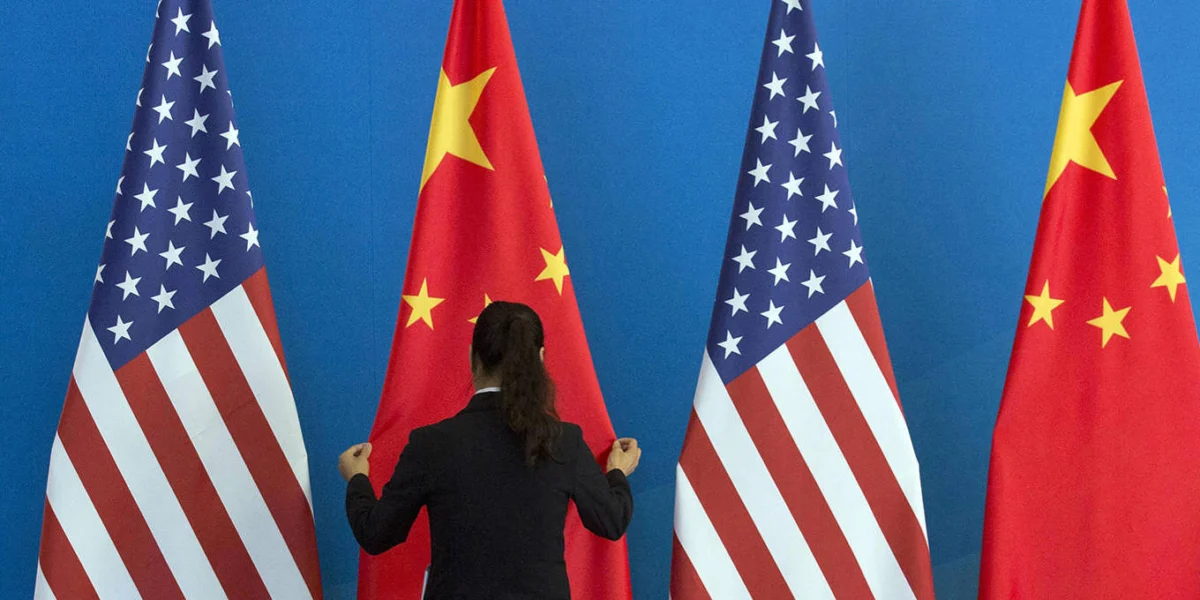
In the modern theater of international relations, the battlefield has shifted from the kinetic to the commercial. As geopolitical tensions recalibrate the global order, the term "geoeconomics"—the strategic use of economic tools to achieve national security objectives—has moved from academic discourse to the forefront of policy debates in Washington, Beijing, and Brussels.
At the European Central Bank’s (ECB) 11th Annual Research Conference last month, Nobel laureate Paul Krugman offered a provocative thesis: that in the era of "weaponized interdependence," the European Union possesses a latent capacity for influence that surpasses both the United States and China. However, this assertion, while intellectually stimulating, rests on a precarious statistical foundation. By relying on Purchasing Power Parity (PPP)-adjusted GDP to flatten the volatility of nominal exchange rates, Krugman may be obscuring a more complex reality, as the inherent volatility of PPP data often exceeds the very fluctuations it is intended to stabilize.
The Rise of Weaponized Interdependence
Geoeconomics is no longer a peripheral concern; it is the central nervous system of contemporary statecraft. The term, popularized by scholars like Henry Farrell and Abraham Newman, describes a world where the intricate networks of globalization—the undersea cables, the financial clearinghouses, and the supply chains for critical minerals—are being turned into levers of power.
Whether it is China’s strategic manipulation of rare-earth mineral exports to coerce trading partners or the United States’ deployment of the dollar-based financial system to enforce sanctions, nations are increasingly looking to their economic footprint as their primary deterrent. During his keynote in Frankfurt, Krugman argued that the European Union, often dismissed as a "regulatory superpower" lacking hard power, is actually the primary beneficiary of this transition. His argument rests on the sheer scale of the EU’s Single Market and its role as the world’s ultimate arbiter of regulatory standards—the so-called "Brussels Effect."
Chronology of the Debate: From Globalization to Fragmentation
To understand why the EU’s position is currently under intense scrutiny, one must look at the recent trajectory of international economic policy:
- 2022-2023: The Great Realignment. The shock of the conflict in Ukraine exposed the fragility of Europe’s energy dependency, leading to a frantic pivot toward "de-risking."
- 2024: The Strategic Autonomy Shift. The EU formally adopted a suite of policies designed to limit reliance on non-market economies, specifically regarding green technology and semiconductors.
- September 2026: The ECB Conference. Paul Krugman presented his findings, arguing that when adjusted for the actual purchasing power of local currencies, the European Union’s economic gravity exceeds that of its primary rivals, positioning it as the ultimate "chokepoint" in global trade.
- October 2026: The Counter-Analysis. Following the conference, a wave of economists—including this author—began scrutinizing the methodology used to derive these power rankings, particularly the heavy reliance on PPP-adjusted metrics.
The Statistical Quagmire: PPP vs. Nominal GDP
The crux of the current debate lies in how we measure "power." Krugman’s reliance on PPP-adjusted GDP is a methodological choice that deserves rigorous interrogation.
The Logic of PPP
PPP-adjusted GDP attempts to equalize the purchasing power of different currencies by eliminating the differences in price levels between countries. It is frequently used by development economists to measure the actual standard of living of a population. Proponents of using PPP to assess geopolitical power argue that it provides a more stable, long-term view of a nation’s productive capacity, untainted by the daily gyrations of the currency markets.
The Hidden Volatility
However, the application of PPP to the high-stakes world of geoeconomics is flawed. While nominal exchange rates are indeed volatile, they represent the reality of global market interactions. When a country exerts economic influence, it does so through the global capital markets, using currencies that trade at nominal—not PPP-adjusted—rates.
Furthermore, the assumption that PPP data is "smoother" is empirically incorrect. The price indices used to calculate PPP—specifically for non-tradable services—are subject to massive structural adjustments that can shift drastically during periods of high inflation or sudden economic reform. By using PPP, we are essentially looking at a distorted mirror; we are smoothing over the very market signals that define a country’s ability to project power abroad.
Supporting Data: Examining the EU’s Economic Footprint
When we strip away the PPP adjustments, the picture of the European Union’s influence becomes more nuanced.
- Market Access: The EU remains the world’s largest trading bloc. Its ability to deny market access to foreign firms is a potent weapon, as seen in the ongoing implementation of the Carbon Border Adjustment Mechanism (CBAM).
- Financial Infrastructure: While the Euro is the second-most important global reserve currency, it remains a distant second to the US Dollar. The EU’s influence in global financial messaging systems remains significant but is often hampered by a lack of centralized fiscal policy.
- The Productivity Gap: Data from the OECD indicates that while the EU performs well in social welfare metrics, its growth in high-technology sectors—the core of modern geoeconomic advantage—has lagged behind the US for the better part of a decade.
If we measure power by the ability to move global markets, the United States still holds the "exorbitant privilege" of the dollar. If we measure power by the ability to control supply chains for the energy transition, China’s dominance is undeniable. The EU’s power is "regulatory," which is effective in times of peace but arguably less flexible in times of acute crisis.
Official Responses and Institutional Perspectives
The European Central Bank has maintained a position of cautious neutrality. While the ECB’s leadership has acknowledged the importance of "strategic autonomy," they have been careful not to overstate the Union’s power in a way that might alienate trading partners.
Conversely, policy analysts in Washington have expressed skepticism toward the idea that the EU is the dominant force in geoeconomics. The US perspective remains centered on the concept of "Integrated Deterrence," which explicitly links military capability with economic sanctions. The prevailing view in the Beltway is that the EU is a "civilian power" that is currently in the process of discovering its limitations.
Beijing’s response has been more tactical. By emphasizing "win-win" cooperation, Chinese officials have sought to peel away EU member states from a unified European geoeconomic strategy, successfully leveraging the differences in economic priorities between, for example, Germany’s export-oriented manufacturing sector and the more protectionist leanings of the French administration.
Implications for the Future of Global Trade
The debate over how to calculate the EU’s power is not merely an academic exercise. It has profound implications for how the European Union conducts its foreign policy in the coming years.
The Risk of Overconfidence
If policymakers in Brussels believe their own rhetoric—that the EU is the preeminent geoeconomic power—they may be emboldened to pursue aggressive trade policies that the bloc is not yet prepared to back up with hard economic or military muscle. Overestimating one’s leverage can lead to diplomatic miscalculations, potentially driving partners into the arms of competitors.
The Necessity of Structural Reform
The real lesson of the current geoeconomic era is that the European Union must transition from being a rule-maker to a rule-enforcer. This requires not just better metrics, but a deeper integration of capital markets and a unified energy strategy. Without these, the EU’s "weaponized interdependence" will remain a theoretical construct rather than a practical reality.
A Call for Better Metrics
Economists must move beyond the binary of nominal GDP versus PPP-adjusted GDP. We need a new "Geoeconomic Power Index" that accounts for:
- Dependency Ratios: The extent to which a country relies on specific foreign inputs for its critical infrastructure.
- Systemic Centrality: The degree to which a country acts as a hub in global financial and data networks.
- Resilience Capacity: The ability to withstand sudden economic shocks without a collapse in domestic demand.
Conclusion: The Path Forward
Paul Krugman’s intervention at the ECB conference was a necessary catalyst for a long-overdue discussion. However, we must resist the temptation to simplify the complexity of global power into a single, sanitized metric. The European Union is undoubtedly a significant actor in the global order, possessing a unique capacity to shape the regulatory future of the digital and green economies.
But it is not a superpower in the traditional sense, and its influence is not as absolute as some of the more optimistic PPP-based models might suggest. The reality of the next decade will be defined by friction, not smooth adjustments. To navigate this, the EU must ground its strategy in the hard, often volatile, data of real-world trade and capital flows.
As we look toward 2030, the true test for Europe will be whether it can translate its internal market strength into a coherent, externalized strategy that can hold its own against the giants of the East and the West. That will require more than just clever economics; it will require the political will to treat the economy not as a backdrop to history, but as the engine of our collective future.