In an era defined by rapid technological shifts and the evolving nature of human interaction, the ability to accurately gauge public opinion has become a high-stakes challenge. The Pew Research Center, a cornerstone of objective data collection, recently unveiled the findings from Wave 194 of its American Trends Panel (ATP). This study, conducted between May 26 and June 1, 2026, offers more than just insights into where Americans spend their time online—it serves as a definitive case study in the integration of traditional rigorous social science with cutting-edge artificial intelligence.
The report, a product of the Pew-Knight Initiative—a collaborative effort funded by The Pew Charitable Trusts and the John S. and James L. Knight Foundation—details a massive, systematic effort to categorize the digital communities that define the modern American experience.
The Foundation of Accuracy: The American Trends Panel (ATP)
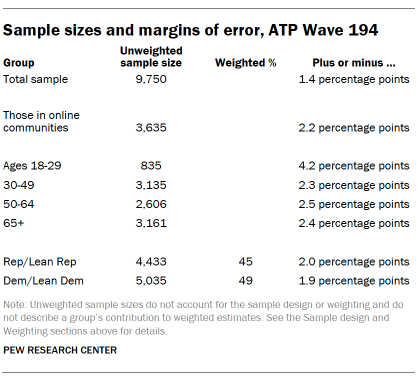
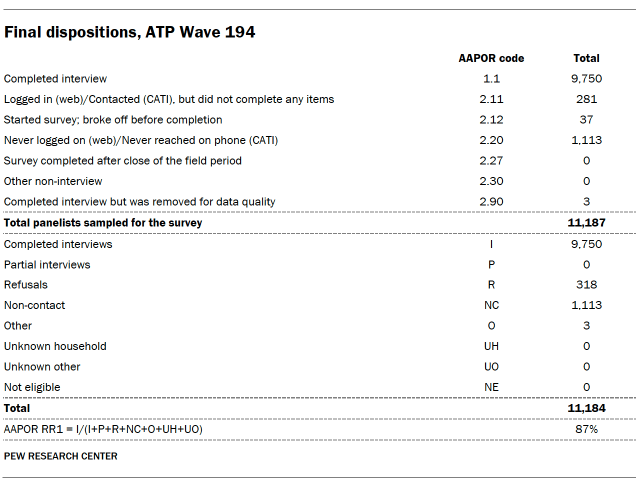
At the heart of this research lies the American Trends Panel, a nationally representative group of randomly selected U.S. adults. To ensure the integrity of the data, the Center maintains a gold-standard approach to survey methodology. For Wave 194, researchers invited all active panel members to participate, resulting in a robust response from 9,750 individuals out of 11,184 sampled.

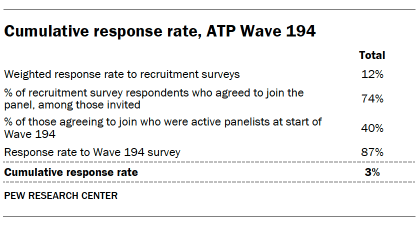
This achievement represents a survey-level response rate of 87%, a figure that stands in stark contrast to the declining participation rates often seen in modern polling. The margin of sampling error for the full sample sits at a precise plus or minus 1.4 percentage points, providing a high level of statistical confidence.
A Chronology of Data Collection
The logistics of such an undertaking are exhaustive. The survey process followed a strictly controlled timeline:
- May 22, 2026: Pre-notification postcards were mailed to panelists designated for telephone interviews.
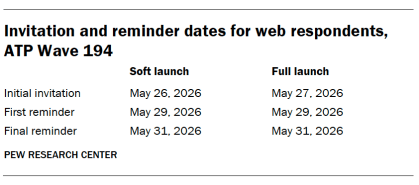
- May 26, 2026: The official field period commenced. A "soft launch" involved 60 online panelists and a small group of telephone interviewees to test the system’s logic and readiness.
- May 27, 2026: The full launch began. All remaining English- and Spanish-speaking panelists were invited to participate via email, SMS, or live telephone calls from trained SSRS interviewers.
- June 1, 2026: The field period concluded, marking the end of the collection phase.
To maximize participation across diverse demographics, the Center utilized a tiered incentive system. Respondents were offered post-paid incentives ranging from $5 to $20, with higher amounts targeting populations traditionally harder to reach, ensuring the final dataset reflected a truly representative slice of the American populace.
Methodological Rigor: The Role of AI in Social Research
Perhaps the most significant development in this report is the Center’s "Open-end Coding Methodology." When researchers asked participants to identify the focus of their most-visited online community, they were met with thousands of unique, free-text responses. To process this qualitative data, Pew moved beyond traditional manual coding, adopting an AI-assisted classification system.
The HypotheSAEs Framework
The researchers employed the "HypotheSAEs" method—a sophisticated approach developed by Movva et al. in 2025. This process utilized unsupervised machine learning, specifically sparse autoencoders and Large Language Model (LLM) interpretation, to identify latent themes within the responses.
The pipeline was as follows:
- Pilot Discovery: Human researchers reviewed a random sample to identify baseline themes.
- Theme Discovery: Parallel to the human review, the LLM-based system generated candidate categories.
- Validation: The team utilized GPT-5.2 to code responses based on a strictly defined codebook. To ensure accuracy, human coders validated the model’s performance against a stratified sample of 210 responses.
- Refinement: After measuring the model’s performance using standard classification metrics, researchers achieved a micro-averaged F1 score of 0.86, indicating high reliability.
This hybrid approach allows the Center to maintain the "human-in-the-loop" standard while achieving a speed and scale that would be impossible with human labor alone.
Supporting Data and Data Quality
The credibility of the ATP relies on rigorous data cleaning. Before any analysis was performed, researchers implemented strict quality control measures to identify "satisficing"—the tendency for respondents to provide hurried or thoughtless answers. By checking for patterns such as consistently skipping questions or selecting the same answer option (e.g., the first or last choice) for every item, the team identified and removed three respondents whose data were deemed unreliable.
Weighting and Representation
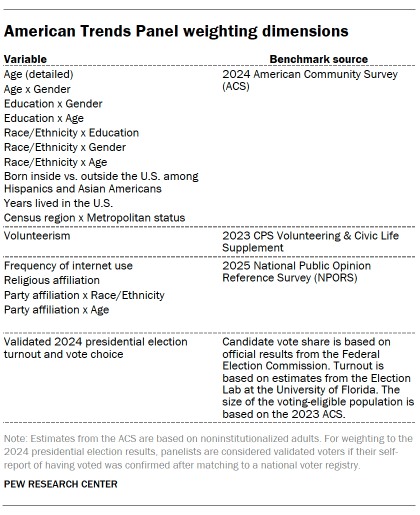
To account for the complexities of modern sampling, the data underwent a multi-stage weighting process:
- Base Weighting: Reflecting the probability of recruitment into the panel.
- Calibration: Aligning the data with known U.S. population benchmarks for age, race, education, and geography to correct for attrition.
- Trimming: Statistical trimming at the 1st and 99th percentiles was applied to reduce variance and improve the precision of estimates.
These steps ensure that the final results are not merely a reflection of who happened to answer the survey, but a mirror of the broader American demographic landscape.
Official Perspectives: Transparency in AI Usage
Pew Research Center has been transparent about its policy regarding artificial intelligence. In their accompanying documentation, they emphasize that AI is used as a tool to enhance human analysis, not to replace the intellectual oversight of trained researchers.
"The goal is to maintain the same standard of accuracy that has defined the Center for decades," noted a representative during the release of the technical specifications. The Center’s decision to publish their "full prompt" used for the GPT-5.2 classification is a testament to their commitment to open science and reproducibility. By allowing the public to see the exact instructions provided to the AI, they invite scrutiny and foster trust in an era where "black box" algorithms often obscure the truth.
Implications for the Future of Public Opinion
The success of Wave 194 suggests a new paradigm for institutional research. As digital platforms become more fragmented and specialized, the "one-size-fits-all" approach to survey analysis is increasingly obsolete.
Bridging the Digital Divide
The study highlights that online communities are no longer just social media hubs; they are specialized ecosystems—ranging from hobbyist forums to professional networks. By using AI to categorize these spaces, researchers can now map the shifting interests of the American public with unprecedented granularity.
A Model for Future Research
The implications for social science are profound. The integration of LLMs into qualitative coding means that researchers can now process massive amounts of unstructured data—such as open-ended survey responses—at a scale previously reserved for quantitative metrics.
However, the Center remains cautious. The reliance on human validation for every stage of the AI process demonstrates that while technology can accelerate the workflow, the final interpretation of social trends must remain grounded in human experience. The "human-in-the-loop" model used by Pew ensures that errors in machine logic are caught, corrected, and learned from, creating a feedback loop that improves the accuracy of each subsequent survey.
Conclusion: The Road Ahead
As we move further into the decade, the landscape of public opinion will continue to be influenced by the digital communities we inhabit. The Pew Research Center’s work in Wave 194 demonstrates that the path to understanding this complexity lies in the marriage of traditional, address-based sampling with the computational power of modern AI.
By prioritizing transparency, methodological rigor, and human-led validation, the Center continues to provide the data necessary for policymakers, academics, and the public to make informed decisions. The marriage of the American Trends Panel’s historical consistency and the innovative use of LLMs ensures that as the world moves online, our understanding of it keeps pace. This study is not just an analysis of online communities; it is a blueprint for the future of democratic discourse and social research in the 21st century.