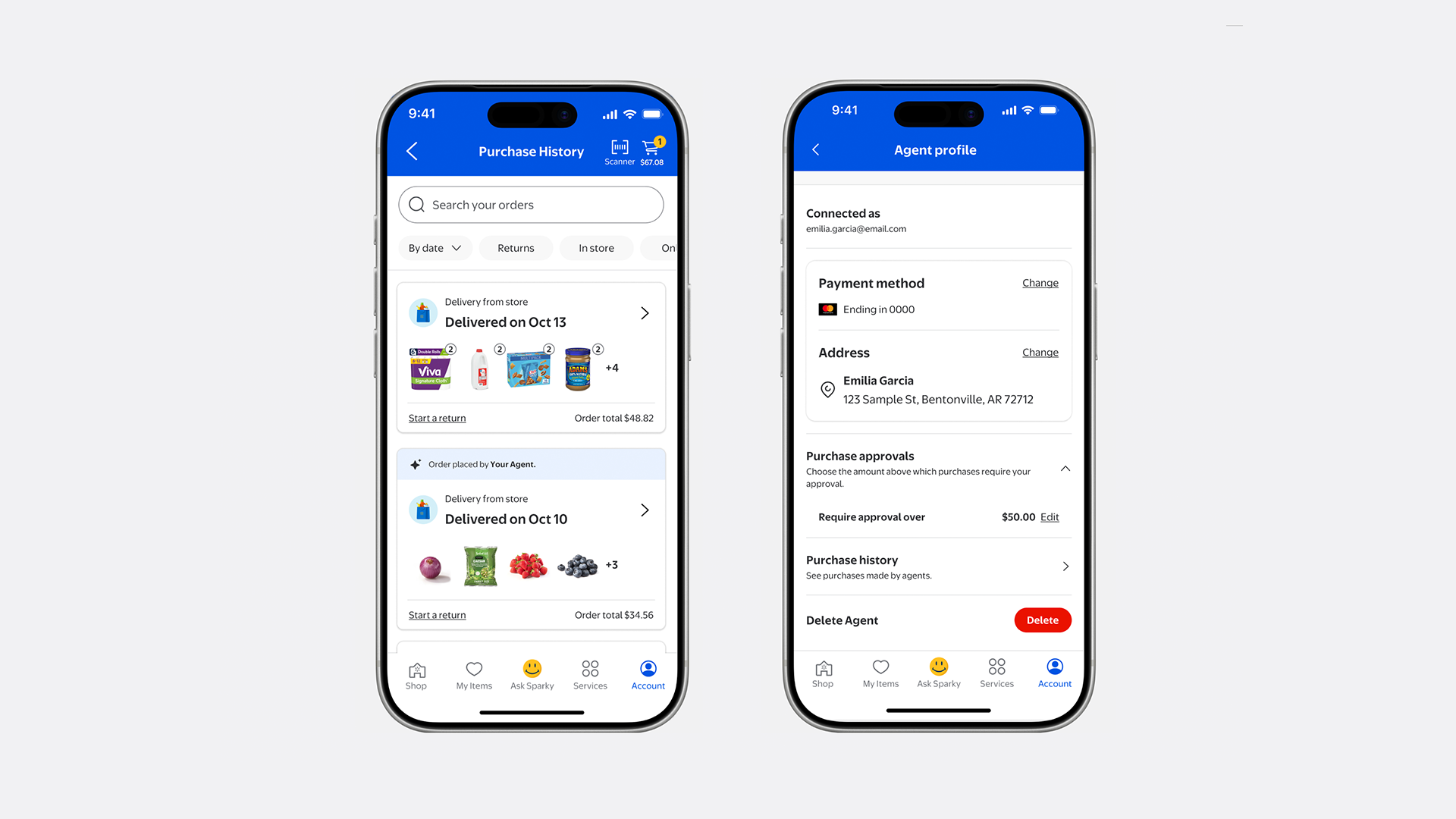
As the retail landscape shifts toward an era of "agentic commerce"—where artificial intelligence agents act on behalf of consumers to browse, select, and purchase products—Walmart is taking decisive action to ensure human shoppers remain firmly in the driver’s seat. On October 21, 2026, the retail giant announced a suite of robust security and management tools designed to provide transparency, control, and peace of mind as AI agents become an increasingly permanent fixture in the digital shopping experience.
This initiative marks a pivotal moment in the evolution of ecommerce, positioning Walmart as a leader in building a "trusted" ecosystem for automated purchasing. By introducing dedicated "Agent Profiles" and a specialized "Agent Gateway," the retailer is addressing the primary consumer apprehension regarding AI: the fear of losing control over financial decisions and personal data.
The Rise of Agentic Commerce: A New Retail Paradigm
The term "agentic commerce" refers to the shift from human-led searching to automated, AI-driven purchasing. Rather than a shopper manually visiting a website to search for a specific brand of detergent, an AI agent—integrated into platforms like ChatGPT, Gemini, or Walmart’s own proprietary tool, Sparky—can handle the entire transaction process.
However, consumer adoption of this technology remains cautious. According to research from payments technology provider NMI, only 11% of U.S. adults have utilized AI to complete a retail transaction. The data further suggests that 70% of consumers demand the ability to review or override AI decisions before a transaction is finalized. Recognizing this gap between technological capability and consumer comfort, Walmart is moving to bridge the divide by implementing strict, user-centric safeguards.
Chronology: From Experimental AI to Managed Ecosystems
Walmart’s journey into AI integration has been a deliberate, multi-year progression. The company’s recent announcement is the latest milestone in a series of strategic technology investments:
- Early Integration Phase: Walmart began embedding AI across its supply chain and customer-facing interfaces, starting with the deployment of Sparky, its proprietary shopping agent, and forming strategic partnerships with tech leaders like Meta, OpenAI, and Google.
- Initial Market Testing: Throughout 2025 and 2026, as agentic commerce began to gain traction, Walmart observed that AI agents were successfully driving sales in specific categories—most notably, health supplements and protein powders.
- The Shift to Governance: By mid-2026, the company recognized that uncontrolled agents could lead to "shopping friction," such as agents getting stuck in browser-based workflows or making unintended purchases.
- The October 2026 Announcement: Walmart unveiled its new governance framework, focusing on "Agent Profiles" and the "Agent Gateway," effectively creating a standardized, secure lane for AI traffic.
Strengthening the Foundation: Agent Profiles and Consumer Control
The cornerstone of Walmart’s new strategy is the introduction of Agent Profiles, slated to roll out within the coming month. Currently, AI-led purchases often blend seamlessly into a user’s account history without clear distinction, creating confusion during budgeting or returns.
How Agent Profiles Work
The new system allows users to create distinct profiles for AI agents, effectively siloing them from the user’s primary shopping identity. The functionality centers on three primary pillars:
- Granular Approval: Shoppers can mandate that every AI-initiated purchase requires a manual "thumbs-up" from the human account holder before the transaction is finalized.
- Spending Thresholds: Users can set pre-approved spending limits—such as $50, $100, or $200—allowing agents to operate autonomously within a defined financial "guardrail."
- Auditability: A clear, tagged record will be visible in the user’s account dashboard, distinguishing between human-made orders and agent-made orders, simplifying the management of returns and order tracking.
Daniel Danker, Walmart’s executive vice president of AI acceleration, product, and design, emphasized that these features are designed to build trust. "Our goal is to make our experience the most trusted," Danker stated, noting that the rules strictly prohibit agents from accessing sensitive payment-card details or modifying existing payment methods.
The "Agent Gateway": Moving Beyond the Browser
One of the significant technical hurdles in AI shopping has been the reliance on standard web browsers. AI agents were previously forced to "mimic" human behavior by clicking through websites designed for people, a process that is inherently slow, inefficient, and prone to technical errors.
To solve this, Walmart is developing the Agent Gateway, a system utilizing the Model Context Protocol (MCP). This open standard, developed by Anthropic, allows AI applications to connect directly with a retailer’s backend services. By bypassing the traditional user interface, the Agent Gateway enables:

- Faster Transactions: Agents can execute purchases and track orders with minimal latency.
- Smart Discovery: Agents can identify a customer’s preferred items—like a specific brand of milk or bread—without needing access to the customer’s full, sensitive shopping history.
- Enhanced Reliability: By using an API-driven gateway rather than browser-scraping, the error rate for agent-driven shopping is significantly reduced.
The Gateway will launch in a limited beta for developers and select corporate partners, marking a transition toward a more structured "API-first" approach to retail.
Implications for Marketplace Sellers
While consumers focus on control, Walmart’s marketplace sellers are looking at the implications for visibility and competition. The rise of AI-driven discovery is fundamentally changing how products appear in search results.
Manish Joneja, senior vice president of Walmart Global Marketplace and Walmart Fulfillment Services, believes this transition is a "potential game-changer." As AI agents become the primary point of contact for shoppers, the traditional "search engine optimization" (SEO) of the past is evolving into "AI optimization."
The New Requirements for Success
For sellers, the stakes are rising. To succeed in an AI-dominated marketplace, sellers must prioritize:
- Data Integrity: Providing accurate, high-quality product information that AI models can easily parse and categorize.
- Price Competitiveness: Because AI agents are often programmed to find the best value, competitive pricing is no longer just a suggestion—it is a requirement for being "recommended" by an agent.
- Reliability: Since AI agents prioritize consistency, seller ratings, inventory availability, and reliable fulfillment are critical metrics that will influence whether an agent selects a specific product.
Walmart is currently working closely with its marketplace sellers to refine their catalog quality, ensuring that even niche brands have a fair chance at being discovered by AI algorithms.
Regulatory and Security Safeguards
A critical component of Walmart’s announcement is the firm stance on accountability. To address the fear that AI might "run wild" with spending, the company has established strict terms of service for agents:
- Instruction Adherence: Agents are barred from acting outside the specific parameters set by the consumer.
- Information Privacy: The system ensures that agents cannot access unauthorized user data or change account settings.
- Enforcement: Any agent or third-party tool found to be in violation of these terms will be immediately blocked from the platform.
Furthermore, for any unintended purchases that might occur despite these safeguards, Walmart is ensuring its standard, user-friendly returns process remains fully accessible. This provides a "safety net" for consumers who are still testing the waters of AI-assisted shopping.
Conclusion: A Measured Approach to Innovation
Walmart’s strategy reflects a mature understanding of the current technological climate. Rather than pushing for total, unchecked automation, the retailer is opting for a "Human-in-the-Loop" model. By prioritizing user control through Agent Profiles and technical efficiency through the Agent Gateway, Walmart is attempting to turn the abstract, often intimidating concept of "agentic commerce" into a practical, secure, and beneficial service.
As the retail industry continues to grapple with the integration of generative AI, Walmart’s move may well set the industry standard for how retailers balance the efficiency of automation with the necessity of consumer trust. For now, the future of shopping appears to be a partnership between human intent and machine execution, managed by clear boundaries and transparent tools.