Main Facts: Moving from Compliance to Utility
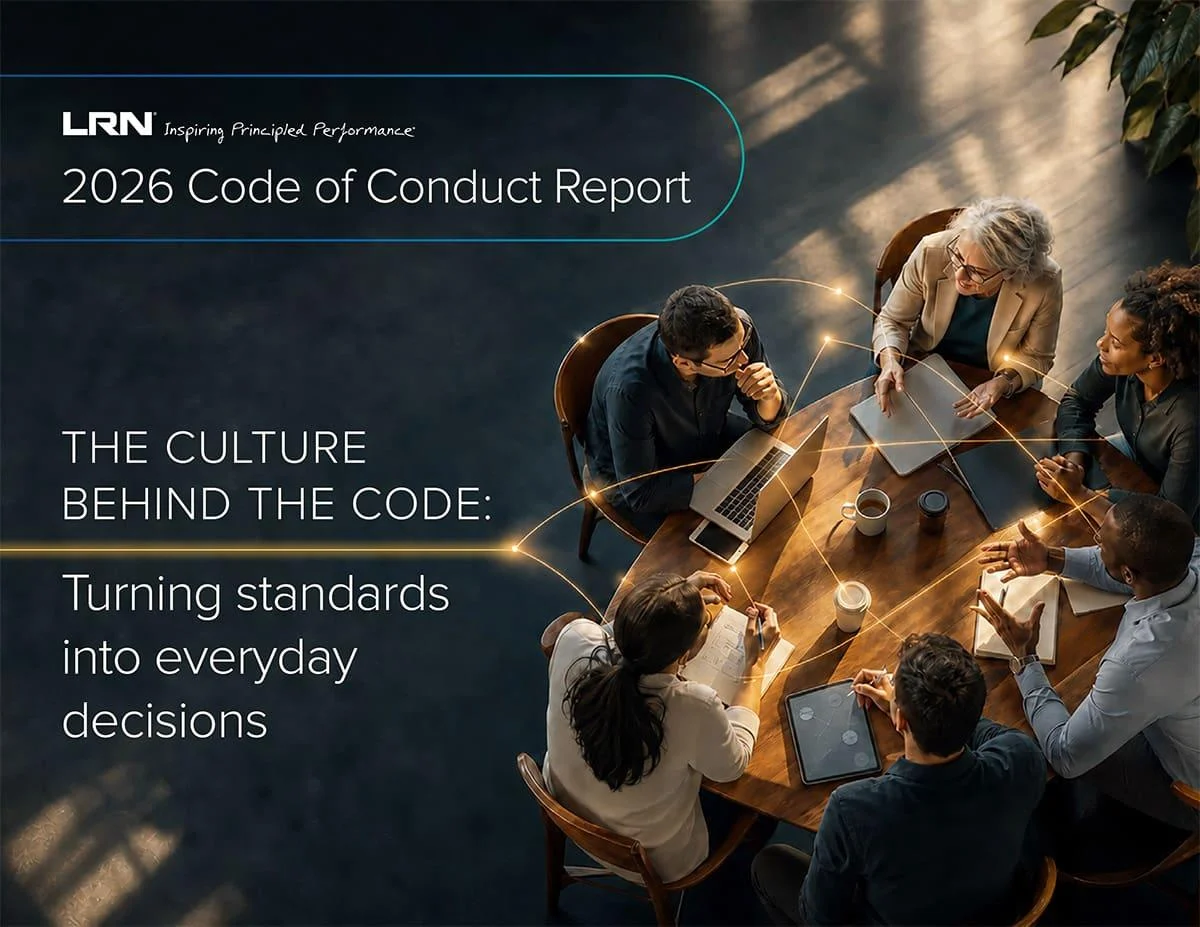
In the modern corporate landscape, the "Code of Conduct" has long been a staple of the legal department—often viewed as a thick, static document designed primarily to mitigate liability. However, a landmark study released this month by LRN Corporation, the 2026 Code of Conduct Report, suggests a seismic shift in how global organizations approach ethical governance.
The report reveals that the "paper-based compliance" era is effectively dead. For the vast majority of global enterprises, the primary challenge is no longer the drafting or implementation of a code, but rather ensuring its utility in the daily lives of employees. Based on an exhaustive analysis of over 1,000 corporate codes of conduct and a comprehensive survey of 2,000 employees across 16 industries and 15 countries, LRN’s findings indicate that organizations are pivoting from "checking the box" to fostering "principled performance."
The central thesis of the report is that a code of conduct is only as effective as its accessibility and relevance. As global regulatory environments become increasingly complex and workforces more distributed, companies are finding that a stagnant PDF in a digital file cabinet is insufficient to drive ethical culture or long-term competitive advantage.
Chronology: The Transformation of Corporate Governance
To understand the current state of ethics, one must look at the evolution of the Code of Conduct over the last three decades.
The Era of "Rules-Based" Compliance (1994–2010)
When LRN was founded in 1994, the corporate world was largely focused on avoiding litigation. Codes of conduct were treated as legal contracts—rigid, dense, and rarely read. The focus was on "thou shalt nots," ensuring that if a violation occurred, the company had the necessary documentation to shift blame to the individual actor.
The Era of "Values-Based" Integration (2010–2020)
Following the global financial crisis and the rise of social media, stakeholders began demanding more than just legal adherence. They demanded values. Organizations began incorporating "Mission, Vision, and Values" into their codes. This was a transitional period where companies attempted to humanize their ethics programs, though many still struggled to move these concepts beyond the boardroom.
The Era of "Utility and Performance" (2020–Present)
The post-pandemic world, marked by remote work and heightened social awareness, has forced a reckoning. The 2026 LRN report marks the official arrival of the "Utility Era." In this phase, codes are designed as interactive, dynamic resources. They are not meant to be read once during onboarding; they are intended to be living documents that guide decision-making during moments of ethical ambiguity.
Supporting Data: What the 2,000 Employees Told Us
The LRN 2026 report draws its strength from its dual-layered methodology: quantitative analysis of document structure and qualitative feedback from a diverse global workforce.
The Breakdown of the Survey
- Participant Diversity: The survey spanned 15 countries, capturing a spectrum of corporate cultures from North America and Western Europe to emerging markets in Southeast Asia and Latin America.
- Industry Breadth: Covering 16 industries, the data highlights that while manufacturing and finance have historically rigorous codes, tech and retail are catching up, albeit with different communication styles.
- Key Finding: 78% of employees surveyed indicated that they view their company’s code of conduct as a "resource for difficult decisions" rather than a "legal barrier." This is a significant jump from previous longitudinal studies conducted by LRN.
The Anatomy of a Successful Code
The analysis of 1,000 codes revealed that high-performing organizations share specific structural traits:
- Readability: High-utility codes use plain language, avoiding "legalese."
- Interactive Elements: Organizations that utilize digital platforms—allowing for searchability, video integration, and scenario-based learning—saw a 40% higher engagement rate among their workforce.
- Accessibility: The most effective codes are mobile-responsive, allowing employees to access guidance while in the field or working remotely.
Official Responses and Perspectives
Industry leaders and ethicists have weighed in on the implications of the LRN report, underscoring the urgent need for a shift in corporate culture.
"The Code of Conduct is the heartbeat of an organization," says a spokesperson from LRN. "When it is static, the culture becomes stagnant. When it is dynamic, it empowers every single person—from the intern to the CEO—to act with confidence in the face of complex regulatory and moral dilemmas."
Human Resources leaders who participated in the survey have echoed these sentiments. One executive noted, "For years, we measured success by how many employees signed an acknowledgment form. Now, we measure success by how many employees feel empowered to speak up when they see a potential violation of our core values."
The consensus among the experts contributing to the report is that "principled performance" is no longer an abstract goal; it is a measurable metric that correlates with higher employee retention and stronger market trust.
Implications: The Future of Ethical Culture
The findings from LRN carry profound implications for the C-suite and boardrooms worldwide. If the "Utility Era" is indeed the new standard, organizations must adapt their strategies accordingly.
1. From "Compliance" to "Competitive Advantage"
The report highlights that ethical behavior is a sustainable competitive advantage. Companies that foster a culture where employees truly understand the code are less likely to suffer from reputational damage, regulatory fines, and internal turnover. LRN suggests that by acting upon shared values, companies can "outbehave and outperform" their competitors.
2. The Role of Leadership
The report implies that leadership is the primary driver of code utility. If management does not reference the code in meetings, town halls, or decision-making processes, employees will not view it as a meaningful tool. The 2026 guidelines suggest that leaders must be the first to demonstrate how the code influences their own strategic choices.
3. Adapting to Global Complexity
With the workforce spread across different time zones and cultural contexts, the one-size-fits-all approach is officially obsolete. The report encourages organizations to localize their codes—not just in language, but in cultural relevance. A code of conduct must respect the local legal environment while remaining tethered to the global values of the parent company.
4. The Digital Imperative
As the professional world becomes increasingly digital, the "Code of Conduct" must transition into an "Ethics Portal." This includes AI-driven search capabilities where employees can type in a specific dilemma—such as "Is this gift acceptable?"—and receive immediate, value-based guidance.
Conclusion: A Call to Action
The LRN 2026 Code of Conduct Report serves as a wake-up call for organizations that have been content to let their compliance documents gather dust. The transition from "compliance" to "utility" is not merely an administrative upgrade; it is a fundamental shift in corporate philosophy.
As organizations navigate the complexities of 2026 and beyond, the winners will be those who recognize that a Code of Conduct is a living, breathing component of their operational identity. By investing in the accessibility, relevance, and integration of these ethical guidelines, companies do more than avoid risk—they build trust, foster inclusivity, and set the stage for long-term, sustainable success.
For those looking to modernize their internal frameworks, LRN offers the partnership and the empirical foundation necessary to turn abstract principles into the daily behaviors that define a world-class, ethical organization. In the final analysis, the most powerful tool a company has is its integrity—and the most effective way to protect that integrity is to ensure it is understood, accessible, and practiced by everyone, every single day.
About LRN
Since 1994, LRN has been the global leader in helping organizations inspire principled performance. By providing the knowledge, partnership, and digital solutions necessary to navigate complex regulatory environments, LRN empowers over 2,800 companies worldwide to foster cultures of integrity. For more information on how to transform your organization’s ethical landscape, visit LRN.com.