The digital landscape is bracing for a significant infrastructure shift. As of January 1, the digital scaffolding supporting countless online communities, marketplaces, and social platforms will undergo a forced migration. Google’s Jigsaw unit has officially set December 31 as the shutdown date for Perspective, the widely deployed API that has served as the backbone of online toxicity scoring for nearly a decade.
For trust and safety teams, this is not merely a routine maintenance update; it is a critical juncture. Perspective’s departure leaves a void that standard vendor swaps are ill-equipped to fill. Into this breach steps Hindsight AI, a startup that is challenging the industry’s status quo by offering something previously unheard of in the AI space: a $1 million professional guarantee against harm caused by content its model fails to flag.
A Chronology of the Crisis: From Perspective to Proactive Defense
Perspective was launched by Jigsaw with a noble goal: to reduce toxicity on the web by providing developers with a machine-learning tool that could score the "civility" of a comment in real-time. For years, it functioned as the industry standard. However, the nature of online abuse has evolved rapidly, moving away from explicit profanity and toward sophisticated, coded rhetoric.
As platforms have grappled with this evolution, the limitations of Perspective’s architecture became clear. By late 2026, the reliance on such tools began to look less like a safeguard and more like a liability. The upcoming shutdown serves as a catalyst for a long-overdue audit of how platforms define, identify, and mitigate online harm.
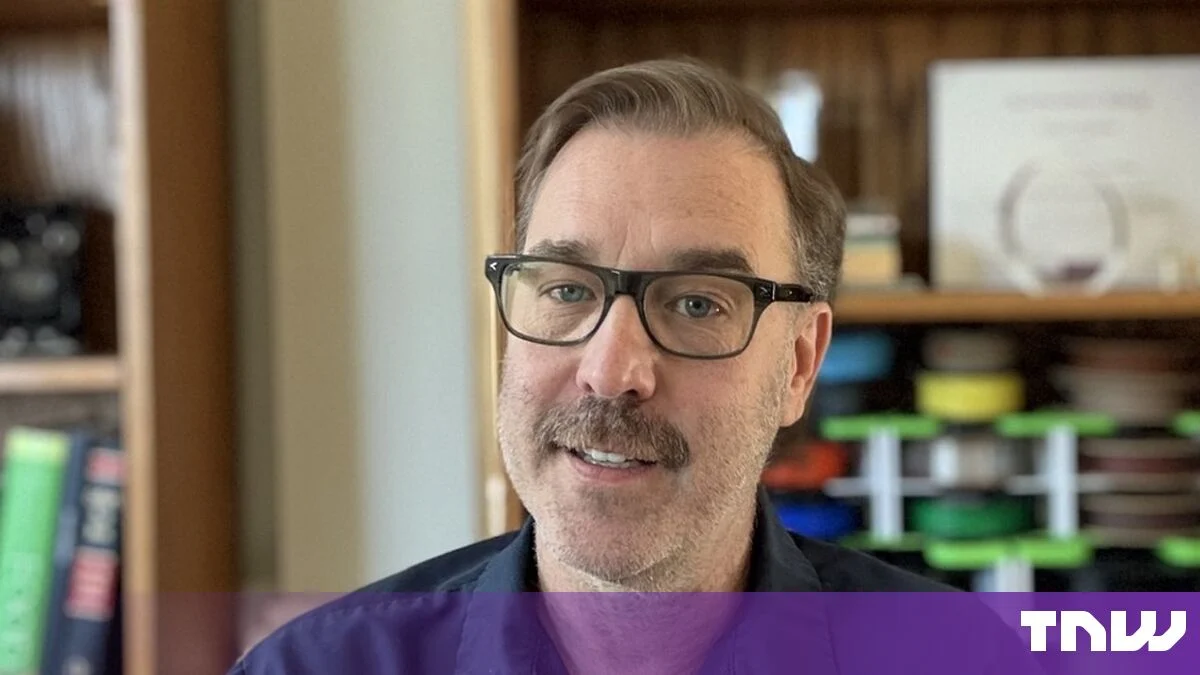
Hindsight AI, founded by Dean Gebert, is positioning itself not just as a replacement, but as an evolution. "Coded Language is the new slur, and it is ridiculously hard to catch consistently," Gebert says. "A like-for-like model swap just moves the old blind spots to a different vendor. We are moving toward a paradigm of accountability."
The Anatomy of Modern Abuse: Why "Binary" Models Fail
The fundamental flaw in most legacy moderation systems is their reliance on binary logic—classifying content as either "Safe" or "Unsafe." This rigid architecture forces platform executives into a "lose-lose" scenario: tune the system to be overly sensitive, and you end up flooding human moderators with false positives; tune it for leniency, and you leave your community vulnerable to bad actors.
Bad actors, meanwhile, have become experts at exploiting this binary rigidity. They have migrated toward "Coded Language"—using numeric dog whistles like "1488," extremist slang such as "boogaloo," phonetic misspellings, and "l33tspe@k" to bypass automated filters. These tactics are not limited by geography or language, yet many moderation tools treat them as localized edge cases.
Hindsight’s solution is a tripartite classification system: Red Flag, Yellow Flag, and Safe. By introducing a "Yellow Flag" category, the model creates a middle lane for context-dependent language.
"Take the word ‘bitch’," Gebert explains. "A binary model struggles with context. Aimed at a person in anger, it is a clear Red Flag. Between friends, it is likely benign. We’ve spent an obsessive amount of time training the model to distinguish between these nuances. It took a lot of coffee, but it means our clients can rely less on human oversight for the easy stuff and focus their resources where they truly matter."
Supporting Data: Benchmarking the Future
The performance gap between general-purpose LLMs and specialized moderation models is widening. In a recent benchmark study, Hindsight tested nine prominent AI models—including offerings from OpenAI, Meta, Azure, and AWS—against a fixed set of 2,205 real-world online posts.
The results were stark. On the detection of Coded Language, Hindsight identified 97.9% of cases, while the competition struggled, with most scoring 65% or lower. Perhaps more importantly, Hindsight maintained a "Missed Flag" rate of just 3.3% and a "False Alarm" rate of 8.2%.
This performance is derived from a strategy Gebert describes as "more sniper, less shotgun." Rather than relying on a single, bloated, general-purpose base model, Hindsight utilizes three specialized models, each with fewer than 600 million parameters. By focusing the training data—drawn from 18 datasets and 292,000 human-labeled posts—the company has created a model that outperforms generalist systems up to 14 times its size.
The Financial Stakes: Liability and the $1 Million Guarantee
The implications of failed moderation are no longer just social; they are financial and legal. From 2016 to mid-2022, the Anti-Defamation League tracked over $6.2 million raised by extremists via crowdfunding. Furthermore, federal litigation against major gaming platforms and marketplaces underscores the reality that "the AI missed it" is no longer a valid legal defense for tech giants.
Hindsight’s $1 million guarantee is a direct response to this environment. By shifting the financial burden of failure from the client to the vendor, Hindsight is fundamentally changing the economics of trust and safety.
"We are moving from a cost-center mentality to an insurance-based model," says one industry analyst. "If a vendor is willing to put $1 million on the table, it forces them to be hyper-transparent about their false-negative rates and their calibration processes."
Implications for Enterprise Integration
For companies currently scrambling to replace Perspective before the year-end deadline, the integration path is intentionally streamlined. Hindsight is designed to be implemented via a single API call, allowing developers to run it in parallel with their existing systems during a transition phase.
Gebert recommends that prospective clients run Hindsight alongside their current tool for a week. "Look at the delta," he advises. "Look at where we disagree. In those disagreements, you will find the gaps where your current system is failing to protect your users."
However, this transition comes with constraints. To ensure the highest level of accuracy, Hindsight is capping its launch cohort at four commercial clients. This allows the team to perform custom calibration of the model instances against each platform’s unique community policies and risk profile. For these first-movers, the company is also offering "founder pricing," acknowledging the inherent risks of adopting a new standard during a critical infrastructure migration.
The Road Ahead: Rethinking Safety
As we move into 2027, the role of AI in content moderation will only increase in complexity. The rise of generative AI, the globalization of extremist rhetoric, and the increasing sophistication of coded language mean that static, "set-it-and-forget-it" moderation tools are effectively obsolete.
The shutdown of Perspective is a wakeup call. It serves as a reminder that the tools used to govern our online spaces must be as dynamic as the communities they serve. Whether companies choose to migrate to Hindsight’s specialized, high-accuracy approach or opt for another solution, the era of relying on general-purpose toxicity scores is effectively over.
The question for platform leaders now is not just which tool will replace Perspective, but how their moderation strategy will evolve to meet the challenges of the next decade. By forcing this migration, Google may have inadvertently triggered a necessary maturation of the trust and safety industry—one that prioritizes accountability, nuance, and measurable protection over simple, binary heuristics.
For those interested in testing their data against Hindsight’s benchmarks or applying for the launch cohort, the company has made its methodology and testing tools available at hindsightai.com. In a landscape defined by uncertainty, the move toward specialized, guaranteed performance may be the only way forward.