
In the modern marketing landscape, the greatest challenge facing leadership is no longer a lack of information, but an abundance of noise. Every day, marketing executives are besieged by an unrelenting deluge of reports, white papers, LinkedIn think-pieces, and podcasts. The expectation to stay current in a rapidly evolving industry has paradoxically made it harder for leaders to actually learn anything of substance.
Recognizing this critical bottleneck, industry powerhouse Convince & Convert (C&C) has announced a major strategic pivot. After years of running their flagship newsletter, "ON," the organization is rebranding and restructuring its primary communication channel into a new, streamlined resource: The Trendline. This shift represents a broader industry realization: in an era of content saturation, the true value for an audience lies not in the creation of more content, but in the filtering of it.
The State of the Inbox: Why Curation Wins
The premise behind the move to The Trendline is rooted in a fundamental theory: marketing leaders do not need more content; they need better filters.
For years, the standard playbook for brand newsletters involved a "link-dump" approach—a collection of headlines and URLs designed to drive traffic back to a website. While this model was effective in the early days of digital marketing, it is increasingly failing to resonate with a sophisticated audience that has limited time and dwindling patience.
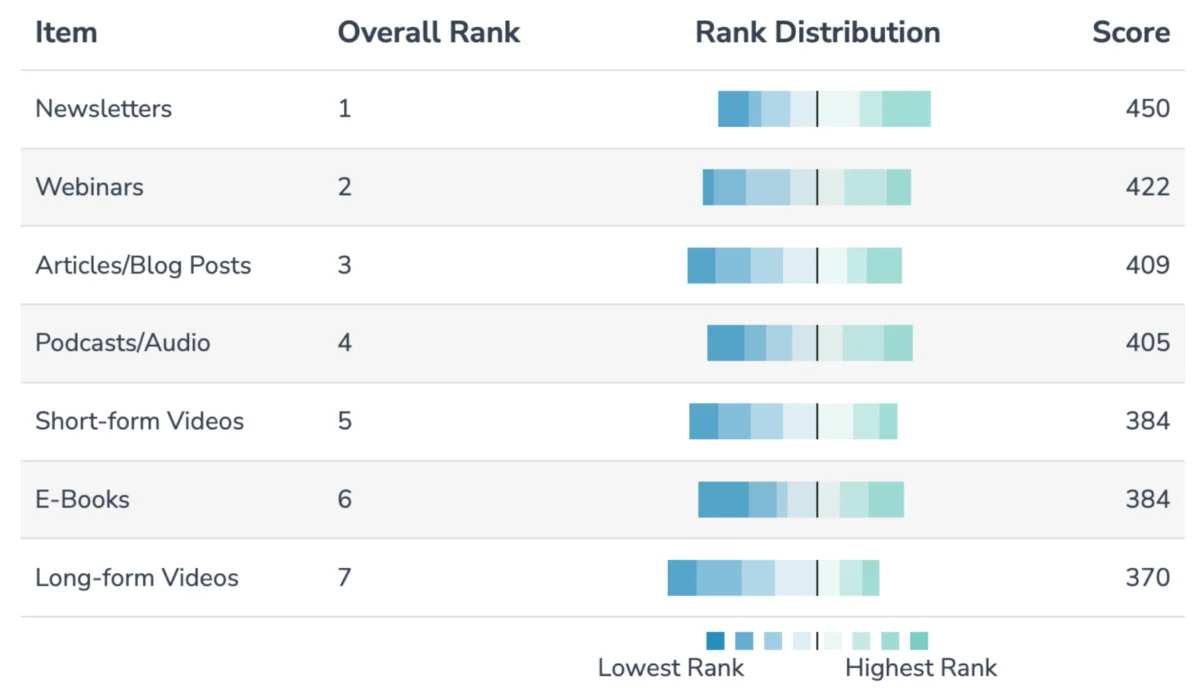
Data from C&C’s latest annual audience survey confirms this evolution in behavior. When asked, "What content formats do you prefer when learning about marketing trends and insights?" the response was unequivocal. Newsletters outperformed short-form video, webinars, blog posts, and podcasts as the preferred medium for professional development. In fact, respondents were nearly twice as likely to rank newsletters first compared to any other format.
Chronology of a Strategy Shift
The evolution of The Trendline did not happen overnight. It was the result of a systematic review of how C&C’s audience interacts with their content ecosystem.
- Phase 1: The Audit: The team conducted a comprehensive audit of their previous newsletter, "ON." They realized the format—which was organized by content medium (e.g., "Our latest podcast," "Our latest blog post")—placed the burden of discovery on the reader. The audience had to click through multiple links to determine if a piece of content was actually relevant to their strategic goals.
- Phase 2: Audience Research: C&C surveyed its base of marketing leaders to understand the specific pain points of their daily information intake. The findings revealed that senior decision-makers crave synthesis. They do not want to be sent to a landing page to find out why a trend matters; they want the "why" delivered to them in the email body.
- Phase 3: Rebranding and Structural Design: The team decided to sunset "ON" and build The Trendline. The goal was to transform the newsletter from a distribution channel into a "debrief"—a strategic document that synthesizes complex industry news into actionable intelligence.
- Phase 4: Launch and Iteration: The transition involved a total redesign of the editorial workflow, moving away from chronological content posting toward a thematic, insight-driven structure that prioritizes the reader’s time.
Supporting Data: The Case for the Curated Newsletter
The shift toward The Trendline is backed by clear behavioral shifts among marketing professionals. According to C&C’s internal research, the "click-heavy" newsletter model is losing its luster. Modern readers have become increasingly selective, often ignoring emails that require excessive navigation to find value.

The research indicates that the most successful newsletters today function as a "third-party brain." They do the heavy lifting of synthesis, distilling a week’s worth of industry chaos into a few key takeaways. This "value-upfront" model is not just a preference; it is a necessity for a demographic that feels burned out by the constant pressure to consume "must-read" content.
By providing the insight directly in the inbox, C&C is shifting the metric of success from "click-through rate" to "perceived value."
Official Perspectives: Rethinking the CMO’s Needs
When asked about the philosophy behind the new format, leadership at Convince & Convert emphasized the necessity of empathy in content design.
"When presenting to CMOs or senior decision-makers, they need information that helps their teams solve problems," noted an agency spokesperson. "They don’t have time for 20 charts to get there. The goal is to provide the strategic lens—the ‘why’—immediately."
This perspective is echoed in the design of The Trendline. The team has moved toward a format that emphasizes:
- Topical Synthesis: Grouping content by theme rather than medium.
- The "Brief" Format: Summarizing the significance of news so that the reader gains value even if they never click a single link.
- Interactive Feedback: The inclusion of "Sound Off" polls, which provides the C&C team with direct, qualitative engagement data that is far more reliable than standard open rates.
The Implications: A New Era for Owned Media
The move to The Trendline signals a significant maturation in the email marketing industry. For years, email was treated as a top-of-funnel tool—a way to push traffic to a website. The current strategy treats email as a destination in itself.
1. The Rise of the "Concierge" Newsletter
Brands that succeed in the next five years will be those that act as concierges rather than marketers. By filtering the noise, companies build trust. When a brand respects a reader’s time by not forcing them to click, the reader is more likely to trust that brand when they do finally ask them to visit their site.

2. The Death of Content for Content’s Sake
The "content treadmill"—where brands feel compelled to publish daily just to maintain visibility—is becoming a liability. The Trendline demonstrates that it is better to send one highly curated, highly valuable email than to fill an inbox with low-effort content. Quality, not volume, is the new currency of authority.
3. The Importance of "Owned" Channels
As algorithms on social platforms like LinkedIn and X (formerly Twitter) become increasingly volatile, the newsletter remains the most stable, "owned" channel for reaching an audience. The transition to The Trendline is a defensive and offensive move: it protects the relationship with the audience while simultaneously strengthening the brand’s intellectual authority.
Key Takeaways for Marketing Leaders
For organizations looking to emulate the success of this shift, there are three clear lessons to be drawn from the Convince & Convert experience:
- Start with Audience Pain: Stop asking what you want to tell your audience and start asking what they are struggling to filter out. If your newsletter feels like a chore, you have already lost the battle for their attention.
- Deliver Value Upfront: If you are hiding your best insights behind a link, you are likely losing a large portion of your readership. Ensure the primary "aha!" moment of your content is available in the body of the email.
- Design for the Mobile Professional: Marketing leaders are often reading these updates on the go. Use hierarchy, formatting, and clear editorial guidelines to make your content skimmable yet dense with insight.
The transition to The Trendline is more than just a name change; it is a declaration that the era of "more is better" is over. In a world where attention is the scarcest resource, the most valuable thing a marketer can provide is clarity. By evolving their newsletter, Convince & Convert is not just keeping up with the industry—they are defining the next generation of professional communication.
As the marketing landscape continues to shift, the brands that thrive will be those that understand the difference between being a loud voice in the room and being a trusted filter for the truth. Through The Trendline, C&C has positioned itself firmly in the latter camp, proving that in the digital age, being helpful is the ultimate competitive advantage.