By Editorial Staff
Published: 15 October 2026
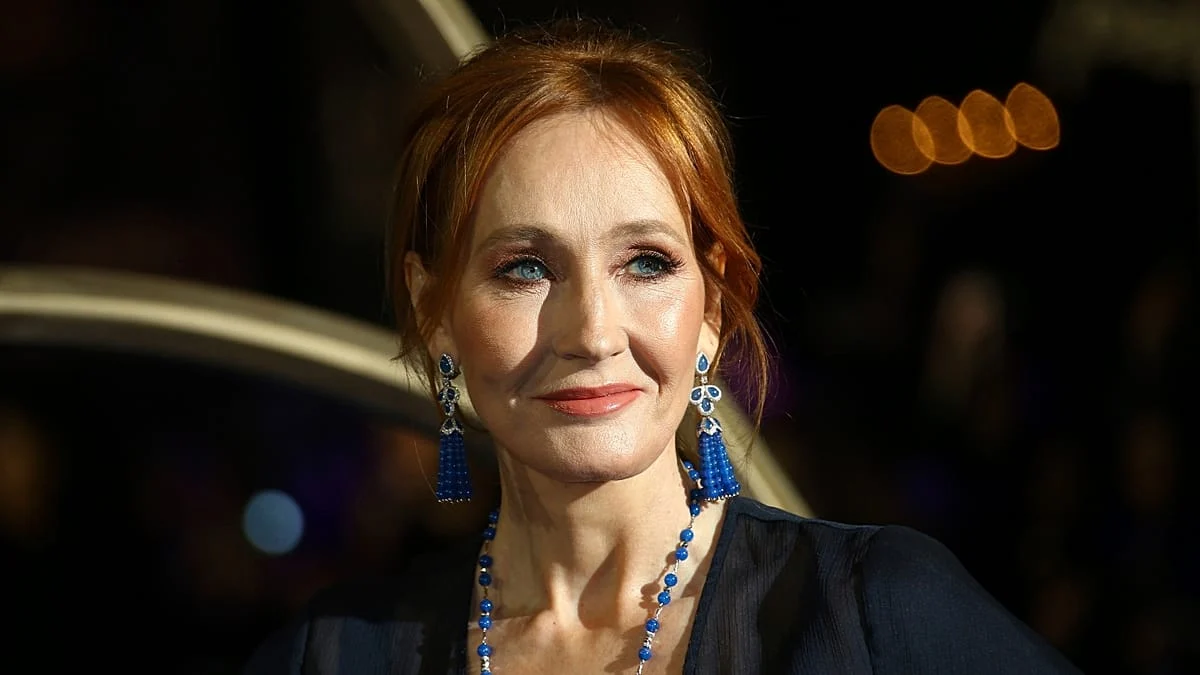
The BBC has officially commissioned a two-part documentary series tasked with examining the trajectory of J.K. Rowling, the author whose name is synonymous with the most successful literary franchise in history and, increasingly, with the most volatile culture wars of the 21st century. As the world approaches the highly anticipated launch of HBO’s Harry Potter television adaptation, this upcoming documentary promises to dissect the dual nature of Rowling’s legacy: the architect of a generation-defining cultural phenomenon and the figurehead of a polarizing debate regarding gender identity and trans rights.
Main Facts: A Portrait of an Absent Subject
The documentary project, currently in development, has confirmed that J.K. Rowling will not be participating in its creation. This absence is notable, as it positions the production as an external, journalistic investigation into a public figure who has largely retreated from traditional media interviews to focus on her digital presence.
The series is structured as a chronological investigation. The first installment will focus on the origins of the "Wizarding World," tracing Rowling’s "bookish childhood," her struggles as a single mother, and the unprecedented global explosion of Harry Potter. The producers aim to frame this era as a watershed moment for digital community building, where fans used the burgeoning internet to connect over a shared narrative of acceptance and the "outsider" experience.
The second part pivots sharply toward the present. It seeks to analyze the post-Potter era, focusing on the author’s transition from a beloved literary icon to a lightning rod for criticism. The documentary intends to map her vocal interventions in Scottish independence, feminism, and gender identity, placing her at the center of a vitriolic digital landscape where her influence has been both celebrated by supporters and fiercely condemned by detractors.
Chronology: From Literary Darling to Cultural Pariah
To understand the necessity of this documentary, one must look at the timeline of the rift. For nearly two decades, J.K. Rowling was widely viewed as a progressive icon, with her work often cited as a cornerstone of empathy, anti-racism, and tolerance. However, the turning point in public perception occurred roughly in 2020, when the author began utilizing social media to articulate her gender-critical views.
- 2020: Rowling publishes an essay detailing her concerns regarding the impact of trans-inclusive policies on women’s sex-based rights. The backlash is immediate and global.
- 2021–2023: The rift deepens as key cast members of the Harry Potter film franchise, including Daniel Radcliffe, Emma Watson, and Rupert Grint, issue statements distancing themselves from her stance, citing their support for the trans community.
- 2024: Campaigns like #IStandAgainstJKRowling trend repeatedly on social media, coinciding with the announcement of the HBO series.
- 2026 (Present): With the HBO series set to debut in December, the discourse has reached a fever pitch. The BBC’s announcement comes on the heels of internal controversies regarding alleged "trans rights censorship," adding a layer of institutional pressure to how the broadcaster will handle the subject matter.
Supporting Data: The Economic and Cultural Paradox
The "Rowling Paradox" is defined by the tension between her immense economic power and her dwindling social capital within certain demographics. According to industry reports, the Harry Potter franchise remains a multi-billion-dollar juggernaut. Despite repeated calls for boycotts, the commercial viability of the brand seems resilient.
However, the psychological impact on the fanbase is significant. Data from online fan forums and social listening tools suggest that a core demographic of the original Harry Potter readership—now in their late 20s and 30s—feels a profound sense of "betrayal." The documentary is expected to lean into this sociological data, exploring how the very themes of the books—themes of protecting the marginalized and standing up to tyranny—are now being weaponized against the author by those who feel her real-world political stance contradicts the morality of her fiction.
Institutional Implications and Official Responses
The BBC finds itself in a precarious position. Recently, the broadcaster faced accusations of "trans rights censorship" after the Strictly Come Dancing broadcast team blurred a "Protect The Dolls" slogan on a t-shirt worn by actress Bethany Antonia. This incident has led critics to question whether the BBC’s documentary will truly be an impartial examination or if it will be subject to internal or external political pressures.
Public figures involved in the upcoming HBO project have been forced to navigate this minefield. John Lithgow, cast as Albus Dumbledore, recently admitted to the immense internal conflict he felt before signing onto the project. "I considered quitting," Lithgow remarked in a recent interview. "The noise surrounding [Rowling] is deafening."
Lithgow ultimately chose to stay, justifying his decision by focusing on the text rather than the author. "I believe the books are clearly on the side of the angels, against intolerance and bigotry," he stated. This sentiment highlights the central dilemma facing the industry: Can a work of art be successfully decoupled from its creator when that creator is both the primary beneficiary of the project and a central figure in a contemporary political battle?
The Impact of the HBO Adaptation
The timing of the documentary’s premiere—scheduled for early 2027, just after the premiere of the new HBO series—is deliberate. The HBO show is designed to introduce the franchise to a new generation, yet it is doing so under the shadow of the executive producer’s personal politics.
The production of the show has already seen significant turmoil. The high-profile casting of Nicolas Hoult, and his subsequent departure, served as a stark indicator of how toxic the association with Rowling has become for some actors. His replacement, Kit Harrington, has also been subjected to a deluge of negative attention, proving that the association with the brand is no longer a guaranteed career booster; for some, it has become a reputational risk.
Analyzing the "Culture War" Framework
The documentary’s stated intent to explore "intensifying culture wars" suggests that the production will not just be about Rowling, but about the nature of the internet itself. By examining how she engages with topics like free speech and feminism, the BBC aims to provide a case study on how individual creators interact with the modern digital public sphere.
For many, the "bitter online exchanges" mentioned in the press release represent a fundamental shift in how we process public discourse. The documentary will likely argue that Rowling’s case is symptomatic of a broader societal shift where the "death of the author" is no longer a philosophical debate, but a practical, daily necessity for fans trying to reconcile their nostalgia with their values.
Conclusion: A Legacy in Limbo
As the BBC prepares to air this two-part investigation, the stakes remain high for all parties involved. For J.K. Rowling, the documentary represents another chapter in a long-standing battle to defend her views against what she characterizes as a reactionary and censorious movement. For the BBC, it is a test of editorial neutrality in an era where neutrality is often viewed as complicity.
Ultimately, the documentary is unlikely to provide a definitive answer to the question of how history will remember the creator of Harry Potter. Instead, it will likely serve as a mirror to the current state of our culture—a society deeply divided, searching for ways to balance the appreciation of art with the accountability of the artist. Whether the project succeeds in shedding light on this divide or merely inflames it further remains to be seen, but one thing is certain: the debate surrounding J.K. Rowling is far from reaching its conclusion.