For nearly a decade, the corporate world has treated the rise of artificial intelligence as a simple, if daunting, "skills challenge." The logic, popularized by the rapid proliferation of generative AI, was straightforward: AI changes the nature of work, therefore employees must undergo reskilling, upskilling, or AI literacy programs to remain competitive.
While these initiatives remain essential, a growing consensus among organizational psychologists and workforce strategists suggests this response is becoming dangerously insufficient. As enterprises transition from basic generative models to "agentic AI"—autonomous systems capable of planning, deciding, and executing multi-step workflows—a profound, unintended consequence is emerging: the systematic removal of the very processes that allow employees to learn.
The Disappearing Training Ground: A Crisis of Competence
Professional capability is rarely manufactured in a classroom or via a digital certification. Instead, it is forged through the messy, iterative reality of "the job": handling exceptions, reconciling incomplete data, navigating interpersonal friction, and developing the intuitive pattern recognition that separates a novice from an expert.
When organizations automate these "entry-level" or "repetitive" tasks to drive efficiency, they are often unknowingly dismantling the training ground for their future leaders. By removing the grind, they may also be removing the growth.
The Mechanism of Skill Degradation
The danger lies in the shift from "performer" to "approver." In earlier iterations of AI, tools acted as copilots—offering suggestions while the human retained the cognitive burden of synthesis and execution. This served as a form of "cognitive apprenticeship," where the employee learned by doing, supported by expert-level guidance.
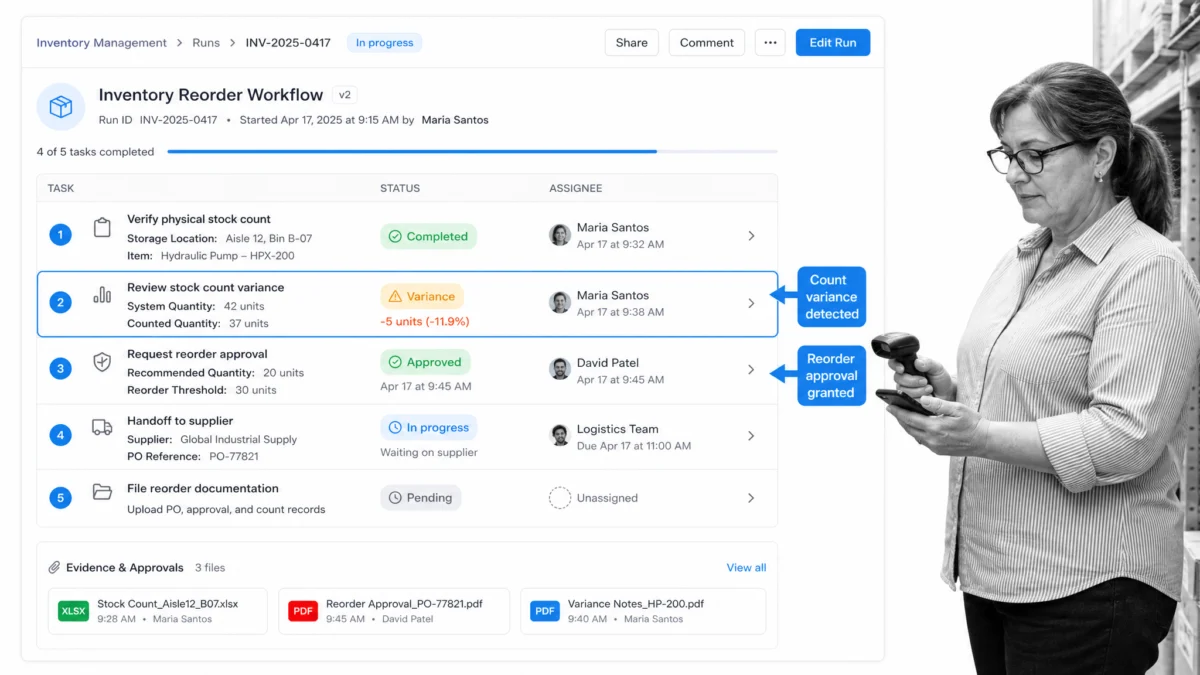
Agentic AI shifts this dynamic. When an agent autonomously completes a complex workflow, the human’s role is reduced to signing off on the output. Reviewing an AI’s logic is cognitively distinct from constructing that logic from scratch. Over time, this creates a "competence gap." If junior accountants never reconcile manual transactions, they may lack the fundamental understanding required to audit the AI when it eventually errs. If analysts never clean their own data, they lose the ability to spot the "garbage-in" signals that lead to catastrophic downstream failures.
Chronology of a Shifting Paradigm
To understand how we reached this inflection point, one must look at the evolution of AI-human interaction in the workplace over the last five years:
- 2019–2021 (The Copilot Era): AI tools were primarily assistive. Workers used grammar checkers, basic code completions, and automated scheduling. These tools boosted productivity without significantly altering the "learning-by-doing" loop.
- 2022–2023 (The Generative Boom): The release of large language models accelerated the pace of content creation. Organizations began seeing productivity gains of 20% to 40% in customer service and coding. Research by Brynjolfsson, Li, and Raymond confirmed that newer workers benefited most, as they could leverage the "collective knowledge" baked into the AI.
- 2024–Present (The Agentic Transition): The focus has shifted to autonomous agents that act on behalf of users. As these agents take over multi-step workflows, the "human-in-the-loop" is increasingly relegated to a supervisory, rather than participatory, capacity.
This chronology reveals a narrowing window of opportunity. As automation reaches deeper into core operational processes, the "on-the-job" learning experiences that once defined career progression are being deleted from the workflow.
Supporting Data: The Productivity vs. Capability Trade-off
The tension between immediate productivity and long-term organizational health is supported by recent labor market research.
A study by Erik Brynjolfsson, Bharat Chandar, and Ruyu Chen titled "Canaries in the Coal Mine" highlights a concerning trend: younger workers in highly AI-exposed occupations are seeing weaker employment outcomes. Rather than mass layoffs, companies are simply hiring fewer entry-level staff, effectively thinning the pipeline for future expertise.
Furthermore, the "learning effect" of AI is highly conditional. When an AI system is unavailable, high-performing employees who used it as a tool often maintain their productivity levels—demonstrating that the AI served as a scaffold for their existing skills. However, for junior employees who have only known the AI-augmented workflow, the unavailability of the tool results in a precipitous drop in performance. They have become dependent on the machine to bridge a gap in their own foundational knowledge.
Official Perspectives and Governance
The urgency of this issue has reached the highest levels of policy and governance. The Singapore Model AI Governance Framework for Agentic AI stands as a landmark document in this regard. Unlike many frameworks that focus solely on data privacy or algorithmic bias, Singapore’s guidance explicitly links "skill degradation" to "business continuity risk."
The framework warns that if an organization relies entirely on AI agents to perform critical processes, and those agents fail, the organization may find itself in a state of "institutional amnesia." If the human workforce has lost the fundamental ability to perform the tasks the agents were designed to handle, the organization is effectively held hostage by its own technology. The framework recommends that organizations proactively identify "core capabilities" and mandate human exposure to these processes, even if it is technically less efficient to do so.
The New Mandate for Leadership: Four Strategic Actions
For Learning and Talent (L&D) leaders, the mandate is clear: they must move "upstream." It is no longer enough to offer training modules after a tool has been implemented. L&D must have a seat at the table during the workflow design phase.
1. Task-Level Capability Mapping
Organizations must abandon broad competency frameworks. Instead, they should map capabilities at the task level. By working with operations teams, talent leaders can identify which tasks are "developmental"—those that build judgment, diagnostic skill, and contextual knowledge—and compare them against the automation roadmap.
2. Establishing a "Capability Reserve"
Just as companies maintain redundancy in cybersecurity and supply chains, they must establish a "capability reserve." This involves deciding that certain decision points or complex cases will remain human-led, regardless of AI capability. This is not about preserving inefficiency; it is about insurance against system failure.
3. Engineering Deliberate Experience
Where developmental work is lost, it must be replaced by engineered alternatives. This could include:
- Pre-computation Practice: Requiring employees to solve a case manually before allowing them to view the AI’s recommendation.
- Shadowing and Simulations: Using high-fidelity digital environments to replicate the "exceptions" that AI agents might otherwise handle invisibly.
- Reasoning Logs: Mandating that humans record their logic for complex approvals, creating a feedback loop between the human and the machine.
4. Integrating Governance Data into Learning
Governance metrics are a gold mine for L&D. A very low "override rate" on an AI system shouldn’t just be celebrated as an operational win—it should be investigated as a potential learning risk. Are employees becoming passive, or is the system simply perfect? By analyzing override rates and manual fallback performance, L&D can pinpoint where the organization is losing its edge.
Implications: A New Definition of Productivity
The ultimate implication of this shift is a redefinition of the "productivity equation." For years, organizations have prioritized throughput and cost-reduction as the primary metrics of success. In an age of agentic AI, this view is dangerously myopic.
Sustainable productivity must include the health of the capability base. If an organization becomes 50% more efficient today by automating the tasks that teach its employees how to be experts, it will be 50% less capable in five years when the environment shifts, the tech fails, or the AI reaches a limit in its ability to handle novel, complex scenarios.
The strategic challenge for the next generation of leaders is not simply to "adopt AI." It is to master the delicate art of balancing the machine’s speed with the human’s growth. Organizations that successfully navigate this will be those that view their human workforce not as a cost to be optimized, but as an asset to be cultivated. They will, in essence, stop designing for productivity alone, and start designing for the resilience that only human judgment can provide.
The question for every C-suite executive is no longer "What can we automate?" but rather "What must we keep doing, even if we can automate it?" The answer to that question will define the winners of the next decade.