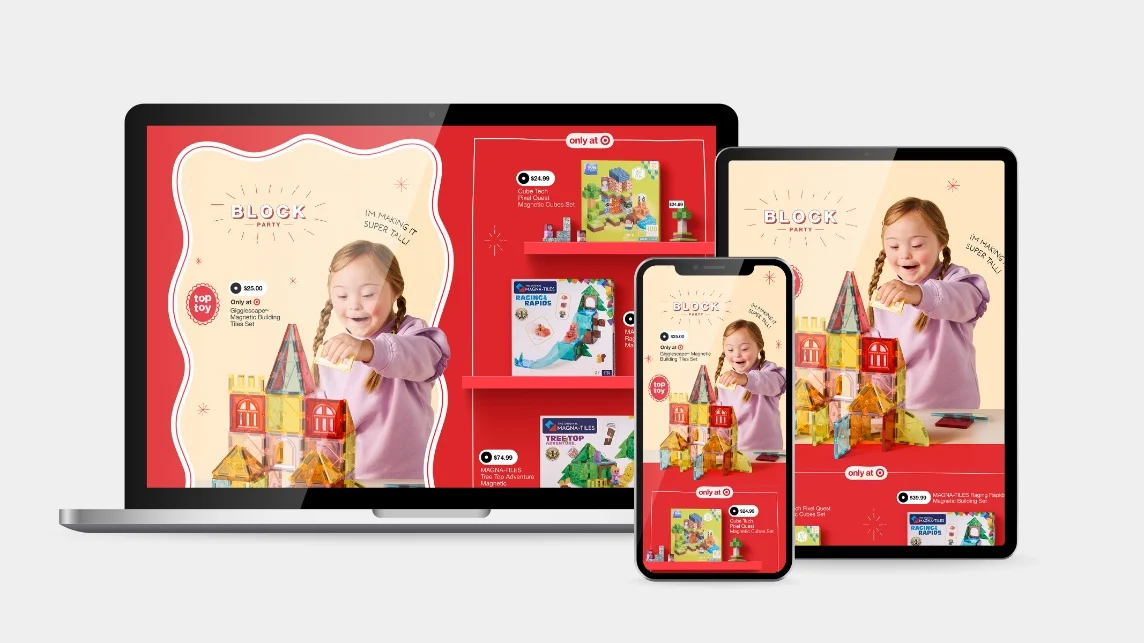
The race for holiday dominance has officially commenced, with retail titans Target and Amazon firing the opening volleys in what has become an annual high-stakes technological arms race. On October 5, both companies debuted their flagship digital toy catalogs, signaling a strategic pivot toward immersive, content-driven commerce designed to capture the attention of digital-native parents and their children.
For Target, the launch of its new interactive Holiday Kids Catalog represents a sophisticated evolution in omnichannel retail. Moving away from the traditional, static product grid, the retailer has transformed its catalog into a shoppable content hub. Simultaneously, Amazon—the perennial leader in the Digital Commerce 360 Top 1000 Database—has leaned into its deep integration of artificial intelligence and voice-activated hardware to offer a personalized, "choose-your-own-adventure" experience.
As inflation concerns and evolving consumer habits shift the retail landscape, these catalogs are not merely marketing brochures; they are sophisticated data-collection and conversion engines designed to secure a larger share of the critical holiday toy market.
The Evolution of the Toy Catalog: From Paper to Platform
Target’s latest digital initiative is a testament to the retailer’s "phygital" strategy—the blending of physical and digital shopping experiences. The catalog, which features nearly 500 carefully curated toys, games, and gift items, functions as an interactive ecosystem rather than a simple inventory list.
Key Features of Target’s Digital Experience
The core of Target’s strategy is discovery. By integrating video content, toy demonstrations, and professional reviews directly into the catalog pages, Target aims to reduce the "search friction" that often leads shoppers to abandon their carts. Perhaps the most notable innovation is the "list scanner" feature. Recognizing that handwritten wish lists are a staple of childhood holiday traditions, Target has implemented technology within its app that allows parents to scan a physical, handwritten note and automatically convert it into a digital, shoppable list.
Furthermore, each page of the physical catalog—a tactile staple that remains a powerful driver of holiday excitement—is embedded with unique QR codes. These codes provide a seamless bridge to the digital catalog, ensuring that the omnichannel journey is frictionless for the user. As Cassandra Jones, senior vice president of Fun101 at Target, stated, “This year’s digital experience helps families discover toys together, create and share wish lists, and find gifts they’ll be excited about all season long.”
Chronology of the Holiday Retail Kickoff
The timing of these launches is far from coincidental. By hitting the market in early October, both retailers are attempting to capture "early bird" shoppers who are increasingly conscious of supply chain stability and potential price fluctuations.
- Early October: Target and Amazon launch their respective digital toy experiences on the same day, marking the unofficial start of the holiday shopping season.
- Fiscal Q2 2026 Context: Both companies entered this period buoyed by strong performance in their entertainment and toy segments. Target, in particular, reported double-digit comparable sales growth in its "Fun101" category—which includes toys and sporting goods—making it their strongest-performing sector during the second quarter.
- Ongoing Integration: Throughout the month of October, both retailers will utilize AI-driven analytics to adjust inventory levels and promotional strategies based on the engagement metrics gathered from these new catalog platforms.
Amazon’s AI-Driven Counter-Strategy
While Target is betting on creator-led content and social sharing, Amazon is leaning into its competitive advantage: the Alexa ecosystem. Now in its ninth year, Amazon’s "Holiday Kids Gift Book" has grown from a simple digital catalog into an interactive entertainment portal.
Amazon’s strategy focuses on "intelligent assistance." Through a partnership with Readyland, the catalog offers an immersive, audio-based, choose-your-own-adventure experience. Children can interact with the book’s "Forest Friends" characters via any Alexa-enabled device, turning the selection process into a game.
Beyond the child-facing interface, Amazon has significantly upgraded its parent-facing tools. Utilizing its prowess in AI Commerce—where it holds a high-ranking position in Digital Commerce 360’s specialized databases—Amazon has integrated conversational AI into its shopping experience. Parents can make complex, natural-language requests such as, "Find holiday gifts for my 10-year-old daughter who loves science and soccer," and receive hyper-personalized recommendations. Coupled with "Amazon Lens," which allows shoppers to scan real-world objects to find them on the Amazon marketplace, the retailer is attempting to shorten the path from inspiration to checkout to mere seconds.
Supporting Data: The State of Ecommerce at Target
The importance of the toy category to Target’s bottom line cannot be overstated. According to recent fiscal data, Target’s online sales grew 8.7% year-over-year in fiscal Q2 2026, significantly outpacing the company’s total comparable sales growth of 3.8%.
The success of the "Fun101" category, which outperformed all other sectors, suggests that Target’s investment in the toy experience is a primary driver for customer acquisition. Furthermore, the company’s aggressive push into fulfillment services has yielded significant results: same-day delivery services grew by more than 25% during the quarter, with a 30% increase in the fulfillment of same-day and next-day units compared to the previous year.
While these results were partially bolstered by a one-time $1 billion tariff refund recorded as a reduction in the cost of sales, the underlying growth in online traffic and unit velocity indicates that Target’s digital-first holiday strategy is gaining traction among its core demographic.
Implications for the Future of Retail
The competition between Target and Amazon highlights a broader shift in the retail industry. We are witnessing the end of the "passive browsing" era. The new standard for holiday catalogs is a highly interactive, data-rich experience that serves multiple functions:
- Customer Data Acquisition: By encouraging users to build and share wish lists, retailers gain invaluable insights into consumer preferences and future purchase intentions, allowing for highly targeted advertising.
- Increased Dwell Time: By embedding videos, games, and interactive stories into the shopping experience, retailers are increasing the time customers spend within their ecosystems, which historically correlates with higher conversion rates.
- Cross-Platform Integration: The success of the "list scanner" and QR-code-to-app features demonstrates that the future of retail is not about choosing between physical or digital, but about creating a seamless, hybrid experience that satisfies the customer’s need for convenience while maintaining the magic of the holiday season.
Conclusion: The Strategic Path Forward
As the holiday season intensifies, the battle between Target and Amazon serves as a microcosm of the broader ecommerce landscape. Target is playing the role of the curated, lifestyle-oriented destination, leveraging social sharing and emotional engagement to build brand loyalty. Amazon, meanwhile, continues to operate as the world’s most efficient infrastructure for commerce, using AI and voice technology to remove every possible barrier between a shopper’s desire and the delivery of a product.
For retailers looking to compete in this high-stakes environment, the message is clear: the catalog is no longer a static book. It is a portal. Whether through AI-driven personalization or the integration of physical and digital workflows, the winners of the 2026 holiday season will be those who can make the act of gift-buying as engaging as the gifts themselves.
As the industry moves toward the peak of the holiday rush, all eyes will be on these digital platforms to see which strategy—Target’s social-centric discovery or Amazon’s AI-powered efficiency—resonates most with the modern family. Regardless of the outcome, the consumer is the ultimate beneficiary, enjoying a shopping experience that is more personalized, interactive, and efficient than ever before.
Stay on top of the latest developments in the online retail industry. Sign up for a complimentary subscription to Digital Commerce 360 Retail News and ensure you have the data needed to navigate this rapidly evolving landscape.