By Zaki Laïdi
October 12, 2026
The French political landscape is currently dominated by a singular, looming question: Is the ascent of the National Rally (RN) toward the Élysée Palace hitting an immovable object in the form of Jordan Bardella?
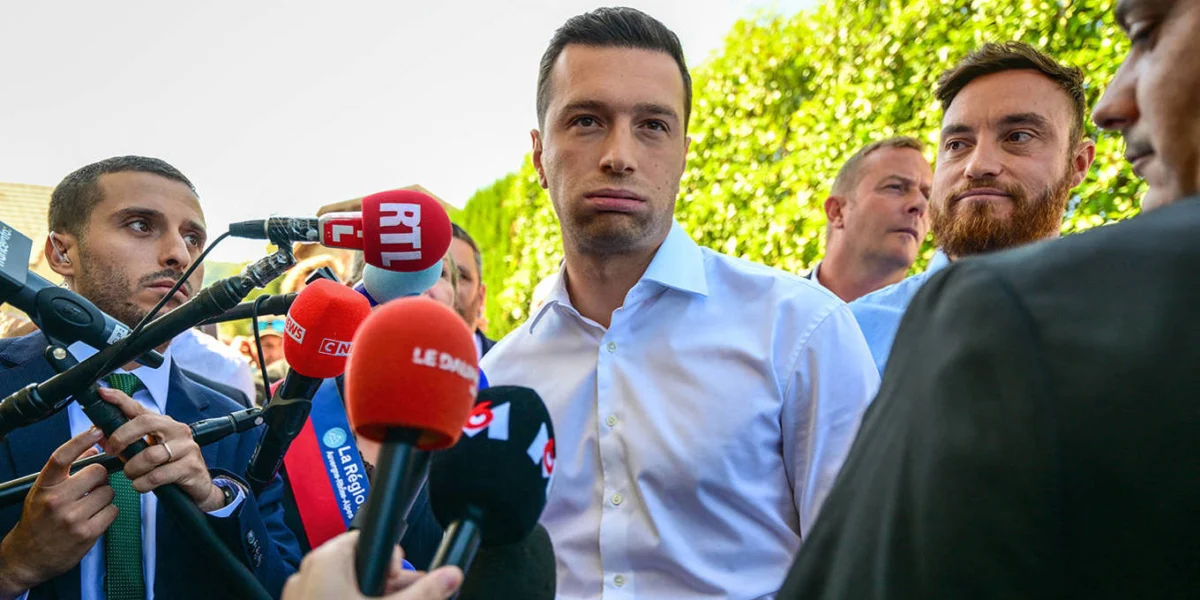
For months, Marine Le Pen has cultivated a strategy of "dédiabolisation"—a long-term project to scrub the far-right party of its historical antisemitic and extremist associations. Her hand-picked successor and designated Prime Minister, Jordan Bardella, has been the face of this moderate makeover. However, a deepening scandal involving resurfaced antisemitic comments attributed to the young leader threatens to derail a campaign that, until recently, seemed destined for victory in the 2027 presidential election.
The Core of the Controversy: A Legacy of Rhetoric
The scandal centers on unearthed recordings and archival social media interactions that critics argue expose a deep-seated hostility toward Jewish communities—a history the RN has spent years attempting to bury. While Bardella has attempted to dismiss these reports as a "smear campaign orchestrated by the Parisian elite," the political damage is palpable.
For Le Pen, the stakes could not be higher. Her entire roadmap for 2027 rests on the assumption that she has successfully transitioned the National Rally from a protest movement into a party of government. By appointing Bardella as her Prime Minister, she intended to signal a generational shift and professional competence. If that pillar of her platform becomes a liability, the RN’s carefully constructed façade of respectability risks crumbling just months before the electorate heads to the polls.
Chronology of a Crisis
The current turmoil did not emerge in a vacuum. The trajectory of the crisis can be traced through several critical junctures:
- Early 2026: As the RN’s polling numbers surged, investigative journalists began intensifying their scrutiny of Bardella’s early political life and his digital footprint from his time as a regional youth activist.
- August 2026: Initial reports surfaced regarding questionable remarks made by associates in Bardella’s inner circle, drawing uncomfortable parallels to the rhetoric of Jean-Marie Le Pen, the party’s founder.
- Late September 2026: The release of audio fragments by independent media outlets served as the catalyst for the current scandal. The comments, while opaque, have been interpreted by civil society groups as dog-whistling to the party’s more radical, historical base.
- October 2026: The scandal reached a fever pitch, with mainstream political opponents, including the centrist coalition and the fractured left-wing alliance, demanding an investigation into the authenticity of the comments and an immediate apology from the RN leadership.
Supporting Data: The Fragility of the Lead
According to the latest IFOP barometer, the National Rally remains the frontrunner in the presidential race. However, the data reveals a dangerous volatility. While the party’s core base has remained steadfast, the "swing" voters—those essential for a victory in the second round—are showing signs of hesitation.
"The trajectory of the RN is linked to its ability to attract moderate conservatives who are disillusioned with the current administration," says political analyst Marc Dubois. "If these voters perceive the party as fundamentally unchanged in its outlook on minorities, we will see a shift in the polling data within the next quarter."
Current trends indicate that while Le Pen’s personal approval rating has remained resilient, Bardella’s favorability has suffered a double-digit decline among voters aged 35–50. This demographic is crucial for the RN; they are the group most concerned with the party’s "competence" and "reliability" as a governing force.
Official Responses and the Party Line
The response from the National Rally has been one of aggressive deflection. In a press conference held last week, Le Pen stood firmly by her protégé, characterizing the allegations as a "desperate attempt by the fading political establishment to distract from their own failures."
"Jordan Bardella is a patriot who represents the future of France," Le Pen stated, attempting to shift the narrative back toward inflation, immigration, and national sovereignty.
Conversely, the response from the government and opposition parties has been scathing. The Prime Minister’s office issued a brief statement condemning "all forms of hate speech," while leaders from the Socialist and Green parties have called for a parliamentary inquiry. "This is not just about one man," said a spokesperson for the opposition. "This is about the fundamental DNA of the National Rally. They are trying to present a new face, but the mask is slipping."
Implications for 2027: Three Potential Scenarios
The scandal has created a fork in the road for Marine Le Pen. Analysts generally agree on three potential outcomes for the months ahead:
1. The "Weathering the Storm" Strategy
In this scenario, the current outrage follows a predictable cycle. The media moves on to a new economic headline, the public’s attention span shifts, and the RN successfully frames the incident as a "hit job." In this outcome, Le Pen maintains her current trajectory, keeps Bardella in his role, and continues to march toward a victory in 2027. This is the RN’s preferred path, relying on the assumption that voters are more concerned with their purchasing power than with past rhetoric.
2. The "Controlled Sacrifice"
If the polling numbers for the second round of the presidential election begin to drop significantly, Le Pen may be forced to make a strategic sacrifice. She could distance herself from Bardella, perhaps by suggesting he step aside from the Prime Ministerial nomination to focus on party administration or European parliamentary duties. While this would cause internal friction, it might be the only way to save the presidential bid by distancing the top of the ticket from the toxicity of the scandal.
3. The "Institutional Backlash"
The most dangerous scenario for the RN is one where the scandal triggers a wider investigation into the party’s funding or internal processes. If legal authorities or election watchdogs decide that the remarks warrant a broader review of the party’s platform and associations, the RN could find itself embroiled in a legal battle that would occupy the entire election cycle. In this event, the goal would no longer be winning the election, but preventing a total collapse of the party’s reputation.
The Broader Context: A Divided Nation
The Bardella scandal serves as a microcosm for the deep polarization currently gripping France. The country is split between those who view the RN as a legitimate political alternative to the status quo and those who see it as a structural threat to the republic’s values.
For the average French citizen, the noise surrounding the National Rally is often drowned out by concerns regarding the cost of living, housing, and the efficacy of public services. However, this scandal touches on a deeper, more existential issue: the identity of the French Republic. Can a party with historical baggage ever truly leave it behind, or is it destined to be defined by the very sentiments it seeks to outrun?
Conclusion
As we look toward the spring of 2027, the National Rally finds itself in a precarious position. The strategy of moderation has brought them to the doorstep of the Élysée, but the ghosts of the past have a way of reappearing at the most inconvenient times.
Jordan Bardella is, at this moment, the personification of the RN’s ambition. Whether he becomes the youngest Prime Minister in the history of the Fifth Republic or the primary cause of his party’s downfall depends on a few critical factors: the persistence of the media, the reaction of the electorate, and, ultimately, the loyalty of Marine Le Pen.
The next few months will be a test of endurance. If the RN can prove that it is more than just the sum of its controversial parts, it may well succeed in its quest for power. If not, the Bardella scandal will be remembered as the moment the "dédiabolisation" project finally ran out of steam, leaving the party once again on the margins of French politics. For now, the nation waits, watching to see if this is merely a political tremor or the first crack in a much larger collapse.