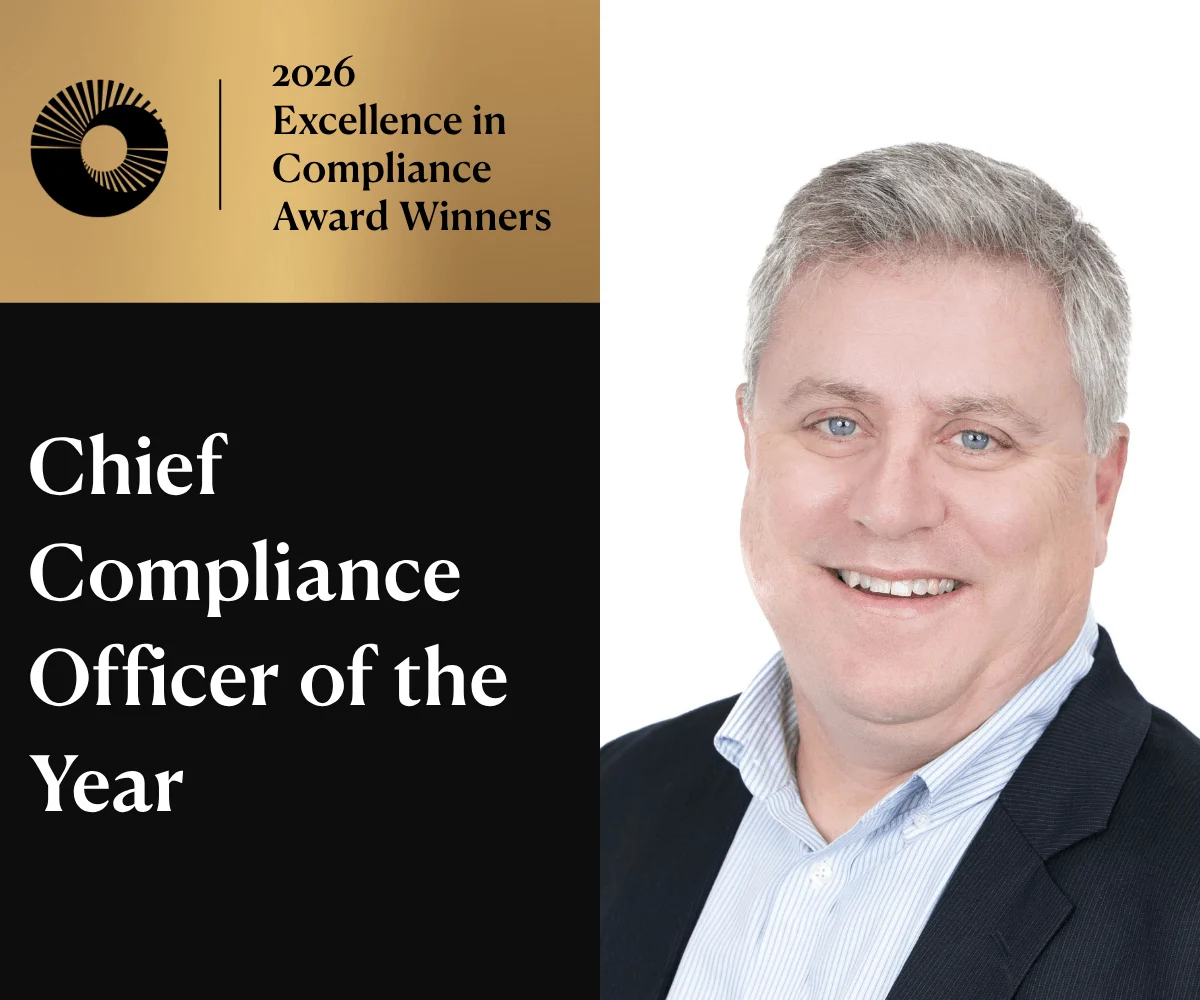
In the high-stakes world of financial services, where regulatory scrutiny is as constant as market volatility, the role of the Chief Compliance Officer (CCO) is often viewed as a defensive barricade. However, for James Clements, former CCO at Carson Group, compliance is not merely about saying "no"—it is about operational excellence, strategic foresight, and the cultivation of a culture that views regulation as a competitive advantage.
Following a tenure defined by technological innovation and a radical commitment to interpersonal service, Clements has transitioned into a new chapter as the President of CreativeOne Securities, LLC. His recent recognition for his work at Carson Group serves as a masterclass in modern compliance leadership, providing a blueprint for how firms can navigate complex regulatory environments while maintaining business velocity.
The Main Facts: A Paradigm Shift in Regulatory Oversight
Last year was a crucible for the compliance team at Carson Group. As the firm faced one of the most complex regulatory periods in recent memory, Clements orchestrated a strategy that integrated cutting-edge Artificial Intelligence (AI) with a "human-first" service model.
His efforts did not go unnoticed. Nominations for his recent industry accolades praised his "strategic foresight and operational excellence," noting that he successfully bolstered the organization’s compliance posture without stifling the firm’s growth. At the heart of his success was a simple, yet profound philosophy: compliance is a service department, and its effectiveness is measured by its ability to build relationships, not just check boxes.
Clements’ approach to compliance was multi-faceted. He oversaw compliance for both the broker-dealer and registered investment advisory (RIA) entities, managing a delicate balance between Securities and Exchange Commission (SEC) requirements and Financial Industry Regulatory Authority (FINRA) mandates. By fostering deep collaboration with internal legal, marketing, and sales teams—as well as external broker-dealer partners—Clements transformed the compliance function from a siloed department into a central pillar of the firm’s operational framework.
Chronology: From Advisor to Compliance Visionary
James Clements’ career trajectory is atypical, which he cites as his greatest professional asset. He began his journey as a financial advisor, gaining firsthand experience in the day-to-day challenges of client management and investment strategy. This ground-level perspective later informed his transition into the compliance field in 2020, when he assumed the role of CCO at Carson Group.
- Pre-2020: Clements builds his foundation as a financial advisor, learning the nuances of the regulatory landscape and the practical limitations of business operations.
- 2020–April 2024: Serving as CCO for Carson Group, Clements navigates the firm through the pandemic-era regulatory shifts and the rapid digitization of financial services. During this time, he integrates AI into advertising reviews and streamlines compliance workflows.
- 2024–Present: Clements transitions to the role of President of CreativeOne Securities, LLC. He now applies his deep-seated compliance experience to the highest levels of firm leadership, setting the strategic tone for the organization’s future.
Throughout this timeline, Clements never abandoned his "compliance grounding." Even when stepping into broader leadership roles, he remained committed to the principle that an organization’s reputation is its most valuable currency.
Supporting Data: AI Integration and Service Excellence
The integration of AI into the Carson Group’s compliance department was not a reactive measure, but a strategic upgrade. The primary focus was the advertising review process, a historically bottlenecked area for most financial firms.
The AI Advantage
By deploying AI tools to scan marketing collateral, Clements’ team was able to flag problematic language or regulatory inconsistencies in seconds rather than hours. When edits were required, the AI-assisted process provided immediate feedback, allowing the marketing team to iterate quickly.
Performance Metrics
Despite the complexity of the regulatory landscape, Clements’ team was consistently ranked by partner advisors as one of the top three teams within the entire company. This is a rare feat for a compliance department, which is often viewed as a friction point. Clements attributes this high regard to his team’s:
- Accessibility: An "open-door" policy that encourages advisors to ask questions before taking action.
- Communication protocols: The "two-email rule"—if a complex issue isn’t resolved within two email exchanges, the team is required to pick up the phone.
- Constructive Feedback: A willingness to engage in "difficult conversations" regarding problematic business behaviors, framing them as opportunities for growth rather than punitive measures.
Official Perspectives: The Role of the Modern Compliance Officer
In an exclusive interview with Compliance Week, Clements shared his philosophy on the future of the industry, the role of human judgment, and the ethical burden of the CCO.
On the Human Element vs. AI
While AI has been a transformative tool for efficiency, Clements is firm in his belief that it will never replace the compliance officer. "AI won’t take away your job," he asserts. The value of a compliance professional lies in institutional knowledge, judgment, and the historical context of firm decisions. AI can handle the repetitive, administrative heavy lifting, but it cannot navigate the moral nuances or the strategic, long-term impact of a regulatory decision.
The "Thick Skin" Requirement
Clements is candid about the pressures of the role. He believes that to be successful, a CCO must possess a moral compass that is impervious to corporate pressure. "If you’re looking for a lot of thanks and pats on the back, you’re not going to enjoy compliance," he admits.
He emphasizes that the goal of a compliance officer is not to "get to yes" with leadership. Rather, it is to provide the uncomfortable truth—to tell leadership, "I don’t agree with that." This is the essential check-and-balance that prevents a firm from succumbing to short-term gains that could lead to long-term regulatory disaster.
The Power of Documentation
Clements emphasizes the importance of thorough documentation. He maintains detailed logs of his decision-making process, the advice he provided to leadership, and the context behind firm initiatives. In the event of a regulatory audit, this isn’t just "paperwork"—it is a narrative of integrity. Regulators want to understand the why behind a firm’s actions, and a well-documented trail proves that compliance was an active participant in those decisions.
Implications: The Future of Compliance Leadership
As Clements takes on his new role as President of CreativeOne Securities, his legacy at Carson Group offers several key takeaways for the broader financial industry:
- Compliance as a Culture: A firm’s compliance posture is only as strong as its culture. When leadership prioritizes compliance, the rest of the organization follows suit.
- The "Reputation First" Mandate: Echoing the advice he received early in his career, Clements reminds us that the primary objective of any firm is to avoid the headlines that come from regulatory failure. Every decision must be filtered through the lens of long-term reputation.
- Communication is Key: The shift from digital to verbal communication in high-stakes situations is essential. The "pick up the phone" rule is more than a policy; it is a relationship-building tool that humanizes the regulatory process.
- Strategic Integration: Future leaders should not view compliance and executive management as separate entities. By bringing his compliance background into the President’s office, Clements is demonstrating that a firm’s baseline for growth should be rooted in regulatory adherence.
Conclusion: A Legacy of Integrity
James Clements’ career serves as a reminder that the most effective compliance officers are not the ones who hide behind rules, but the ones who stand in front of them, guiding their organizations toward sustainable, ethical success. As he moves into the executive suite, he continues to champion the idea that compliance is the bedrock of growth.
"We want to see our name in the press for positive reasons," Clements states, reflecting on his new mission. "Not for fines because we wanted to do something for short-term gain." In an era of rapid technological change and evolving regulations, that commitment to long-term integrity is perhaps the most valuable asset any financial leader can possess.