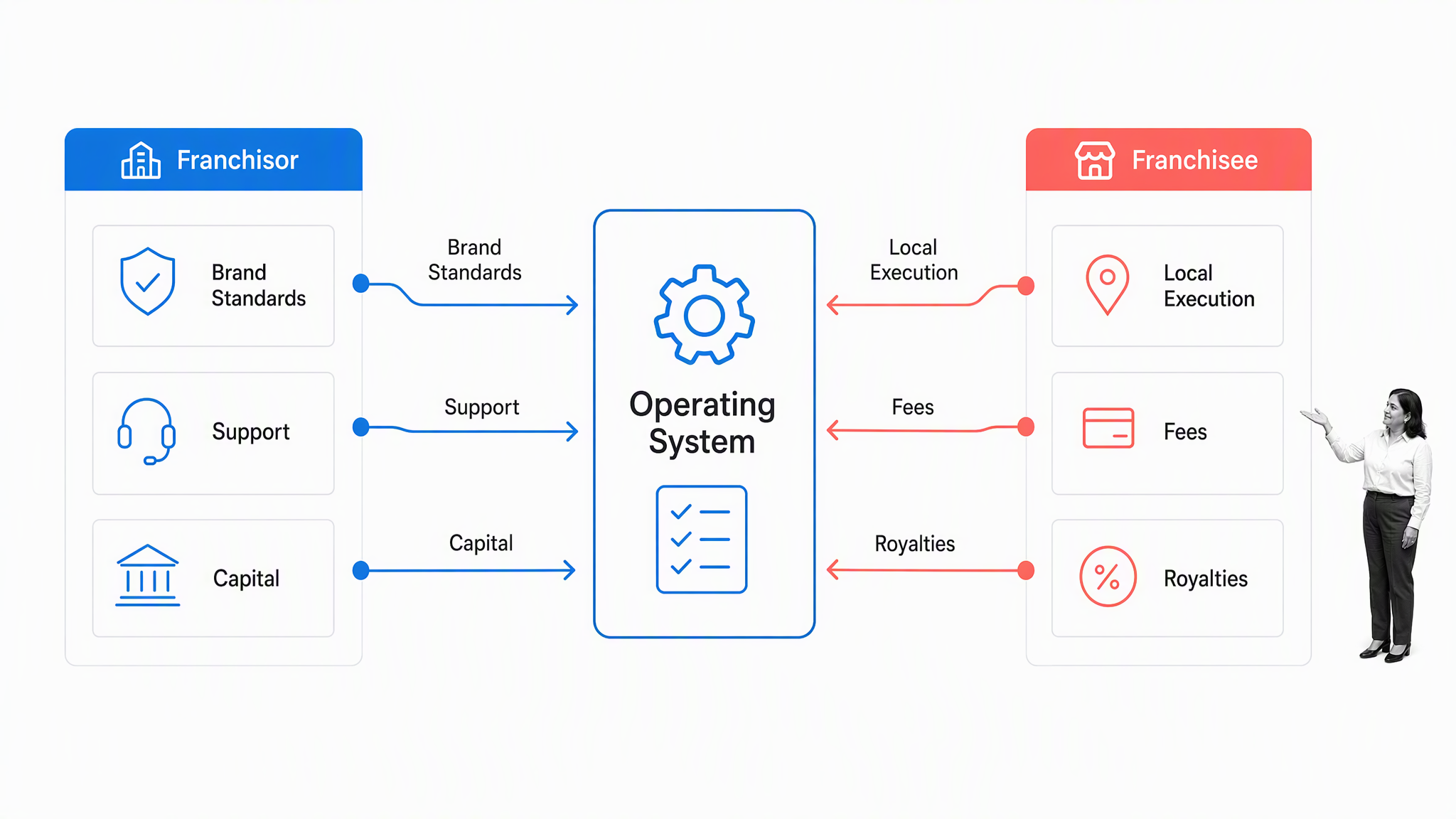
In the landscape of modern commerce, few business structures are as ubiquitous—or as misunderstood—as the franchise. At its core, a franchise is a symbiotic legal and commercial relationship where an independent operator pays for the right to leverage another company’s brand, products, and proprietary operating system. The franchisor provides the blueprint, the training, and the brand identity; in exchange, the franchisee contributes the capital, assumes the day-to-day operational risks, and pays ongoing royalties.
While this model can significantly accelerate an entrepreneur’s path to market, it is not a risk-free endeavor. The trade-off for a "turnkey" business identity is a sacrifice of local autonomy and a lifelong financial commitment to the parent company. As the 2026 economic outlook from the International Franchise Association (IFA) suggests, this model is a juggernaut of the American economy, projecting approximately 845,000 franchise establishments, nearly 8.9 million jobs, and $921.4 billion in total economic output.
The Mechanics of the Franchise Relationship
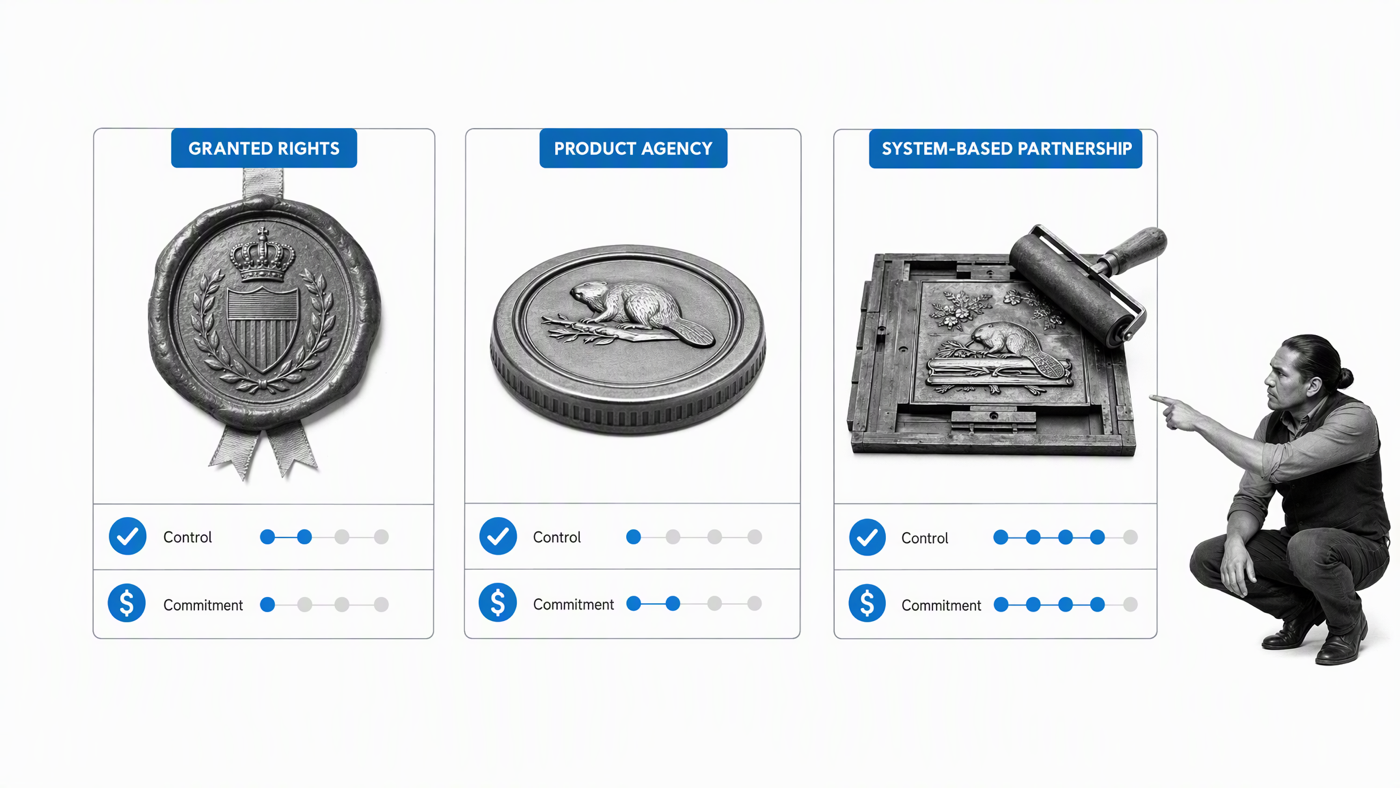
A franchise agreement is more than a lease or a license; it is a comprehensive operational partnership. The franchisor defines the system, which typically includes everything from store design and supply chain logistics to marketing protocols and intellectual property usage. Crucially, this agreement does not turn the franchisee into an employee. The operator is an independent business owner who hires their own team, manages local execution, and assumes the financial liabilities of the storefront.
However, the franchisee must adhere strictly to the "system." If a brand promises a specific level of quality, every location must mirror that promise. This is where the importance of a robust operations manual becomes paramount. A simple directive to "provide great service" is insufficient. Successful franchises rely on documented procedures, defined role ownership, and rigorous quality controls that render the desired result repeatable, regardless of who is managing the shift.
Platforms like Process Street are increasingly vital in this space, acting as Compliance Operations Platforms. By utilizing document-management and operational workflow tools, franchisors can ensure that standards are not just written, but enforced, tracked, and audited across thousands of independent locations.
A Chronology of Collaboration: From Franklin to Kroc
To understand the franchise model, one must look at its evolution from colonial ingenuity to the mass-market efficiency of the 20th century.
The Colonial Blueprint
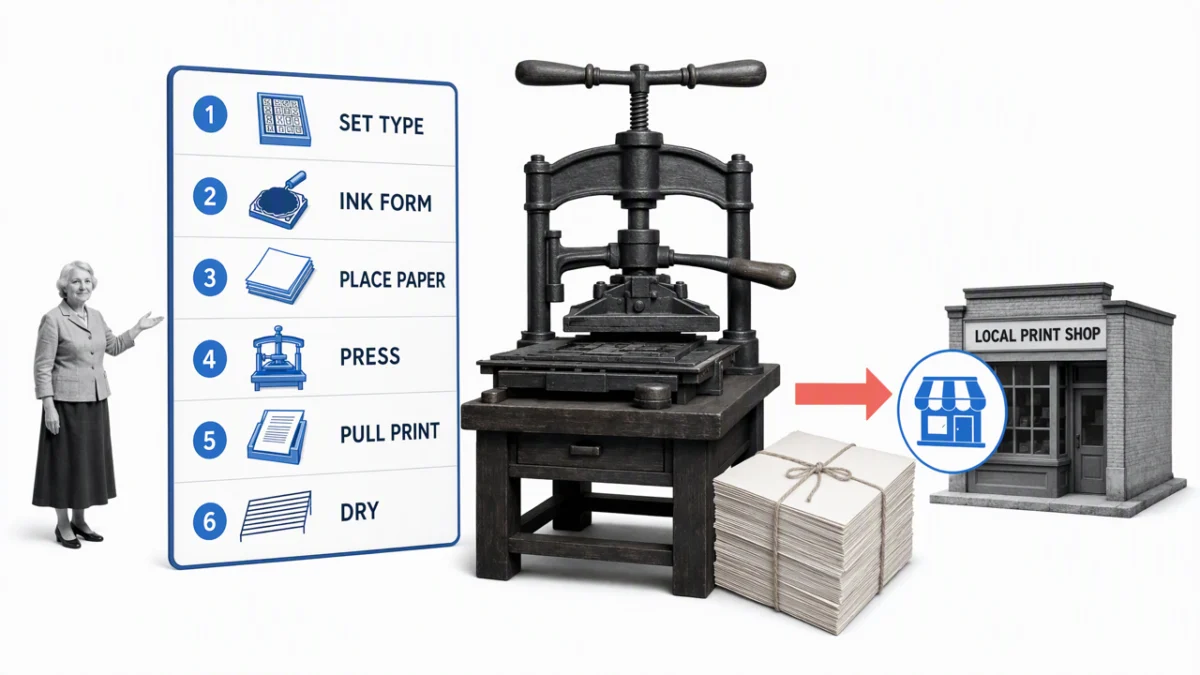
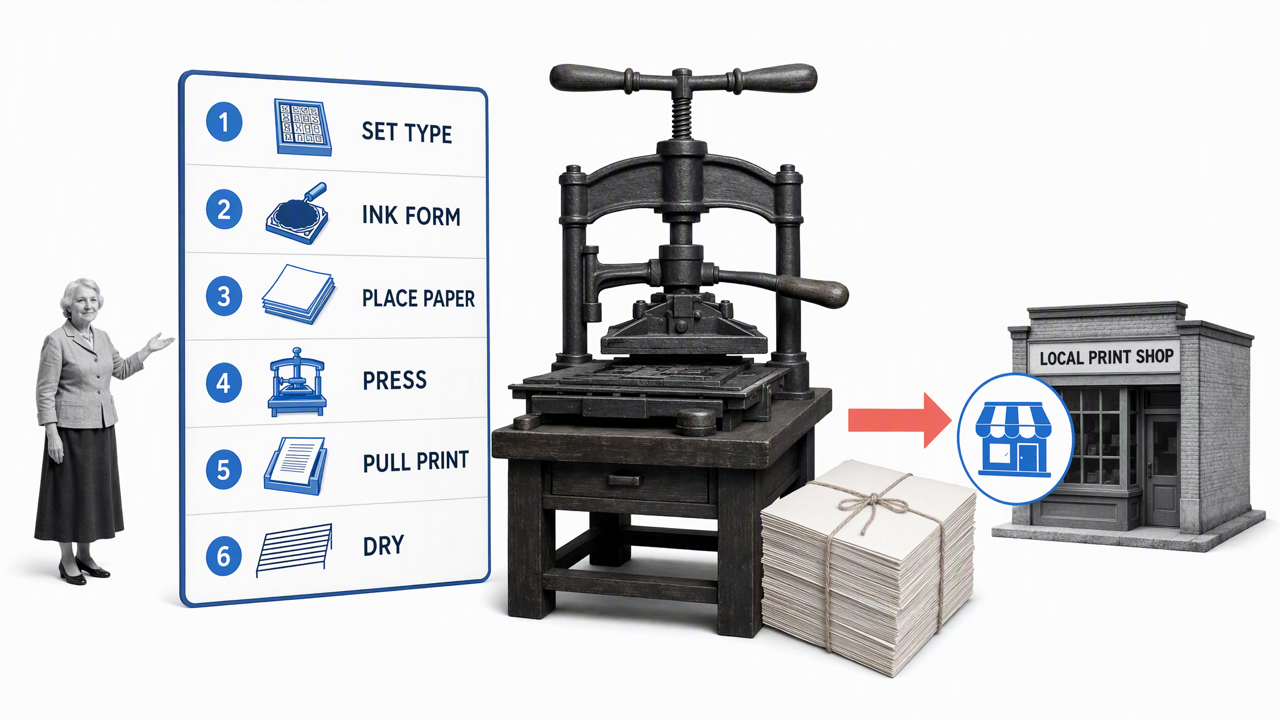
While modern franchising is governed by strict federal disclosure laws, the structural concept dates back to the 18th century. Benjamin Franklin, often viewed through the lens of statesmanship, was also a shrewd pioneer of early franchising. In 1731, he entered a co-partnership with Thomas Whitmarsh in South Carolina. Franklin provided the printing equipment, supplies, and technical "know-how," while Whitmarsh operated the shop. This allowed Franklin to expand his printing empire without having to manage every press personally—a core principle of the modern franchise.
The McDonald’s Revolution
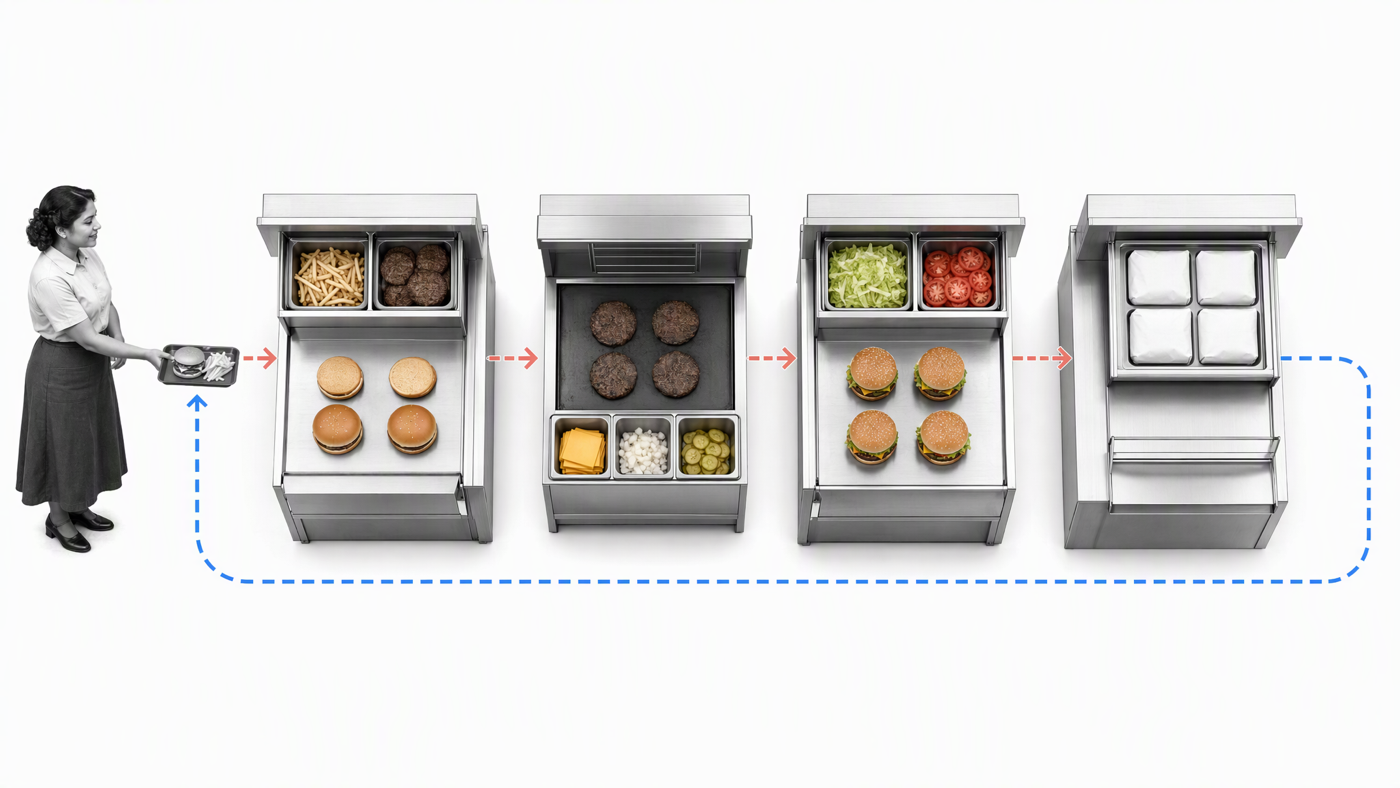
The 20th century saw the model reach its zenith with the McDonald brothers and Ray Kroc. As dramatized in the film The Founder, the McDonald brothers developed the "Speedee Service System," an innovative approach to food preparation that treated the kitchen like a manufacturing line. By drawing the layout on a tennis court, they rehearsed every movement to eliminate waste, shorten travel time, and optimize throughput.
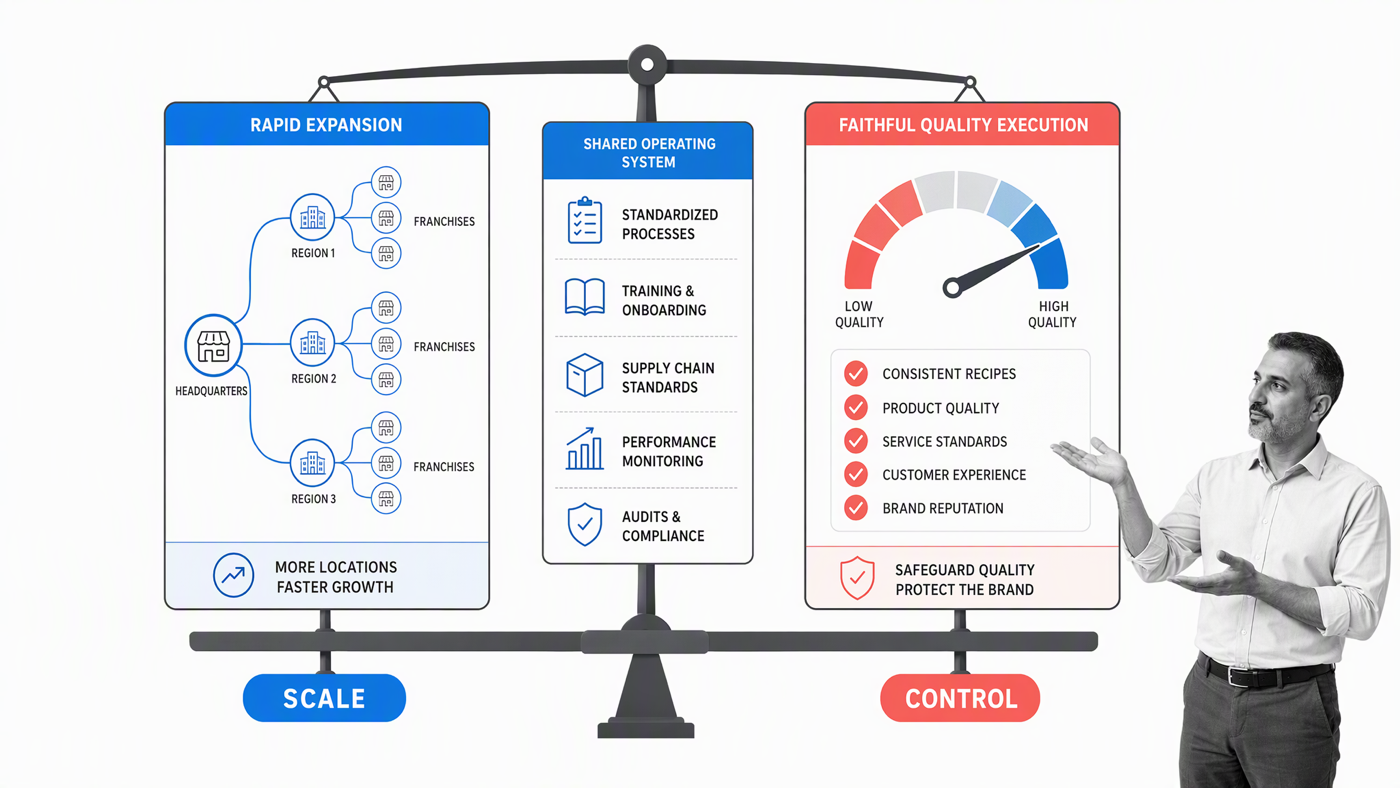
Ray Kroc, a milkshake-machine salesman, recognized that this system was a "better mousetrap." He understood that while the brothers had perfected the product, they lacked the appetite for the national expansion he envisioned. The subsequent conflict between the brothers’ artisanal commitment to quality and Kroc’s drive for rapid scaling illustrates the fundamental tension in every franchise: how to maintain high standards while expanding a network across thousands of miles.
Supporting Data: The Investment Reality
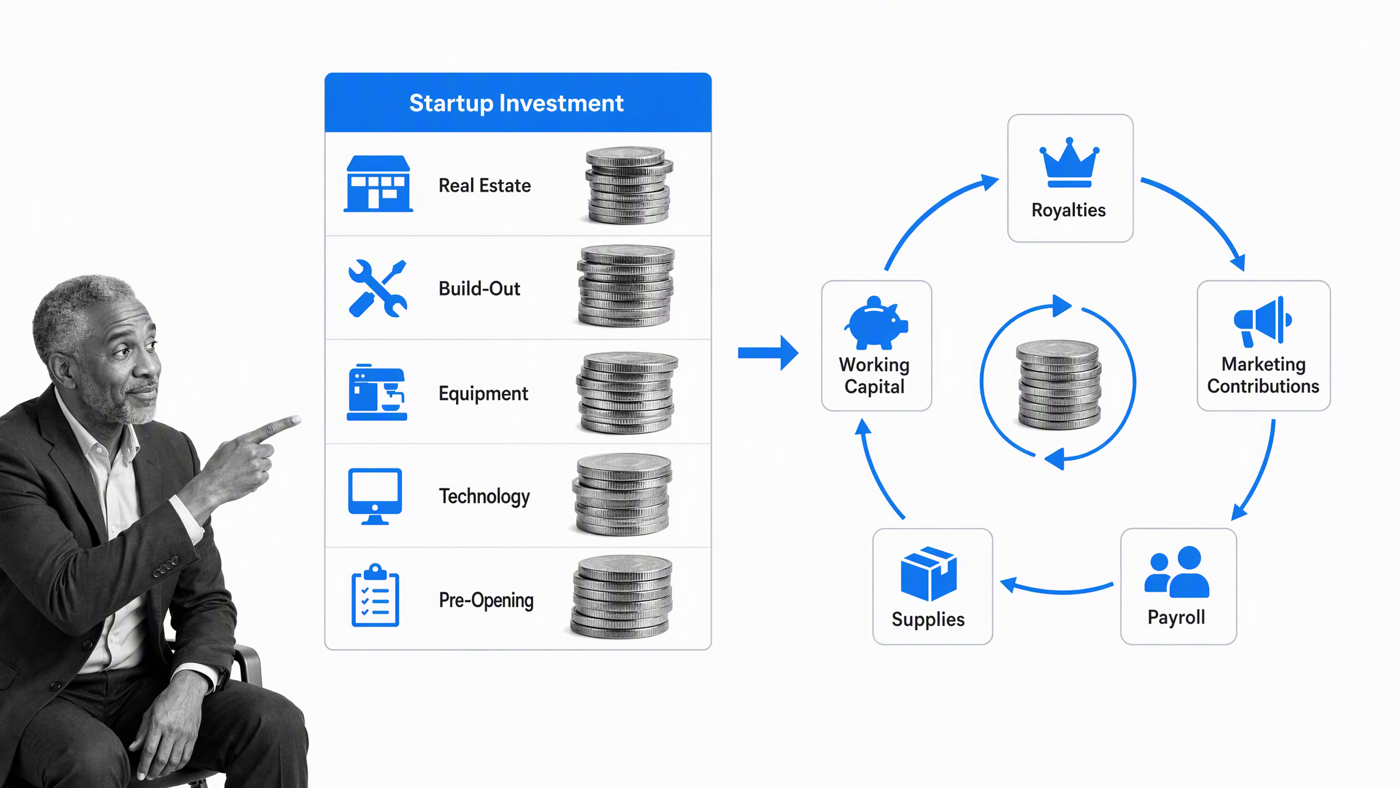
Prospective owners often focus solely on the "franchise fee," but this is merely the entry ticket. The real financial burden lies in the "Total Initial Investment," which encompasses real estate, construction, equipment, inventory, licenses, and marketing.
The financial landscape is vast. A simple home-service franchise might require $50,000 in startup capital, while a full-scale restaurant or lodging facility could require millions. A critical, yet often overlooked, component is working capital. A new location rarely achieves profitability on day one. A sophisticated business plan must account for months of overhead—including rent, payroll, and royalties—before the location hits a break-even point.
The Regulatory Framework: Federal Oversight
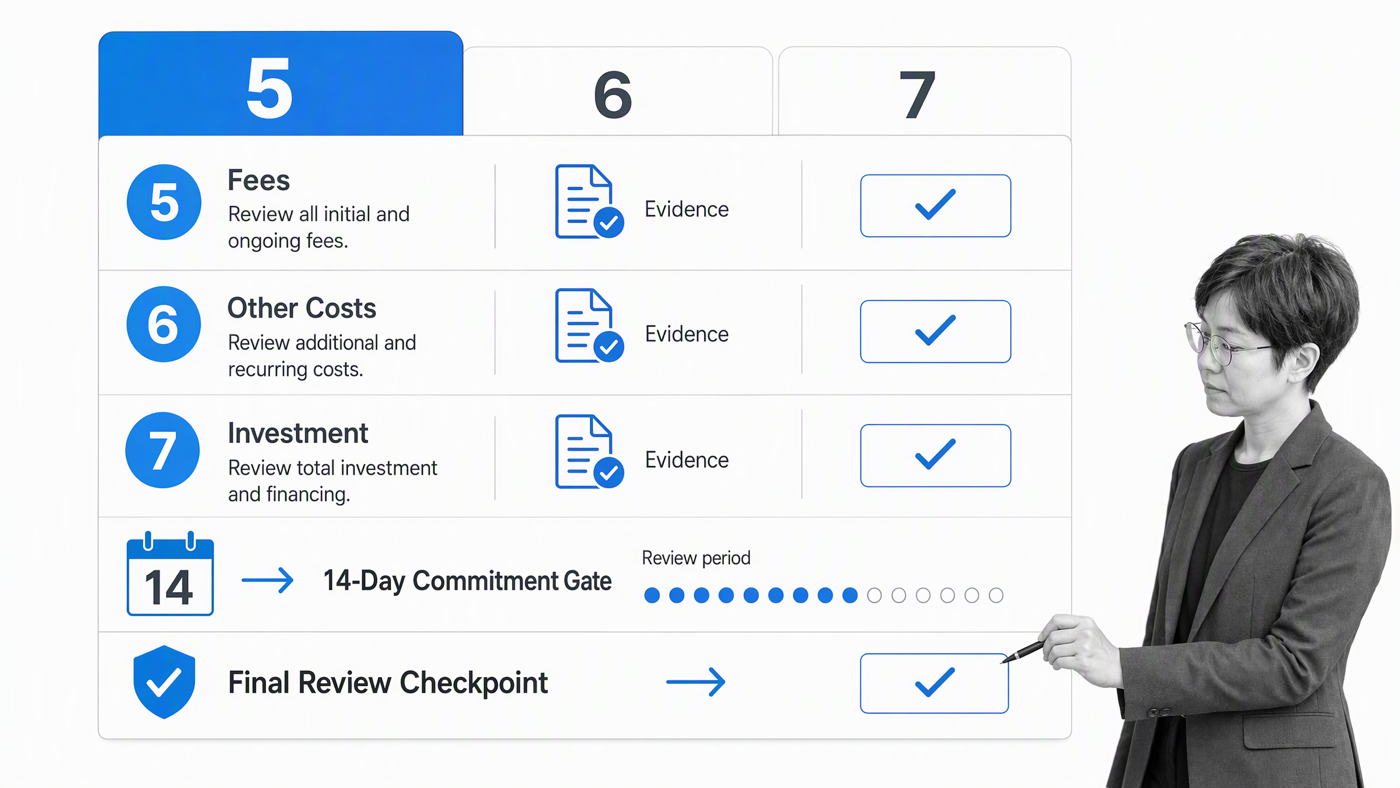
In the United States, the federal Franchise Rule provides a mandatory "cooling-off" period for prospective owners. Franchisors are required to provide a Franchise Disclosure Document (FDD) at least 14 calendar days before a binding contract is signed.
The FDD is the most important document in the decision-making process. It contains 23 distinct items, but three are of paramount importance for the potential franchisee:
- Item 5: The initial franchise fee.
- Item 6: Other ongoing fees (royalties, advertising, training).
- Item 7: The estimated total initial investment.
While these documents are legally mandated to be transparent, they are not guarantees of profit. They serve as a baseline for due diligence. Prospective owners are encouraged to model multiple scenarios, including "worst-case" sales figures, to ensure they have the financial runway to survive the initial growth phase.
Implications for Modern Business: Process and Scale
The success of a franchise network hinges on the ability to translate "tacit knowledge" into "explicit systems." A founder’s instinctual way of doing business is impossible to replicate; a documented, automated, and audited process is not.
The Lean Manufacturing Connection
The McDonald brothers’ approach—which relied on eliminating wasted time and motion—is a direct precursor to modern "Lean" management. By standardizing the workflow, they ensured that a burger made in California tasted the same as one made in Florida. In today’s market, this consistency is achieved through business process automation. When the operating model is explicitly defined, routine tasks—such as inventory reordering, employee training, and quality reporting—can be automated. This reduces the administrative burden on the local franchisee and provides the franchisor with real-time data on the health of the entire network.
The Risk of Inconsistency
The primary danger to any franchise is "drift." When a location begins to deviate from the established standards, the brand value is diluted. This is why the most successful franchisors are not just selling a name; they are selling a rigorous management system. They provide the tools, the training, and the oversight, but they demand adherence to the protocol.
Conclusion: Balancing Autonomy and Consistency
The franchise model remains one of the most effective ways to scale a successful business. It leverages the capital and dedication of local entrepreneurs while utilizing the brand power and systems of a central organization. However, the success of the arrangement is entirely dependent on the quality of the system being replicated.
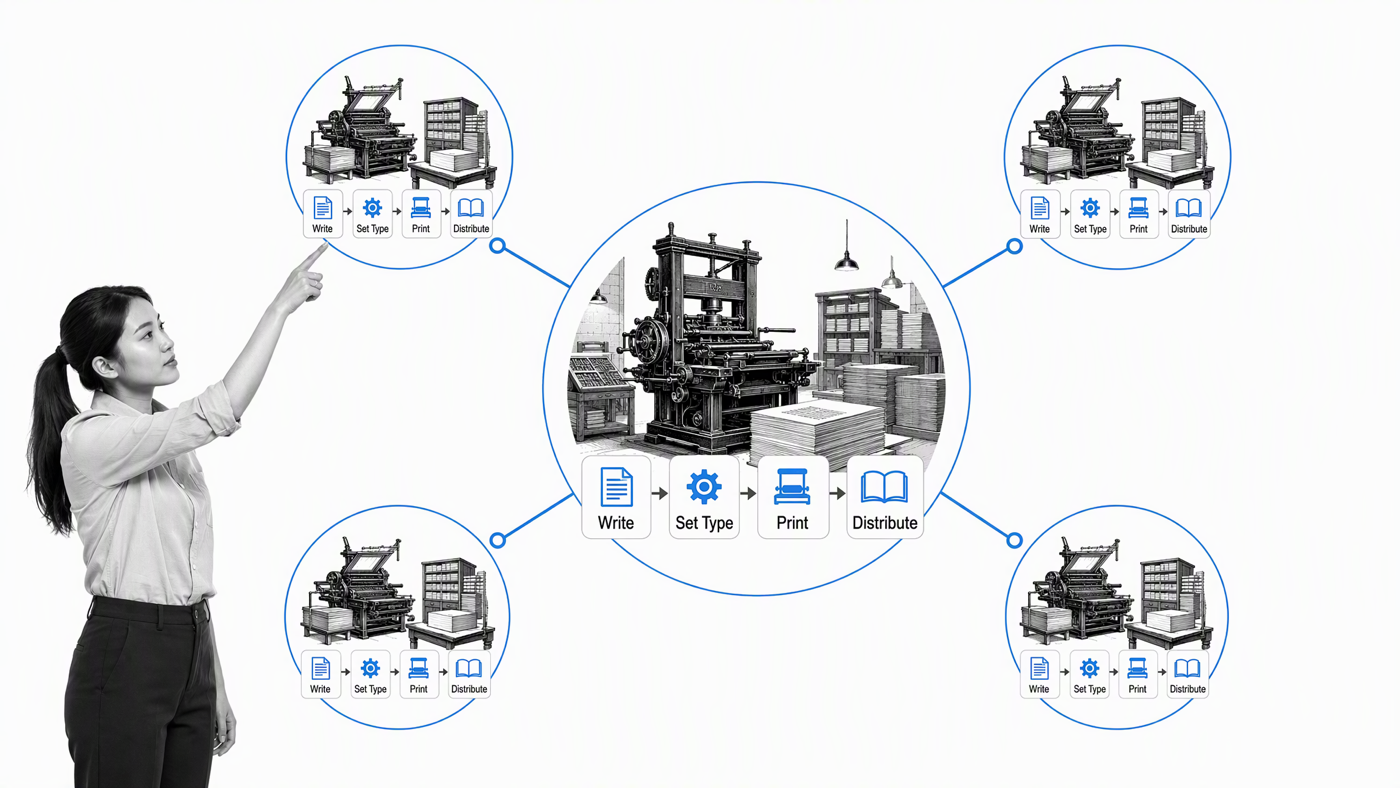
As the industry continues to evolve, the distinction between a "brand" and a "system" will become even more pronounced. The brands that thrive in the coming decade will be those that empower their franchisees with the best operational tools—moving away from paper manuals toward dynamic, AI-assisted, and automated platforms. Whether it is a printing shop in the 1700s or a fast-casual restaurant in 2026, the lesson remains the same: it takes one person to build a better mousetrap, but it takes a robust, disciplined system to ensure the world can beat a path to every door.