By Stan Schroeder | Senior Editor
September 21, 2026
In the fast-paced world of mobile technology, the release of a new iPhone is rarely just about the chassis or the camera; it is about the "engine under the hood." This year, with the launch of the iPhone 18 Pro and Pro Max, the focus has centered entirely on the A20 Pro chip. Built on a cutting-edge 2nm process, this silicon represents the latest iteration in Apple’s relentless pursuit of mobile computing dominance.
After putting the iPhone 18 Pro through a rigorous series of synthetic benchmark tests, the data is unequivocal: Apple has once again set a new industry benchmark for performance. While the competition is closing the gap, the A20 Pro remains firmly in a league of its own.

The Core of the Beast: Understanding the A20 Pro
Before diving into the numbers, it is essential to understand what powers this device. The A20 Pro is a marvel of miniaturization. By utilizing a 2nm fabrication process, Apple engineers have managed to pack an extraordinary amount of logic into a footprint that remains thermally efficient.
The architecture consists of a 6-core CPU—featuring two high-performance "super cores" for heavy lifting and four high-efficiency cores for day-to-day background tasks. Complementing this is a 7-core GPU that integrates advanced Neural Accelerators. Perhaps most critically, the chip features a dual 16-core Neural Engine. This dedicated hardware is designed specifically to handle the heavy AI workloads that have become a staple of the modern smartphone experience, from real-time image processing to on-device large language model (LLM) inference.
Chronology: A Legacy of Silicon Innovation
To understand the significance of the A20 Pro, one must look at the timeline of Apple’s silicon journey. Since Apple broke away from third-party mobile processors to design its own custom silicon, it has consistently delivered double-digit performance gains with every annual refresh.

- 2020: The A14 Bionic introduces the first 5nm chip in a smartphone, signaling a new era of efficiency.
- 2022-2024: The A16 and A17 Pro chips solidify Apple’s lead in single-core performance, leaving the Android ecosystem to catch up on multi-core efficiency.
- 2025: The transition to more intensive AI-centric tasks begins, with the A19 series focusing heavily on NPU (Neural Processing Unit) throughput.
- 2026: The A20 Pro arrives. With its 2nm architecture, it marks the first time a mobile chip has crossed the 10,000-point threshold in standard multi-core testing, a milestone previously reserved for high-end desktop and laptop processors.
This steady climb—often overseen by key figures like John Ternus, who played a pivotal role in the transition to Apple silicon before his ascension to the CEO chair—has made the iPhone not just a communication device, but a legitimate portable workstation.
The Data: Breaking Down the Benchmarks
To ensure the integrity of these results, our testing was conducted on a "factory fresh" iPhone 18 Pro, devoid of third-party applications and background services. We utilized Geekbench 7 and Geekbench 6 to provide both a contemporary snapshot and a historical comparison.
Geekbench 7 Results
In the latest iteration of the industry-standard benchmark, the A20 Pro posted numbers that were, quite frankly, staggering for a handheld device:

- Single-Core Score: 3,959
- Multi-Core Score: 10,854
- GPU Score: 61,194
These results indicate that the A20 Pro is capable of handling professional-grade tasks, such as video rendering and complex code compilation, with a speed that would have been unimaginable five years ago.
Comparative Analysis: Geekbench 6
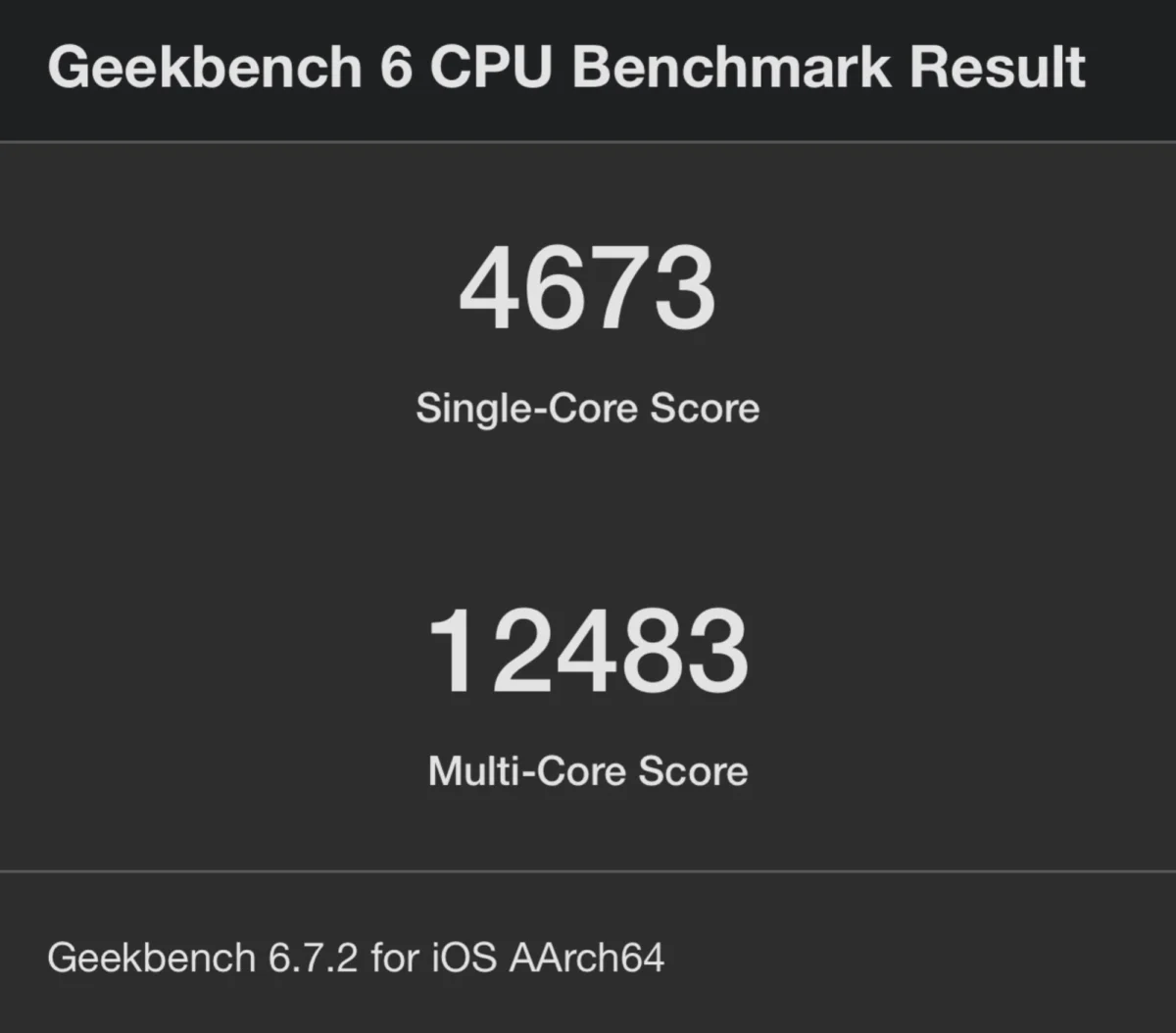
When looking back at Geekbench 6 scores to compare the A20 Pro with its predecessors and rivals, the lead becomes even more pronounced. The iPhone 18 Pro achieved a single-core score of 4,673 and a multi-core score of 12,483.
While the Qualcomm Snapdragon 8 Elite Gen 5 for Galaxy—the beating heart of the S26 Ultra—remains the only competitor that can realistically hold a candle to the A20 Pro, it still falls short of Apple’s multi-core throughput. The performance delta between the A20 Pro and the A19 chip in last year’s model sits at approximately 25 percent, a significant generational leap that underscores the efficiency gains of the 2nm process.

Official Responses and Industry Context
While Apple rarely comments on specific benchmark scores, the company has emphasized that the A20 Pro’s design philosophy was dictated by "sustained intelligence."
"We are not just building for speed; we are building for the future of on-device machine learning," noted an Apple spokesperson during the launch event. The emphasis on the dual 16-core Neural Engine suggests that Apple is positioning the iPhone not merely as a phone, but as a host for local AI agents.
Independent industry analysts have noted that this focus is a strategic move to insulate the iPhone from the fluctuations of cloud-based AI costs. By keeping the processing power local and hyper-efficient, Apple is ensuring that the user experience remains seamless, regardless of network conditions or privacy concerns.

Implications: The Reality of "Over-Engineering"
With such raw power available, a pertinent question arises: Do you actually need this?
In real-world usage, the difference between the A19 and the A20 Pro is subtle for the average consumer. Scrolling through social media, browsing the web, or managing emails remains a snappy experience on devices that are three or four years old. However, the true value of the A20 Pro is found in the "overhead."
The "Superuser" Factor
For those who push their devices—mobile videographers, professional photographers, and AI power users—the A20 Pro is a game-changer. The extra headroom allows for real-time AI-powered video editing and high-fidelity rendering that would otherwise cause a device to overheat or throttle.

The Foldable Frontier
The upcoming iPhone Duo, which also features the A20 Pro, represents the next major test for this silicon. Because the Duo features a vastly different form factor and a massive, power-hungry foldable display, it will be fascinating to see how the chip manages heat dissipation and battery management under load. We anticipate that the thermal ceiling of the Duo will be higher than the 18 Pro, potentially allowing for even higher sustained performance scores.
Long-Term Value
The most significant implication for the average buyer is longevity. Buying an iPhone with an A20 Pro is, in effect, "future-proofing." As iOS continues to evolve with more aggressive AI features, the A20 Pro has the architectural capacity to handle updates that might leave older chips struggling. It is an investment in a device that will remain relevant, fast, and capable for at least the next half-decade.
Final Thoughts
The benchmark results for the iPhone 18 Pro’s A20 Pro chip confirm what many have suspected: Apple Silicon is currently undefeated in the mobile space. By pushing the boundaries of what a 2nm chip can achieve, Apple has created a device that is, by all traditional metrics, vastly over-powered for the average user.

However, in the context of the rapidly evolving AI landscape, this "over-engineering" is exactly what is required. The A20 Pro isn’t just a chip for today; it is the infrastructure for the next generation of computing. Whether that potential is fully realized by the average app developer remains to be seen, but for now, the throne remains firmly in Cupertino’s hands.
The iPhone 18 Pro and Pro Max are currently available for order, with various carrier promotions, such as those from T-Mobile, offering significant incentives for early adopters.